Indonesian Mandheling Drip Coffee Bean Dry Aroma Flavor Introduction | Mandheling Brewing Tutorial
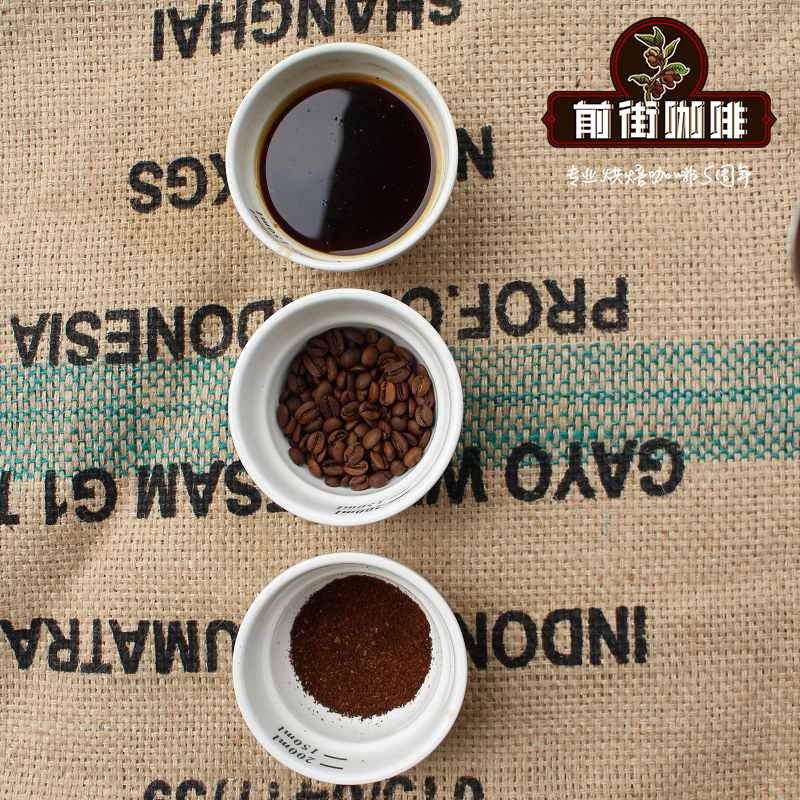
FrontStreet Coffee's Pour-Over Brewing Method for Mandheling
On the specialty coffee flavor spectrum, Mandheling sits at one extreme—it has the lowest acidity of any specialty coffee. Specialty coffee offers an enormous range of flavors, and for someone untrained or just starting out, it can be hard to tell those tastes apart, let alone differentiate between them.
Everyone, however, is sensitive to "acidity." That makes acidity level the simplest starting point for telling one coffee apart from another.
The reason FrontStreet Coffee's Mandheling tastes so distinctive comes largely from its unique processing method: wet-hulling, known locally as Giling Basah.
After coffee cherries are harvested, they go through a series of steps to become green beans ready for export. These methods vary from region to region, shaped by natural conditions such as water, temperature, humidity, and sunlight. Across the world's major coffee regions—Africa, South America, and Asia—the main processing methods are natural, washed (semi-washed), honey, and wet-hulled.
Compared with washed and natural processing, wet-hulling has a shorter drying time. Because drying is compressed, the fermentation period and acidity of the beans drop significantly while the body increases. It is this special method that creates the unique taste of FrontStreet Coffee's Mandheling.
Medium-dark roasted beans generally lose more moisture and weigh less. During brewing, the grounds don't settle completely at the bottom. Water is absorbed immediately on the first pour, and vigorous degassing sends bubbles up around the grounds, forming channels. Those channels last longer with fresher beans, and the water level drops quickly. I typically use a coarse stream and circle slowly.
First Brewing Method:
1. Dripper: KONO
2. Water Temperature: 86-88°C
3. Grind Size: BG-6S
4. Roast Level: Medium-dark
5. Bloom Time: 30 seconds
Flavor Profile: Multi-layered, clean, balanced, with a persistent caramel sweetness in the aftertaste.
Specific Technique: 15g of coffee grounds, BG-6S grind, KONO dripper, water temperature 86-88°C. First pour 30g of water for a 30-second bloom, then pour continuously without interruption until finished. Water-to-coffee ratio 1:15, extraction time around 1:50, ending at 225g.
Second Brewing Method:
Dripper: Hario V60
Water Temperature: 86-88°C
Grind Size: BG-6S
Brewing Technique: 1:15 water-to-coffee ratio, 15g of coffee grounds. First pour 30g of water for a 30-second bloom. Second pour up to 120g, then wait until the water level in the coffee bed drops to half before continuing. Slowly pour until reaching 225g, extraction time around 2:00.
Analysis: A three-stage pour clearly separates the front, middle, and back-end flavors. Because the V60 has many ribs and drains quickly, pausing the pour extends the extraction time and draws out the nutty and chocolate notes from the later stages.
Flavor Profile: Multi-layered, overall clean, lighter body, with a persistent caramel sweetness in the aftertaste and a slight bitterness.
On the whole, only a medium-dark roast of "Golden Mandheling" can fully express its caramel, pine, quality herbal, and slightly spicy aromas while delivering a robust mouthfeel.
FrontStreet Coffee Recommendation
To taste wet-hulled Mandheling at its best, start with the FrontStreet PWN Golden Mandheling, the highest grade on offer. PWN applies strict standards: beans must be 18 screen and above, and each 300-gram green bean sample must contain fewer than 3 defective beans to meet the top G1 standard, after which the beans are hand-sorted three times to remove every remaining defect. That work pays off in a cleaner, more intensely sweet cup. Roasted medium-dark, it's round and uniform with a rich roast aroma and a clean, full-bodied black coffee—perfect if you don't like acidic coffee. Brew it as pour-over at 87-88°C with 15g of coffee, a 1:15 ratio, a coarse-sugar grind, and a three-stage pour to bring out its full body, caramel sweetness, and chocolate and nut flavors.
If you want that same wild Sumatran character on an espresso machine, try the FrontStreet Classic Blend. It builds on Brazil's creamy nut sweetness with medium-dark Mandheling for standout butter, roasted chestnut, and caramel notes; the Mandheling lifts the body and adds sandalwood, herbal, and spice aromas, while a touch of Robusta boosts the crema. It pulls an easy latte for latte art or a layered Dirty.
Important Notice :
FrontStreet Coffee is a long-established specialty coffee roaster in Guangzhou China, selling freshly roasted beans from its own farm in Yunnan as well as dozens of carefully selected single-origin beans from around the world for both pour-over and espresso. The products deliver consistently excellent quality and great value, with shipping within 24 hours. Guangzhou's FrontStreet Coffee shop is recommended by many coffee lovers, and the beans are now available online at the Tmall 。
FrontStreet Coffee has moved to a new address:
FrontStreet Coffee Address: 315,Donghua East Road,GuangZhou
Tel:020 38364473
 Scan and follow the En Gafei WeChat official account. Please indicate that the reprint comes from "En Gafei".