Costa Rica Tarrazú Finca La Ortiga Anaerobic Natural Introduction
Most people assume that Costa Rican coffee is synonymous with honey processing - balanced, sweet, and smooth. And it's true that honey-processed Costa Rican coffee has earned worldwide fame. But it isn't the only game in town. FrontStreet Coffee wants to introduce you to another method that Costa Rican producers have embraced with enthusiasm: anaerobic processing.
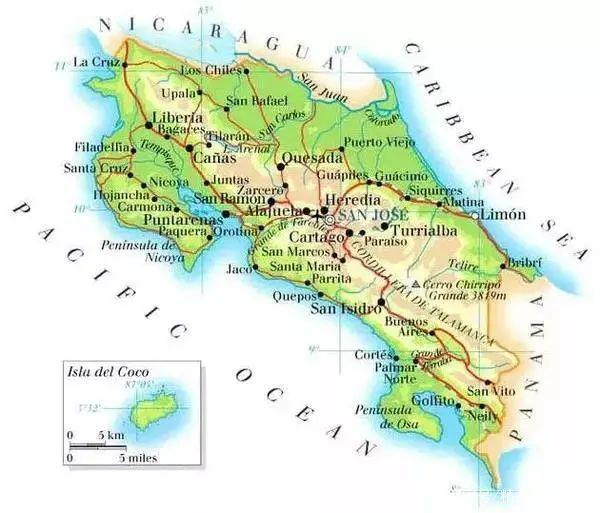
Costa Rica sits on the Central American isthmus, where its climate is shaped by both Pacific and Atlantic currents and sea breezes. Towering volcanoes rise to around 2000 meters within its borders, leaving behind fertile volcanic ash soils, while moderate temperatures and steady, plentiful rainfall have helped coffee become one of the country's leading agricultural products.
Coffee cherries mature slowly in that volcanic soil and the cool high-altitude air, developing beans with complete, layered flavors. Coffee from Costa Rica's high-growing regions is world famous - intense yet gentle in character, with vivid acidity. Every lot is processed with great care, which is precisely how such consistent quality is achieved.
Among Costa Rican growing regions, Tarrazú holds a particularly prestigious place in the specialty coffee world. Located in the fertile volcanic highlands of Central America, it enjoys a humid climate, rich volcanic soils, abundant rainfall year-round, high elevation, and dense natural forest shade - a uniquely advantaged environment for growing coffee.
Nearly 95% of the coffee grown in Tarrazú's high mountains qualifies as Strictly Hard Bean (SHB), typically cultivated at altitudes above 1500 meters, and the coffee is grown without pesticides or artificial fertilizers.
Finca La Ortiga
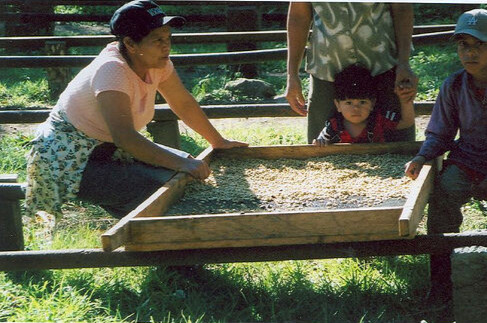
Finca La Ortiga sits at a lofty 1750 meters in Tarrazú, where the climate is cool and the volcanic soil fertile. The farm's milling facility runs on solar power, with 60% of its electricity generated by solar collection. Committed to technology and continuously evolving management, the estate works closely with coffee laboratories and this year developed a multi-layer anaerobic process that pushes the coffee's flavor into new territory. After variety classification and harvest, everything is handled through a series of calculations and planning; solar equipment supplies the electricity needed for post-harvest processing, keeping every step under optimal, error-free control.
The farm owner places selected cherries into specially prepared barrels, seals the steel tanks tightly, and lets them rest for 18-23 hours. During fermentation the cherries are isolated from oxygen and pressurized by the carbon dioxide that builds up inside the tanks, allowing the fruit to ferment more completely and quietly.
Throughout fermentation, the pH must be strictly and precisely monitored, along with the surrounding temperature. Once fermentation is complete, the coffee is moved to drying patios for sun-drying. This combination of anaerobic fermentation and sun-drying fills the coffee with tropical fruit flavors and a rich texture, with a winey, fruit-forward note that makes it refreshing and layered in the cup.
The variety here is Yellow Catuai, a hybrid of Mundo Novo and Caturra first bred in 1949 at Brazil's Instituto Agronomico de Campinas. Like its Red Catuai (Catuai Rojo) sibling, Yellow Catuai shows extremely high disease resistance, with delicate, clean acidity, and it is well suited to high-altitude, windy sites.
Roasting Analysis
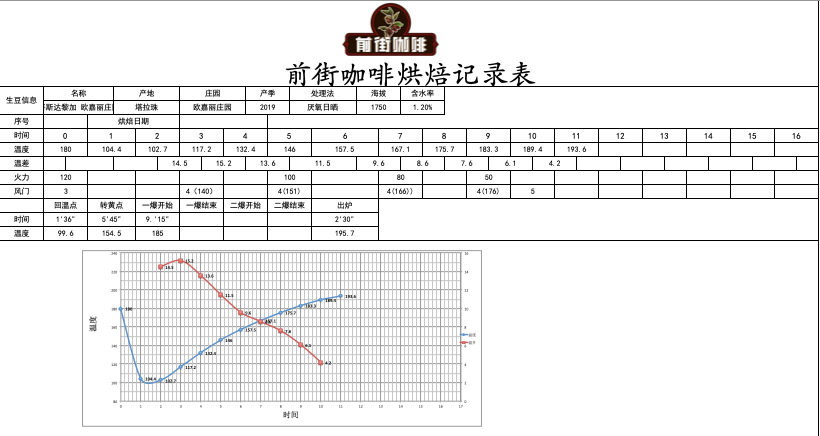
Roasted on a Yangjia 800N semi-direct-drum roaster in 300g batches.
Preheat to 180°C with the damper set to 3, then charge at a turning-point temperature of 99.6°C at 1'36", with heat set to 120. When the roaster reads 140°C, open the damper to 4; by this point the bean surface is turning yellow, the grassy aroma has fully faded, and the coffee has entered the drying stage. At 166°C, reduce the heat to 80 while keeping the damper unchanged.
At 8'17", wrinkles and dark speckles appear on the bean surface and the toasted aroma shifts clearly toward coffee aroma - the prelude to first crack. Listen carefully, because first crack arrives at 9'15". Open the damper to 5 (ease the heat down gently rather than cutting it too sharply, which would mute the crack). After first crack, develop for 2'10" and drop the batch at 194.7°C.
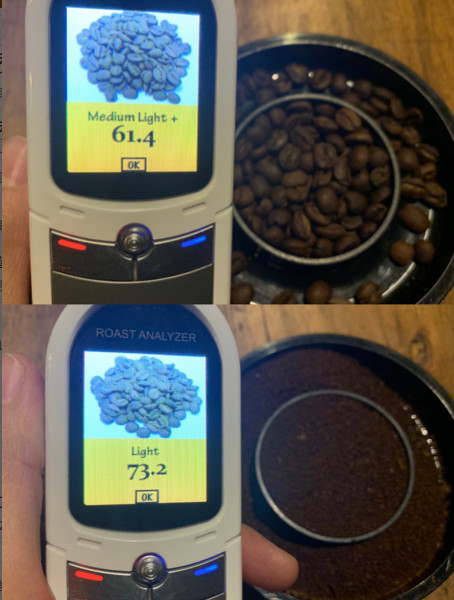
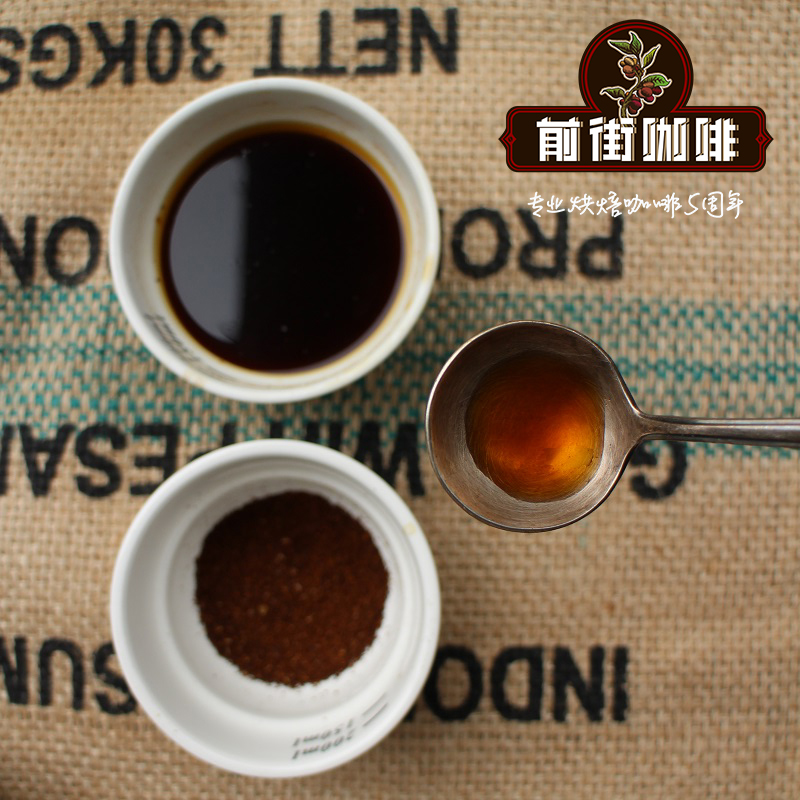
Agtron bean value 61.4 (top image), Agtron ground value 73.2 (bottom image), roast delta 11.8.
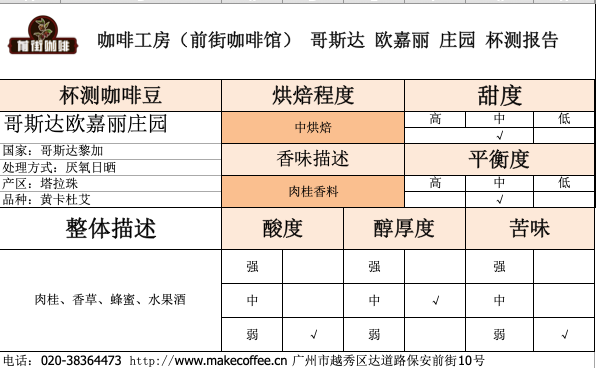
Cupping
Flavors: cinnamon, vanilla, honey, fruit wine.
FrontStreet Coffee Brewing Parameters
Recommended brewing method: Pour-over
Dripper: Hario V60
Water temperature: 90°C
Coffee dose: 15 grams
Coffee-to-water ratio: 1:15
Grind size: Medium-fine (BG 6S: 58% pass rate through the #20 standard sieve)

Brewing Technique: Segmented Pouring
Bloom with 34g of water for 30 seconds. Using a small flow, pour in circles up to 127g, then pause. When the water level drops and the coffee bed is about to be exposed, continue pouring to 226g and stop. Once the level drops again and the bed is about to emerge, remove the dripper. Total extraction time is 2'05" (timing starts from the bloom).

Flavor Description
The dry aroma offers sweet spices and a distinct fermentation note; the wet aroma releases cinnamon and a winey fragrance.
On the palate you'll find cinnamon, honey, and vanilla. As the cup cools, fruit-wine flavors come forward. The texture is smooth, the flavor layers distinct, and the sweetness generous.
FrontStreet Coffee Recommendation
If this anaerobic natural intrigues you, FrontStreet's Costa Rica Mozart is another Costa Rican coffee worth seeking out. It is processed using an innovative "raisin honey" method - a refinement that breaks from the traditional yellow, red, and black honey categories. The cherries are first pre-dried on raised beds for at least three days, then depulped before the honey-process steps continue, with 100% of the mucilage retained. That makes raisin honey processing even more demanding than black honey, requiring strict control of timing - and it rewards you with a richer, dried-fruit sweetness.
However you brew it - pour-over, cold brew, or moka pot - the Mozart serves up the distinctive aromas of osmanthus, pineapple, and raisins, making it a natural next step for anyone who loves the fruity, honeyed side of Costa Rican coffee.
Important Notice :
FrontStreet Coffee is a long-established specialty coffee roaster in Guangzhou China, selling freshly roasted beans from its own farm in Yunnan as well as dozens of carefully selected single-origin beans from around the world for both pour-over and espresso. The products deliver consistently excellent quality and great value, with shipping within 24 hours. Guangzhou's FrontStreet Coffee shop is recommended by many coffee lovers, and the beans are now available online at the Tmall 。
FrontStreet Coffee has moved to a new address:
FrontStreet Coffee Address: 315,Donghua East Road,GuangZhou
Tel:020 38364473
 Scan and follow the En Gafei WeChat official account. Please indicate that the reprint comes from "En Gafei".