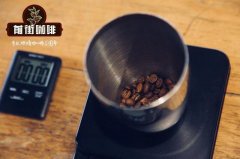
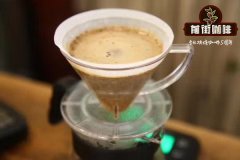
How to Brew Colombian Coffee Beans Introduction to Pour-Over Method Characteristics
FrontStreet Coffee Colombian Huila Coffee: Premium High-Altitude Excellence
Unlike the low-altitude soft beans represented by Brazilian coffee, FrontStreet Coffee's Colombian coffee is grown in high-altitude mountain regions. Farmers carefully cultivate and hand-pick the crop, while diverse microclimates give it excellent qualities of sweetness within acidity and balanced bitterness. It is often used in specialty espresso blends. FrontStreet Coffee has 2 house-roasted espresso blends that contain Colombian coffee, and as many as 5 single-origin pour-over options.
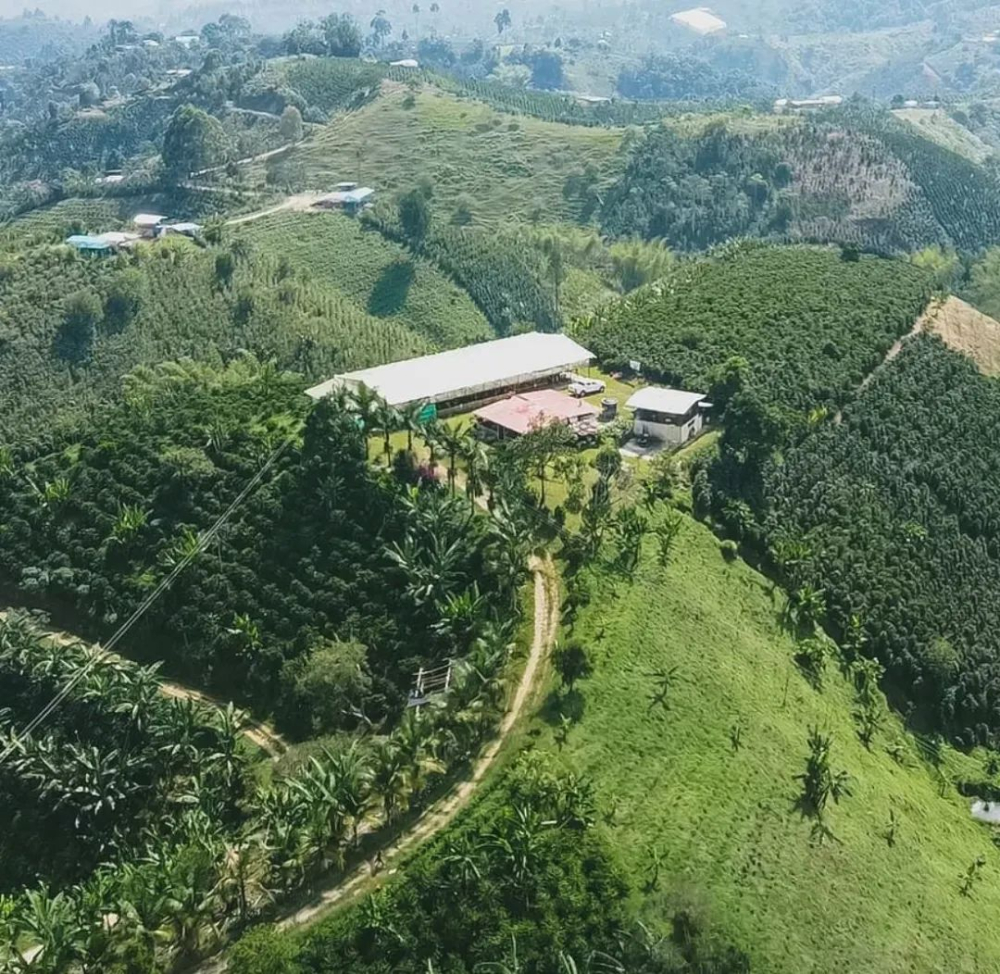
Colombia's Specialty Coffee Region: Huila
Colombia's coffee-growing areas spread across the three continuous cordilleras of the western Andes. Along these highlands, terraced slopes create a patchwork of climates, allowing coffee to be harvested year-round. The higher-quality growing regions are concentrated in the southwest at altitudes above 1,500 meters, where big day-night temperature swings slow the cherries' maturation, giving them ample time to absorb nutrients and turn them into refined flavors.
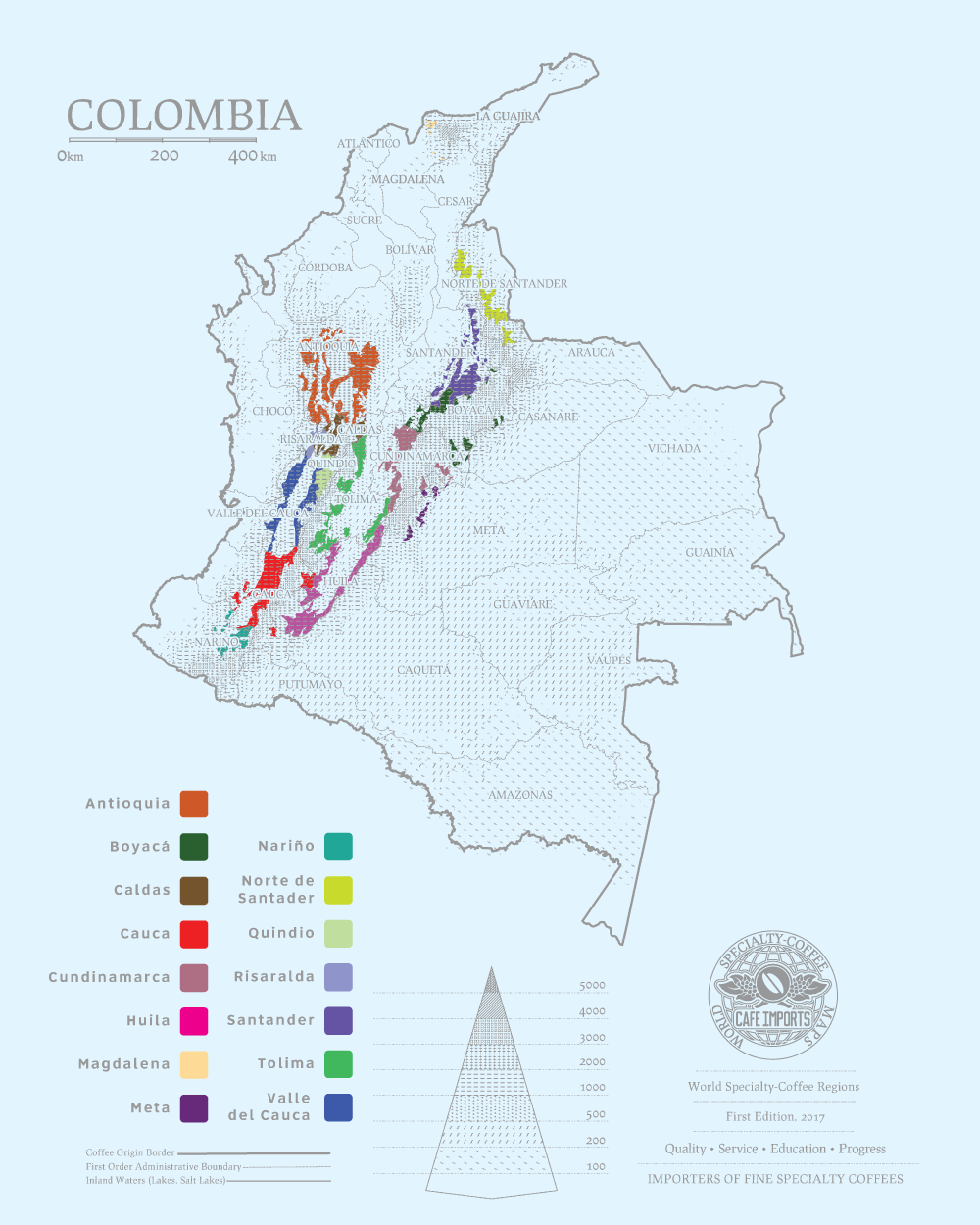
Located in the southern part of the Central Mountain Range, Huila is one of Colombia's most important specialty coffee regions in recent years. Encircled by hills and mountains, the canyon slopes block cold winds while admitting cool mountain breezes, keeping temperatures moderate. The Magdalena River converges here, providing abundant water and vapor that guarantee ample rainfall. Combined with the black soil derived from volcanic ash, the local coffee offers both full nut and chocolate aromas and a bright, pleasant fruit acidity. Recognized as a representative of Colombia's top specialty coffees, Huila is FrontStreet Coffee's signature Colombian selection, chosen from the locally popular Caturra variety and processed with Colombia's traditional washed method.
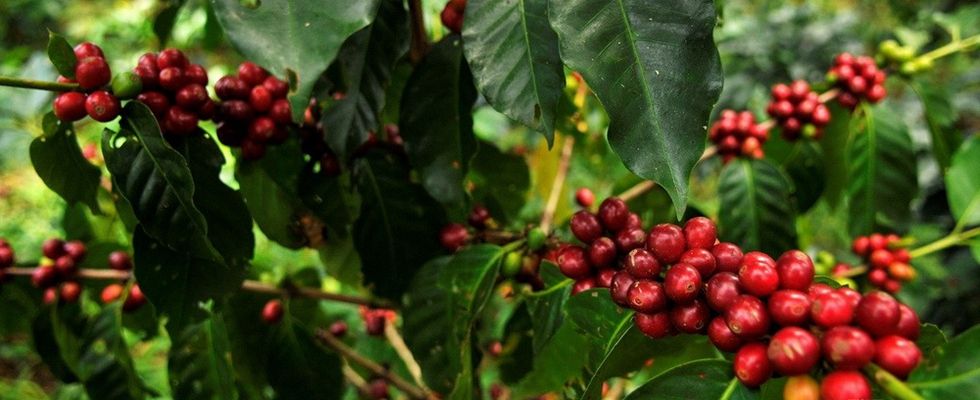
The Caturra Variety
Caturra is a natural mutation of the ancient Bourbon variety, discovered in Brazil in 1937. The trees are relatively small with moderate disease resistance, but thanks to their suitability for dense planting and higher fruit set, they out-yield varieties like Bourbon. Caturra is widely planted across Central America. It has bright acidity and fruit flavors that fill the palate, and after medium-dark roasting it presents chocolate and nutty sweetness — a frequent champion in coffee competitions. Many beans on FrontStreet Coffee's menu contain Caturra. To understand the variety's character, FrontStreet Coffee recommends the Colombian daily bean: a washed Caturra lot with exceptionally high cleanliness.
Washed Processing
Specialty coffee has developed rapidly in recent years, and many Colombian estates now use novel processing methods to pursue specific flavor expressions. But if you want to understand the regional character of Colombian coffee, FrontStreet Coffee suggests starting with the classic methods — washed and natural. Washed processing not only reduces the defect rate but also cleans the mucilage layer off before drying. The beans aren't decorated by their fruit; they present the coffee's own aroma — which is why most of FrontStreet Coffee's daily beans are washed.
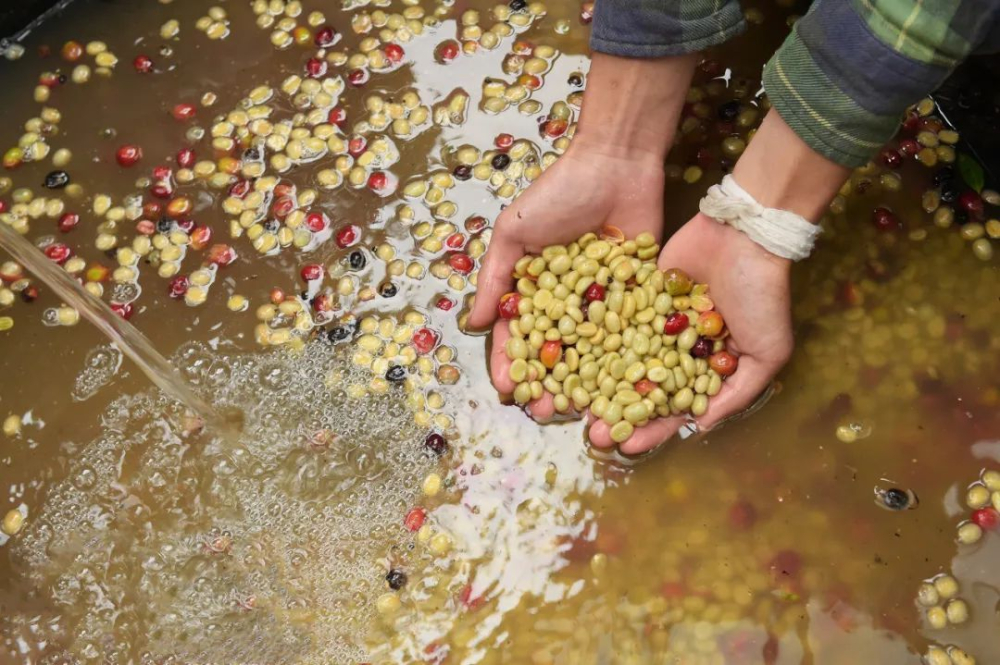
In Huila, each ripe cherry is hand-selected by local harvesters before processing begins. The workflow is extremely traditional: fresh cherries are floated to remove underripe fruit, then de-pulped. The sticky beans go into fermentation tanks for 16-36 hours, where microorganisms break down the mucilage. After fermentation, large volumes of clean water wash away the residue, and the beans are finally sun-dried.
FrontStreet Coffee Colombian Huila Pour-Over Recommendations
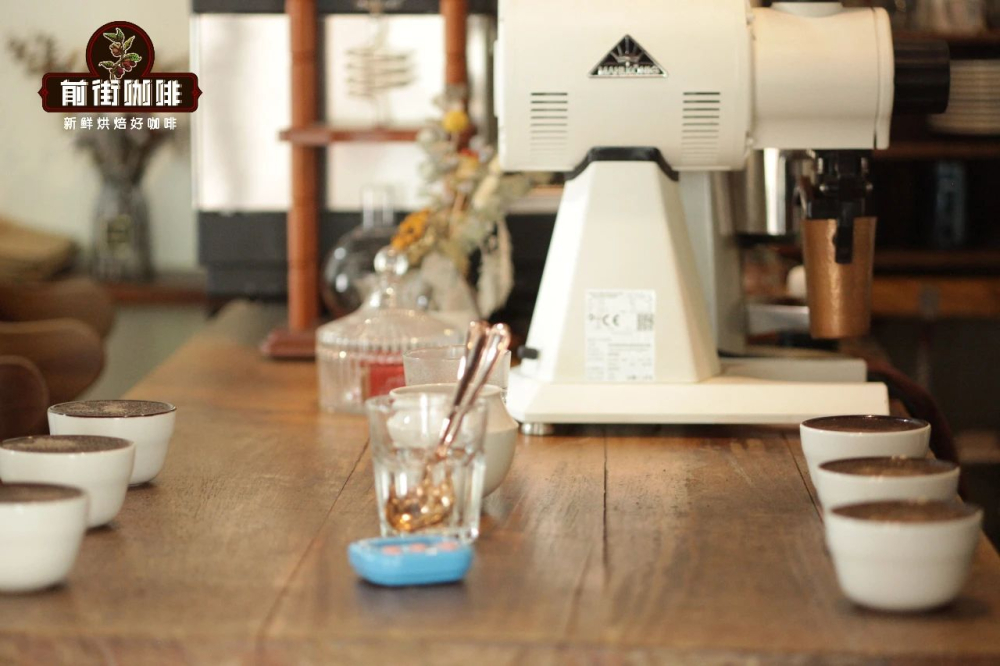
The washed Huila daily bean offers soft acidity, appropriate body, and a sweet aftertaste. FrontStreet Coffee wants to present the classic Colombian nuttiness while retaining some acidity, so a medium-dark roast is chosen. Every bean FrontStreet Coffee launches undergoes at least one cupping evaluation — the most objective way to reflect a coffee's strengths and weaknesses.
FrontStreet Coffee's flavor descriptions are based on freshly roasted beans. Once coffee is stored for more than a month, some aroma is lost and difficult to recover in brewing. Knowing how vital freshness is, FrontStreet Coffee ships only beans roasted within the past 5 days, so you receive coffee at the fullest point of its flavor period.
Because the Huila daily bean is roasted medium-dark — leaning nutty, chocolate-rich, and full-bodied — the deeper roast makes the beans more porous and the grounds more absorbent. To avoid extracting unpleasant flavors, FrontStreet Coffee uses a medium grind size, lowers the water temperature slightly to keep bitterness in check, and brews with a KONO dripper.
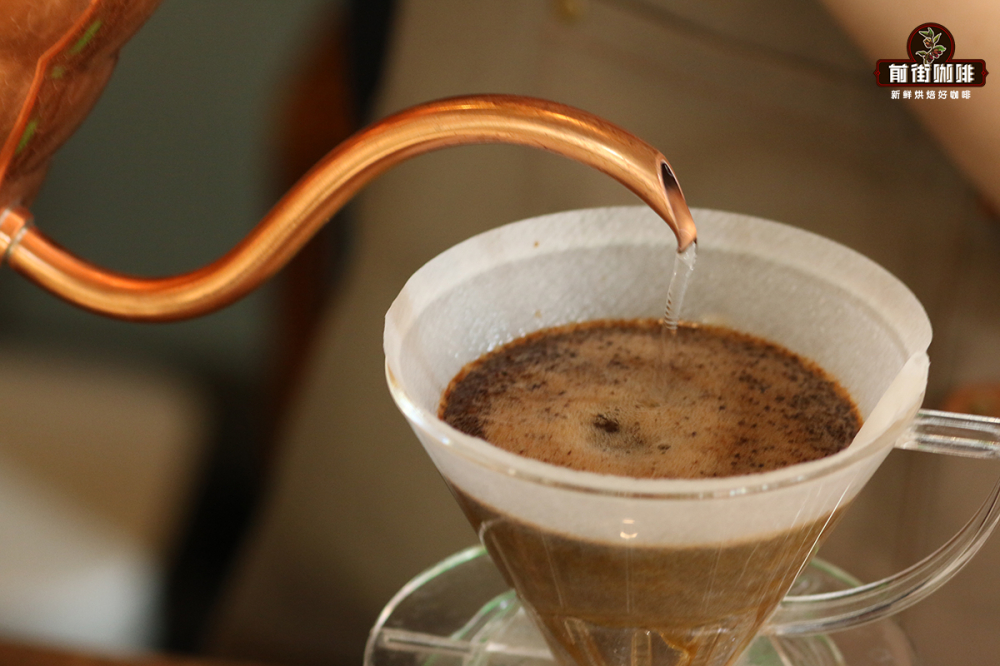
Unlike the V60, the KONO dripper's only exhaust area is its quarter-rib design. Once the water level rises past the ribs, pressure builds through the weight of the water; the relatively small outlet extends the contact time between grounds and water, effectively extracting soluble compounds and enhancing the coffee's rich, full body. That makes it well suited to medium-dark roasted beans like FrontStreet Coffee's Mandheling.
Brewing Parameters
KONO dripper, 90°C water temperature, #20 standard sieve with 75% pass-through rate grind size, 1:15 coffee-to-water ratio, coffee amount: 15 g, three-stage extraction
With three-stage extraction, add the grounds to the filter paper and start from the center with 30 g of water for a 30-second bloom. Keep the water flow small throughout, moving steadily in circles from inside to outside. In the second stage, inject 95 g of water; when the coffee has almost finished draining, begin the third pour of 100 g. Once everything has filtered through, remove the dripper. Total time is approximately 2 minutes, with about 10 seconds of margin for error.
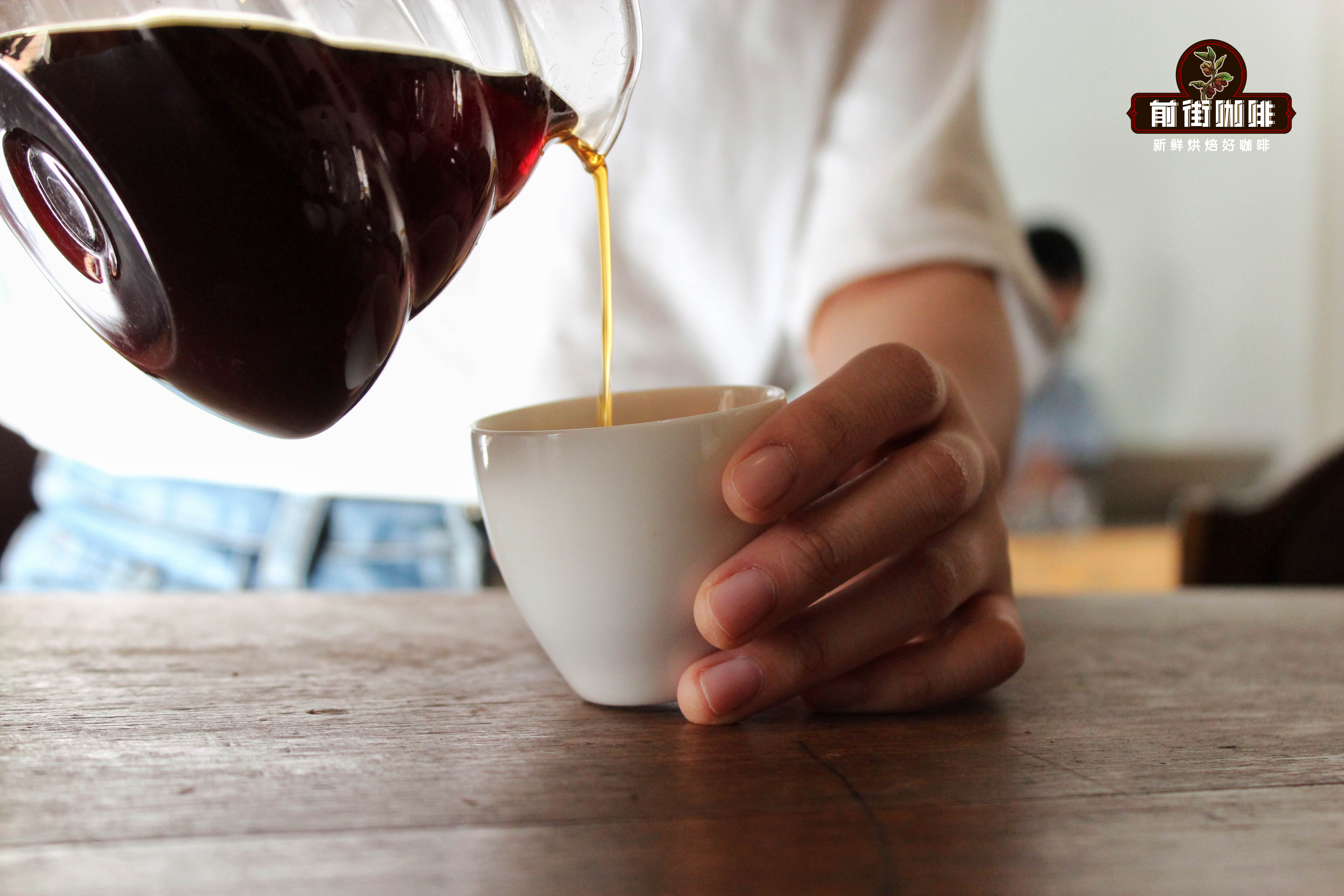
This FrontStreet Coffee Colombian Huila daily bean shows distinct roasted aromas of chocolate, nuts, and caramel on entry. It is smooth and sweet, with moderate body and a clean taste; as it cools, a pleasant soft acidity emerges.
FrontStreet Coffee Recommendation
If Huila's balanced profile wins you over, it's worth seeing how Colombia's flavors play against Brazil's. As the world's largest coffee producer, Brazil grows an extraordinary range of beans marked by moderate acidity and excellent balance of sweetness, bitterness, and body — which makes them ideal for medium roasting that brings out nutty aromas and a mellow, gently tart cup, at home in single-origin brewing or blends alike.
FrontStreet Coffee's Brazil Cerrado Red Bourbon is a classic: a pulped natural (semi-washed) lot from the renowned Cerrado region that, roasted medium, offers creamy peanut, toasted bread, caramel, and hazelnut aromas with a rounded, non-sour cup and just a light bitterness — suitable for pour-over, moka pot, espresso SOE, siphon, or French press. For a rarer expression, the Fazenda Rainha (Queen Estate) Yellow Bourbon from Mogiana — a mutation of Red Bourbon with a cleaner fruit character — delivers a sugarcane sweetness plus fruit and chocolate notes you won't find elsewhere.
And if espresso or milk drinks are your daily ritual, Brazil sits at the heart of FrontStreet Coffee's espresso blends: the crema-rich Classic Blend, the nut-forward Signature Blend, the balanced Dark Cocoa Blend favored by many baristas, and the café-focused Commercial Blend all include Brazilian components, contributing chocolate and cream aromatics, gentle acidity and bitterness, and a stability-friendly balance for extraction.
Important Notice :
FrontStreet Coffee is a long-established specialty coffee roaster in Guangzhou China, selling freshly roasted beans from its own farm in Yunnan as well as dozens of carefully selected single-origin beans from around the world for both pour-over and espresso. The products deliver consistently excellent quality and great value, with shipping within 24 hours. Guangzhou's FrontStreet Coffee shop is recommended by many coffee lovers, and the beans are now available online at the Tmall 。
FrontStreet Coffee has moved to a new address:
FrontStreet Coffee Address: 315,Donghua East Road,GuangZhou
Tel:020 38364473
 Scan and follow the En Gafei WeChat official account. Please indicate that the reprint comes from "En Gafei".