Pour-Over Coffee: A Guide to the Guava Variety - Flavor Profile and Tasting Notes

Introducing the "Queen of Flowers" Coffee
With acidic coffees on the rise in recent years, FrontStreet Coffee suspects most drinkers have heard of the "Queen of Flowers." The name alone signals that this is something special. Its bright citrus and berry notes, wrapped in a sweet-and-sour balance reminiscent of fruit juice, leave a lasting impression. This article will introduce you to this exceptional coffee.
The Rise to Fame
In 2017, Ethiopia's DW company submitted a natural-processed batch from the "Buku Abel" processing station, which won the championship at Ethiopia's National Taste of Harvest (TOH) competition with its intense strawberry and cream aromas. That same year, at the China regional round of the World Brewers Cup, Li Jianfei of Beijing CREMA Coffee Training used "Queen of Flowers" to defeat competing Geisha varieties and took the national runner-up spot in the brewing competition. From then on, "Queen of Flowers" began appearing on café menus everywhere.

In an interview, brewing runner-up Li Jianfei said he believed this Ethiopian coffee could compete with Panama's Geisha varieties on equal footing, and he hoped it might become the ultimate "Geisha," which is how he arrived at the name "Queen of Flowers." "Queen among hundreds of flowers, enchanting and graceful" is the origin of the coffee's name. The English name for "Queen of Flowers" is simply its growing region: Hambella.
Guji Region
As one of Ethiopia's main specialty coffee producing regions, Sidamo lies in the south of the country, spanning the highlands south of Lake Awasha in the East African Rift Valley. Altitudes range from 1,500-2,200 meters, and the large day-night temperature swing stretches out the maturation period, letting the beans absorb more nutrients and producing coffee with rich, layered sweetness and acidity. Varied terrain, differing soil types, and numerous microclimates all contribute to Sidamo's exceptional flavor diversity.

Guji was originally part of Sidamo. Because it was remote and poorly served by infrastructure, its rise came later; at first it was not as well known as Yirgacheffe or Harrar, but the exceptional quality of its beans eventually earned it recognition as an independent region. The area has fertile black soil and an average altitude above 1,800 meters, a set of geographic conditions that make for ideal coffee terroir.
Hambella Region
Hambella is a sub-region within Guji and is currently home to about 20 green coffee processing stations of varying size. The "Queen of Flowers" beans come from the Buku processing station in Guji. Hambella is in fact a coffee farm belonging to the locally renowned METAD Agricultural Development PLC, serving both as an independent farm and as the main processing station for nearby growing areas: it handles coffee from surrounding plantations and sells it as separate lots. An Ethiopian coffee export company, METAD was founded by Aman Adinew in 2013, and its coffee comes from the Gedeo Zone, Gedeb District of the Southern Nations, Nationalities, and Peoples' Region (SNNPR), as well as the Guji Zone and Hambella Estate in the Oromia Region.

Aman comes from a coffee-growing family: his grandmother established coffee farms in Ethiopia's Harrar and Sidamo regions back in the last century. Aman himself previously served as Chief Operating Officer of the Ethiopia Commodity Exchange (ECX), and after leaving government service he founded METAD to help modernize the local coffee industry, working with thousands of smallholders in Yirgacheffe and Guji.
The Hambella farm covers 200 hectares and sits about 75 kilometers from Yirgacheffe, in the heart of Ethiopia's best coffee-growing country. Its processing stations are already professional and well equipped in terms of machinery, management, and scale. Fertile volcanic soil, natural organic farming, and relatively mature post-harvest processing have all helped make this one of the most popular sub-regions in recent years.

Natural Processing
During the annual harvest season, from December to January, the Buku processing station takes only fully ripe cherries, selecting fruit with a sugar content above 30 and placing it on African raised beds to dry. Because the day-night temperature difference is so large, farmers shade the beds at midday to prevent high temperatures from over-fermenting the fruit, and cover them with plastic sheeting at night against sudden rain. The cherries are turned around the clock and never piled too thick, which keeps drying even while preventing sunburn and off fermentation flavors. After roughly 18 days of natural processing, the green beans reach a moisture content of 13% and can be bagged for storage.
Coffee Varieties
FrontStreet Coffee often hears customers in our café ask, "What exactly are Heirloom varieties?" Ethiopia has an enormous number of coffee varieties, a natural gene bank for Arabica, with so many types that classifying them definitively is difficult. The government also protects them by not disclosing detailed information, which is why they are collectively called "Heirloom." It is also why Ethiopian heirloom beans vary so much in size and shape.

Queen of Flowers Coffee Beans
After DW made its name with "Queen of Flowers," the company expanded to four processing stations: "Buku Abel," "Buku Saysay," "Haro Soresa," and "Tirtiro Goye." Strictly speaking, however, only the natural-processed coffee from the "Buku Abel" estate and processing station can be called "Queen of Flowers." The naming follows the order of the vintages from 2017 onward: the 2018 batch is "Queen of Flowers 2.0," the 2019 batch is "Queen of Flowers 3.0," and the 2021 batch is "Queen of Flowers 5.0." FrontStreet Coffee has added it to our menu so everyone can taste it, so let's take a closer look.
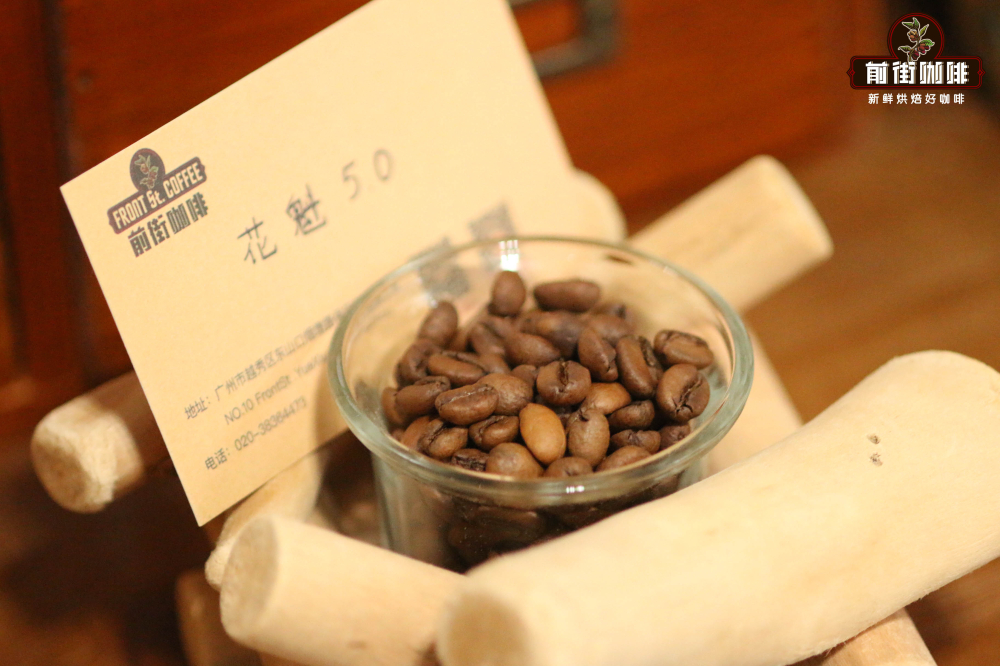
FrontStreet Coffee: Ethiopia Queen of Flowers 5.0
Region: Sidamo, Guji
Altitude: 2250-2350m
Variety: Local heirloom varieties
Processing method: Natural processing
Brewing Suggestions
To appreciate the full aroma of Queen of Flowers, FrontStreet Coffee recommends brewing with freshly roasted beans, which preserve the coffee's aromatic compounds best. Everything FrontStreet Coffee sells is roasted within 5 days, and taking shipping time into account, customers receive it inside its optimal flavor window and can brew right away. (The degassing period is 4-7 days, and the optimal flavor period is generally 4-30 days; after receiving fresh beans you can watch how the flavor changes from the roast date.)

FrontStreet Coffee uses a medium-light roast to highlight the florals and tropical fruit in this coffee. Because high-altitude hard beans absorb less water once ground, FrontStreet Coffee chooses a medium-fine grind with a higher water temperature and a V60 dripper to emphasize the layered fruit and floral notes.
Dripper: V60
Water temperature: 92°C
Grind size: 80% pass-through on a #20 standard sieve
Coffee-to-water ratio: 1:15
Coffee dose: 15g

Ground Queen of Flowers has a honey-like sweetness. Pour the grounds into a V60 and wet the bed with twice the water as coffee, letting it bloom for 30 seconds. Then use a small, steady stream to pour in concentric circles from the inside out until the scale reads 125 g, creating a staged pour. When the water level drops to halfway in the dripper, continue with the same fine stream for a third pour up to 225 g. Remove the dripper once all the liquid has filtered through; total brewing time is about 2 minutes, give or take 10 seconds.
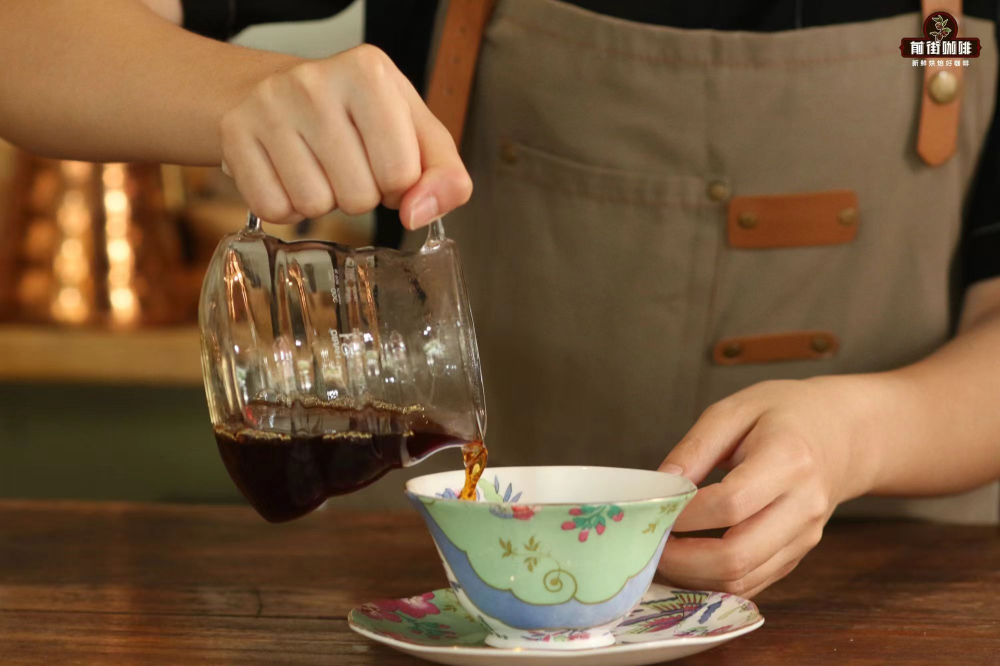
The first sip brings intense sweetness from tropical fruits like passion fruit and mango, with berry and citrus acidity. The mouthfeel is creamy and smooth, while a black-tea-like aftertaste lingers across the palate.
FrontStreet Coffee Recommendation
Queen of Flowers made its name by taking on Geisha and holding its own, so if the comparison in this article intrigued you, it is worth tasting both sides. Panama is where Geisha became famous: in 2003 the owner of Hacienda La Esmeralda found the variety growing on the farm, entered it in the Best of Panama competition, and its average cupping score of 94.6 broke the event's record and turned Geisha into the most wanted variety in the world almost overnight. FrontStreet's Boquete Geisha is the most accessible way in, showing classic orange-blossom honey, an oolong-tea body, fine fruit acidity, and clearly separated layers. Above it sits the Esmeralda line: the Red Label, officially Esmeralda Special, is grown at 1,600-1,800 meters, requires every lot to cup above 90 points, numbers each lot separately, and draws all its beans from a single small plot, while the Green Label, originally Private Collection, blends several plots to express the estate's signature high-altitude Geisha profile at a friendlier price.
Ethiopia, the birthplace of the variety, offers its own estate-level Geisha, and these make an interesting counterpart to Hambella. The Geisha Village Gold Label is the Geisha 1931 variety, about 10% of the village's total output and the top coffee it produces outside of auction, often chosen by competition baristas; it is processed as a fine natural and cups with remarkable complexity. The Red Label is the Gori Gesha variety, about 15% of production, scores 88 or above on the SCA 100-point system, and is released as a single-terroir series with full traceability covering plot name, variety, and processing date. Roasted medium-light, both reward the same careful V60 approach recommended above: 15 g of coffee, 1:16, water at 91°C, and a grind of about 78% pass-through on a #20 standard sieve.
Important Notice :
FrontStreet Coffee is a long-established specialty coffee roaster in Guangzhou China, selling freshly roasted beans from its own farm in Yunnan as well as dozens of carefully selected single-origin beans from around the world for both pour-over and espresso. The products deliver consistently excellent quality and great value, with shipping within 24 hours. Guangzhou's FrontStreet Coffee shop is recommended by many coffee lovers, and the beans are now available online at the Tmall 。
FrontStreet Coffee has moved to a new address:
FrontStreet Coffee Address: 315,Donghua East Road,GuangZhou
Tel:020 38364473
 Scan and follow the En Gafei WeChat official account. Please indicate that the reprint comes from "En Gafei".