Pour-Over Yirgacheffe Coffee Brewing Tutorial & Extraction Guide
The Art of Pour-Over Coffee
Pour-over brewing reveals the most authentic aroma and flavor a coffee has to offer. As the specialty coffee movement has grown, more and more enthusiasts have joined the pour-over camp and started digging into extraction parameters. In this guide, FrontStreet Coffee walks you through everything you need to know to brew a great cup of pour-over coffee.
Choosing the Right Coffee Beans
If you're just starting out, FrontStreet Coffee recommends practicing with budget-friendly beans. They make it easier to start recognizing different growing regions by their signature flavor profiles, and mistakes along the way won't sting so much.
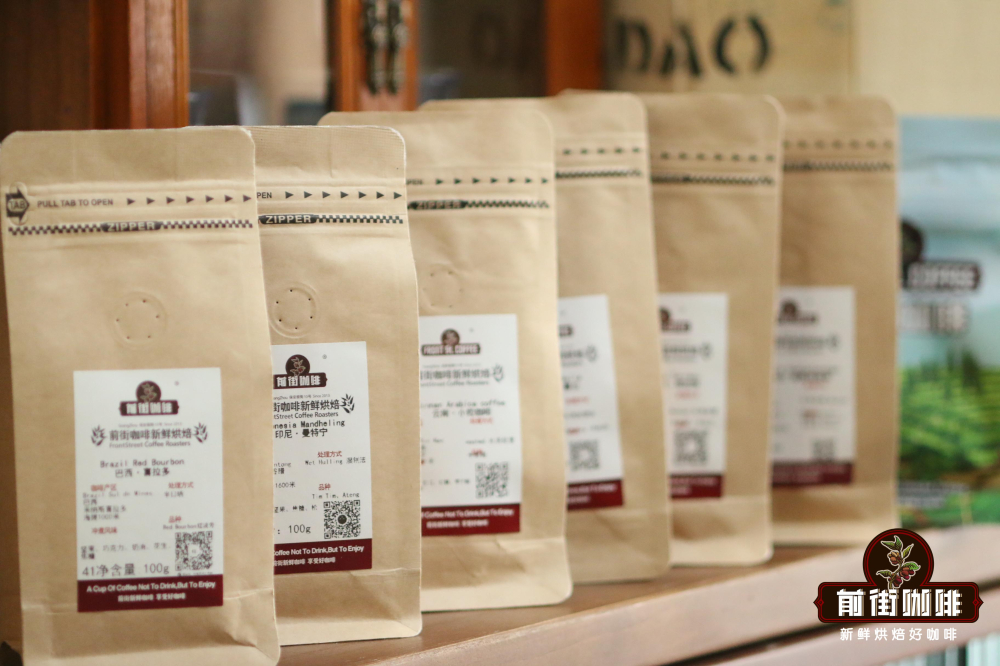
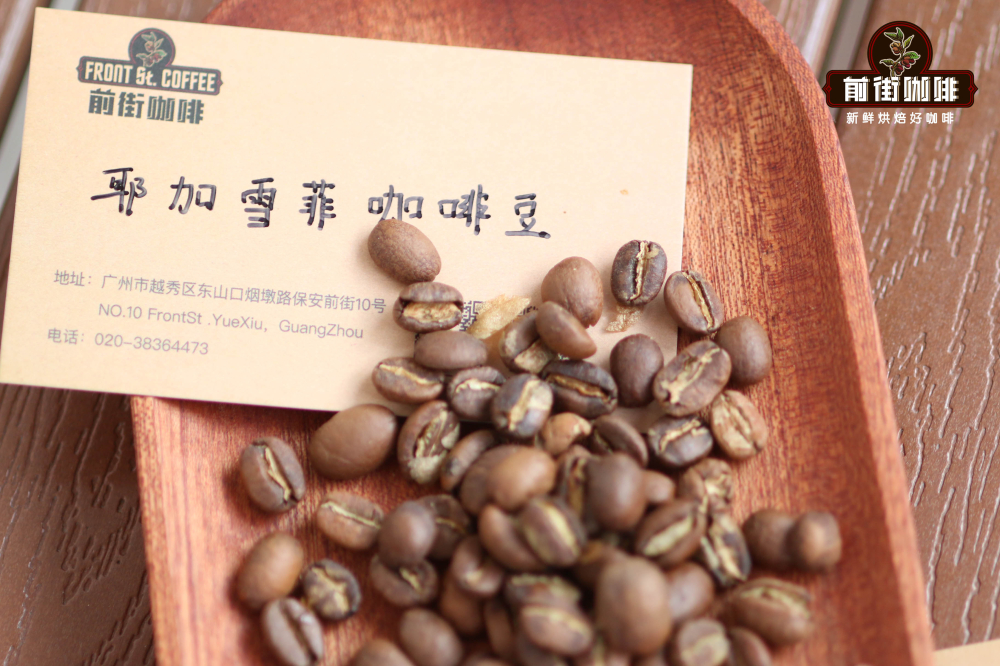
FrontStreet Coffee offers a "Daily Bean" series on its bean menu — coffees that taste great but won't break the bank. The series covers seven classic origins, spanning representative regions, varieties, and processing methods: Ethiopian washed Yirgacheffe, Guatemalan washed Huehuetenango, Colombian washed Huila, Brazilian pulped natural Cerrado, Costa Rican washed Tarrazú, Indonesian wet-hulled Lintong Mandheling, and Chinese Yunnan washed Baoshan. The idea is to let you explore regional flavor characteristics at an approachable price and figure out what you actually like. It's FrontStreet Coffee's best-value coffee lineup.
For this tutorial, FrontStreet Coffee uses its widely praised washed Yirgacheffe daily bean to demonstrate the extraction approach. Every bag of beans FrontStreet Coffee ships out has been roasted within the past five days, so it reaches you right at its flavor peak, with plenty of aromatic layers to spare.
Pour-Over Equipment
With the "ingredients" sorted, the next step is picking the right gear. Good equipment helps draw out the positive flavors in the cup. To brew one cup of pour-over coffee, you'll need at minimum: a gooseneck kettle, a dripper, a server, a grinder, filter papers, a digital scale, and a thermometer.
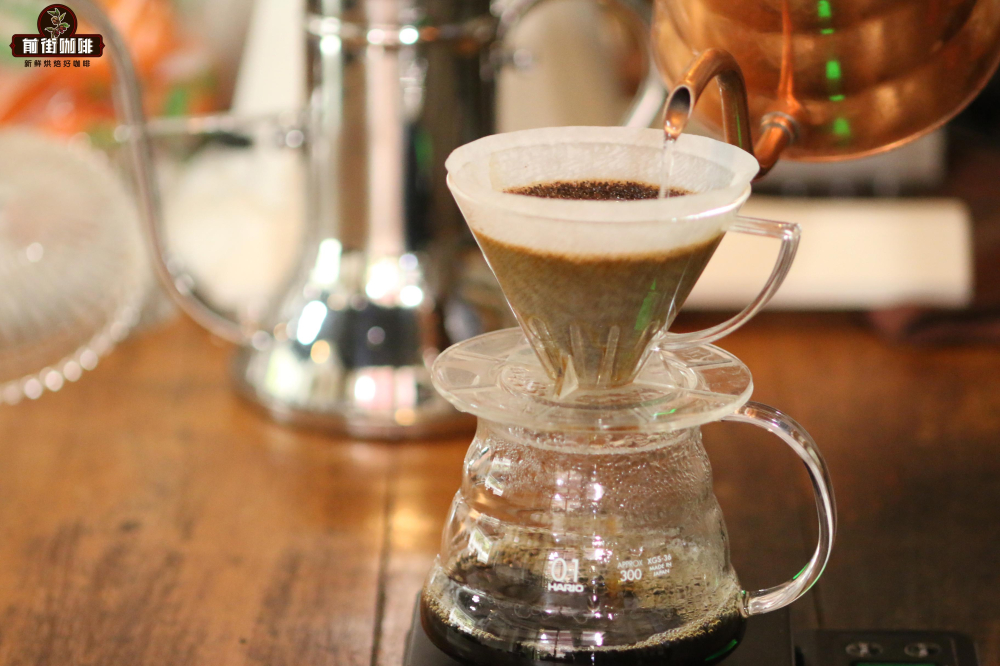
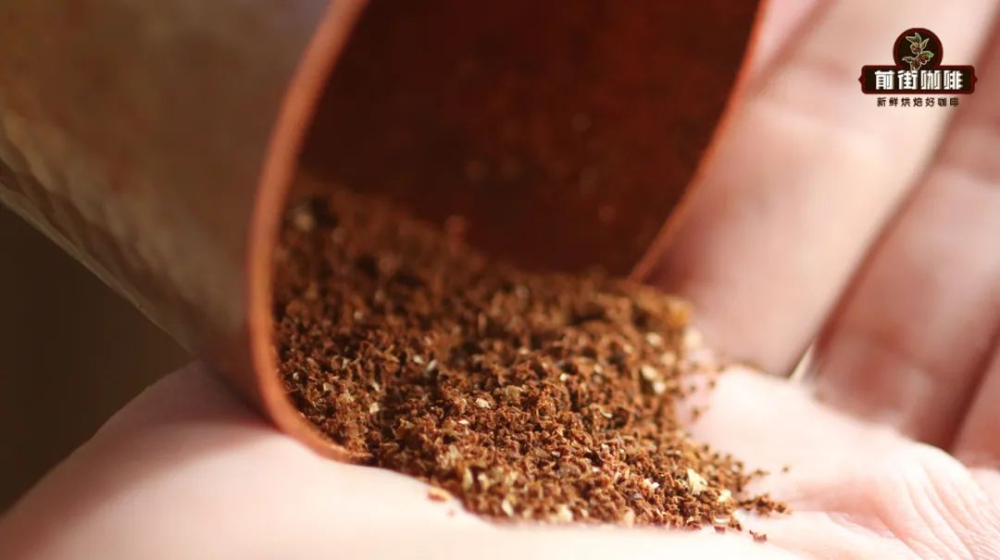
The grinder matters enormously in pour-over coffee and generally falls into two camps: manual and electric. Whichever you choose, the goal is the same — evenly sized coffee particles. Grind size has a direct effect on taste: grounds that are too coarse lead to under-extraction and a thin, weak cup, while grounds that are too fine push toward over-extraction and bitterness. FrontStreet Coffee uses a dedicated tool to calibrate grind size — the China No. 20 standard sieve with 0.85 mm openings. For light-to-medium roast beans, FrontStreet Coffee aims for a 75–80% pass rate; for medium-to-dark roasts, 70–75%. This Yirgacheffe is a high-altitude, light-to-medium roast, and since FrontStreet Coffee wants to draw out as much of its aromatic complexity as possible, they chose a grind with an 80% pass rate on the No. 20 sieve. In the shop, the beans are ground on an EK43s set to 10.
The thermometer tracks your hot water temperature. Water temperature works much like grind size — the hotter the water, the more efficient the extraction, the more readily flavor compounds dissolve, and the higher the resulting strength. Brewing with water close to a rolling boil makes it easy to pull out harsh, bitter compounds. That's why FrontStreet Coffee uses different brewing parameters for medium-to-dark roasts than for light roasts. In darker roasts the caramelization reaction runs deeper, and large bitter molecules come out of the grounds far more easily. To keep those undesirable flavors out of the cup, FrontStreet Coffee dials the temperature down slightly: 87–90°C for medium-to-dark roasts, while light roasts need more heat to unlock their aroma and get 91–93°C.
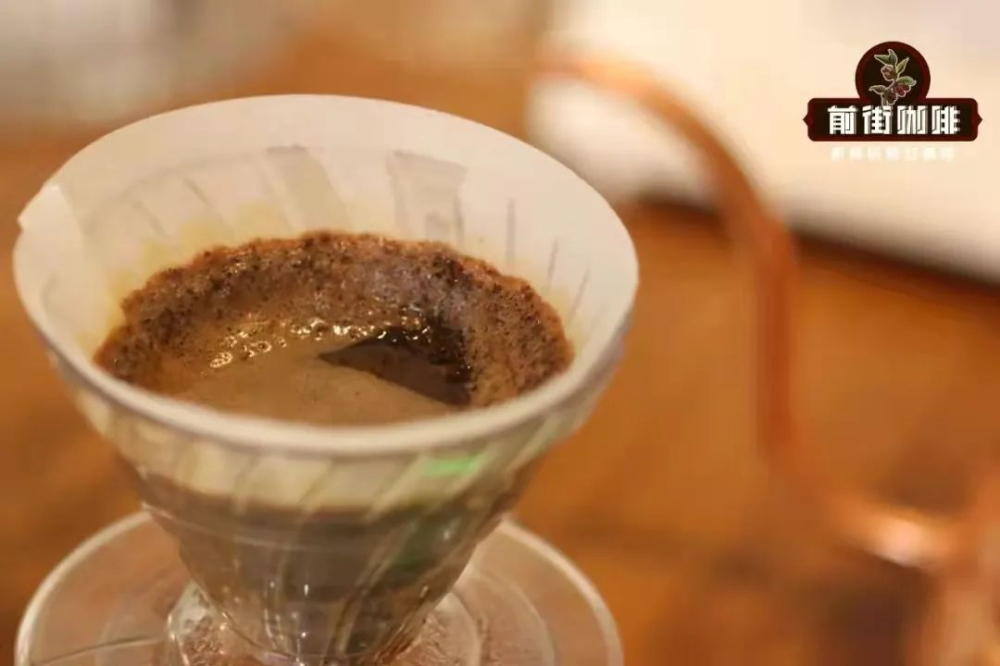
For daily service, FrontStreet Coffee's bar works with two drippers: the Hario V60 and the KONO. The V60 handles the lighter roasts, the KONO the darker ones. For this Yirgacheffe, the barista uses a resin V60. The V60's ribs run continuously from top to bottom and its single large opening at the center lets water flow fast; the spiral exhaust grooves lengthen the water's path, extending contact time between grounds and hot water. Every stream converges along those grooves toward the center of the cone, concentrating pressure on the coffee bed and yielding a cup with noticeably richer layers of flavor.
Brewing Technique
Based on years of brewing experience, FrontStreet Coffee suggests beginners start with a three-pour method. Splitting the extraction into three stages helps dissolve flavor compounds more fully, adds layers to the mouthfeel, and prevents the over-extraction that comes from long soaking. For a 15 g dose at a 1:15 coffee-to-water ratio (225 ml total water), the three pours are 30 ml, 95 ml, and 100 ml — the scale will read 30 g, 125 g, and 225 g.
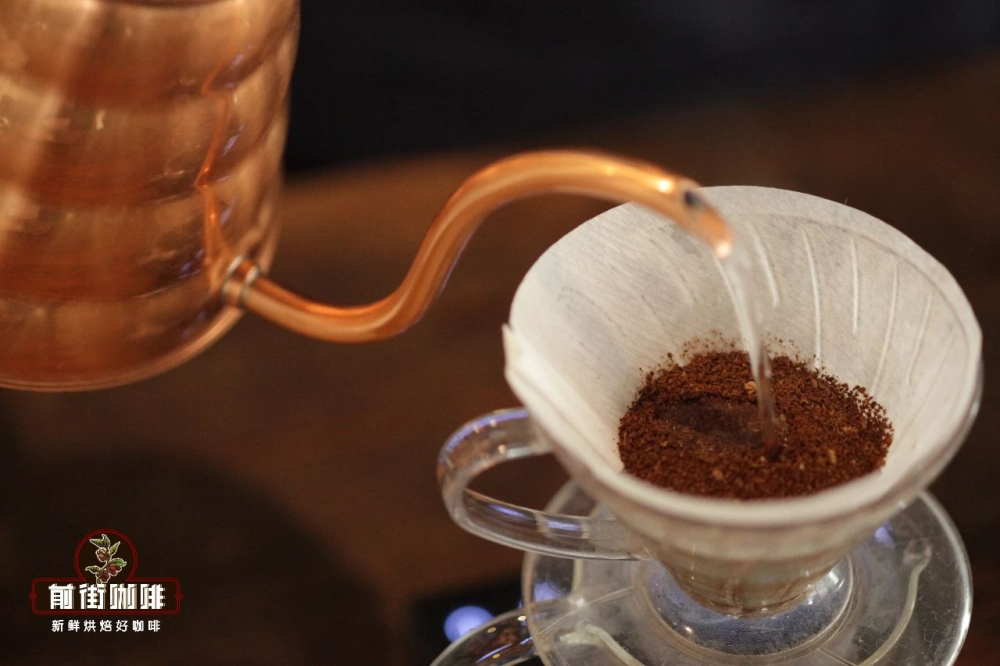
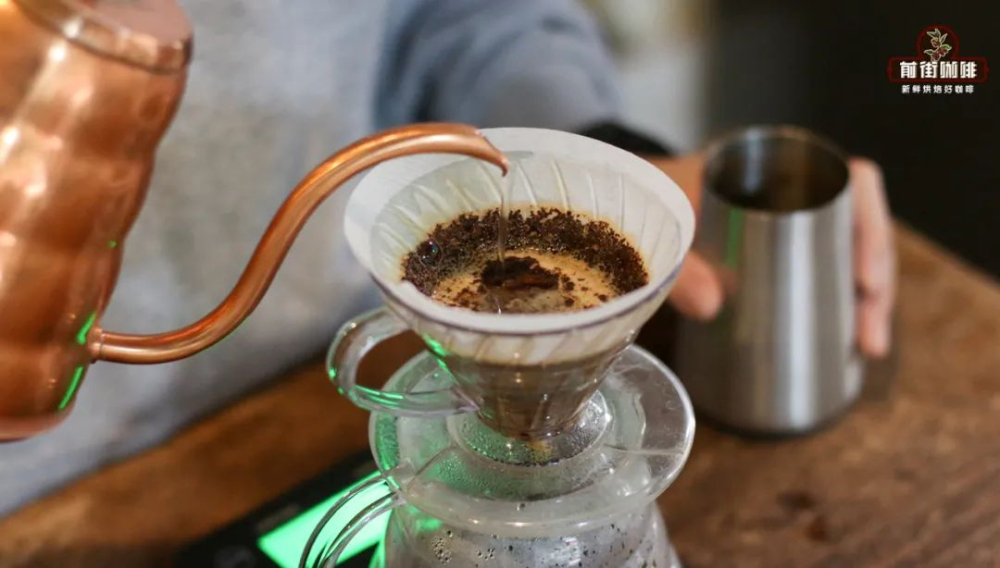
Fold the filter paper to fit the dripper, rinse it with a little water so it seats properly, and discard the water from the server. Add the grounds and give the dripper a gentle tap to level the bed. For the first pour, add 30 g of water to bloom for 30 seconds. For the second, pour steadily in even circles out to about 125 g. Wait for the liquid level to drop to about halfway down the bed, then pour the final stage up to 225 g. Let the coffee finish draining — total brew time is usually around 2 minutes.
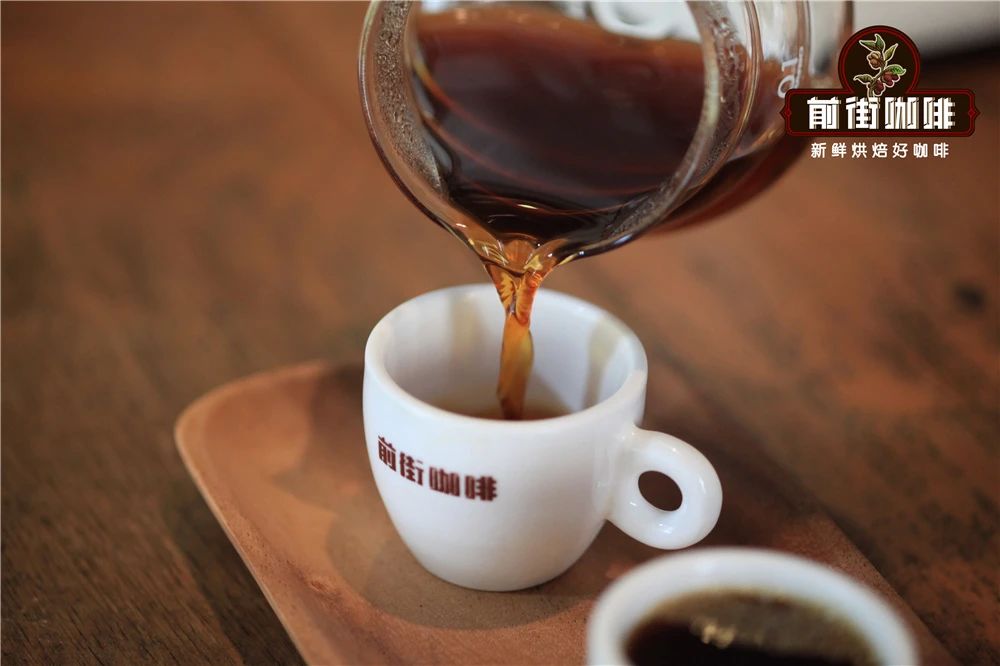
Part of what makes pour-over coffee so beloved is that every variable is yours to explore: adjusting the brew for different varieties and roast levels, choosing vessels that highlight different sides of the same bean, and fine-tuning grind size, water temperature, flow rate, and pouring technique. Every step changes the taste and the aromatics — that is the charm of pour-over coffee.
For professional coffee knowledge exchange and more coffee bean information, please follow Coffee Workshop (WeChat official account: cafe_style).
For more specialty coffee beans, please add FrontStreet Coffee on WeChat: qjcoffeex
FrontStreet Coffee Recommendation
If you're new to Ethiopian coffee, start with FrontStreet Coffee's washed Yirgacheffe daily bean. It's known for white jasmine florals, bright citrus and lemony acidity, and a distinct tea-like finish — and at its friendly price, it has become many people's very first specialty coffee bean.
Yirgacheffe is a small town in Ethiopia's southern Sidamo region, sitting at roughly 1,700–2,100 meters, with most coffee planted above 1,800 meters — among the highest coffee-growing elevations in the world. The area's unmistakable white floral character and lemon-citrus acidity — turned the name Yirgacheffe into shorthand for Ethiopian specialty coffee. The town's coffee was so famous by 2010 that the Ethiopian Commodity Exchange formally separated it from Sidamo as its own appellation, which is how the household name we know today came to be.
For something a step up, FrontStreet Coffee also offers the washed Worka (Guodingding) cooperative lot from a small village at the southeastern edge of Yirgacheffe. Processed using the most traditional washed method, it carries no harsh bitterness — just clean, lively citrus and lemon acidity wrapped in jasmine fragrance, the kind of cup that wins people over on the first sip.
Brewing suggestion from FrontStreet Coffee: use a V60 dripper with 15 g of coffee at a 1:15 ratio and 90–91°C water. Grind to a fine-sugar texture (80% pass on the No. 20 sieve, EK43s setting 10). Pour 30 g of water to bloom for 30 seconds, then pour up to 125 g on the scale over about a minute; when the water level drops to two-thirds of the bed, pour the remaining 100 g to reach 225 g, finishing the last pour around 1:35. The drawdown completes between 2:00 and 2:10 — remove the dripper and enjoy.
Important Notice :
FrontStreet Coffee is a long-established specialty coffee roaster in Guangzhou China, selling freshly roasted beans from its own farm in Yunnan as well as dozens of carefully selected single-origin beans from around the world for both pour-over and espresso. The products deliver consistently excellent quality and great value, with shipping within 24 hours. Guangzhou's FrontStreet Coffee shop is recommended by many coffee lovers, and the beans are now available online at the Tmall 。
FrontStreet Coffee has moved to a new address:
FrontStreet Coffee Address: 315,Donghua East Road,GuangZhou
Tel:020 38364473
 Scan and follow the En Gafei WeChat official account. Please indicate that the reprint comes from "En Gafei".