How to Brew Delicious Geisha Coffee: Pour-Over Geisha Brewing Steps, Flavor, and Taste Description
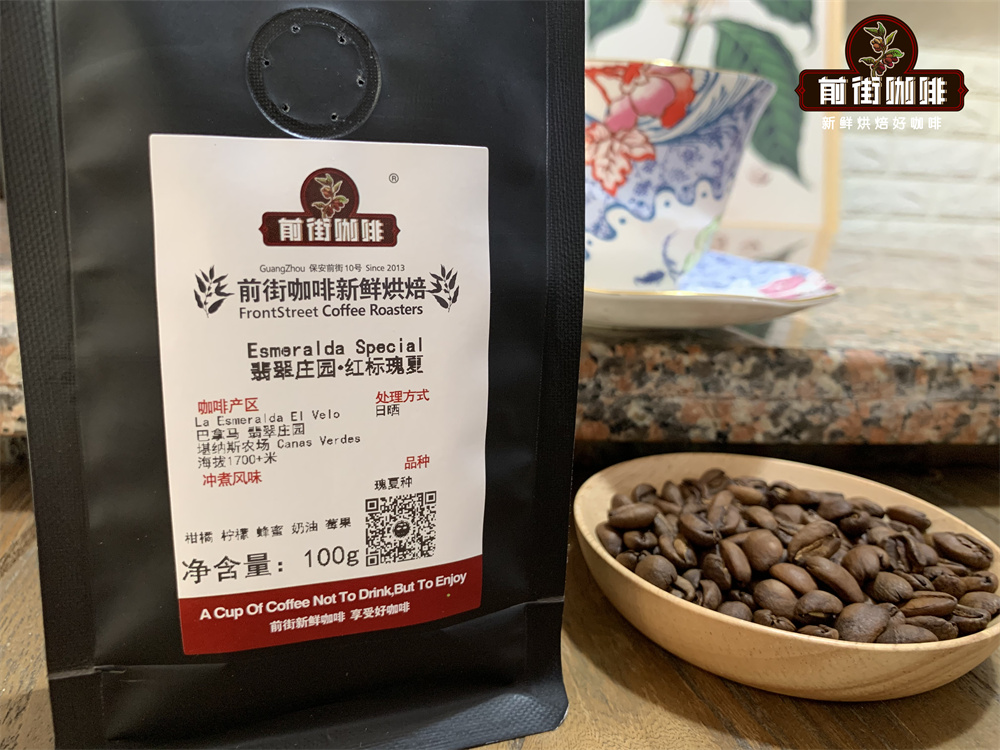
Geisha Coffee: The Exceptional Brew
As one of the world's most expensive coffees, Geisha offers an exceptionally refined taste - once you have tried it, it is hard to forget. Geisha ushered in a whole new era for specialty coffee, yet it was not always famous. How did it rise so suddenly, and so unstoppably, to the top?
FrontStreet Coffee found that before Geisha became famous, it grew in Ethiopia, the birthplace of coffee and a land of countless varieties. At the time, Geisha had low yields, tall plants and a harvest that was difficult to manage, which made it far less popular than varieties such as Caturra and Catuai. As a result, Geisha trees were often planted as windbreaks. Its road to fame was long, and it became well known only after several twists and turns. In 1931, it was taken from Geisha Mountain in southwestern Ethiopia to coffee research institutes in Kenya and Tanzania, then transplanted to Uganda and Costa Rica, and later brought to Panama - where Don Pachi Estate obtained it from Costa Rica - for cultivation in the 1960s and 70s.
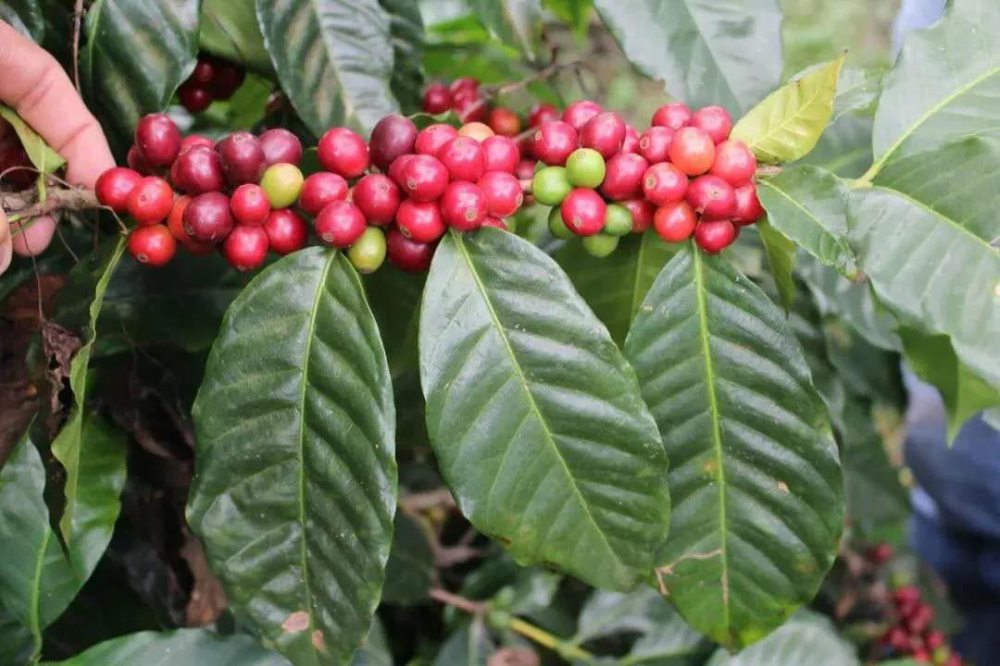
The Unique Characteristics of Geisha Coffee
Although Ethiopia is the genetic birthplace of coffee, the reason Geisha beans taste so refined and elegant lies in their specific growing environment. The Geisha variety is extremely demanding about where it grows: it needs high altitude, cloud cover or generous shade from shade trees, and fertile soil to develop its rich, captivating florals, refined and elegant fruit acidity, and tea-like aftertaste. To many people, Geisha feels like a luxury item in the coffee world. In fact, the name comes from a translation of "Geisha," and it is simply a coffee variety, just like Typica and Bourbon. We rarely see products named "Typica coffee beans" or "Bourbon coffee beans" - those variety names are quietly written in the variety column. Geisha, by contrast, appears in product names all the time.
Since Geisha became famous in Panama, it is not only Panama that produces it - Ethiopia, Colombia, Guatemala and even Yunnan in China all grow Geisha. But climate, altitude, temperature and humidity, the duration and intensity of sunlight, soil fertility, irrigation water and the growers themselves are all factors that cause flavor to vary. Geisha is therefore diverse, and each lot has its own character. Panama is the mainstream, but Geisha from other origins is well worth trying too.
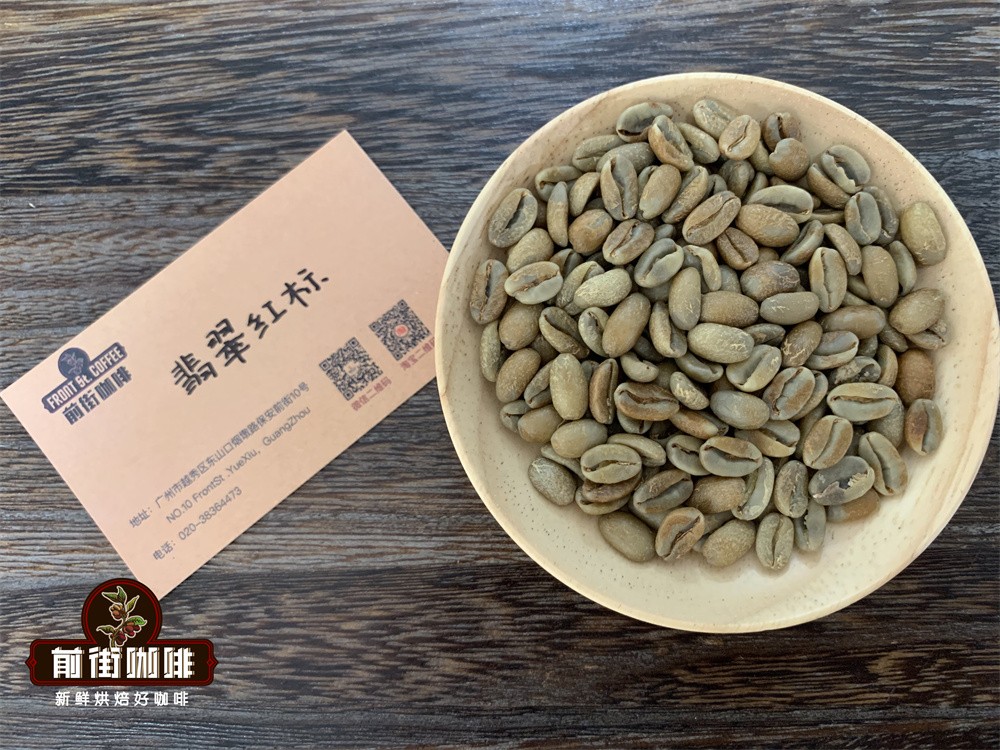
Why Panamanian Geisha Excels
As FrontStreet Coffee just mentioned, coffee is an agricultural product closely tied to climate. Although Geisha originated in Ethiopia, why does Geisha grown in Panama taste better than in other regions? Because Panama's climate produces high-quality coffee.
Bordered by Costa Rica and Colombia, Panama's east-to-west orientation allows cold air currents to flow through the central mountains and converge above 1,900 meters altitude. This creates a very distinctive microclimate in the Boquete and Piedra de Candela regions, where temperature and rainfall are perfectly suited to plant growth. This microclimate area is the main production region for Panamanian coffee. Beyond the climate, the surrounding land is rich in nutrients, and that fertile soil gives coffee ideal growing conditions, shaping numerous unique, high-quality coffees. These combined factors allow Panamanian Geisha beans to develop refined, elegant fruit acidity and distinct floral aromas - precisely the flavors that made Panamanian Geisha popular worldwide.
Brewing Recommendations
So how should such an elegant Panamanian Geisha be brewed to taste its best? The Geisha coffee beans sold by FrontStreet Coffee are all lightly roasted to preserve their excellent acidity and elegant aromas. Coffee grown at high altitude generally has a denser, harder bean, so when brewing you can use a medium-fine grind and slightly hotter mountain spring water.
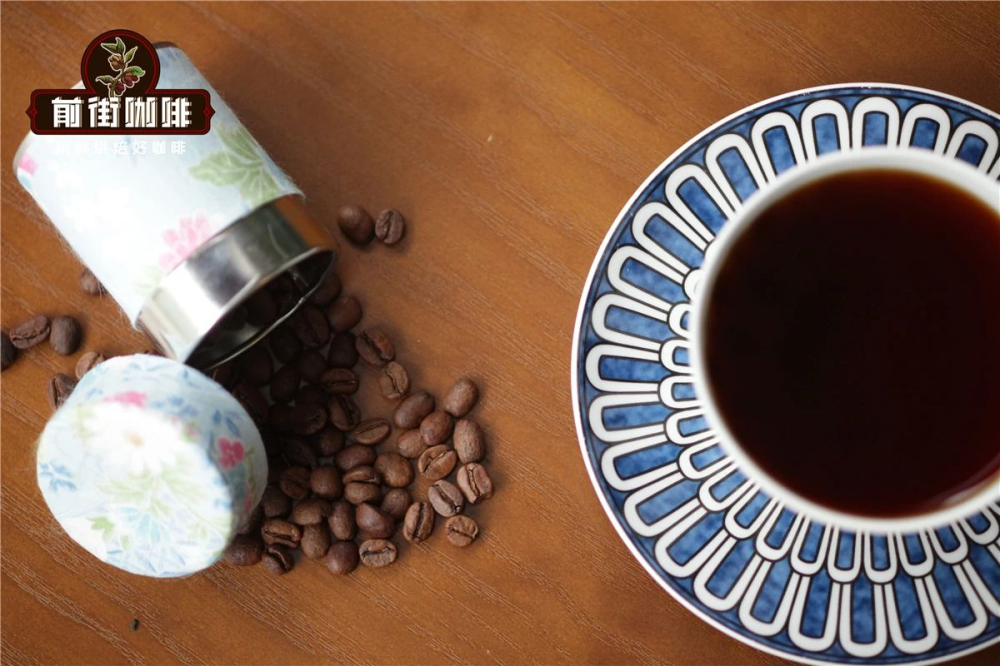
FrontStreet Coffee Brewing Suggestions:
For brewing, FrontStreet Coffee recommends using freshly roasted beans to get the most from coffee's rich flavors. Every order FrontStreet Coffee ships is roasted within 5 days, because FrontStreet Coffee understands deeply how much freshness affects flavor. Its roasting philosophy is "Freshly roasted good coffee," ensuring that everyone who orders receives the freshest coffee when it arrives. The resting period is about 4-7 days, so by the time customers receive it, the coffee is at its peak.
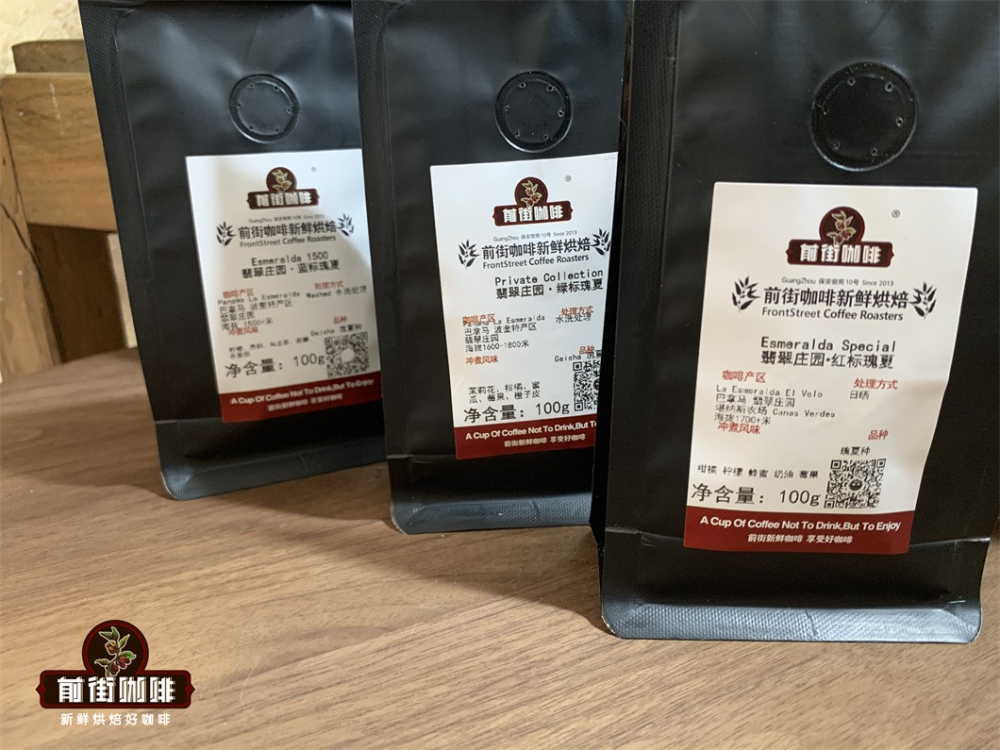
Of course, some customers prefer to have their beans ground, and that is fine too. FrontStreet Coffee does remind everyone, though, that once beans are ground ahead of time they should be brewed promptly. If the coffee is already ground, there is no need for further resting, because during transport the pressure of carbon dioxide building up in the packaging also helps round out the flavor. You can brew a cup as soon as the ground coffee arrives.
At the same time, ground coffee oxidizes quickly once exposed to air, meaning the flavor dissipates relatively fast and the coffee will not taste as good. FrontStreet Coffee therefore recommends buying whole beans and grinding fresh before brewing to taste the coffee at its best.
Three-Stage Brewing Process for FrontStreet Coffee Geisha Coffee Beans
First, prepare everything: a V60 dripper, 15 g of coffee, a 1:15 coffee-to-water ratio, 91°C Nongfu Spring water, and coffee grounds sized like fine sugar (medium-fine, at about an 80% pass-through rate on a China #20 standard sieve).
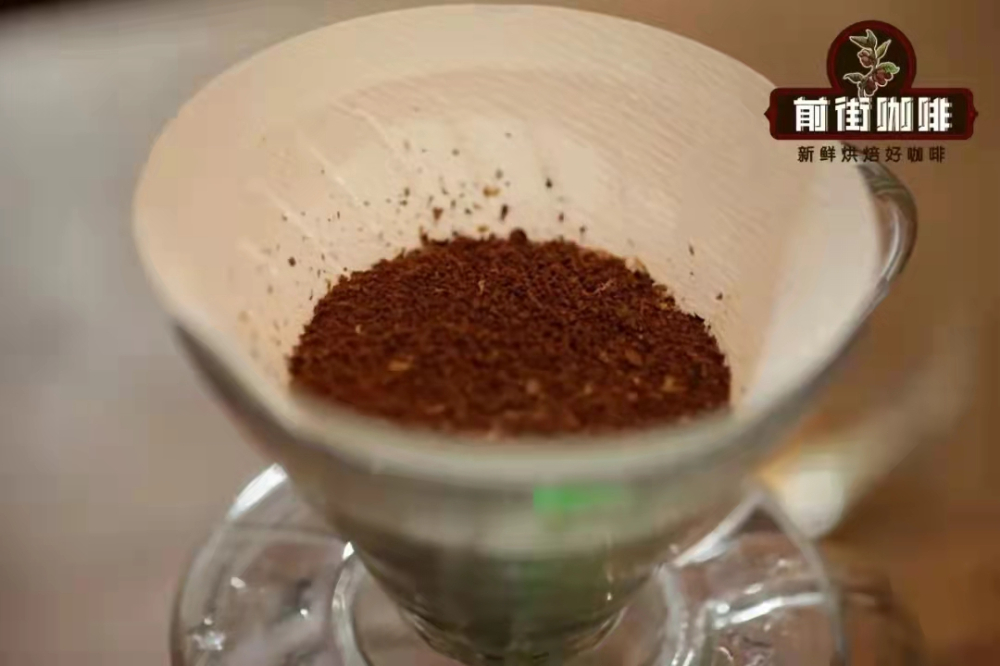
Step 1:
Add the grounds and begin the first pour while starting the timer. Inject 30 g of hot water, circling from the center outward. The grounds absorb water and slowly expand, forming a puffy "coffee burger." This process is called blooming. Blooming lets the grounds release internal carbon dioxide, which makes the subsequent extraction more stable.
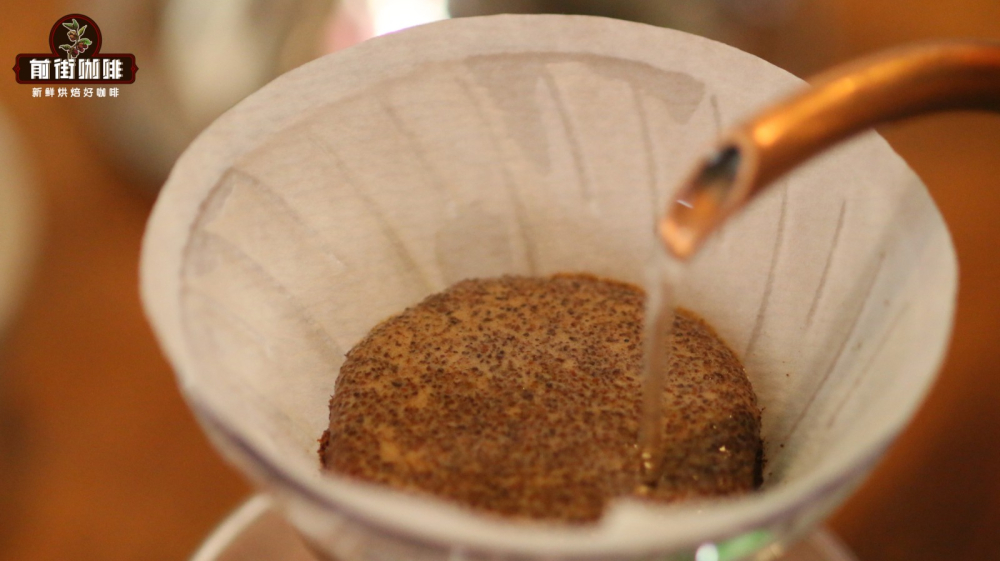
Step 2:
Stop pouring when you reach 30 g of water and wait for a 30-second bloom. At the 31st second shown on the scale, begin the second pour, circling from the center outward. Keep the flow steady and vertical. When the water column hits the coffee bed, foam will form. This stage allows the coffee foam to release and spread across the entire surface of the bed, and the liquid level rises to the base of the dripper's short ribs. The water added in this stage is 125 g.
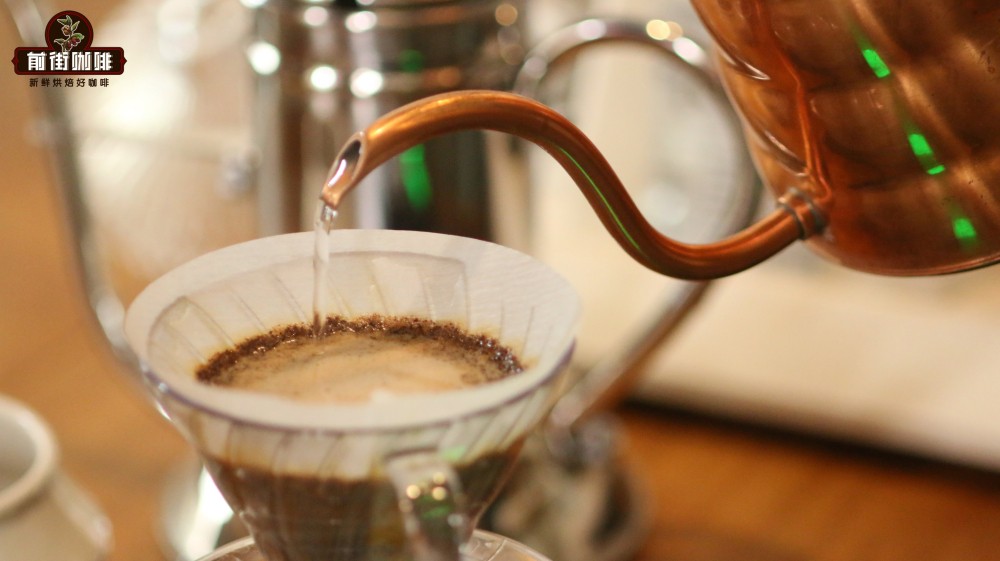
Step 3:
When the liquid level drops to the halfway point, begin the final pour. This stage also uses 70 g of water, poured "aroma-smelling style" from the center outward. The original dark brown foam turns light yellow, and the liquid level returns to the same height as after the second pour. Once all the coffee liquid has drained into the lower server, remove the dripper to end extraction. The entire brew takes 2'00".
FrontStreet Coffee Emerald Red Label Pour-Over Flavor
Bright rose and citrus aromas, brown rice, berries, apricots, complex fruit and honey, with a rich, juicy texture, deep flavor layers and noticeable sweetness.
FrontStreet Coffee Recommendation
Geisha comes in many forms, and understanding the grades makes it easier to find the one that suits you. FrontStreet Emerald Red Label Geisha, officially "Esmeralda Special," is grown at 1,600-1,800 meters; every lot must cup above 90 points and carries its own number, and each lot comes from a single small plot such as the Jaramillo plot. FrontStreet Emerald Green Label Geisha, or "Private Collection," blends several plots to express the estate's signature high-altitude Geisha character at a friendlier price.
For a gentler introduction, FrontStreet Boquete Geisha is an entry-level Panamanian Geisha that still delivers the classic orange-blossom honeyed profile, an oolong-tea sensation and delicate fruit sweetness. From Ethiopia, FrontStreet Grana Geisha is a single-variety estate coffee, sun-dried on raised beds for 14-20 days and roasted light-medium, showing bright citrus acidity, elegant ginger-lily aromatics and the ripe, fine-grained sweetness that marks the variety.
Important Notice :
FrontStreet Coffee is a long-established specialty coffee roaster in Guangzhou China, selling freshly roasted beans from its own farm in Yunnan as well as dozens of carefully selected single-origin beans from around the world for both pour-over and espresso. The products deliver consistently excellent quality and great value, with shipping within 24 hours. Guangzhou's FrontStreet Coffee shop is recommended by many coffee lovers, and the beans are now available online at the Tmall 。
FrontStreet Coffee has moved to a new address:
FrontStreet Coffee Address: 315,Donghua East Road,GuangZhou
Tel:020 38364473
 Scan and follow the En Gafei WeChat official account. Please indicate that the reprint comes from "En Gafei".