Is Caturra Coffee Bean an Arabica Variety? Introduction to Caturra Variety Characteristics

Coffee enthusiasts often get into the habit of learning the stories behind what they drink. As specialty coffee advances, more people pay attention to where coffee comes from, its terroir, its processing, and its varieties. We know that coffee varieties can be broadly split into Arabica and Robusta, yet few people deliberately explore the differences and characteristics between them. Today, let FrontStreet Coffee guide you into the fascinating world of coffee varieties.
Understanding Coffee Varieties
Arabica tastes better than Robusta, which is why it usually shows up as specialty coffee, while Robusta does not taste as good and so tends to be used for espresso. In China, the Arabica variety is commonly called the small-seeded coffee species, and because Chinese coffee cultivation is concentrated in Yunnan, it is also known as Yunnan small-seeded coffee. Early Yunnan mainly grew pure Arabica, namely Typica, but leaf rust, weak disease resistance, and low yields held it back. In 1992, Nestle introduced Catimor to Yunnan. Because of its strong disease resistance and high yield, Catimor quickly replaced the traditional variety and became the mainstream of Yunnan's coffee industry. So what locals call Yunnan small-seeded coffee shifted from Typica to the widely planted Catimor. The Yunnan daily coffee beans stocked by FrontStreet Coffee are Catimor produced in Baoshan.

Arabica Species
Ethiopia is the origin of coffee and the native home of the Arabica species. Ethiopia is known as the cradle of humanity and of coffee. In mythology, the Garden of Eden where Adam and Eve ate the forbidden fruit is thought to have been surrounded by several major coffee-producing regions of Ethiopia. Coffee was first discovered for its refreshing, mind-clearing effects and consumed as medicine. Later it was used by Muslims as a secret remedy for the body and mind and for staying alert during evening prayers, and from Arabia it spread around the world to become a beverage people everywhere love.
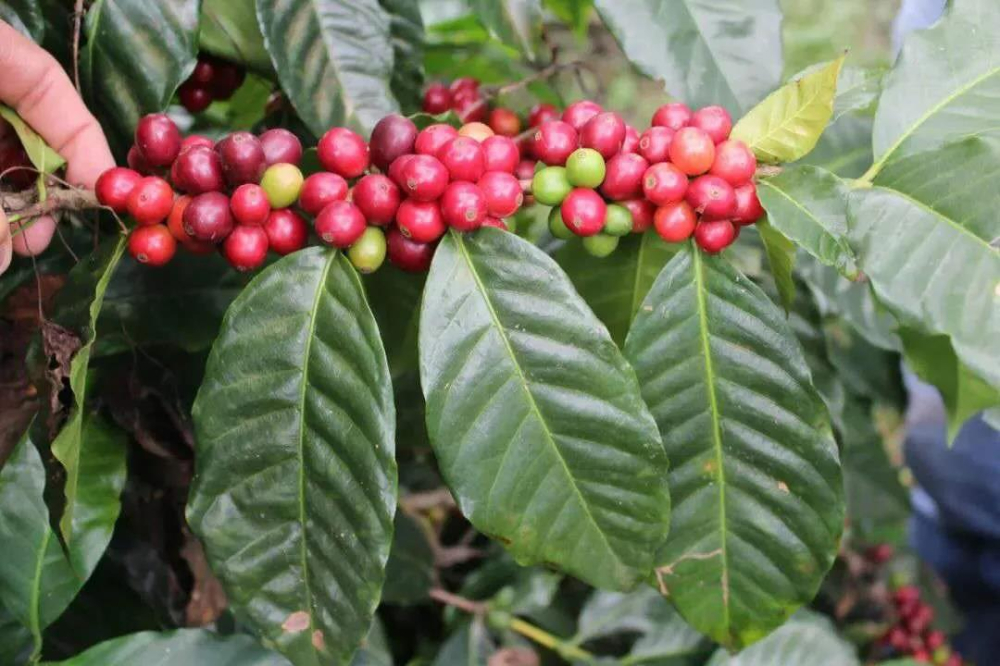
Arabica is the earliest discovered species and is considered the best of the coffee varieties, and today it is the most important variety in the world. Arabica is grown in the countries of Central and South America, as well as Brazil, Colombia, Ethiopia, Tanzania, Yemen, Indonesia, and other African countries. Arabica typically grows between 2.5 and 4.5 meters tall, tolerates low temperatures but not frost, and has weak drought resistance. Its beans are larger, its quality excellent, its flavor mellow, with some acidity and slight bitterness, and it accounts for about 85% of world production. Arabica has many subspecies, all of them descended from Ethiopia's oldest Typica and Yemen's Bourbon after being transplanted to Central and South America or Asia and then mutating; there are too many to list. Specialty coffee, however, refers mainly to carefully cultivated high-altitude Arabica, and not every Arabica coffee qualifies as specialty coffee.
Arabica Subspecies
Ancient Native Varieties
Typica: the oldest native variety from Ethiopia, and the ancestor of all Arabica varieties. Typica has bronze-colored top leaves, and its beans are oval or slender and pointed; the flavor is elegant, but the plant is weak, with poor disease resistance and low fruit yield. Excellent estate beans such as Jamaican Blue Mountain, Sumatra Mandheling, and Hawaiian Kona all belong to Typica. The bronze color of Typica's top leaves is one of its distinguishing features.
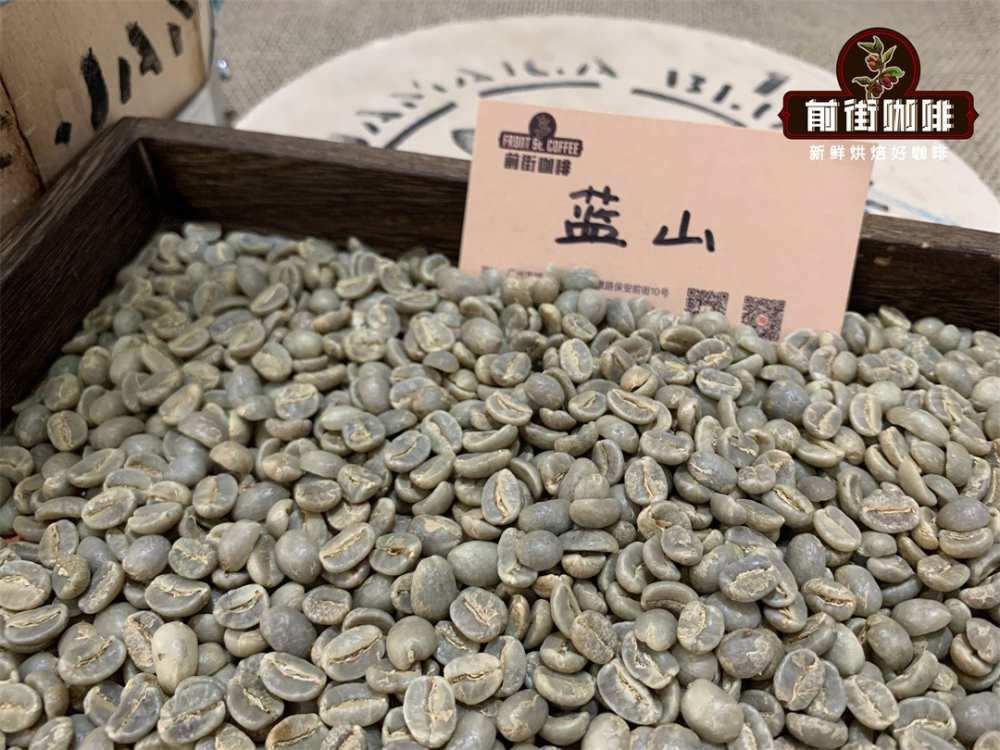
Bourbon: a variant of early Typica that changed after being transplanted to Yemen, where its bean shape shifted from slender and pointed to round. In 1715, France took the round beans from Yemen Mocha to Bourbon Island off the east coast of Africa (renamed Reunion Island after the French Revolution), and the variety took the name Bourbon. The round Bourbon beans reached Brazil and Central and South America indirectly in 1727. In 1732, Britain also transplanted Yemen Mocha to St. Helena Island, later the site of Napoleon's imprisonment, and those were round Bourbon beans as well. Bourbon is the perennial champion of American specialty coffee cupping. Examples include FrontStreet Coffee's Brazil Queen Yellow Bourbon and FrontStreet Coffee's daily Red Bourbon.

Geisha is an Ethiopian coffee with floral, tropical fruit, and intense sweetness flavors. It is now cultivated in many regions worldwide and is the new king of specialty coffee, with especially high quality and prices in Latin American countries such as Panama, Guatemala, and Colombia.
Geisha green beans have a beautiful blue-green color with a jade-like warmth. They smell of fresh grass, peach, berries, and the unique milky sweetness of oolong tea that most coffee beans lack. Aroma and flavor may need a little imagination, but the faint tea fragrance is something we can clearly perceive.

Geisha's dry aroma is very uplifting and bright, with rose and jasmine fragrance, and it also brings out pomelo and citrus aromas. Light roasting adds a nutty aroma, while the wet aroma adds hazelnut and reveals more floral character.
Caturra is a natural variant of the Arabica Bourbon variety, discovered in Brazil in 1937. Its tree is shorter than Bourbon, more dwarfed. Because it inherits Bourbon's lineage, its disease resistance is relatively weak, but its yield is higher than Bourbon's. Although it was discovered in Brazil, Caturra does not grow well there and was never planted on a large scale, so instead it became widely popular in Central and South America, with Colombia, Costa Rica, and Nicaragua all growing Caturra extensively. FrontStreet Coffee's currently stocked Colombia Huila and Colombia Rose Valley coffees are Caturra.

What are the main characteristics of Caturra coffee?
Caturra plants are dwarfed and easy to harvest. They inherit many traits from the parent Bourbon variety, with larger leaves and wavy leaf edges; the cherries do not fall off easily in wind and rain; pest and disease resistance is stronger than the parent; and yield is higher than Bourbon. It needs no shade and adapts readily to its environment. Like Bourbon Whiskey, Caturra adjusts to most coffee-growing environments, but it thrives between 1,200 and 2,000 meters of altitude with annual rainfall between 2,500 and 3,500 millimeters. At higher altitudes the quality improves while the yield drops.
When coffee prices soared in the 1970s, farmers switched to Caturra to raise yields, and the results were striking under vigorous promotion by Brazilian and Colombian authorities. Adopting Caturra meant a major shift in cultivation techniques. Brazil and Colombia moved to high-yield, high-density sun cultivation, and by 1990 one million hectares could harvest 14 million bags of coffee beans, lifting production capacity by 60%. It is no wonder that this high-capacity, high-quality Caturra has become the variety so many producing countries now rely on.

Caturra suits cultivation from lows of 700 meters to highs of 1700 meters, with strong altitude adaptability, but higher altitudes give better flavor with relatively reduced capacity. Some academics describe Caturra as the intensive, sun-grown version of Bourbon, which is quite insightful. Central and South America also has a yellow Caturra variant, but it is less renowned than Yellow Bourbon.
In fact, the Caturra-type mutation is not unique. Similar mutations produced the Pacas variety (Bourbon) in El Salvador and Villa Sarchi (Bourbon) in Costa Rica. Genetically, in every case the mutations are very similar to Bourbon.

Coffee varieties shape coffee flavor, and of course variety is not the only factor; growing environment and processing method matter too. Every producing region tastes different. FrontStreet Coffee stocks over fifty coffee beans from different regions, and we suggest you try a wider range to understand and experience different coffee styles.
FrontStreet Coffee's Brewing Suggestions:
To brew a good cup of coffee, you still need to pay attention to the freshness of the beans. FrontStreet Coffee has always believed that freshness is closely tied to coffee flavor, so FrontStreet Coffee ships beans within 5 days of roasting. FrontStreet Coffee's roasting philosophy is freshly roasted good coffee, ensuring that every customer who places an order receives the freshest coffee. The resting period is about 4-7 days, so by the time customers receive it, it is at its peak flavor.

For friends who need ground coffee, FrontStreet Coffee kindly reminds you that coffee ground in advance does not need further resting, because during transport the pressure from carbon dioxide in the packaging also helps mellow the flavor, so you can brew a cup as soon as the ground coffee arrives. Ground coffee does need to be brewed promptly, though, because coffee powder oxidizes quickly on contact with air, meaning the flavor dissipates relatively fast and the coffee will not taste as good. So FrontStreet Coffee suggests buying whole beans and grinding fresh before brewing, to better experience the coffee's flavor.
FrontStreet Coffee Recommendation
Since the Caturra story runs through Yunnan and Colombia, the easiest place to start is FrontStreet Yunnan Small-Seeded. From the Baoshan region and processed washed then roasted medium, it shows soft nut and chocolate sweetness with a light plum acidity, and its friendly price makes it many drinkers' first taste of Yunnan coffee. Stepping up, FrontStreet 2013 Natural Typica is grown on FrontStreet's own estate from fully ripe red cherries and processed naturally, then roasted medium for a more balanced, more pronounced sweet-and-sour profile with dark berries, caramel, chocolate, a touch of dried apricot, and a black tea finish.
For espresso drinkers who want a Yunnan accent, FrontStreet Dark Cocoa Blend pairs Yunnan small-seeded coffee with Brazil Cerrado. Brazil supplies mixed-nut aroma and balance, while Yunnan carries the chocolate and citrus, giving an americano that balances sweet, sour, and bitter with nut and brown sugar notes, and a latte that turns smooth and almond-creamy.
Important Notice :
FrontStreet Coffee is a long-established specialty coffee roaster in Guangzhou China, selling freshly roasted beans from its own farm in Yunnan as well as dozens of carefully selected single-origin beans from around the world for both pour-over and espresso. The products deliver consistently excellent quality and great value, with shipping within 24 hours. Guangzhou's FrontStreet Coffee shop is recommended by many coffee lovers, and the beans are now available online at the Tmall 。
FrontStreet Coffee has moved to a new address:
FrontStreet Coffee Address: 315,Donghua East Road,GuangZhou
Tel:020 38364473
 Scan and follow the En Gafei WeChat official account. Please indicate that the reprint comes from "En Gafei".