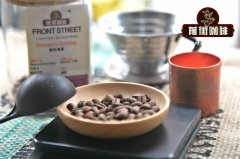
Washed Colombian Coffee Introduction to Huila Colombian Coffee Bean Characteristics
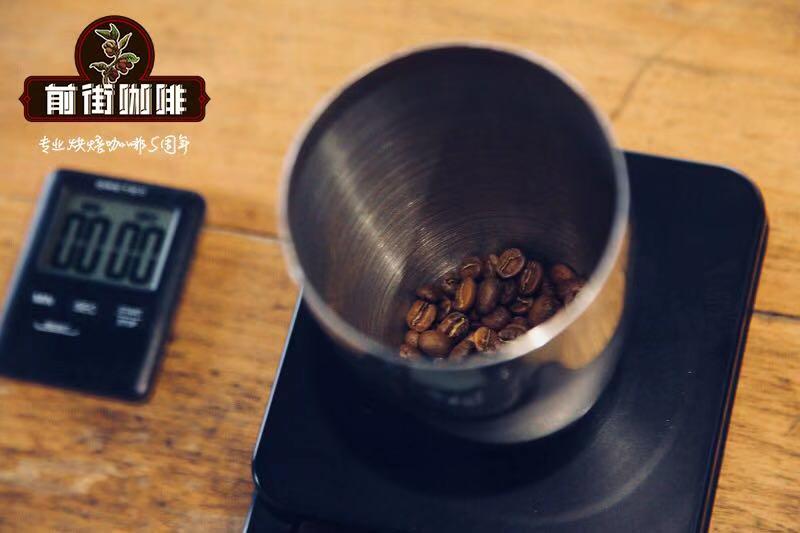
Introduction to FrontStreet Coffee Colombian Donald Micro-Lot Small Farmer Typica Coffee
The southern provinces of Colombia, including Huila, Cauca, Tolima, and Nariño, are almost entirely made up of small farms, sitting at altitudes of roughly 4,000-6,000 feet. These plots are not large; most run around 10 acres, and some are as small as 2-3 acres. In the past, growers pooled their coffee for export. The overall quality was good and more competitive than coffee from the large estates of northern Colombia (Antioquia, Bucaramanga, and Medellin), yet it was still hard to produce a standout masterpiece.
Small farms in the south then began to change their traditional practice and sell their coffee individually. A single small farm might produce only about 10 bags a year, and some just one bag. This is what we now call micro-lot coffee. Thanks to unique microclimates and the meticulous care of the farmers, each small farm's coffee has its own character, and quality often far exceeds a traditional multi-estate blend. There are frequent and delightful surprises. Although the price runs noticeably higher than ordinary commercial-grade Colombian coffee or fair-trade coffee, these lots remain highly sought after.
Understanding Micro-Lot Coffee
Micro-lot refers to small-batch specialty coffee with a distinctive character. Unlike typical regional or estate beans, the source of a micro-lot may be even narrower, such as one particular smallholder within a cooperative or one specific field inside an estate. All of these selections are based on cupping results, measured out in small bags of 10 kg.
Washed Processing Method in Colombia
Most Colombian coffee is washed. Each small farming family owns a small, specialized processor, an Ecomill or eco-pulper. Harvested cherries go straight in, which removes the skin and pulp and much of the mucilage while using very little water. The parchment beans, still carrying a little mucilage, then go into a small tank or container, perhaps a cement tank (some tiled) or a stainless-steel barrel. They are left to ferment overnight so the remaining mucilage loosens, and the next day they are rinsed with clean water to finish the washed process.
Product Specifications
Chinese Name: Colombian Donald Micro-lot Small Farmer Typica Coffee
English Name: Colombia Edgar Eladio Ossa, Micro-lot
Product Specification: 227 grams
Coffee Country: Colombia
Coffee Region: Huila County
Coffee Grade: EP, 17 screen or above
Processing Method: Fully washed
Roast Degree: Medium roast (City Roast)
Flavor: Blackberry, plum, nuts, chocolate
FrontStreet Coffee Recommendation
Colombian coffee covers a wide range of uses: it works as an espresso blend component and as a pour-over single origin, and it spans fruity, full-bodied, and aroma-forward styles, so there is something for almost everyone. To get to know the Huila region, FrontStreet Colombia Huila coffee is a natural first stop. The province in the southern part of the central cordillera is the country's best-known specialty region, ringed by mountains with planting above 1,500 meters, and Colombia's most important rivers meet there, bringing abundant water and humidity. FrontStreet roasts it medium-dark, which emphasizes dark chocolate and nutty sweetness, moderate oil, and a full body. It suits pour-over and a French press, and it also extracts beautifully in a moka pot or an espresso machine for an Americano or a latte.
If you want to taste how modern Colombian producers are pushing flavor, FrontStreet Colombia Frontera Sidra is a striking choice. The Sidra variety originally comes from Pichincha province in Ecuador, where it is called Sydra; genetic comparison shows it shares ancestry with Ethiopian landraces, leading researchers to suspect it is a cross between an Ethiopian experimental variety and local Bourbon. It came to wider attention after champion barista Anthony Douglas used a Frontera Sidra in the 2022 World Barista Championship. FrontStreet processes this lot with the anaerobic natural method and roasts it medium-light; after anaerobic fermentation the coffee develops more tropical fruit aroma, so pour-over, cold brew, drip bags, or a moka pot all deliver layered notes of passion fruit, grape, apricot, and preserved fruit.
For home espresso setups or a moka pot, baristas often reach for FrontStreet Classic Blend. Built for cafe use, it pairs Brazil's creamy nuttiness with Colombia's dark chocolate bittersweetness; the extraction shows fine golden crema, and it turns rich and silky with milk for a latte, while also serving as the base for an Americano, cappuccino, or mocha.
Important Notice :
FrontStreet Coffee is a long-established specialty coffee roaster in Guangzhou China, selling freshly roasted beans from its own farm in Yunnan as well as dozens of carefully selected single-origin beans from around the world for both pour-over and espresso. The products deliver consistently excellent quality and great value, with shipping within 24 hours. Guangzhou's FrontStreet Coffee shop is recommended by many coffee lovers, and the beans are now available online at the Tmall 。
FrontStreet Coffee has moved to a new address:
FrontStreet Coffee Address: 315,Donghua East Road,GuangZhou
Tel:020 38364473
 Scan and follow the En Gafei WeChat official account. Please indicate that the reprint comes from "En Gafei".