Where is Geisha Coffee Most Famous and Best Tasting? Can Panamanian Geisha Coffee Beans Be Used for Espresso?

For more specialty coffee knowledge, please follow the WeChat official account: FrontStreet Coffee
Ask where the best Geisha comes from, and the answer is invariably Panama's Hacienda La Esmeralda. Panama's climate shaped Geisha, and Panama's coffee scene was made by it. Panamanian Geisha is the finest expression of the variety — and distinct from the Geisha of its homeland. And although Geisha is a single-origin bean, it can absolutely be made into espresso. That's called SOE (Single Origin Espresso): espresso drawn from a single-origin lot, typically built on high-quality beans, priced above ordinary espresso, and prized for showcasing each origin's regional character.
"Panama coffee has a very special flavor, which may be because it lies between the Pacific and Atlantic oceans and is the result of very special climate and conditions. Geisha Panama coffee is well-known, which is why I came here looking for this special coffee flavor," said Jung Jung Lee, CEO of Maristela Roasting & Coffee Lab.

Geisha Coffee
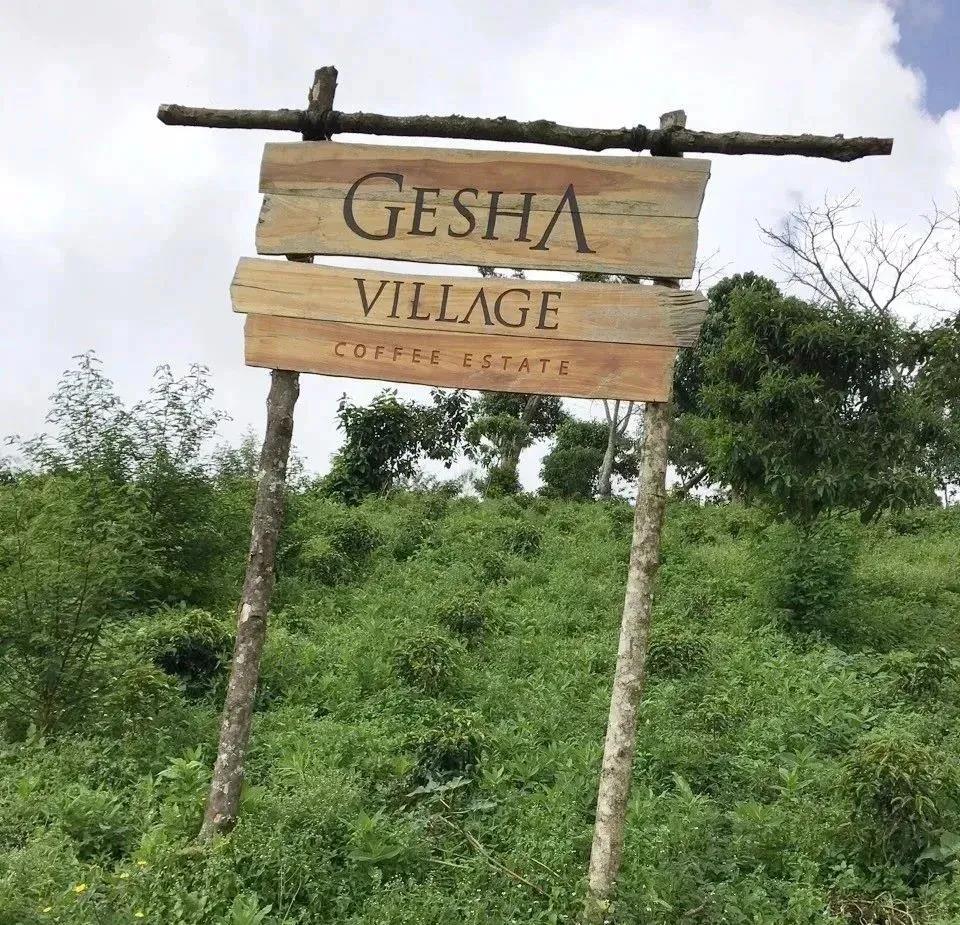
Geisha is a rare variety that performs exceptionally only under very specific conditions. It was found growing wild in the 1930s near the town of Gesha, in the Kaffa forest of Ethiopia — the birthplace of coffee and its genetic treasury, home to so many varieties that countless Ethiopian beans are simply labeled "heirloom varieties."
The Geisha variety was identified in 1931 in the Gesha forest. Locals paid it little attention, even using it as a windbreak, until it reached Panama's Hacienda La Esmeralda. Along the way it was sent to the Coffee Research Institute in Kenya, introduced to Uganda and Tanzania in 1936, Costa Rica in 1953, and Panama in 1970. Finally, Hacienda La Esmeralda separated it from other varieties, entered it into competition, and took the 2004 BOP championship. Geisha shot to fame, stepping into everyone's view as a standout of specialty coffee.
Although Panamanian Geisha descends from Ethiopian stock, the variety and its flavors differ from Ethiopia's own. Geisha's exquisite flavor depends on very specific growing conditions: the variety demands high altitude, cloud cover or extensive shade-tree protection, and fertile soil. At high altitude, Geisha develops distinct floral notes and refined, elegant fruit acidity — which is exactly why Panama's growing environment made the coffee famous, and one reason it conquered the world.
Since Panamanian Geisha rose to prominence, growers everywhere have begun cultivating the variety — including multiple estates within Panama itself. The Geishas FrontStreet Coffee has sourced include not only Hacienda La Esmeralda's but also lots from Colombia and Costa Rica — and Ethiopian Geisha is indispensable. FrontStreet Coffee carries over a dozen Ethiopian single-origin beans and more than 50 single origins from around the world.

Panama Coffee Regions
Panama's terrain undulates through crisscrossing valleys; beyond the coastal plains in the north and south, most of the country is mountainous. Sitting near the equator with a tropical marine climate, it enjoys humid days and cool nights, average temperatures of 23-27°C, and a year split into dry and rainy seasons with 1500-2500mm of annual rainfall. High-quality Panamanian coffee grows mainly in the northwest, near Costa Rica and close to the Pacific — and the Boquete coffee region of Chiriqui province is particularly famous.

Boquete Coffee Region
Boquete's coffee is cultivated as high as 1,400-1,900m, near the Panama-Costa Rica border and close to the Baru Volcano. With beautiful scenery and rich, fertile soil, the climate and earth are near-perfect for quality coffee. The region hosts many excellent estates: besides Hacienda La Esmeralda, farms like Elida Estate and Kotowa Duncan Estate also produce outstanding specialty coffee. That's due not only to Boquete's mild climate and the volcanic-ash soil of Baru, but also to another key factor — the varied microclimates found across the Boquete highlands.

The washed Boquete Geisha from this region features in FrontStreet Coffee's daily selection as a representative of Panamanian Geisha.
Hacienda La Esmeralda
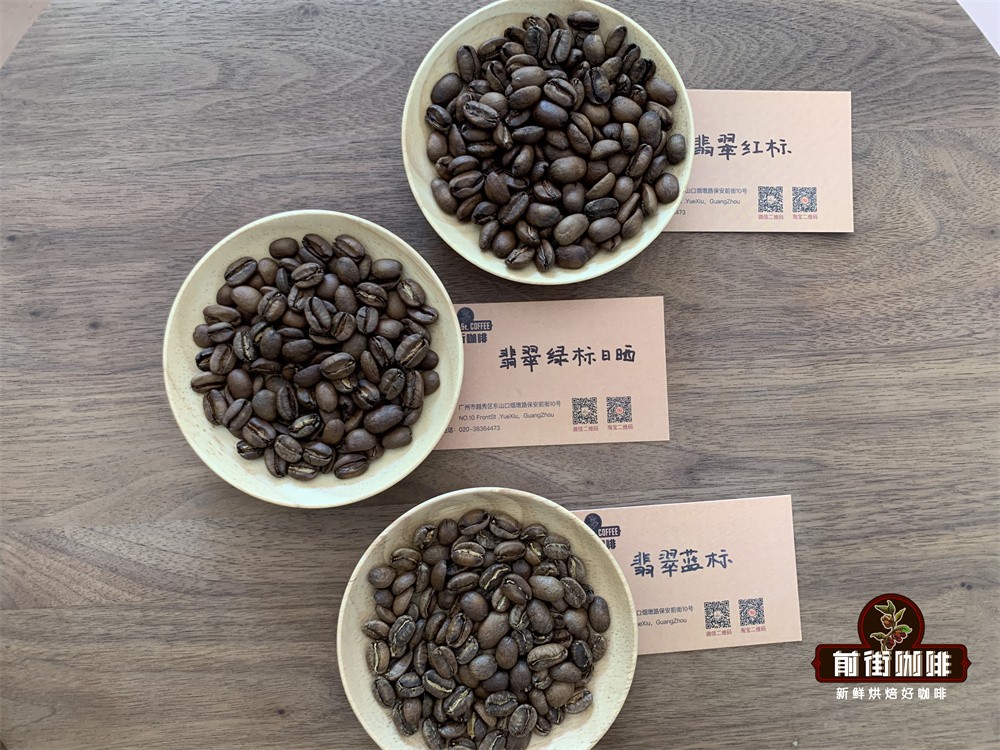
Esmeralda's Geisha owes its fame partly to coincidence. Rudolph A. Peterson, a retired Swedish-American banker, bought the estate to spend his later years — and when the coffee trees bore unexpected fruit, he sent them off to coffee competitions almost casually. Winning the national championship at the 2004 Panama Specialty Coffee Competition made him famous overnight. Since 2005, Hacienda La Esmeralda's Geisha has claimed more than a dozen world coffee competition titles. The estate's Geisha is generally divided into three tiers — Red Label, Green Label, and Blue Label — with the top Red Label reserved for auction batches.
Can Panama Geisha Coffee Be Used for Espresso?
Espresso is usually built on blends or dark-roasted beans, which produce rich crema and fuller flavor. Pull a light roast through the machine and the taste can turn prominent, stimulating, and sharply acidic. SOE is popular now and can absolutely be made from single-origin specialty beans, but those beans typically roast somewhat deeper than pour-over lots to taste their best. So can Geisha go in the portafilter? FrontStreet Coffee believes it can — but for coffee this expensive, we'd rather brew it pour-over, which shows off Geisha's singular character far better. The same logic applies to Blue Mountain, which we also serve primarily as pour-over.
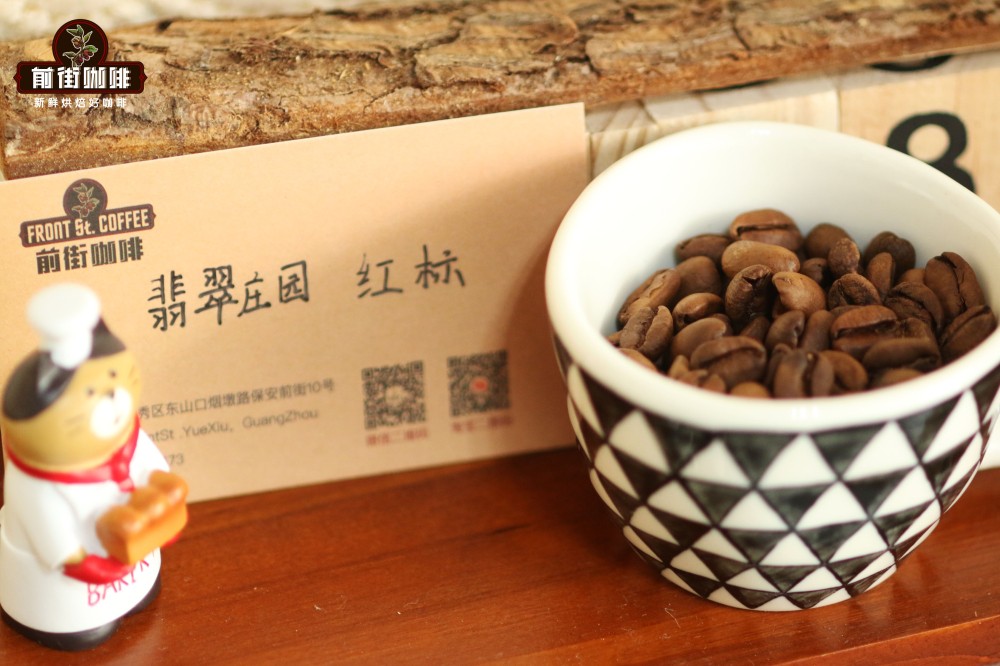
At FrontStreet Coffee's stores, Geisha is served pour-over only.
Geisha is simply a variety; espresso is just one way of presenting coffee. Geisha can be enjoyed many ways: as espresso on a semi-automatic machine, brewed in a dripper, made in a moka pot, or run through a drip brewer.
Geisha's great strength is its clarity of flavor. The Panama Hacienda La Esmeralda Washed Geisha on our bean list, brewed as pour-over, shows several distinct layers — floral, citrus, nuts, and tea. The Natural Geisha from the same estate? Tropical fruit and floral notes come through in every sip.

So why doesn't FrontStreet Coffee run Geisha as espresso? First, we haven't calibrated Geisha's espresso recipe yet. How can we serve a product that hasn't been dialed in and tested? Even for the Nuanyang Blend we use every day, our baristas adjust the recipe against the beans' condition before opening each morning. Beyond espresso parameters, a Geisha Americano means reworking the espresso-to-water ratio, and a milk drink means reworking the espresso-to-milk ratio.
The second reason is product logic: is Geisha practical as a daily service? Clearly not. Beyond the higher cost, the reason we skip Geisha for espresso is the same reason we serve blends rather than single-origin espresso.
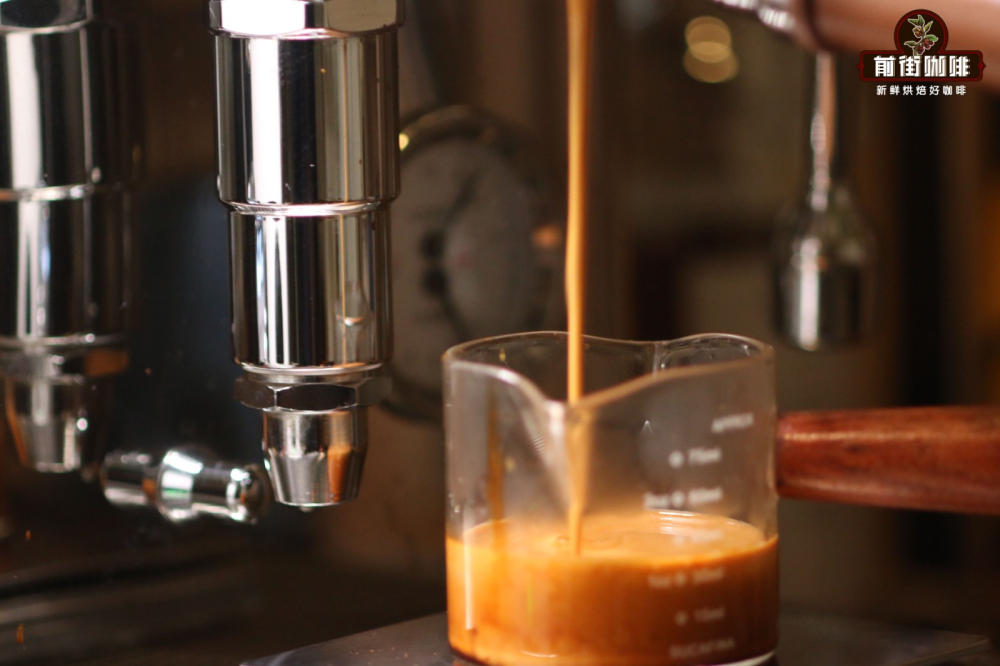
What would Geisha espresso require? To highlight its flavor, the roast can't go too deep — competition roasters typically take Geisha very light and extract with large doses. What does that mean for store service? Consistency becomes much harder to maintain.
The third reason is the variety's own performance. Geisha's strength is distinctness; its weakness as espresso is insufficient richness and body — and a washed Geisha also lacks sweetness in that context.
That is why FrontStreet Coffee uses a blend for its house espresso. Blending is far more intricate than it looks. When our roaster designed the Nuanyang Blend in 2019, they first tried Sherry coffee as a single-origin SOE, found it lacked complexity, then added Yirgacheffe and experimented until repeated testing settled the final ratio: 60% Sherry barrel-aged beans to 40% Natural Yirgacheffe.
FrontStreet Coffee's Brewing Recommendations:
Whether espresso or pour-over, FrontStreet Coffee has always believed bean freshness shapes flavor above all. We ship beans roasted within 5 days, under the philosophy "Freshly Roasted Good Coffee," so every order arrives at its freshest. With a resting period of about 4-7 days, coffee lands at peak flavor just as it reaches the customer.

A kind reminder for those who order pre-ground coffee: grounds need no resting period, because in transit the pressure of the carbon dioxide inside the packaging helps the flavor round out — you can brew the moment your coffee arrives. But do brew it promptly: ground coffee oxidizes quickly in air, flavor dissipates faster, and the cup won't taste as good. That's why FrontStreet Coffee recommends whole beans, ground fresh before brewing, to enjoy the coffee at its best.
FrontStreet Coffee Recommendation
Geisha is one of Arabica's most beloved varieties, conquering drinkers with unique florals and superb sweet-sour structure — even as low yields, weak disease resistance, and demanding cultivation keep prices climbing. Know the product lines and you can drink well at any budget: Esmeralda's Red Label ("Esmeralda Special," 1600-1800m, cupping above 90 points, each numbered batch from a single plot) is the pinnacle; the Green Label ("Private Collection," a blend of multiple high-altitude plots) is excellent value; and the entry-level FrontStreet Boquete Gesha delivers the classic Panamanian profile — orange aroma and honeyed sweetness, oolong-tea texture, delicate fruit acidity, clear layering — at a modest price.
Ethiopia offers its own Geisha treasures. Geisha Village, a 475-hectare estate 12 miles from the Gesha forest, grows Gori Gesha, Geisha 1931, and Illubabor Forest, graded into Gold, Red, Green, and Chaka tiers — the Gold Label (Geisha 1931, 10% of production, refined natural) its top non-auction coffee, the Red Label (Gori Gesha, 15% of production, 88+ SCA) a fully traceable single-terroir series. For an accessible start, the FrontStreet Genlana Gesha from a 700-hectare area near Kochere — ripe cherries dried 14-20 days on raised beds — shows bright citrus acidity, ginger-flower aroma, mature fruit sweetness, and a refined Gesha finish at medium-light roast.
Brew Geisha right and it repays you fully: grind to a 78% pass-through on a #20 sieve (fine sugar), use 91°C water, and pour 15g at 1:16 in three stages on a V60 — 30g bloom for 30 seconds, then small circular pours to 125g and 225g, drawing down in about 2'10"–2'20". For the SOE-curious, the medium-roasted Genlana Gesha pulls a lovely shot (20g, 1:2, 25 seconds — dried apricot, caramel, nuts; an Americano of orange, nuts, and blueberry; a latte of buttery shortbread), and FrontStreet's Strawberry Candy — Panama Geisha blended with Costa Rica raisin-honey coffee — makes an effortless cold brew of grape juice, rose, sweet orange, and fruit-wine notes.
Important Notice :
FrontStreet Coffee is a long-established specialty coffee roaster in Guangzhou China, selling freshly roasted beans from its own farm in Yunnan as well as dozens of carefully selected single-origin beans from around the world for both pour-over and espresso. The products deliver consistently excellent quality and great value, with shipping within 24 hours. Guangzhou's FrontStreet Coffee shop is recommended by many coffee lovers, and the beans are now available online at the Tmall 。
FrontStreet Coffee has moved to a new address:
FrontStreet Coffee Address: 315,Donghua East Road,GuangZhou
Tel:020 38364473
 Scan and follow the En Gafei WeChat official account. Please indicate that the reprint comes from "En Gafei".