Introduction to Typica Coffee Bean Characteristics and Guatemalan Pacamara Coffee
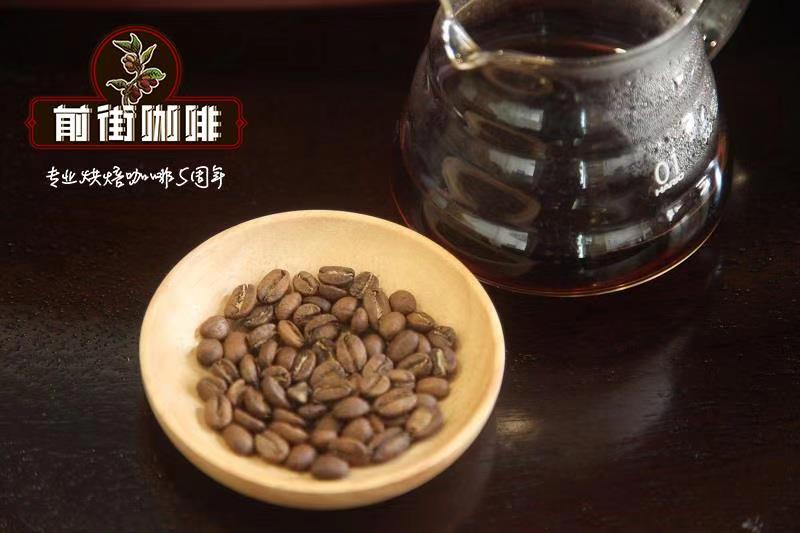
Introduction to Arabica Coffee and Pacamara by FrontStreet Coffee
For professional coffee knowledge exchange and more coffee bean information, please follow Coffee Workshop (WeChat official account: cafe_style).
Arabica, also called small-grained coffee, originates from Ethiopia. Arabica trees usually grow at 1,000-2,000 meters. They tolerate cold relatively well and thrive at growing temperatures of 15-24°C. They need higher humidity, with annual rainfall of no less than 1,500 millimeters, and they also demand more careful cultivation. Arabica trees are fairly large shrubs with oval, dark green leaves, and their fruit is oval too, generally holding two slightly flattened beans. The front of the bean is a long oval with a narrow, curved center crack that forms an S, while the back has a relatively flat arc. Caffeine content is about 0.8%-1.5%.
Arabica began spreading around the world in the mid-1700s. Historically, most coffee varieties are descendants of Typica and Bourbon. In the mid-20th century, breeders began introducing introgression varieties that resist coffee leaf rust.
Dozens of Arabica varieties are cultivated around the world, each with its own performance and adaptation to local conditions. Although there are several kinds of coffee beans, Arabica is considered the highest quality. Today it remains the world's most popular coffee bean, accounting for about 70% of global production.
Salvadoran Coffee
In the early 1990s, guerrilla warfare badly damaged El Salvador's national economy, and coffee production fell from 3.5 million bags in the early 1970s to 2.5 million bags in 1990-1991. The eastern part of the country was hit hardest, and many farmers and workers were forced to leave their plantations. A shortage of capital drove production down sharply, from a previous yield of 1,200 kilograms per hectare to today's less than 900 kilograms per hectare. On top of that, in 1986 the government added a 15% tariff on coffee exports, meaning 15% on top of the existing 30% tax. The taxes, combined with unfavorable exchange rates, slashed coffee exports, and quality declined along with them.
The government finally recognized coffee's major role in the national economy, in solving employment, earning foreign exchange, and developing agricultural production. So in 1990 it partially privatized the coffee export industry, hoping to raise coffee's earnings in the export market.
01 | Geographical Conditions
El Salvador has multiple volcanoes within its borders and is known as the "Land of Volcanoes." The fertile volcanic soil is an excellent source of nutrients for coffee. Coffee trees are planted at 1,000-1,200 meters, where the temperature is cool and favorable, an ideal environment for Arabica.
Sitting in the heart of Central America, El Salvador is one of the world's oldest coffee origins, known for producing Bourbon, Pacas, and Pacamara. Plantations are spread across the most fertile soil on hillsides and volcanic slopes, concentrated mainly in six producing regions: Alotepec, Apaneca, El Bálsamo, Chichontepec, Tepaca, and Cacahuatique, covering 161,000 hectares. Thanks to the special volcanic terrain and soil, Salvadoran coffee has a distinctive flavor: a mellow taste, moderate sweetness and acidity, a rich aroma, and captivating tonal qualities.
FrontStreet Coffee's Pacamara Coffee from Guatemala
Honey Processed Pacamara
Product Name: Pacamara
Processing Method: Honey Process
Origin: Guatemala
Grade: SHG
Bean Variety: Pacamara
Altitude: 1,250 meters
Flavor Profile: Gentle entry, clean, sweet orange, sweet aftertaste
FrontStreet Coffee Recommendation
To trace the Arabica family back to its roots, FrontStreet's Ethiopian coffees are the natural place to start, since Ethiopia is where the variety began. FrontStreet's washed Yirgacheffe is the classic expression, with clear jasmine florals and a bright citrus acidity, light and elegant with a tea-like body. FrontStreet's Gedeb Cooperative coffee, a traditional washed lot, brings out jasmine and citrus even more fully, and at a medium-light roast it adds green tea and honey notes.
For a naturally processed contrast, FrontStreet's sun-dried Red Cherry shows peach, cocoa, honey, and lemon, while the natural Flower Queen from Guji's Hambella area layers strawberry, passion fruit, and jackfruit over a heavy, syrupy body. FrontStreet's Hamasho 74158, grown from the JARC 74-series disease-resistant varieties at a Sidamo washing station, offers perfume lemon, strawberry, and star fruit. Any of these makes a fine companion to the Pacamara above, letting you taste the floral, citrus side of the Arabica family against its rounder, fruitier natural counterpart.
Important Notice :
FrontStreet Coffee is a long-established specialty coffee roaster in Guangzhou China, selling freshly roasted beans from its own farm in Yunnan as well as dozens of carefully selected single-origin beans from around the world for both pour-over and espresso. The products deliver consistently excellent quality and great value, with shipping within 24 hours. Guangzhou's FrontStreet Coffee shop is recommended by many coffee lovers, and the beans are now available online at the Tmall 。
FrontStreet Coffee has moved to a new address:
FrontStreet Coffee Address: 315,Donghua East Road,GuangZhou
Tel:020 38364473
 Scan and follow the En Gafei WeChat official account. Please indicate that the reprint comes from "En Gafei".