Introduction to African Uganda Coffee Region Characteristics & Pour-over Brewing Guide
FrontStreet Coffee - Uganda Coffee Region Characteristics, Pour-over Brewing Guide, and Tasting Notes
Uganda rarely gets the spotlight, yet it is one of Africa's most important coffee origins. Here is what makes its coffee distinctive — and how to brew it at home.
Uganda: Origin of the Nile
Uganda sits at the source of the Nile River and is a landlocked African country with no coastline. Although it shares a long coffee-growing history with its East African neighbors, quality improvements were long hindered by wars rooted in ethnic conflict. The country's finest coffee mostly grows in regions bordering Kenya — so much so that some premium lots have historically been trucked into Kenya and sold as Kenyan coffee. Only about 15 years ago, when the wars finally ceased, did Uganda begin its rise as a fast-developing coffee nation.
Uganda boasts lush green forests, lakes, wetlands, and abundant river water. Coffee is the country's largest agricultural crop: roughly 500,000 farms engage in coffee-related agriculture, supporting about 25% of the population. The majority of Uganda's coffee trees are robusta — hardy, vigorous plants that make up about 94% of total cultivation. The remaining 6% consists of traditional arabica varieties, rare beans grown in tropical rainforest zones and mostly exported to markets around the world.
The Rwenzori Mountains
The Rwenzori Mountains, affectionately known as the "Mountains of the Moon," rise in western Uganda along the border with the Democratic Republic of Congo. Coffee is Uganda's primary economic crop, accounting for 95% of the country's total exports.
The local Bukonzo people have farmed these mountains for centuries. The mountain soil is fertile and the climate is excellent, making the region ideal for coffee cultivation.
Brewing Guide
Recommended brewing method: Pour-over
Dripper: V60
Water temperature: 90°C
Coffee-to-water ratio: 1:15
Grind size: Medium-fine, similar to fine sugar (BG 5R: 57% pass-through rate on China standard #20 sieve)
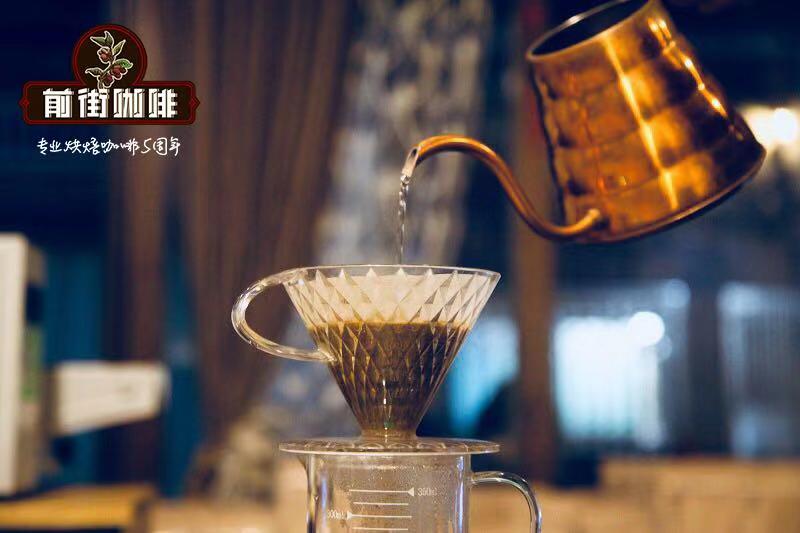
Brewing technique: Segmented extraction. Start with 35g of water to bloom for 25 seconds, then pour in circles to 130g and pause. When the water level drops and is about to expose the coffee bed, pour again to 227g and stop. Remove the dripper when the level drops once more and the bed is about to surface. (Timing starts from the bloom.) Total extraction time: 1'50".
Flavor profile: An aroma with subtle fermented notes, flavors of cocoa, cream, and peanuts, and a gentle fruit acidity.
Understanding Coffee Taste
Taste refers to what the tongue perceives. Coffee flavors essentially fall into four categories: sour, sweet, bitter, and salty (some argue for a fifth: umami). When you take small sips of coffee, your perception may shift from sip to sip — sour one moment, bitter the next — because a small mouthful cannot coat the entire tongue, and different zones of the tongue vary in sensitivity to each taste.
Sourness and bitterness are the easiest tastes to detect. Since everyone's tolerance differs, sour and bitter notes that fall within your own acceptable range can be considered good — even if others may not agree.
Beyond intensity, there is also quality: sourness that reads as fermented funk, or bitterness like charcoal, is not the kind anyone wants. Even a hint can drag down an otherwise lovely cup — though a few drinkers genuinely enjoy them, which is simply a matter of personal preference.
Sweetness, meanwhile, is a primal human craving but surprisingly hard to perceive in coffee through taste alone; we usually identify it with help from the ketone and aldehyde aromas in the flavor profile.
Judging purely by taste, a good coffee looks like this: noticeable but non-irritating sourness, bitterness that is present but understated, and as much sweetness as possible. When you drink coffee, taste, touch, and smell are all active. If you cannot yet isolate tastes on their own, try holding your breath (or gently pinching your nose) — that "switches off" the retronasal aromas and isolates the flavors in your mouth.
Mouthfeel
Simply put, mouthfeel is the tactile sensation of coffee liquid moving over the tongue — also known as body. Complexity of flavor: when many flavors coexist harmoniously without overwhelming one another, they create a rich, full perception — think of the depth that chocolate, orange marmalade, yogurt, and nut paste each bring to a curry. Persistence: the longer the aftertaste lingers, the fuller the body feels, with lingering bitterness the most obvious example.
Fine texture: the viscous quality created by colloidal particles in coffee (proteins and lipids) contributes to the perception of fullness. If the flavor in your mouth changes noticeably between the first sip and the swallow, the coffee has depth — a combined expression of complexity and persistence — which we also read as body.
Smoothness: simply put, this is the quality of the coffee's flow across the palate, and it needs little further explanation.
Flavor
After tasting, we should not stop at "delicious" — we need to articulate where the deliciousness lies. Phrases like "lemon-like acidity" or "candy-like sweetness" do real work in describing a coffee's appeal.
FrontStreet Coffee Recommendation
Ugandan arabica rewards the same careful pour-over brewing as other East African origins, and the V60 is the perfect tool for the job. Its 60° cone and single large outlet give the brewer full control of flow rate, pulling out layered aromatics and a lively, refined acidity — the reason FrontStreet Coffee relies on it for floral and fruit-forward beans.
If you love this style of bright, fruit-accented cup, FrontStreet Coffee's Yirgacheffe Guodingding is a must-try: clear citrus, berry, and jasmine floral notes with a green-tea sweetness, gentle enough for anyone new to specialty pour-over. For tropical fruit in overdrive, FrontStreet Coffee's Ethiopia Huakui (Guji natural) offers striking strawberry, passion fruit, pineapple, and even lychee aromas, an obvious sweetness, and almost no bitterness — often described by drinkers as "the coffee that tastes least like coffee."
Important Notice :
FrontStreet Coffee is a long-established specialty coffee roaster in Guangzhou China, selling freshly roasted beans from its own farm in Yunnan as well as dozens of carefully selected single-origin beans from around the world for both pour-over and espresso. The products deliver consistently excellent quality and great value, with shipping within 24 hours. Guangzhou's FrontStreet Coffee shop is recommended by many coffee lovers, and the beans are now available online at the Tmall 。
FrontStreet Coffee has moved to a new address:
FrontStreet Coffee Address: 315,Donghua East Road,GuangZhou
Tel:020 38364473
 Scan and follow the En Gafei WeChat official account. Please indicate that the reprint comes from "En Gafei".