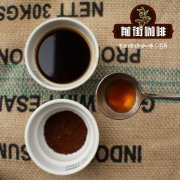
Introduction to Ethiopian Natural Red Cherry Coffee - Yirgacheffe Red Cherry Flavor Profile

Introduction to FrontStreet Coffee's Ethiopia Natural Red Cherry
For professional coffee knowledge exchange and more coffee bean information, please follow Coffee Workshop (WeChat public account: cafe_style).
Yirgacheffe is a small town in Ethiopia sitting at 1700-2100 meters, which makes it one of the highest coffee-producing regions in the world and a byword for Ethiopian specialty coffee. Lake Turkana, Lake Abaya, and Lake Chamo bring abundant water vapor to the area. In the Rift Valley, represented by Misty Valley, fog hangs in the air year-round, creating a spring-like climate of gentle breezes and cool, humid air. Thousands of coffee varieties thrive and multiply here, cultivating the unique terroir of FrontStreet Coffee's Yirgacheffe, where distinctive floral and fruit aromas intertwine in ever-changing combinations.
Yirgacheffe's coffee trees were originally cultivated by European monks—roughly the way Belgian monks once grew grain to brew beer—and were later taken over by farmers and cooperatives. The trees scatter naturally through forests, fields, and backyards. In harvest season, Ethiopian coffee trading companies come to town to buy the beans farmers have collected, and these are ultimately auctioned for export under the "Yirgacheffe" brand.
The "Red Cherry Project" (ORC) is an initiative aimed at improving the quality of small-scale farms. In 2007, Trabocca, the largest green coffee importer in the Netherlands, launched the Red Cherry Project in pursuit of high-quality Ethiopian beans. The project requires that harvested cherries be fully red and picked entirely by hand. But that is only the most basic requirement—the project goes much further.
The main purpose is to encourage bean farmers and bring surprises to roasters. Trabocca invites Ethiopian farms to produce small lots of roughly 1500-3000 kilograms (25-50 bags) before the harvest season. Women are tasked with selecting only fully, 100% ripe red cherries, which makes a significant difference to the flavor of the brewed coffee. The meticulous, sharp-eyed, hardworking women of Ethiopia are therefore a crucial driving force behind the Red Cherry Project.
The Red Cherry Project also works as a reinforcement approach, encouraging farms to invest more attention in screening and selection, and these coffees command relatively higher prices. The initiative covers washed, natural, semi-washed, semi-natural, and experimental coffees. Major producing regions include Yirgacheffe, Sidamo, Bench Maji (Bonga Forest), Lekempti, Kambata, Illubabor, Harar, and Limu, with the Golocha production area near Harar added in 2011. All of these regions offer distinctive flavors that fully showcase Ethiopian coffee's diversity. After receiving the coffee, Trabocca carries out further selection, and farms that meet quality standards in cupping tests at both the Ethiopian and Dutch offices receive substantial bonuses.
Trabocca, the promoter of the Red Cherry Project, has put all profits from recent years back into the cooperative farms. Trabocca stresses that this is a non-profit project, which is why the company runs it with only four people, including the owner and secretary; other administrative work is supported by the parent company to keep administrative expenses down, and all profits are returned to the cooperatives.
FrontStreet Coffee's natural Red Cherry beans have relatively uniform ripeness and a clean flavor profile, so we use a light-medium roast to preserve more floral aroma, fruit acidity, and the fermented notes of ripe fruit.
FrontStreet Coffee's Ethiopia Natural Red Cherry: Strawberry, berries, cream, spices, almonds, oolong tea.
END
FrontStreet Coffee Recommendation
Red Cherry is the natural counterpart to FrontStreet Coffee's washed Yirgacheffe, and trying them side by side is the clearest way to understand what processing does to a bean. FrontStreet's washed Yirgacheffe—the everyday single origin many drinkers start with—is known for white jasmine, bright citrus and lemon acidity, and a tea-like body, at a price that makes it a genuine daily drinker.
The washed Gedeb Cooperative is the most representative single origin from the area. Gedeb village's cooperative grew out of the Wenago Cooperative and was later recognized as a single-producer lot thanks to the push for traceability. It follows the most traditional washed processing, and is often called the last clean stronghold of Yirgacheffe. FrontStreet Gedeb has no traditional bitterness at all: it carries clean, bright citrus and lemon acidity with jasmine fragrance, and the kind of cup that wins people over on the first sip.
Where Red Cherry dries whole fruit on the bed, Gedeb strips the fruit away before drying, and the difference in the cup is exactly what you would expect. If you brew at home, FrontStreet Coffee suggests a V60, 15g of coffee, a 1:15 ratio, water at 90-91°C, and a fine grind (EK43s setting 10, about fine sugar; 80% pass-through through a #20 sieve). Pour 30g for a 30-second bloom, then 95g more (about 125g on the scale) over roughly a minute; when the water drops to two-thirds of the bed, add the remaining 100g (about 225g on the scale) over about 1 minute 35 seconds, finishing the drip in 2 to 2 minutes 10 seconds.
Important Notice :
FrontStreet Coffee is a long-established specialty coffee roaster in Guangzhou China, selling freshly roasted beans from its own farm in Yunnan as well as dozens of carefully selected single-origin beans from around the world for both pour-over and espresso. The products deliver consistently excellent quality and great value, with shipping within 24 hours. Guangzhou's FrontStreet Coffee shop is recommended by many coffee lovers, and the beans are now available online at the Tmall 。
FrontStreet Coffee has moved to a new address:
FrontStreet Coffee Address: 315,Donghua East Road,GuangZhou
Tel:020 38364473
 Scan and follow the En Gafei WeChat official account. Please indicate that the reprint comes from "En Gafei".