Why Colombian Huila Coffee Doesn't Taste Good and How to Properly Brew Huila Coffee
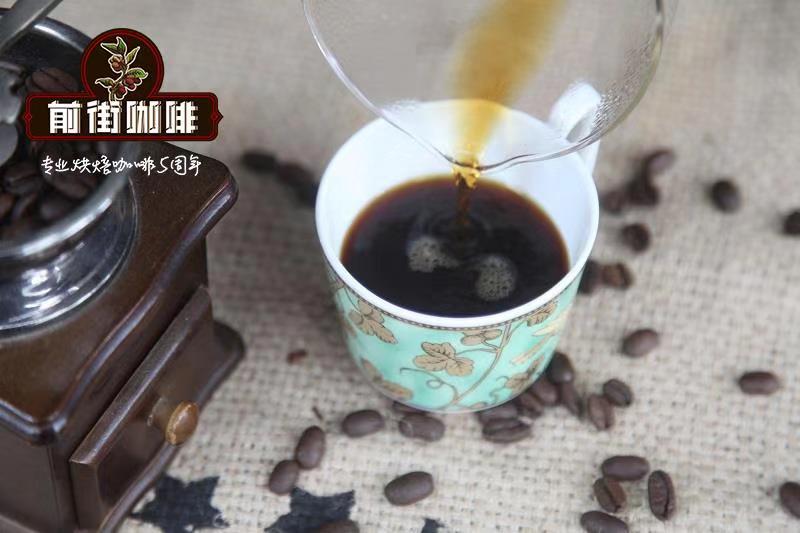
FrontStreet Coffee Introduction: Huilan Coffee Pour-Over
Huilan, grown at 900 to 1,100 meters, was mentioned earlier: beans from this altitude do not have particularly prominent acidity. As a leading Colombian production area, however, its consistency is unquestionable. The washed method sharpens the purity of the beans, and the roast focuses on drawing out mid-range body, oils and melanoidins, placing it in the medium-dark range. In this context, the beans are quite suitable for beginners.
The whole brewing extraction process roughly follows the order shown in the image above: fruit flavors and acidity are extracted first, from the surface of the grounds, followed by mid-range flavors, then sweetness, and finally bitterness.
Let's look at the specific brewing method for these beans. Before that, a few more knowledge points.
1. Roast Degree
Roasts divide into light, medium and dark. Generally, light roasts have prominent fruit flavors and a relatively bright taste; the darker the roast, the richer the body, though there will of course be more miscellaneous flavors and a deeper, heavier mouthfeel.
2. Coffee Fiber Structure
The higher the altitude and the lighter the roast, the firmer the fiber structure, making it harder to extract, so the bloom time can be extended accordingly. Conversely, beans from lower altitudes and darker roasts have a softer fiber structure, extract more easily, and need a shorter bloom, or can even skip it entirely.
3. Blooming Time
The main purpose of blooming is to let hot water penetrate the cell walls of the coffee fiber structure, forcing out the carbon dioxide inside so water-soluble substances extract more easily and diffusion between coffee cells is aided during the second pour. Blooming is generally controlled between 8 and 25 seconds. To judge the right duration, watch whether bubbles keep emerging. When bubbles no longer appear or water begins dripping into the lower pot, the bloom can end.
4. Grind Size
The coarser the grind, the less surface area, so brewing time must be extended accordingly, and vice versa. Grind is generally controlled between settings 2.5 and 4.
5. Coffee Extraction Concentration
Only about 30% of the substances in a coffee bean can be extracted, while the remaining 70% or so are water-insoluble woody fibers. According to the Golden Cup extraction theory issued by the SCAA, the optimal standard for a cup of coffee is an extraction rate of 18% to 22%, while the concentration of extracted coffee substances in the cup is only 1.15% to 1.35%. Do not be surprised that about 98% of what we drink is water. It is not necessarily best to extract all 30% of the water-soluble substances from every bean.
6. Coffee-to-Water Ratio (three options)
Option A (Flavor-focused)
Coffee-to-water ratio 1:18 (light or medium roast, fine grind), concentration between 1.15 and 1.25, extraction rate 18% to 20%.
Option B (Balanced)
Coffee-to-water ratio 1:15 (medium or medium-dark roast, slightly coarser), concentration between 1.28 and 1.35, extraction rate 16% to 18%.
Option C (Body-focused)
Coffee-to-water ratio 1:13 (medium-dark or dark roast, more grounds, coarse grind), concentration 1.35 to 1.45, extraction rate 14% to 16%.
Coffee-to-water ratio: 1:15.
Water temperature: 90 degrees Celsius.
Water addition: a 1:2 ratio for the bloom, meaning 20 g of water, poured in roughly four even circles at medium speed.
Pour from the center with a small stream, then slowly spiral outward, as if gently laying a layer of water over the grounds. Even with a small stream, be careful not to slow the spiraling deliberately, because once the spiral is too slow the water runs in a single direction and the coffee bed absorbs water unevenly.
After the first pour, the coffee particles push against one another as they degas, creating a swelling effect.
Blooming: bloom for about 8 seconds. Since this is a dark roast and I prefer stronger flavors, an 8-second bloom yields a richer body with essentially no off-flavors, carrying slight fruit acidity and distinct chocolate and nutty notes. When the swelling peaks or nearly stops, it is time for the second pour.
Second pour: from the center, quickly spiral outward, adding 80 g of water and keeping the water level flush with the coffee bed. The purpose is to promote rapid diffusion between coffee cells, and basically 80% of the flavor is extracted during this stage. Fast spiraling creates convection between the cells, soaking the cell walls more evenly and drawing out fruit flavors, acidity and mid-range flavors. From this pour onward, watch the water volume and try not to exceed the height of the coffee bed, meaning you can stop when the stream spirals close to the filter paper.
Third pour: wait 5 seconds, then pour again. Keep the flow absolutely steady, steady, steady, until all remaining water is added. Shift from fast to slow with smaller spiraling motions, the aim being to keep fine particles from settling at the bottom, because the fast second pour creates convection that makes fines sink and block the filter holes, leading to over-extraction. This even soak reaches the grounds at the edges as well. Otherwise it is easy to extract bitterness, earthy flavors and astringency, leaving the cup muddled. The ideal is to extract mainly sweetness. The rolling particles begin to settle once pouring stops, and the flow created by the falling water level then causes friction between them, so once pouring stops the particles sink and cause blockage. Pay special attention to the rhythm of your pours.
FrontStreet Coffee Recommendation
Huila makes an excellent beginner's pour-over because its washed process is clean and its medium-dark profile is forgiving. To understand the region, start with the FrontStreet Colombia Huila, grown above 1,500 meters in the country's most famous specialty area. Roasted medium-dark, it highlights dark chocolate and sweet nuts with moderate oils and a full, rounded body, and it is equally at home in a pour-over or French press and in a moka pot or espresso machine for an americano or latte.
For a more modern take on Colombia, the FrontStreet Colombia La Divisa Xizhua is processed anaerobically as a natural, fermented in a low-oxygen or oxygen-free environment so the beans develop far more tropical fruit aroma. At a light-to-medium roast it gives complex notes of passion fruit, grape, apricot and preserved fruit in pour-over, cold brew, drip bag or moka pot.
And if you brew espresso at home, the FrontStreet Boutique Blend is a barista favorite made for cafe service. It pairs Brazil's creamy nut sweetness with Colombia's deep dark chocolate bittersweetness, pulling a fine golden crema and making a rich, silky latte that is very forgiving for newcomers, while also serving as the base for americanos, cappuccinos and mochas.
Important Notice :
FrontStreet Coffee is a long-established specialty coffee roaster in Guangzhou China, selling freshly roasted beans from its own farm in Yunnan as well as dozens of carefully selected single-origin beans from around the world for both pour-over and espresso. The products deliver consistently excellent quality and great value, with shipping within 24 hours. Guangzhou's FrontStreet Coffee shop is recommended by many coffee lovers, and the beans are now available online at the Tmall 。
FrontStreet Coffee has moved to a new address:
FrontStreet Coffee Address: 315,Donghua East Road,GuangZhou
Tel:020 38364473
 Scan and follow the En Gafei WeChat official account. Please indicate that the reprint comes from "En Gafei".