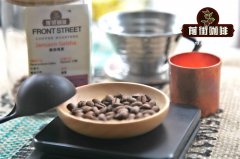
What are the Characteristics of El Salvador Coffee? Introduction to El Salvador Black Honey Coffee Flavor
FrontStreet Coffee Introduction: Salvadoran Coffee
The History of Salvadoran Coffee
El Salvador, known as the "Land of Volcanoes," is the smallest country in Central America. From the mid-17th century, coffee grown here was primarily for domestic consumption. Over the following 100 years, however, coffee gradually became a stable and important crop. Especially in the late 19th century, as El Salvador's original export pillar — the indigo dye industry — declined with the rise of synthetic dyes in Europe, coffee became the country's main export under government leadership.
By the late 1970s, coffee exports accounted for 50% of the country's GDP. But socio-economic and political turmoil then plunged the nation into more than a decade of civil war. In the 1980s, land redistribution policies and reforms disrupted the coffee industry and the market declined. Without resources to continue cultivation, producers abandoned their plantations, leaving coffee trees to grow unharvested — a situation that lasted until the peace agreements of the 1990s. The one benefit the civil war brought: during the 1980s, when many other coffee countries were replacing ancient varieties with higher-yielding, more disease-resistant ones, El Salvador's untended fields preserved the old Bourbon and Typica varieties.
When the Cup of Excellence first came to El Salvador in 2003, the country gained high prestige in specialty coffee thanks to its distinctive varieties: the ancient Bourbon and Typica, the local dwarf Bourbon mutation Pacas, and the hybrid Pacamara. Unfortunately, these famous varieties are particularly susceptible to coffee leaf rust. Especially Bourbon (Pacas and Pacamara both carry Bourbon genetics) lacks the resistance to fight the disease, so the outbreak of the 2010s hit the country's coffee, leading to declines in both quality and yield.
Flavor Profile
Compared with Guatemala's small-grain coffee, El Salvador's highest-yielding Bourbon has a relatively mild aroma, with a chocolate-like richness as its signature. Pacamara offers a lovely mouthfeel but carries a sour aroma closer to Typica.
FrontStreet Coffee Recommendation
If El Salvador's honey-processed style appeals to you, Costa Rica is the classic next step — its high elevations, wide day-night temperature swings, and rich volcanic soils produce strictly hard bean (SHB) coffees famed for honey processing, where the mucilage dries around the bean for intense sweetness and clear aftertaste. FrontStreet Coffee recommends the black-honey Blackberry or the raisin-honey Mozart: expect raisin and blueberry sweetness with osmanthus and rose fragrance, delicious as pour-over, cold brew, Americano, or latte.
Other beginner-friendly single origins worth exploring alongside it include FrontStreet Coffee's Brazil Fazenda Rainha — a rare Yellow Bourbon with compound nut aromas of butter, melon seeds, macadamia, and almond plus a sugarcane sweetness — and the entry-level Panama Boquete washed Geisha, whose clean orange-blossom honey character offers a very affordable introduction to the variety.
Important Notice :
FrontStreet Coffee is a long-established specialty coffee roaster in Guangzhou China, selling freshly roasted beans from its own farm in Yunnan as well as dozens of carefully selected single-origin beans from around the world for both pour-over and espresso. The products deliver consistently excellent quality and great value, with shipping within 24 hours. Guangzhou's FrontStreet Coffee shop is recommended by many coffee lovers, and the beans are now available online at the Tmall 。
FrontStreet Coffee has moved to a new address:
FrontStreet Coffee Address: 315,Donghua East Road,GuangZhou
Tel:020 38364473
 Scan and follow the En Gafei WeChat official account. Please indicate that the reprint comes from "En Gafei".