What are the Characteristics of Sun-Dried Guji Coffee Beans? Introduction to Sun-Dried Sidamo Guji Features
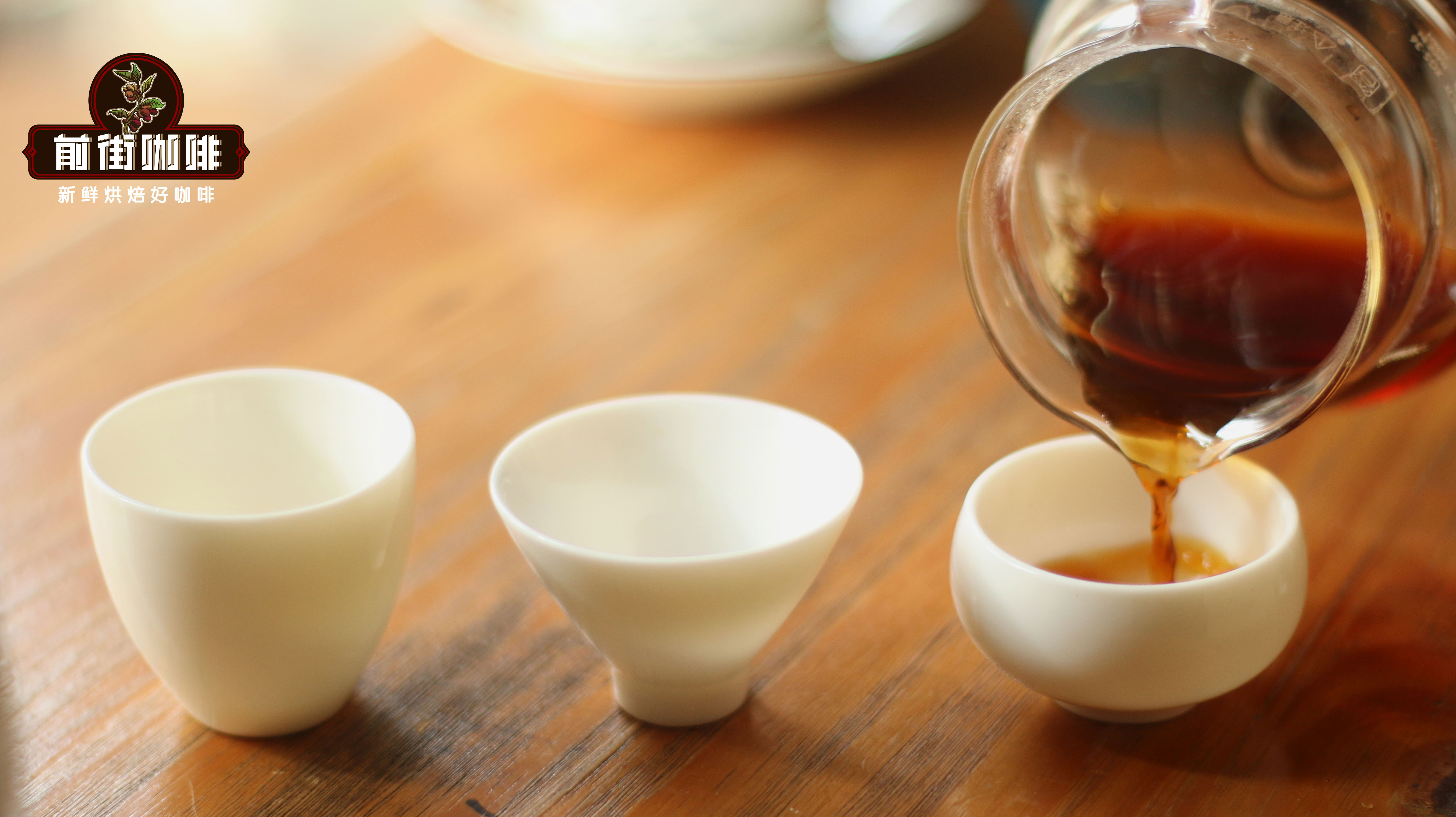
Ethiopian coffees are known above all for their floral, fruity acidity, with light, bright flavors that feel like drinking a cup of fruit tea. FrontStreet Coffee's natural-processed Guanyin coffee is especially sweet and fruity, full of fruit flavors and a honey-like sweetness that lingers on the palate and takes you on a tour of a whole world of fruit.
Ethiopia has two particularly famous coffee-producing regions, both of them specialty regions. One is FrontStreet Coffee's Yirgacheffe, whose washed Yirgacheffe represents Ethiopian coffee and serves as the entry bean for many into specialty coffee. The other is FrontStreet Coffee's Sidamo, which is used mainly for natural processing, with FrontStreet Coffee's Sidamo Guanyin coffee as its most famous representative.
Ethiopia is the birthplace of coffee, but geography, climate and temperature, and soil microelements vary from region to region, so the flavors differ. To let everyone taste high-quality coffees from Ethiopia's many regions, FrontStreet Coffee has acquired more than a dozen single-origin coffees from this country alone, from both natural and washed processing.
The Origin of the Guanyin Coffee Name
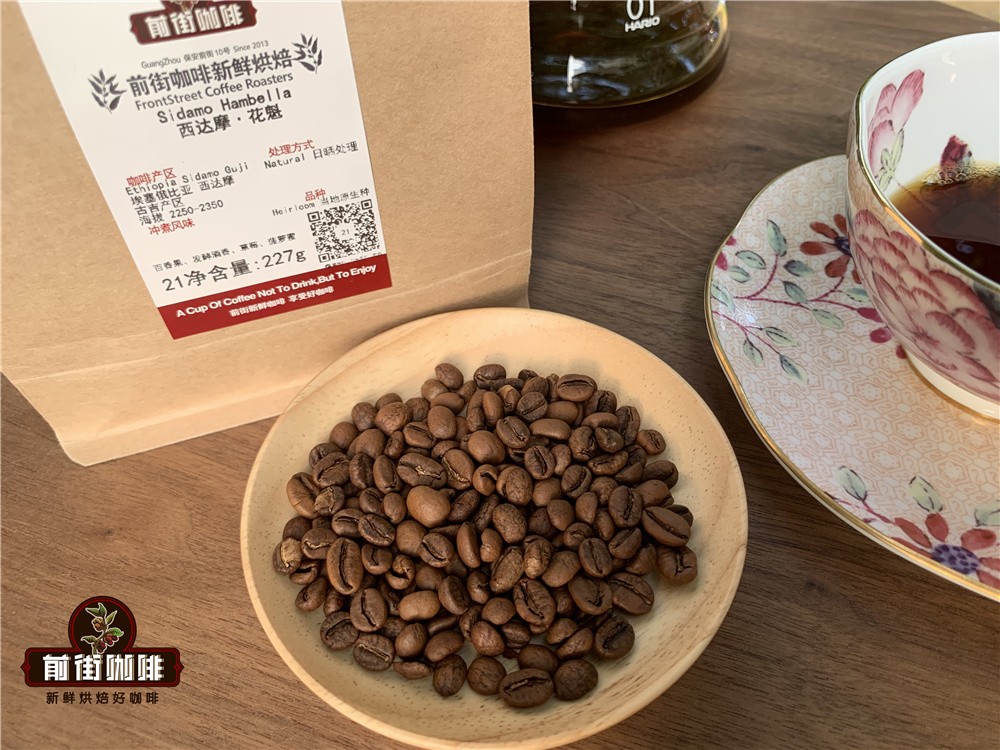
In 2017, Ethiopia's DW green coffee company submitted its beans to the Taste Of Harvest (TOH) competition hosted by the African Fine Coffee Association. Their natural-processed batch won the TOH Ethiopia championship. This lot of green beans was named "Guanyin," meaning "champion." The Beijing-based Hongshun Company introduced Guanyin coffee to China and gave it the name "Guanyin," expressing high expectations.
In fact, internationally, Guanyin coffee has only one name: Hambella. It comes from a small producing area in Sidamo's Guji region. If we look closely, we find that only natural-processed beans from the Buku Abel processing plant are called "Guanyin" by baristas. Put plainly, the "Guanyin coffee" we speak of is a traditional natural-processed G1 coffee bean from the Hambella region, with "Buku Abel" as its more precise traceability information, located in Dimtu town.

After "Guanyin" became famous, and to meet the surge in market demand, DW established five independent green coffee drying stations in Hambella Wamena Wereda, all within the core Dimtu town area. Besides the original Buku Abel, four other small villages, Buku Saysay, Haro Soresa, Tirtiro Goye, and Seke Bokosa, also joined in natural-processed coffee production. It is reported that DW's annual production of "Guanyin" now reaches tens of millions of tons.
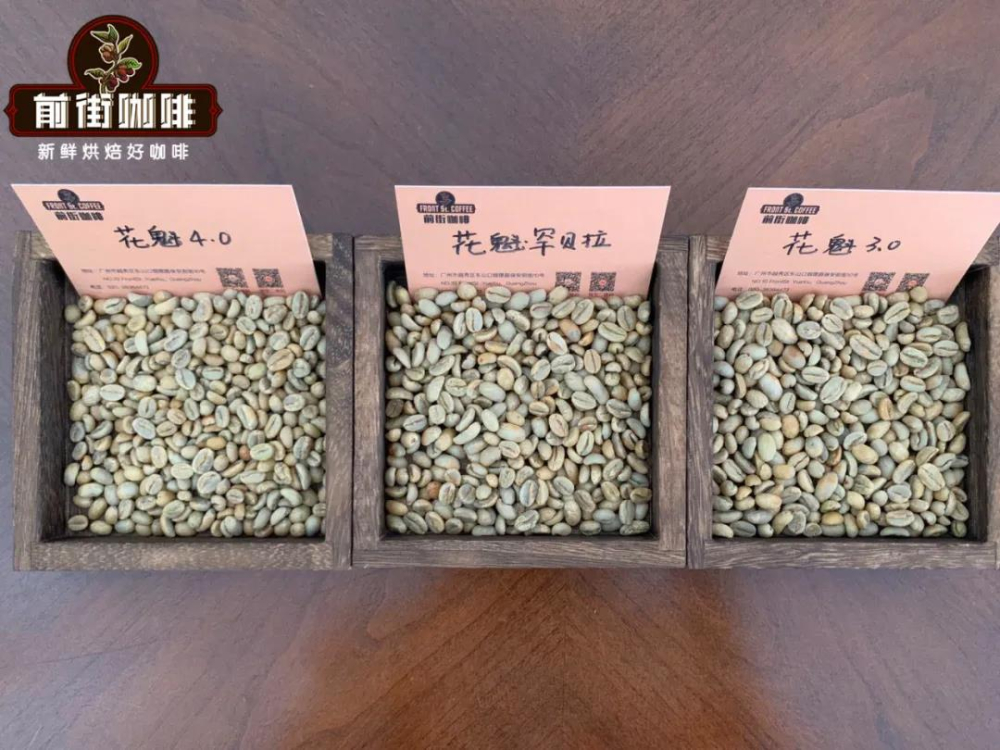
Starting from the 2018 harvest season, Guanyin (natural-processed G1 coffee) from the same growing area and processing station had already begun to show slight flavor changes. Through cupping, FrontStreet Coffee found that although the 2018 and 2019 Guanyin had flavors similar to the 2017 Guanyin, they were inferior to the "first-generation Guanyin" in body, aftertaste, and other mouthfeel aspects. So, to keep marketing this natural-processed coffee from Hambella while creating a distinction from the original, domestic green coffee traders created an X.0 suffix system based on the post-2017 timeline. The 2018 batch became "Guanyin 2.0," the 2019 production "Guanyin 3.0 and 3.1," and last year's release "Guanyin 7.0," and so on. This way, the suffix tells us which year's batch the Guanyin we buy belongs to.

About the Sidamo Coffee Region
As one of Ethiopia's specialty coffee regions, Sidamo borders another specialty region, Yirgacheffe. Sidamo is not just a coffee-producing region but also a coffee brand. In 2006, Starbucks applied for the Sidamo trademark, which caused dissatisfaction and resistance in Ethiopia's coffee industry. The trademark dispute lasted two years, ending with Starbucks withdrawing its application. Both sides reached an agreement, with Starbucks continuing to buy and sell Sidamo coffee through cooperation.

The Sidamo region lies in southern Ethiopia, extending east to the Arsi and Bale administrative regions and west to the Gamogofa administrative region. Sidamo coffee is cultivated at altitudes between 1400m-2000m. The flavors produced there are very diverse, because different areas have different soil compositions, regional microclimates, and countless native varieties, creating obvious differences and characteristics from place to place. According to Ethiopia's administrative divisions, there are four levels, Region, Zone, Woreda, and Kebele, roughly equivalent to province, city, district, and neighborhood.
Coffee is an agricultural crop, so flavor changes are closely tied to climate and environment. Sidamo's flavors are highly varied: different soil types, microclimates, and countless native varieties give the coffee of each town its own obvious character. The Guji region once belonged to Sidamo but was established as a new independent region by the Ethiopia Commodity Exchange (ECX) in 2010. Guji lies southeast of Yirgacheffe, an area of complex, dramatic terrain with towering mountains, valleys, and plains. Its geology consists of fertile black soil (Vertisol) with a depth of nearly two meters and an average altitude of over 1800 meters. The wide day-night temperature swings created by the geography give the area all the terroir needed to produce high-quality specialty coffee.

Guanyin Coffee Varieties
Ethiopia is a magical country, because it is the birthplace of Arabica coffee: the Kaffa Forest is where it all began. To be precise, Ethiopia's Kaffa Zone is the earliest place coffee was discovered, where countless wild Arabica mother trees grow in the cloud forest. FrontStreet Coffee's Kaffa Forest beans come from this lush wild forest and are processed with the washed method, always showing citrus aromas reminiscent of orange peel and green-tea notes when brewed.
Back to the main topic: the Guanyin coffee variety is called Heirloom, which means "native variety" and is unique to Ethiopia. In Ethiopia, garden farming is the survival mode for the vast majority of small coffee farmers, and Heirloom native varieties come from the "unnamed varieties" in their backyards. The coffee trees may have been left by the first owner of the land, shared among neighbors, or grown from seeds brought from another producing area. Various coffee plants are intercropped with other crops and harvested and sold when mature.

So Heirloom does not refer to one specific variety but rather represents the blending of green beans from a producing area: the coffee combines the harvests of multiple smallholders in the same period and is mixed together, with a single batch potentially covering dozens or hundreds of undifferentiated varieties. Because of the differences between varieties and the varying blends each time, these beans differ in particle size, dimensions, and shape, some large, some small, some long, some round, which can be understood as a "blended batch."
Ethiopian Coffee Grades
Before the establishment of the Ethiopia Commodity Exchange (ECX), Ethiopian coffee export grades were determined by the CLU (Cupping and Liquoring Unit) under the Ministry of Agriculture, primarily based on the number of defective beans in 300 g. The grading standards are shown in the table below.
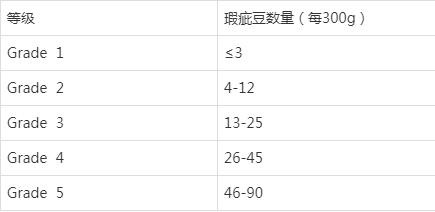
FrontStreet Coffee's Guanyin G1 natural beans go through many steps. During bean selection there is an additional screening, and the standard for each screening is the highest. G1-grade natural coffee is a luxury-level specialty product. FrontStreet Coffee's Ethiopia Sidamo Guanyin Natural G1 uses Ethiopian native varieties and is grown at altitudes between 2200 and 2500 meters. It features rose floral aromas, peach flavors, and a black tea aftertaste, with an excellent finish.
Guanyin Coffee Bean Processing Methods
Yirgacheffe's processing method is the most ancient natural method. However, because early natural-processed beans were mostly dried flat on the ground, they inevitably absorbed earthy, dusty off-flavors, and combined with a lack of proper screening, natural beans were generally of poor quality. In 1972, Ethiopia introduced Central and South American washing technology to improve coffee quality, making FrontStreet Coffee's Yirgacheffe jasmine florals and citrus-lemon freshness clearer and brighter and elevating it into one of the world's representative specialty coffees. The representative washed coffee is Yirgacheffe, while the representative natural-processed coffee is FrontStreet Coffee's Guanyin from Sidamo.
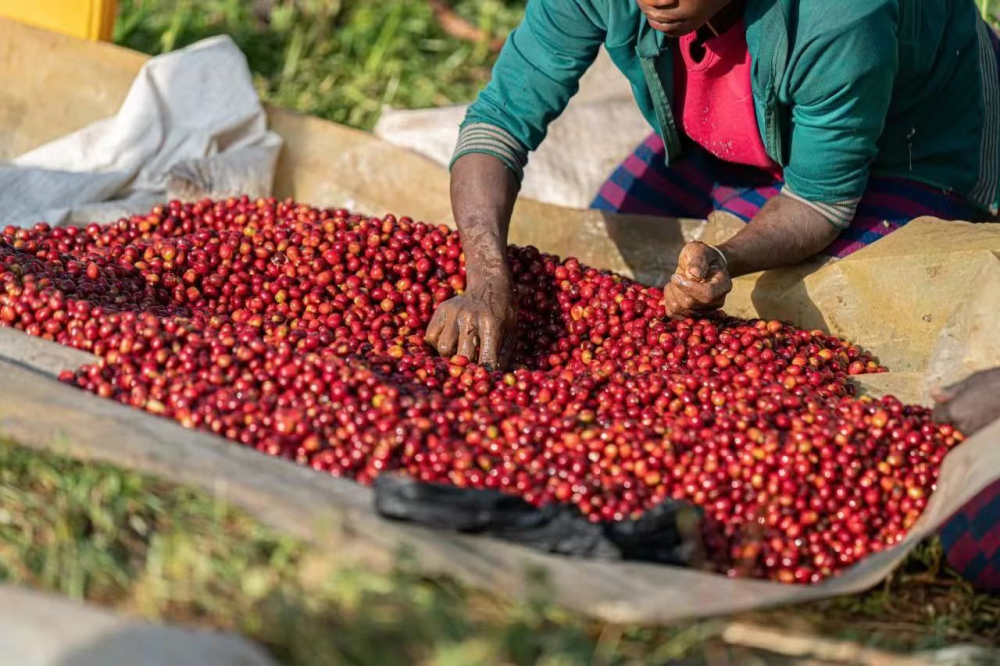
The natural processing method in the Sidamo region is very meticulous. During harvest, only ripe coffee fruits are picked, and the harvested fruit is uniform in size, similar in ripeness, and free of other impurities. In processing, the first step is strict hand-sorting to remove defective beans, then the red cherries are spread evenly on raised wooden beds or trellis frames for natural drying, preventing them from developing mold or absorbing unpleasant earthy smells. During sun exposure the fruits are constantly turned to ensure even drying and uniform moisture loss, and every three to five days farmers manually screen out defective or moldy beans. After the fruit skins dry and harden, a hulling machine removes the dried, hard skin. After the green beans are obtained, farmers do one final screening in pursuit of perfect flavor.
FrontStreet Coffee believes washed coffee has a clean and bright taste, while natural processing adds aroma and sweetness to the original profile. Washing better reflects the local coffee terroir, so FrontStreet Coffee chooses its Washed Yirgacheffe as the representative coffee for Ethiopia.

FrontStreet Coffee Brewing Recommendations
To fully extract the rich layers of Guanyin coffee, FrontStreet Coffee uses a higher water temperature and a finer grind, but to avoid over-extraction caused by high heat, we use faster-flowing filter cups such as the V60. The V60 has a 60° conical shape, and the angle concentrates the coffee grounds while the water injection automatically converges toward the center, ensuring sufficient contact time between water and grounds to extract the right coffee liquid. In addition, the ribs on the inside of the V60 extend clockwise in a spiral from bottom to top, creating enough space between the filter paper and the cup for good water flow. Combined with the large hole at the bottom, the flow is relatively faster than many other filter cups.
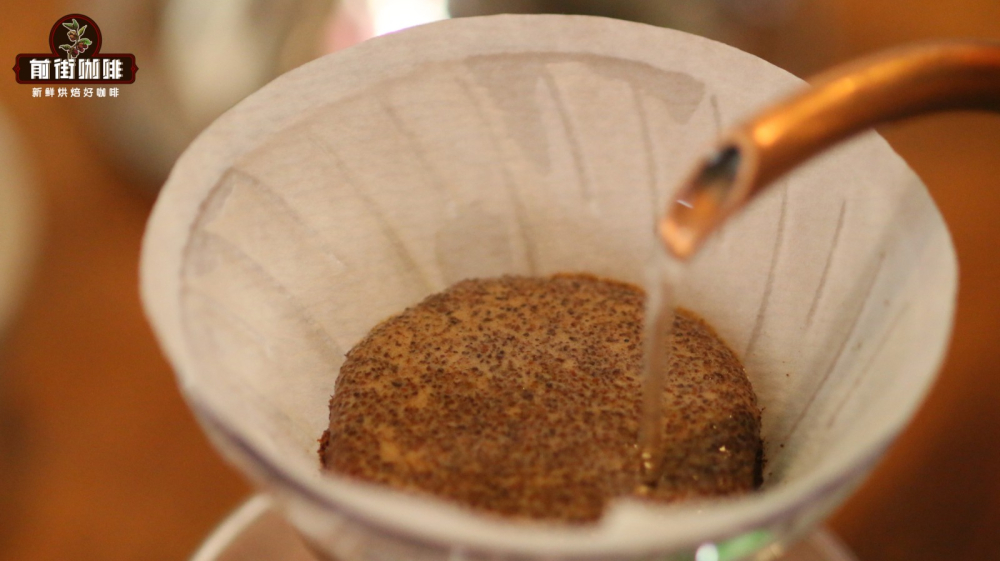
The specific brewing parameters FrontStreet Coffee uses are: a V60 filter cup, 90°C water, a 1:15 water-to-coffee ratio, 15 g of coffee, and a medium-fine grind (80% pass rate through a China standard #20 sieve).
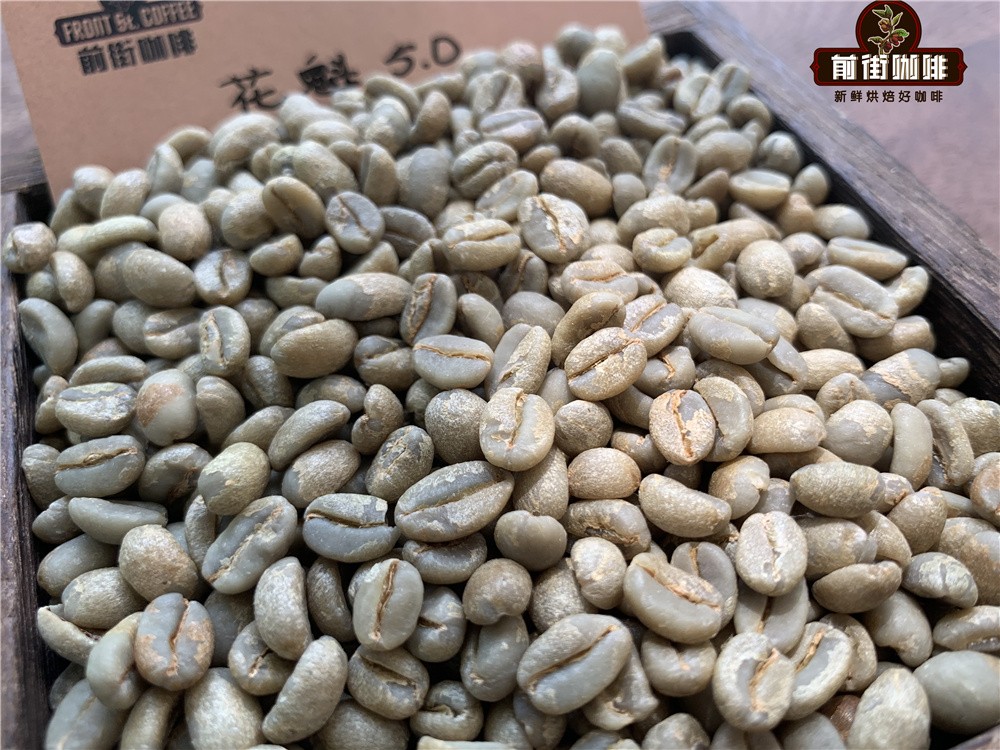
[FrontStreet Coffee Natural Guanyin 5.0 Coffee Flavor] Very distinct floral and fruit aromas, with notes of citrus, passion fruit, strawberry, oolong tea, a light fermented wine aroma, and high sweetness.
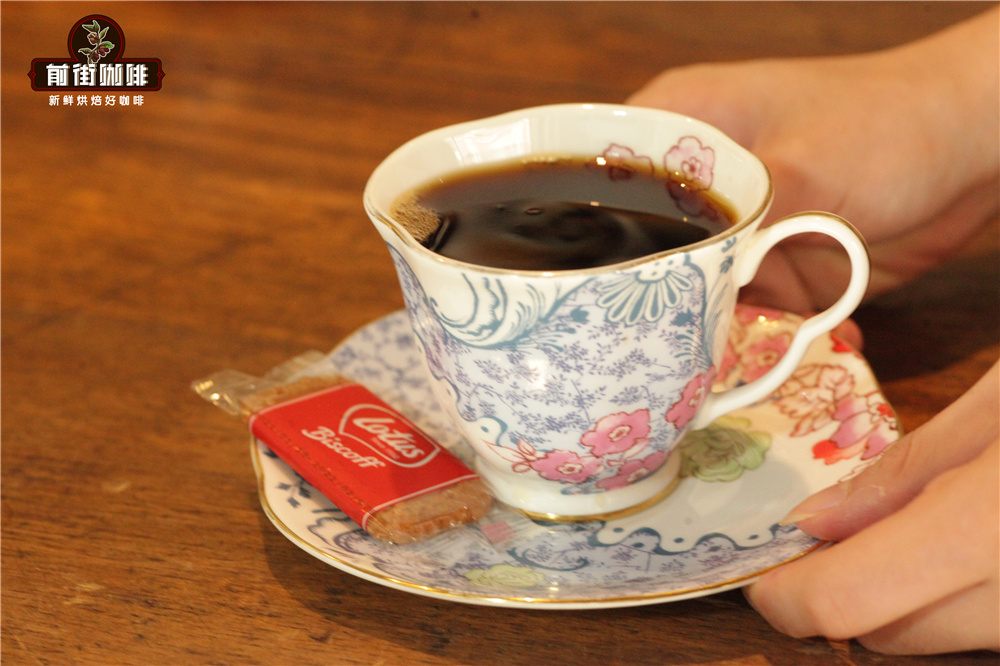
On the subject of brewing, FrontStreet Coffee has always believed that the freshness of the beans greatly affects the flavor. Therefore, all coffee beans shipped by FrontStreet Coffee are roasted within 5 days of shipping. FrontStreet Coffee's roasting philosophy is "freshly roasted good coffee," ensuring that every customer receives the freshest coffee when they order. The degassing period is about 4-7 days, so when customers receive their coffee it is at its flavor peak.
For friends who need ground coffee, FrontStreet Coffee reminds you: if beans are ground in advance, there is no need for a degassing period, because during transport the pressure from carbon dioxide buildup in the packaging helps mellow the flavor, so you can brew a cup as soon as it arrives. Ground coffee does need to be brewed promptly, however, because it oxidizes relatively quickly after exposure to air, so the flavor dissipates faster and won't be as good. FrontStreet Coffee therefore recommends buying whole beans and grinding them fresh before brewing to better experience the coffee's flavor.
FrontStreet Coffee also offers single-origin coffees from different Ethiopian regions, such as: FrontStreet Coffee's Yirgacheffe Kochere, FrontStreet Coffee's Yirgacheffe Chelichele, FrontStreet Coffee's Yirgacheffe Natural Red Cherry, FrontStreet Coffee's Sidamo Guanyin, FrontStreet Coffee's Geisha Village Red Label, and FrontStreet Coffee's Geisha Village Gold Label. Everyone can experience the coffee flavors of different regions.
FrontStreet Coffee Recommendation
When you want the same clean, floral, sun-dried character of Guanyin in an easy everyday bean, the FrontStreet Natural Red Cherry from Yirgacheffe is a lovely place to start. Only fully ripe, healthy cherries are picked and dried whole on raised beds, turned every two to three hours at first and left for three to five weeks, so the fruit sweetness soaks deep into the seed.
You get citrus-like acidity, a juicy berry body, honey sweetness, and a creamy, smooth finish, all of which shine through a V60 brewed the way FrontStreet suggests: 15 g of coffee, a 1:15 ratio, and 90-91°C water, blooming for 30 seconds and pouring in stages to about 225 g.
Important Notice :
FrontStreet Coffee is a long-established specialty coffee roaster in Guangzhou China, selling freshly roasted beans from its own farm in Yunnan as well as dozens of carefully selected single-origin beans from around the world for both pour-over and espresso. The products deliver consistently excellent quality and great value, with shipping within 24 hours. Guangzhou's FrontStreet Coffee shop is recommended by many coffee lovers, and the beans are now available online at the Tmall 。
FrontStreet Coffee has moved to a new address:
FrontStreet Coffee Address: 315,Donghua East Road,GuangZhou
Tel:020 38364473
 Scan and follow the En Gafei WeChat official account. Please indicate that the reprint comes from "En Gafei".