What Variety and Origin is Queen Coffee Bean - Introduction to Ethiopian Sidamo Queen 6.0 Coffee Flavor and Taste Characteristics

Whenever FrontStreet Coffee's Flower Queen coffee beans come up, the name evokes the image of "the leader of a hundred flowers, graceful and enchanting." This FrontStreet Coffee natural-processed Sidamo lives up to its name, unfolding captivating aromas and flavors in the cup. Here, FrontStreet Coffee traces how this Ethiopian sun-dried Sidamo bean rose from "unknown" to "leader of the flowers."
The Origin of Flower Queen Coffee Beans
FrontStreet Coffee's Flower Queen comes from the Guji region of Sidamo. Guji was once part of Sidamo but was established as an independent region by the Ethiopian Commodity Exchange (ECX) in 2010 on the strength of its exceptional bean flavors.

The Guji region lies beside Yirgacheffe and spans varied terrain, with fertile black soil reaching depths of two meters that lets plants root deep. Average altitude sits above 1,800 meters, with significant day-night temperature swings — all favorable conditions for quality coffee. Cultivation rarely requires chemical fertilizer: fallen leaves, decaying matter around the trees, plant residues, and organic soil matter supply ample nutrients for vigorous growth.
You will still often see "Sidamo" and "Guji" mentioned together, and the reason lies in Ethiopia's four-level administrative hierarchy: Region, Zone, Woreda, and Kebele. Most raw-bean names follow that structure. Flower Queen, for instance, grows southeast of Yirgacheffe and administratively belongs to Oromia Region → Guji Zone → Shakisso Woreda → Hambella.

This area has reddish-brown organic soil, abundant rainfall, and pronounced day-night temperature differences — producing coffee with delicate flavors and high-quality, bright acidity. Each harvest, farmers hand-pick only fully ripe red cherries, basket them, and send them to well-equipped processing facilities. Sun-drying begins only when the sugar content of the red fruit measures above 21. With scientific measurement and refined management, the traditional sun-dried craft is preserved while the beans gain more consistent quality and better sweetness.

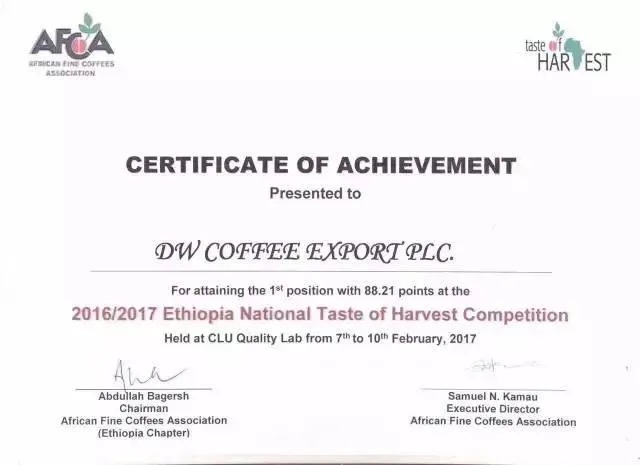
That excellent sweet-sour structure and stable quality caught the attention of Ethiopia's DW green coffee company. In 2017, DW entered sun-dried beans from the Buku processing plant in this region into the TOH (The Taste of Harvest) East African green coffee competition — and the lot took the championship with its rich, full berry notes, creamy smooth texture, and high sweetness. That same year, a Chinese green coffee importer brought in the competition lot and christened it with the evocative name "Flower Queen," capturing the character of the beans.
But fame's real turning point came elsewhere. In 2017, Li Jianfei, runner-up of the China region of the World Brewers Cup, used these Flower Queen beans to out-brew the Geisha lots of many rivals. In an era when Geisha dominated competitions of every size, a natural-processed Ethiopian bean defeating so many Geishas made everyone look at it afresh — and rank Flower Queen alongside Geisha itself.
DW subsequently built processing plants in Dimtu, the heart of Hambella — Buku Abel, Buku Saysay, Haro Soresa, and Tirtiro Goye — with an annual coffee output of roughly 1,100 tons. By growing region and processing plant, only sun-dried beans from the "Buku Abel" plant may be called "Flower Queen." Every Flower Queen FrontStreet Coffee has sold over the years comes from Buku Abel.
Why Does Flower Queen Coffee Bean Have So Many X.0 Series?
In principle, only the 2017 championship batch deserves the name. But coffee is an agricultural product, and its flavors shift from year to year with climate, soil, and other environmental factors. To keep them distinct, DW numbers each year's sun-dried Flower Queen from the Buku plant as an X.0 series: 2018 became Flower Queen 2.0, and by 2024 the series had reached Flower Queen 8.0.

What Are the Flavor Differences Between Flower Queen 5.0 Coffee Beans and 2017 Flower Queen Coffee Beans?
FrontStreet Coffee's cupping records show the 2017 Flower Queen carried rich strawberry aroma and strawberry sweet-sour structure, a texture like cream melting on the tongue, and outstanding, charming sweetness. The 2021 Flower Queen 5.0, while lacking that dense strawberry perfume, offers clearer flavors and higher cleanliness — berry-led notes, tropical fruit aromas, an oolong tea aftertaste, and noticeable sweetness.
Is Flower Queen Coffee Bean a Coffee Variety?
No — Flower Queen is only the name of the beans. The variety behind FrontStreet Coffee's Sidamo Flower Queen is Ethiopian native varieties, commonly seen as "Heirloom." As the birthplace of Arabica coffee, Ethiopia's thousands of Heirloom varieties make it an origin like no other.

Ethiopian coffee is generally grown under three systems: smallholder cultivation, semi-forest cultivation, and forest cultivation. Semi-forest coffee trees are typically wild varieties growing untended; farmers manage the growing areas and interplant other cash crops. With varieties so numerous and complex, genetic testing and verification at scale is nearly impossible — and the government, hoping to protect these unknown varieties from being snapped up by interested parties worldwide, decided to name them all "Heirloom."
FrontStreet Coffee's observations: native varieties tend to run small, relatively round, and uneven — mostly 14-15 mesh. In cupping they show elegant floral and fruit flavors, deeply loved by drinkers.

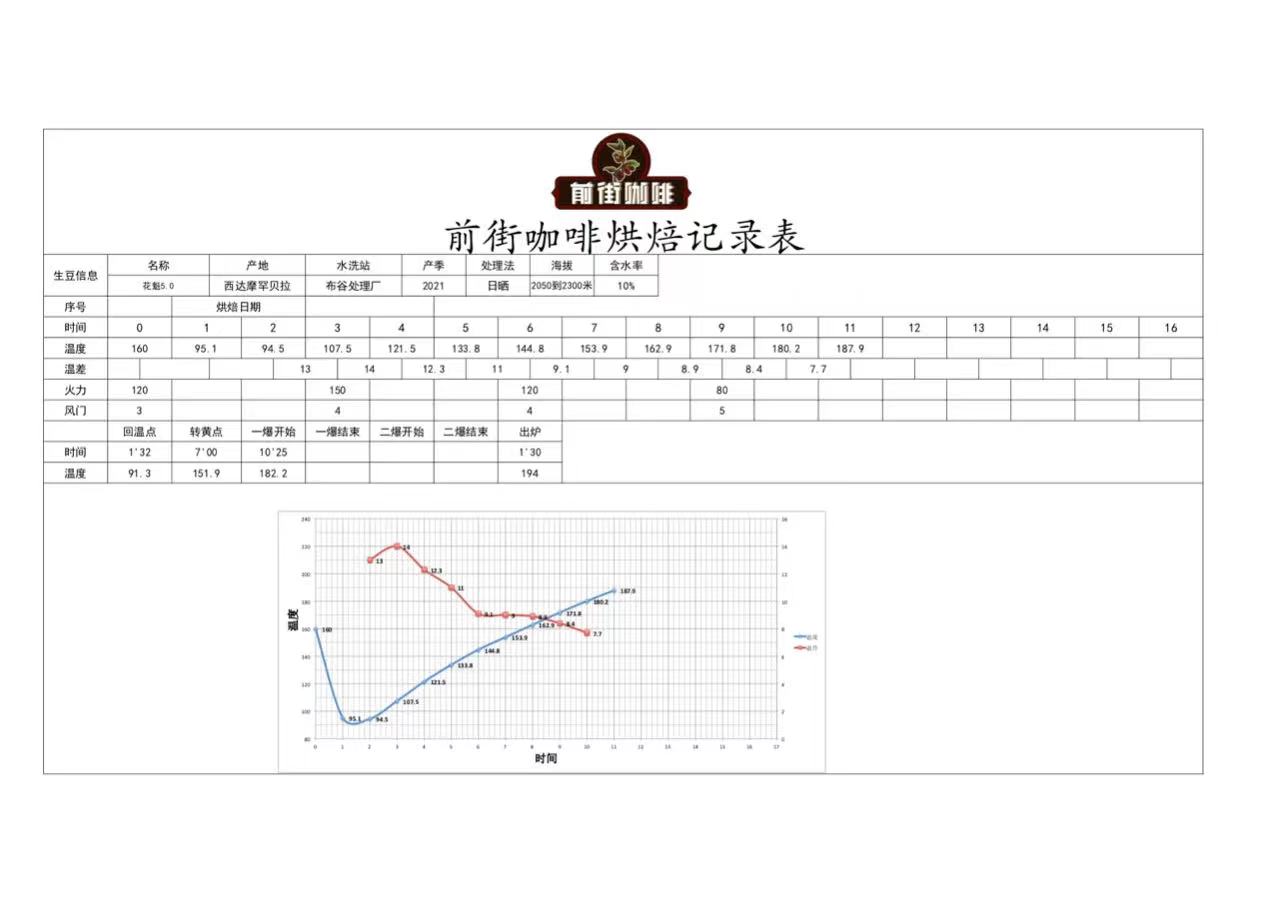
FrontStreet Coffee's Sidamo Flower Queen 5.0 Coffee Bean Roasting Insights
The moment FrontStreet's roasters received the raw Flower Queen 5.0, they noticed a fermented coffee-flower aroma quite unlike the grassy smell of typical green beans. The beans vary in size, many pointed at both ends, with good moisture content around 11% — though they are not the very hard SHB type. Given their density and hardness, the early drying phase is extended, and heat is applied on the climb to first crack to preserve aromatic compounds like the florals.
FrontStreet Coffee Brewing Suggestions
Filter: V60#01 Water Temperature: 90-91°C Coffee Dose: 15g Coffee-to-Water Ratio: 1:15 Grind Size: Medium-fine grind (80% pass-through rate on China standard #20 sieve)
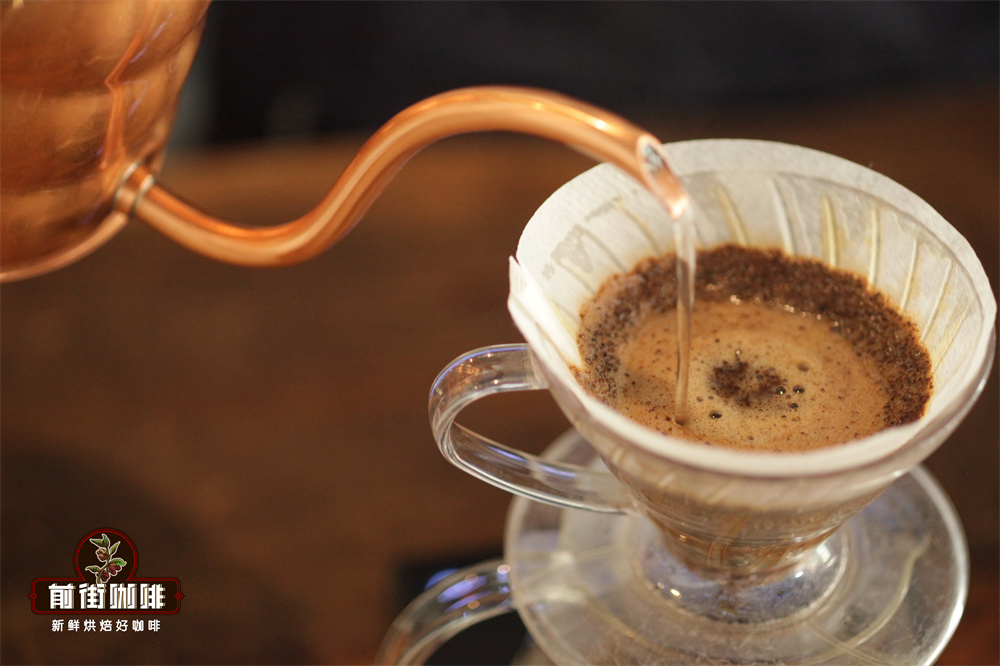
Brewing Method: Three-stage extraction. Bloom with 30g of water for 30 seconds. When the water level drops to about to expose the coffee bed, continue pouring water in a circular motion with a small flow to 125g. When the water level drops to about to expose the coffee bed again, continue pouring to 225g and stop. Wait for the water level to drop to about to expose the coffee bed, then remove the filter cup. (Timing starts from the beginning of blooming) Extraction time: 2'00".
FrontStreet Coffee's Sidamo Sun-dried Flower Queen 5.0 Coffee Bean Brewing Flavor: Floral notes, berries, citrus, plum sweet and sour taste, mango juice, honey, with a black tea sweet aftertaste.
FrontStreet Coffee Recommendation
Flower Queen belongs to the same natural-process Ethiopian family as the Geishas FrontStreet carries, and the two make a fascinating side-by-side tasting. For the classic Panamanian side of Geisha, the Esmeralda Red Label ("Esmeralda Special," grown at 1600-1800m and cupping above 90 points, every numbered batch from a single plot) is the pinnacle; the Green Label ("Private Collection," a blend of batches from multiple high-altitude plots) offers superb value; and the entry-level FrontStreet Boquete Gesha delivers classic orange-blossom honeyed sweetness, oolong-tea texture, and delicate fruit acidity at a friendly price.
On the Ethiopian side, Geisha Village — a 475-hectare estate just 12 miles from the original Gesha forest — grows Gori Gesha, Geisha 1931, and Illubabor Forest, graded into Gold, Red, Green, and Chaka tiers. The Gold Label (Geisha 1931, only 10% of production, an intricate refined natural) is the estate's top non-auction coffee and a frequent competition choice; the Red Label (Gori Gesha, 15% of production, 88+ on the SCA scale) is a fully traceable single-terroir series. For a gentler start, the FrontStreet Genlana Gesha from a 700-hectare growing area near Kochere shows bright citrus acidity, elegant ginger-flower aroma, mature fruit sweetness, and Gesha's signature refined finish.
However you brew, give these delicate lots the care they need: grind to a 78% pass-through on a #20 sieve (fine-sugar texture), use 91°C water, and pour 15g at 1:16 in three stages on a V60 — 30g bloom for 30 seconds, then small circular pours to 125g and 225g, drawing down in roughly 2'10"–2'20". For espresso or cold brew adventures, the medium-roasted Genlana Gesha makes an excellent SOE (20g, 1:2, 25 seconds), and FrontStreet's Strawberry Candy — Panama Geisha blended with Costa Rica raisin-honey coffee — brews a cold brew of grape juice, rose, sweet orange, and fruit-wine notes.
Important Notice :
FrontStreet Coffee is a long-established specialty coffee roaster in Guangzhou China, selling freshly roasted beans from its own farm in Yunnan as well as dozens of carefully selected single-origin beans from around the world for both pour-over and espresso. The products deliver consistently excellent quality and great value, with shipping within 24 hours. Guangzhou's FrontStreet Coffee shop is recommended by many coffee lovers, and the beans are now available online at the Tmall 。
FrontStreet Coffee has moved to a new address:
FrontStreet Coffee Address: 315,Donghua East Road,GuangZhou
Tel:020 38364473
 Scan and follow the En Gafei WeChat official account. Please indicate that the reprint comes from "En Gafei".