How to Brew Brazilian Coffee Beans for Great Taste: Growing Regions, Varieties, and Flavor Characteristics
We often say the higher the altitude, the denser the coffee beans and the more diverse and rich the flavor. Brazil's growing regions generally sit at lower altitudes, on flat terrain without the support of microclimates — conditions better suited to large-scale cultivation of soft beans with mellow flavors. Low acidity, balanced taste, and affordable prices have made Brazilian coffee a top choice for specialty espresso blends: three of FrontStreet Coffee's four house-roasted espresso blends contain Brazilian beans. Their addition not only provides chocolate and cream aromas but also creates a balanced profile that aids extraction stability.
Brazilian Coffee Growing Regions
Brazil has more than three hundred years of coffee cultivation history; since the 1970s, coffee has been the mainstay of the local economy, and the country is currently the world's largest coffee producer. Brazil's growing area dwarfs that of other countries. Today, 17 states produce coffee, concentrated mainly in the southeast, where the four major producing regions — led by Minas Gerais — account for up to 90% of the country's annual coffee output. The coffee cultivation area in Minas Gerais alone reaches 1.22 million hectares, equivalent to the entire coffee-growing area of Colombia.
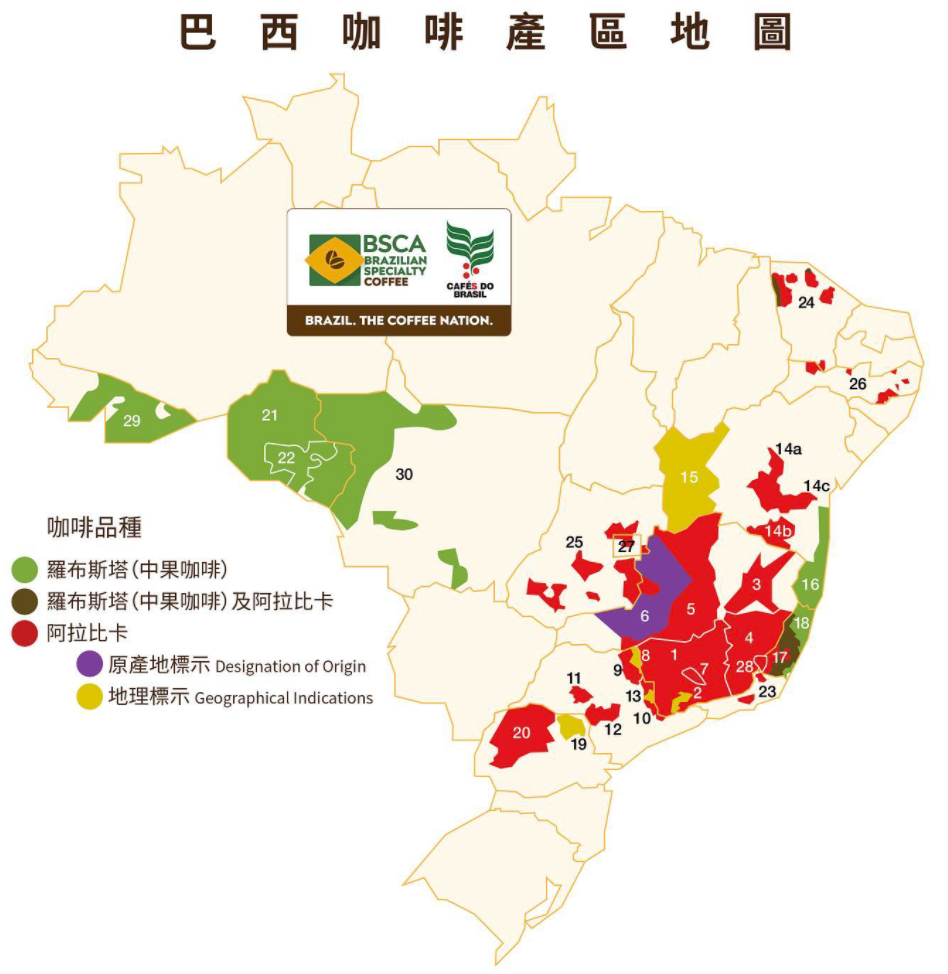
When it comes to representative specialty regions in Brazil, Cerrado and Sul de Minas in Minas Gerais, plus Mogiana in São Paulo, are the most famous. The coffee market has distilled a rule of thumb: Brazil's total production depends on whether Minas Gerais enjoys a bountiful or poor harvest — and Minas Gerais's harvest depends on Sul de Minas, Cerrado, and Mogiana.
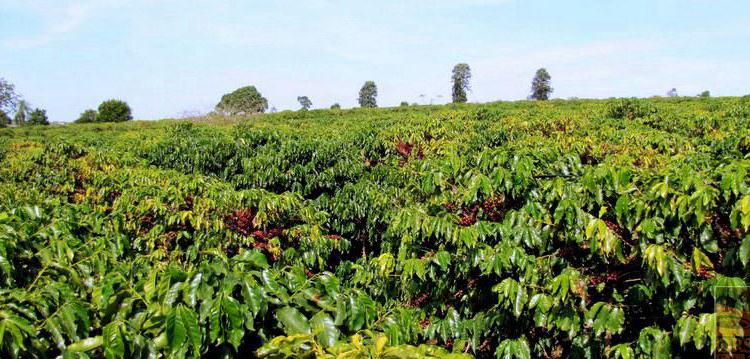
The Cerrado growing region, named after the Cerrado savanna, refers specifically to the Cerrado area in western Minas Gerais. Its flat terrain and concentrated harvest season suit large-scale management and mechanized picking perfectly. Add high altitudes above 1,000 meters and fertile soil, and it is little wonder that many exporters identified this treasure land early and invested in farms here — almost all of them larger than 10 hectares.
Sul de Minas lies above 1,100 meters, with rolling hills and piedmont slopes, rich topography, distinct wet and dry seasons, large day-night temperature swings, and abundant microclimates — ideal for cultivating the elegantly flavored Bourbon and Yellow Bourbon varieties, which has naturally made it a heartland of specialty coffee.

Mogiana is close to Sul de Minas; coffee there grows mostly among shrubs, grasslands, and other vegetation. The region's fertile red volcanic soil lets the cherries absorb ample nutrients and develop full aromas. Some farms stick to traditional operations while others have adopted modern standardized management, greatly raising local coffee quality. FrontStreet Coffee has tasted a unique sugarcane sweetness in Mogiana coffee that other regions don't have, alongside fruity and chocolate flavors.
Vast and resource-rich Brazil produces a wide variety of coffee. FrontStreet Coffee cupped and compared Brazilian beans from multiple regions and varieties, ultimately selecting the pulped natural Red Bourbon from Cerrado as Brazil's representative. This sweet, mellow FrontStreet Coffee Brazil Cerrado has joined FrontStreet Coffee's daily bean series, letting everyone experience Brazilian flavors easily.
Brazil Bourbon Varieties
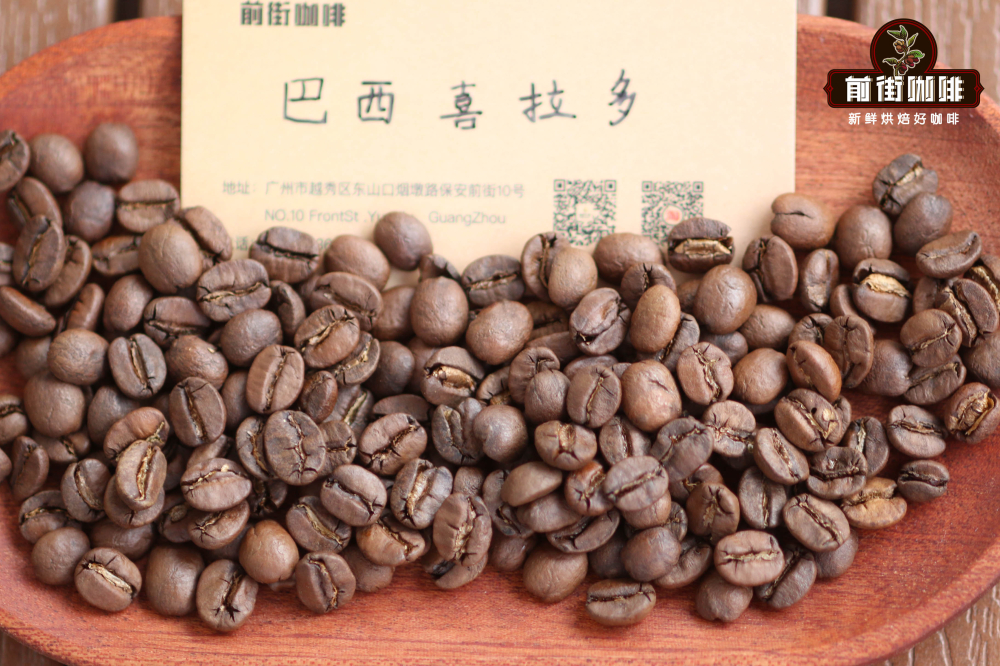
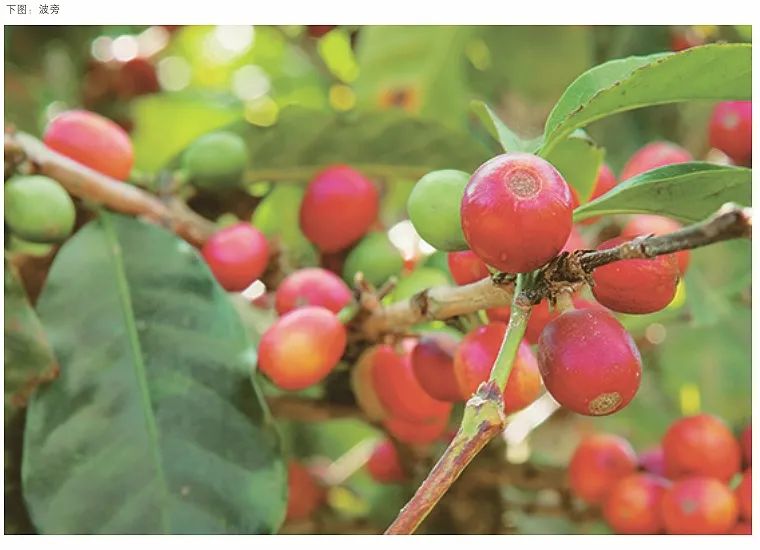
Today, Bourbon, Mundo Novo, and Catuai are Brazil's main varieties, with Bourbon the longest-established, derived from a genetic mutation of Typica. Common Bourbon cherries turn from green to light yellow, orange-yellow, and red before reaching fully ripe dark red — what we call Red Bourbon. Red Bourbon grown at high altitude has balanced flavors, rich aromas, and smooth acidity, and it is the source of FrontStreet Coffee's daily beans.
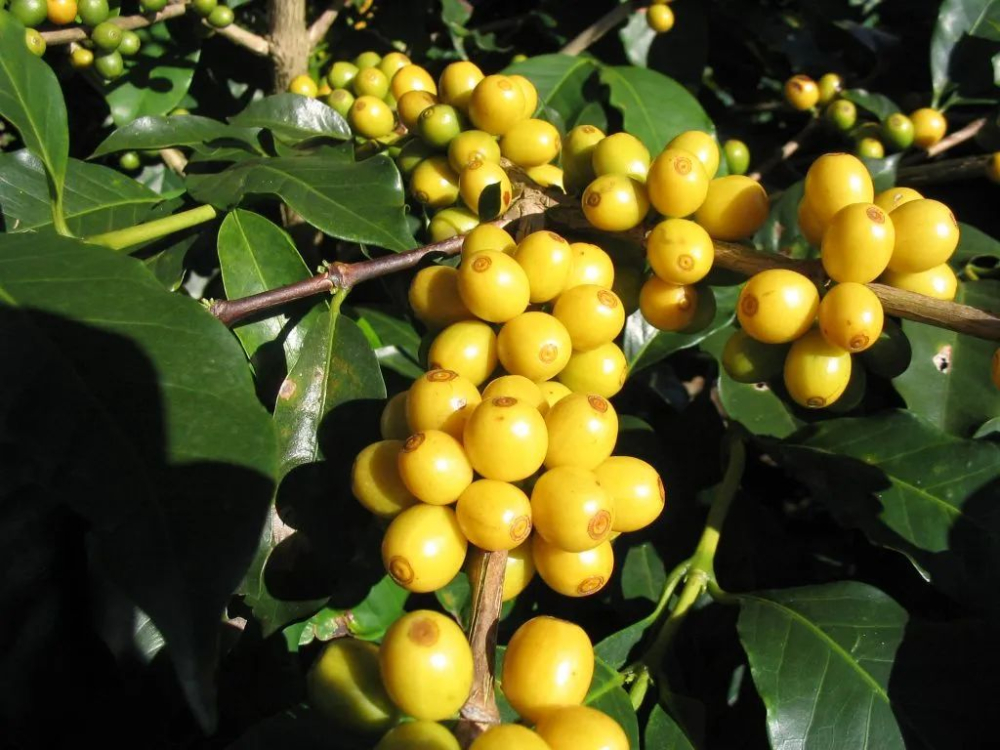
Yellow Bourbon, whose cherries ripen to yellow rather than cherry-red, was discovered in 1930. Its "yellow" comes from genetic color selection. Grown at high altitudes, Yellow Bourbon carries high fructose and can deliver sweet, juicy flavors. It once swept the Brazil Cup of Excellence for two consecutive years, nearly claiming all three top prizes and taking the specialty coffee world by storm! FrontStreet Coffee's Yellow Bourbon from Brazil's Queen Farm shows cream and peanut aromas with sugarcane sweetness after roasting.
Brazil Pulped Natural
Brazil's green coffee processing methods include natural, pulped natural, and washed, with usage driven by local climate conditions.
Before 1990, Brazil relied almost exclusively on rough natural processing, dumping cherries onto concrete ground to sun-dry until hard. The coffee was prone to earthy off-flavors and unpleasant over-fermentation, badly hurting quality. In 1990, Brazil's coffee research institutions developed the pulped natural method suited to the local arid climate: before drying, the pulp and skin are removed, leaving only a thin mucilage layer for 1-3 days of sun exposure, followed by machine drying to 12% moisture, then resting in storage containers for maturation. This shortened processing time and reduced negative flavors from the process, significantly improving the quality of Brazilian beans.
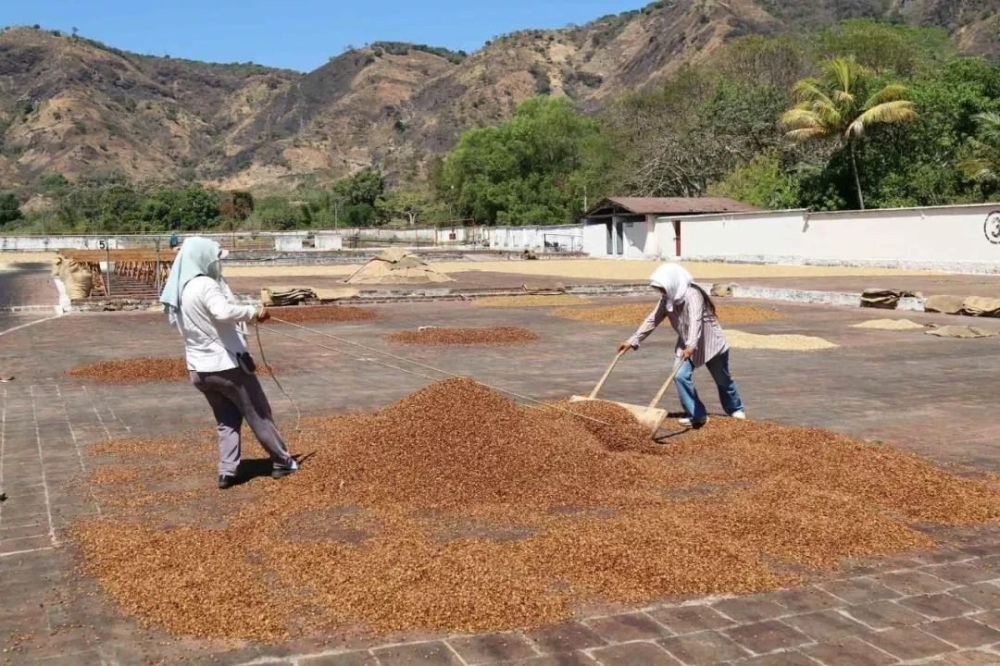
Of course, alongside the efficiency-minded pulped natural, some places in Brazil still preserve traditional natural processing. The natural-process Queen Farm on FrontStreet Coffee's bean list first pours its cherries into water tanks, removing underripe cherries by flotation. To avoid earthy and fermented notes, Queen Farm spreads the cherries on African raised beds throughout drying and assigns staff to turn them regularly, reducing uneven heating and preserving the coffee's cleanliness as much as possible.
How to Brew FrontStreet Coffee's Brazilian Coffee for Best Taste?
As mentioned above, Brazilian coffee offers nutty and peanut flavors with chocolate sweetness and a rich, solid mouthfeel. Its mellow character forgives simple brewing methods, but FrontStreet Coffee's favorite way to present it is pour-over. Here, FrontStreet Coffee will brew its Brazil Cerrado daily beans as an example of a Brazilian pour-over.
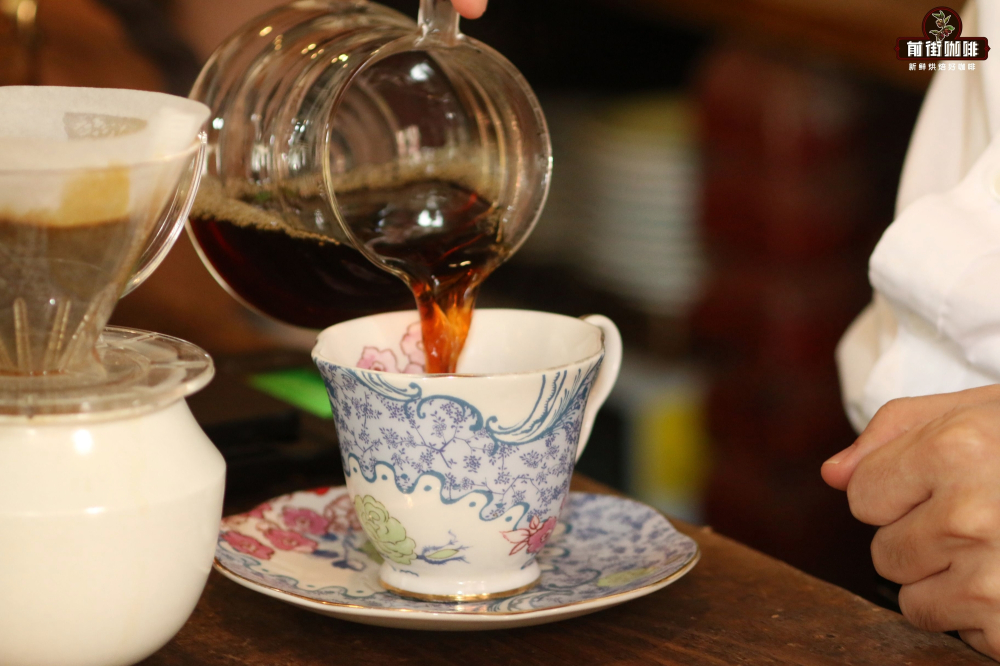
Start with beans inside their optimal flavor window: if the roast date is more than a month old, some aromas may already have dissipated, and woody flavors may even have developed. Beans shipped by FrontStreet Coffee are roasted within 5 days, so when they arrive they are at their most aromatic.
FrontStreet Coffee matches brewing parameters to the roast level. The Brazil Cerrado brewed today is a medium-dark roast: with more caramelization than light roasts, it releases bitter large-molecule compounds more readily, so FrontStreet Coffee lowers the water temperature slightly. While light roasts brew at 91-93°C, medium-dark beans do better at 87-88°C. The finer the grind, the more soluble material is released in the same extraction time, so to avoid over-extraction the grind is set coarser: a medium grind — EK43s setting 10.5 in the shop, with a 75% pass-through rate on the China standard sieve.
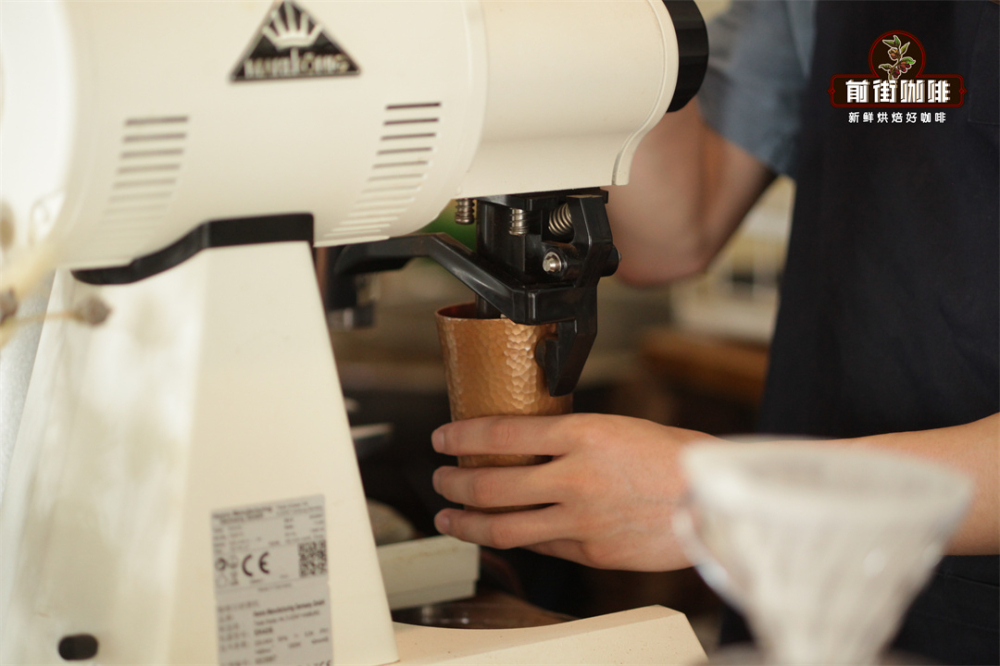
Medium-dark roasts mainly present a rich, rounded mouthfeel — and for that, FrontStreet Coffee chooses the slower-flowing KONO dripper. The KONO's upper walls are a smooth curved surface while the lower part carries guide ribs extending one-third of its length, so the filter paper fits closely and upward airflow is restricted, forcing hot water downward and creating a siphon-like extraction that draws out more aromatic substances. It suits medium-dark roast beans like FrontStreet Coffee Brazil Queen Farm and FrontStreet Coffee Blue Mountain.
Dripper: KONO dripper
Water temperature: 87-88°C
Coffee amount: 15 grams
Coffee-to-water ratio: 1:15
Grind size: Medium grind (75% pass-through rate on the China standard #20 sieve)
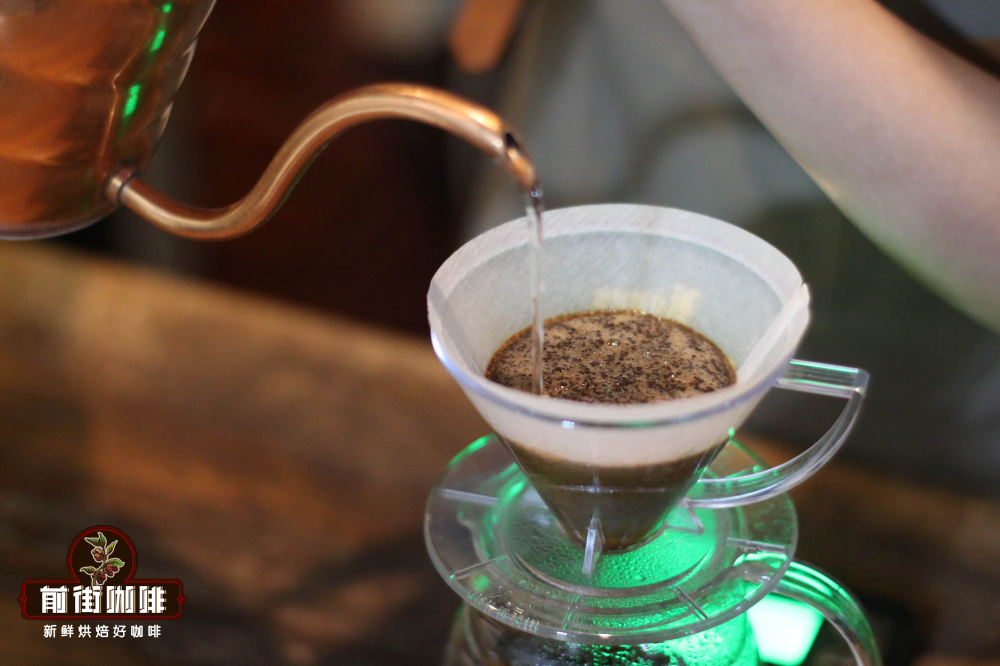
Wet the coffee bed with twice the coffee's weight in water, letting it form a dome and bloom for 30 seconds. Then pour in circles from the center outward with a small flow up to 125g, and pause. When the coffee bed drops to half the dripper's height, continue with the same fine flow for the third pour to 225g. Once all the coffee has filtered through, remove the dripper. Total time should be about 2 minutes.
FrontStreet Coffee Brazil Cerrado Red Bourbon daily beans: obvious sweetness on entry with a faint lemon note, rich nut and caramel flavors, and a distinct dark chocolate finish — an altogether rounded cup.
For professional coffee knowledge exchange and more coffee bean information, please follow Coffee Workshop (WeChat public account: cafe_style)
For more specialty coffee beans, please add personal WeChat FrontStreet Coffee, WeChat ID: qjcoffeex
FrontStreet Coffee Recommendation: Two Ways to Taste Brazil — Cerrado Red Bourbon & Queen Farm Yellow Bourbon
If you simply want a taste of Brazil, start with FrontStreet Coffee's pulped natural Cerrado Red Bourbon, a classic single origin from a region famed for quality. Roasted medium, it pours out aromas of cream and peanut, toasted bread, caramel, and hazelnut — a round, sweet, faintly bitter cup with no sharp acidity, equally at home in a pour-over, moka pot, espresso SOE, siphon, or French press. Want something rarer? The Queen Farm Yellow Bourbon from Mogiana — a genetic mutation of Red Bourbon with cleaner fruit character, grown in fertile red volcanic soil — reveals a sugarcane sweetness found nowhere else, along with fruit and chocolate notes, whether brewed by hand or pushed through milk. Either bean delivers Brazil's signature balance of moderate acidity, sweetness, bitterness, and body.
Important Notice :
FrontStreet Coffee is a long-established specialty coffee roaster in Guangzhou China, selling freshly roasted beans from its own farm in Yunnan as well as dozens of carefully selected single-origin beans from around the world for both pour-over and espresso. The products deliver consistently excellent quality and great value, with shipping within 24 hours. Guangzhou's FrontStreet Coffee shop is recommended by many coffee lovers, and the beans are now available online at the Tmall 。
FrontStreet Coffee has moved to a new address:
FrontStreet Coffee Address: 315,Donghua East Road,GuangZhou
Tel:020 38364473
 Scan and follow the En Gafei WeChat official account. Please indicate that the reprint comes from "En Gafei".