The History and Origins of Costa Rican Coffee: An Introduction to the Regional Coffee Bean Grading System

Costa Rica—whenever we hear the name, do we inexplicably think of Godzilla? In fact, Costa Rica is a presidential republic in Latin America, bordered by Nicaragua to the north and Panama to the south. With high altitudes, rich microclimates, fertile volcanic soil, and good drainage, the region is exceptionally well suited to growing Arabica coffee.
History of Coffee Cultivation in Costa Rica
In 1729, after Costa Rica's first coffee tree arrived from Cuba, the country became one of Central America's commercial coffee pioneers. It wasn't until independence from Spain in 1821, though, that the government began backing the industry with a series of policies. By then coffee had been grown for over a century, and some 70,000 trees were already planted—clear evidence of how fast the sector had developed.
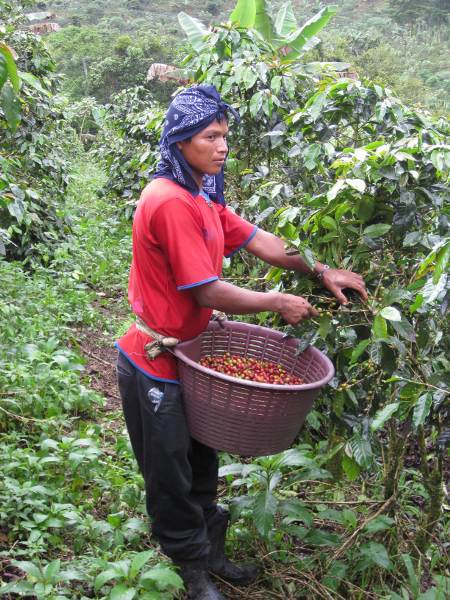
To encourage cultivation, Costa Rica rolled out tax exemptions as early as 1825. Then in 1832 came a remarkable law: "Those who grow coffee will own their land"—anyone planting coffee on unoccupied land could claim it outright. The incentive drew many into coffee, accelerated the industry's growth, and explains why most Costa Rican coffee still comes from private estates.
By 1948 the government had established a dedicated coffee department—now the Costa Rican Coffee Institute, ICAFE (Instituto del Café de Costa Rica), overseen by the official Oficina del Café—mainly to help estates improve everything from cultivation and post-harvest processing to sales. Exports are handled with great care, which is why Costa Rican beans are so consistent in quality and balanced in flavor.
As production grew, quality became uneven and competitiveness suffered. To fix this, in the early 20th century the government enacted and revised laws restricting all farms and plantations in Costa Rica to Arabica varieties. By 1989, a law officially prohibited the cultivation of low-quality beans, encouraging farmers to chase truly exceptional coffee—which is why only Arabica is grown in Costa Rica today.

Worth noting: this law was jointly decided and implemented by the government and two renowned Costa Rican research institutions—CATIE (the Tropical Agricultural Research and Higher Education Center, a multi-country organization, founded in 1942) and ICAFE (created as early as 1933). Both have contributed not only to Costa Rican coffee but to the whole of Central and South American coffee.
Coffee Growing Regions in Costa Rica
Coffee cultivation is distributed across 8 regions: West Valley, Central Valley, Tarrazu, Tres Rios, Orosi, Brunca, Turrialba, and Guanacaste.
Costa Rica's specialty coffee regions are concentrated in the West Valley, Central Valley, and Tarrazú, at elevations of 1,200–2,000m.
Flavor Characteristics of Costa Rican Coffee Regions
Volcanic ash has enriched the soil in these regions, and pleasant year-round temperatures around 19°C plus abundant rainfall make for near-ideal growing conditions. The result is coffee of great purity and sweetness, with charming layered balance in both acidity and mouthfeel.

After cupping comparisons, FrontStreet Coffee found that Tarrazú coffee shows excellent cleanliness, bright acidity, and citrus and berry tones—think of beans such as the "FrontStreet Daily Bean Series – Costa Rica Tarrazú," the "Musician Series Mozart," the "Musician Series Bach," and the "Tarrazú Estate Strawberry Sugar."
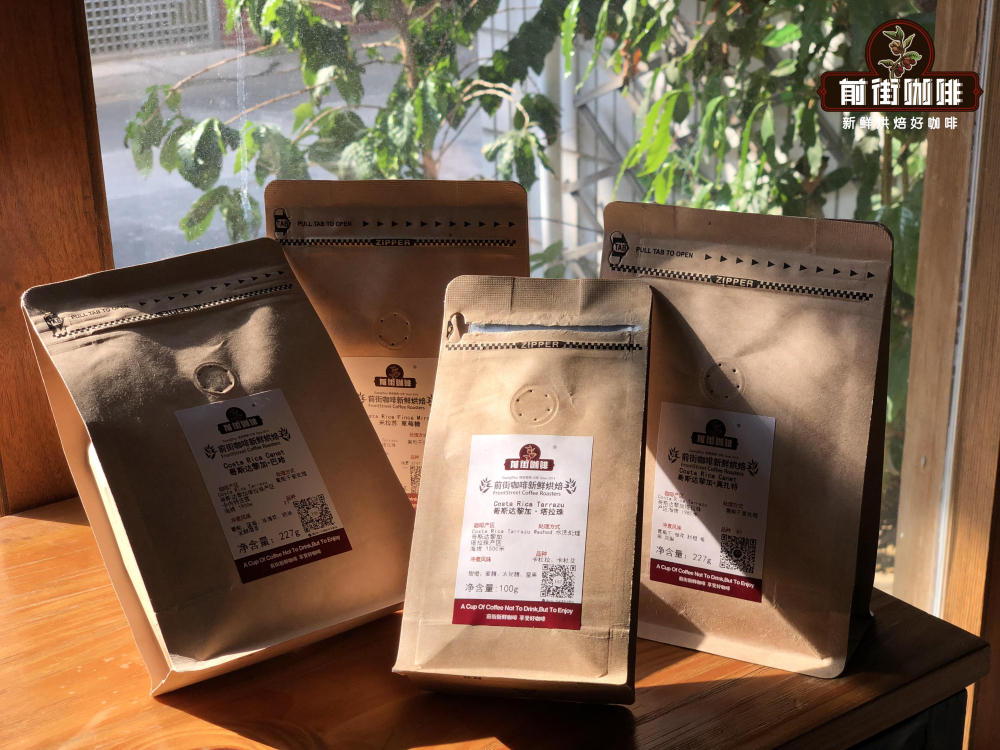
West Valley beans are less sharply acidic than Tarrazú's, with a more balanced mouthfeel and nutty, caramel aftertaste. Central Valley coffee, meanwhile, is very pure and sweet, with beautiful layered balance in acidity and body.
Coffee Bean Varieties in Costa Rica
Costa Rica mainly grows Caturra, Catuai, and Geisha, with smaller amounts of Bourbon, Villa Sarchi, and others.

Caturra is a Bourbon variety discovered in Brazil in 1937. It out-yields Bourbon, resists disease better, and grows shorter plants that are easy to harvest. Highly adaptable and shade-free, it can be cultivated from 700 meters up to 1,700 meters; the higher the altitude, the better the flavor—at the cost of yield.
Catuai was artificially hybridized in 1949 from yellow Caturra and Mundo Novo, originally coded "H-2077". It stands up well to weather, especially wind and rain. Its compact size allows double-density planting and makes pest and disease control relatively easy. Catuai grows vigorously and stays short, but is susceptible to leaf rust.
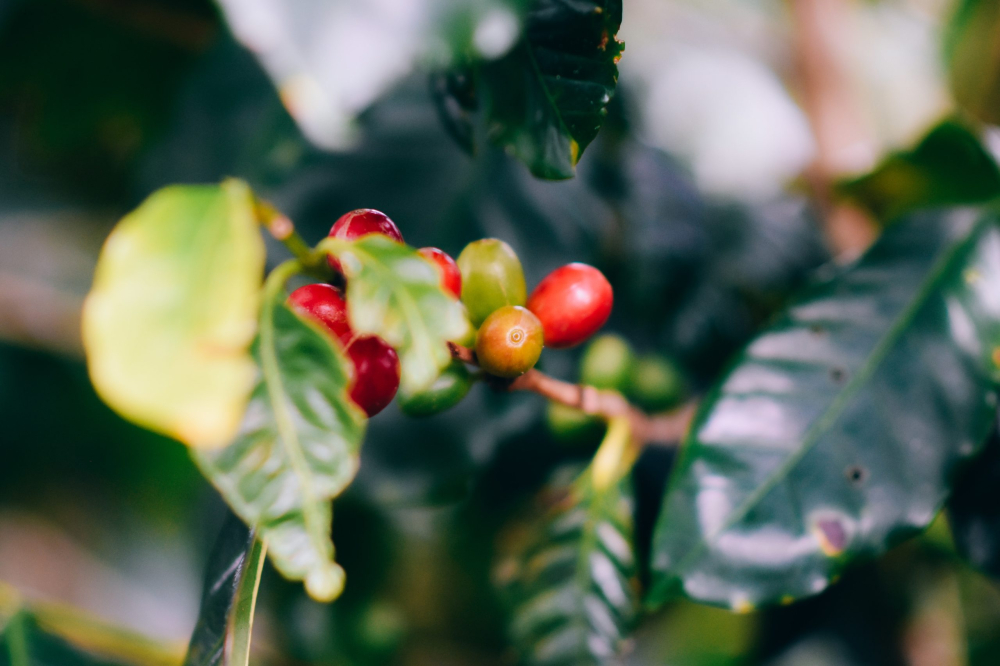
Geisha was found in Ethiopia's Gori Geisha forest in 1931, sent to Kenya's coffee research institute, introduced to Uganda and Tanzania in 1936, and brought to Costa Rica in 1953. Geisha coffee has extraordinarily delicate florals and fruit acidity, and at high altitudes its flavors are almost intoxicating.
Bourbon was originally cultivated on Réunion—known as Bourbon Island before 1789. The variety reached Brazilian farms in 1860 and spread rapidly north through South and Central America. High-altitude Bourbon typically shows better aroma, brighter acidity, and even wine-like flavors.
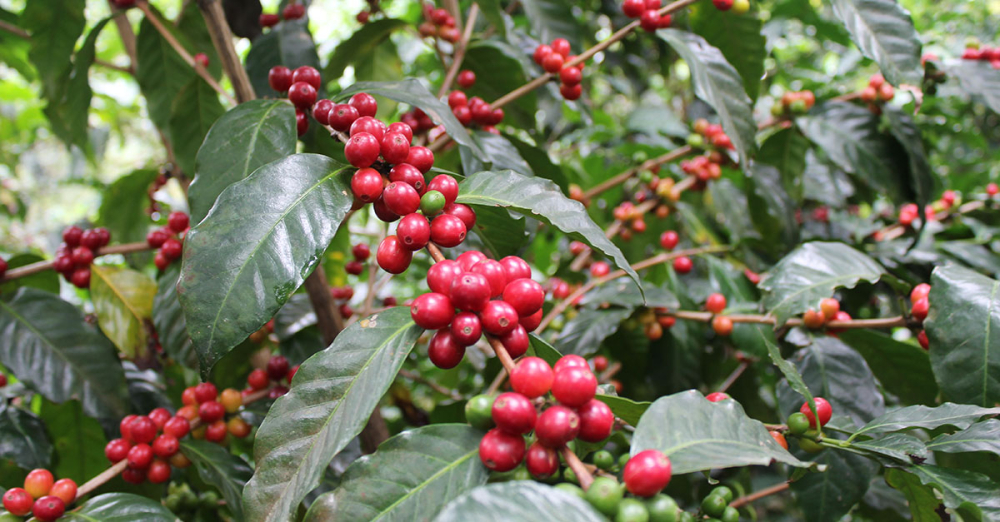
Villa Sarchi is a Bourbon derivative—a natural dwarf mutation with green shoot tips found in Costa Rica in 1950, then refined through pedigree selection. It was never widely planted at home; instead the Honduran Coffee Institute (IHCAFE) introduced it to Honduras in 1974. Aromatically it's a highly complex coffee suited to medium-dark roasting: the dry fragrance after grinding carries floral nectar and cherry, laced with sweet spices like cinnamon.
Villalobos is a Costa Rican Typica. Like Typica, its branches meet the trunk at 60 degrees and its young leaves are bronze. It thrives at high altitude, resists wind, tolerates poor soil, and actually grows better under shade trees. In the cup, its hallmarks are outstanding sweetness and wonderful acidity.
Coffee Bean Grading in Costa Rica
Costa Rican beans are graded mainly by cultivation altitude: the higher the altitude, the denser the coffee and the harder the bean. All Costa Rican beans sold by FrontStreet Coffee are SHB grade.
| Grade | Altitude | |
|---|---|---|
| SHB (Strictly Hard Bean) | Very Hard Bean | ≥1400m |
| HB (Hard Bean) | Hard Bean | 1200-1400m |
| SH (Semi Hard Bean) | Semi-Hard Bean | 1100-1200m |
| EPW (Extra Prime Washed) | Extra Prime Washed | 900-1100m |
| PW (Prime Washed) | Prime Washed | 800-900m |
| EGW (Extra Good Washed) | Extra Good Washed | 600-800m |
| GW (Good Washed) | Good Washed | ≤600m |
How to Brew Costa Rican Coffee for Best Taste?
For brewing, FrontStreet Coffee uses 15g of coffee with a finer grind—about a 78–80% pass rate on the China No. 20 standard sieve—and a 1:15 coffee-to-water ratio.
After several brewing comparisons, water at 90–91°C best expresses this coffee's aroma and sweetness, and a V60 dripper brings out its layered complexity.
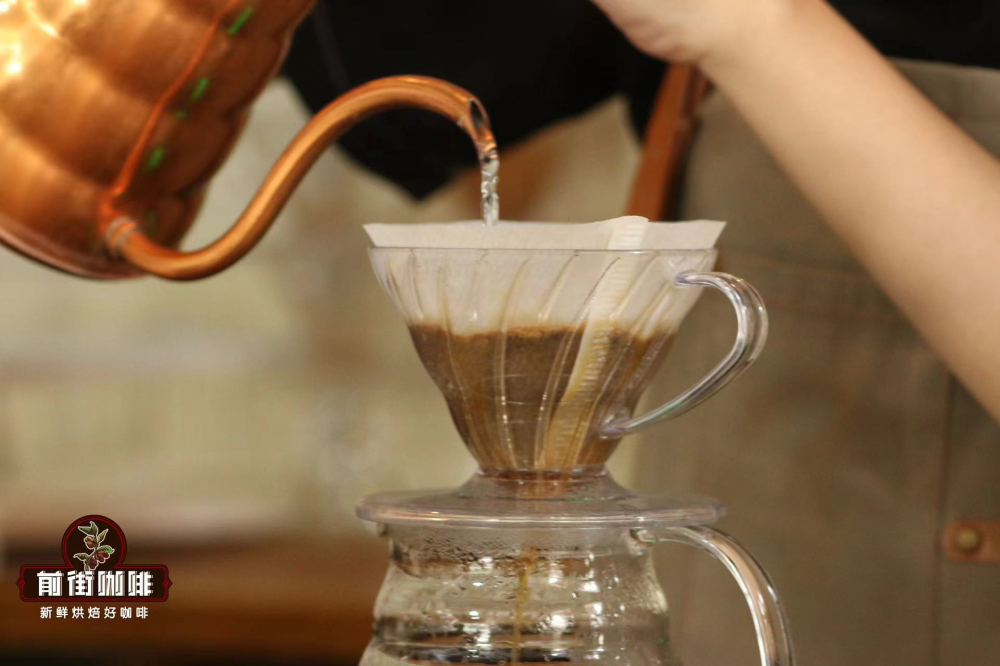
The technique: first pour 30g of water to bloom for 30 seconds. In the second stage pour to about 125g, then wait for the liquid to fall; when it drops to halfway, make the final pour to 225g. Let all the coffee finish dripping to complete the extraction—total brew time is generally around 2 minutes 10 seconds.
FrontStreet Coffee Recommendation
Costa Rica grows its coffee at high altitude with big day–night temperature swings and rich volcanic soil all around, which is why the country is famous for Strictly Hard Bean (SHB) coffee of elegant aromatics. Its signature is the honey process: drying the beans still wrapped in mucilage yields abundant sweetness and a clear, expressive profile. For honey-processed Costa Rica, start with FrontStreet's black-honey Blackberry—almost no mucilage is removed and drying lasts at least two weeks—giving grape, berry, and ripe blackberry at a medium-light roast, or the raisin-honey Mozart, which pre-dries whole cherries for at least three days and retains 100% of the pectin for osmanthus, pineapple, and raisin notes.
Those sweetness-forward cups shine no matter the brew method—pour-over, cold brew, Americano, or latte all highlight Costa Rica's crisp sweetness. If you'd like to branch out, the Strawberry Sugar blend pairs Costa Rican honey processing with Panamanian Geisha lineage for delicate florals plus sweet fruit, equally good hand-poured, moka-potted, or cold brewed.
Important Notice :
FrontStreet Coffee is a long-established specialty coffee roaster in Guangzhou China, selling freshly roasted beans from its own farm in Yunnan as well as dozens of carefully selected single-origin beans from around the world for both pour-over and espresso. The products deliver consistently excellent quality and great value, with shipping within 24 hours. Guangzhou's FrontStreet Coffee shop is recommended by many coffee lovers, and the beans are now available online at the Tmall 。
FrontStreet Coffee has moved to a new address:
FrontStreet Coffee Address: 315,Donghua East Road,GuangZhou
Tel:020 38364473
 Scan and follow the En Gafei WeChat official account. Please indicate that the reprint comes from "En Gafei".