Should You Use Hot or Cold Water to Make Cold Brew Coffee? Can Cold Brew Be Made with Hot Water?
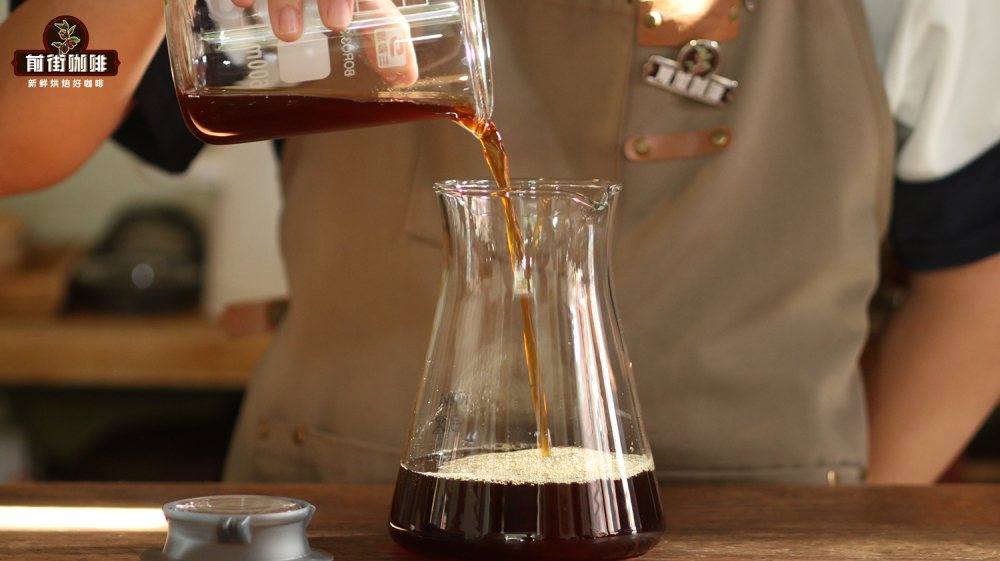
Beyond hot water extraction, coffee can also be crafted with cold water. Coffee made with cold water is known as "cold brew coffee," and it offers a distinctive charm compared to hot-brewed coffee.
Cold brew coffee encompasses both cold brew and ice drip coffee. Cold brew involves steeping coffee grounds in cold water, while ice drip coffee refers to extracting coffee drop by drop through a dripping process. Some friends have asked FrontStreet Coffee: "Should cold brew coffee be made with hot or cold water?" Coffee steeped with hot water cannot be called cold brew. Cold brew must be steeped with room-temperature or ice water, and the steeping environment must maintain low temperatures.
Because the grounds only ever contact low-temperature water at 4-10°C, extraction efficiency is extremely low and bitter macromolecules are not easily released. Prolonged low-temperature steeping allows compounds like sugars and organic acids to extract more completely, resulting in better balance of acidity, sweetness, and body in the finished coffee.
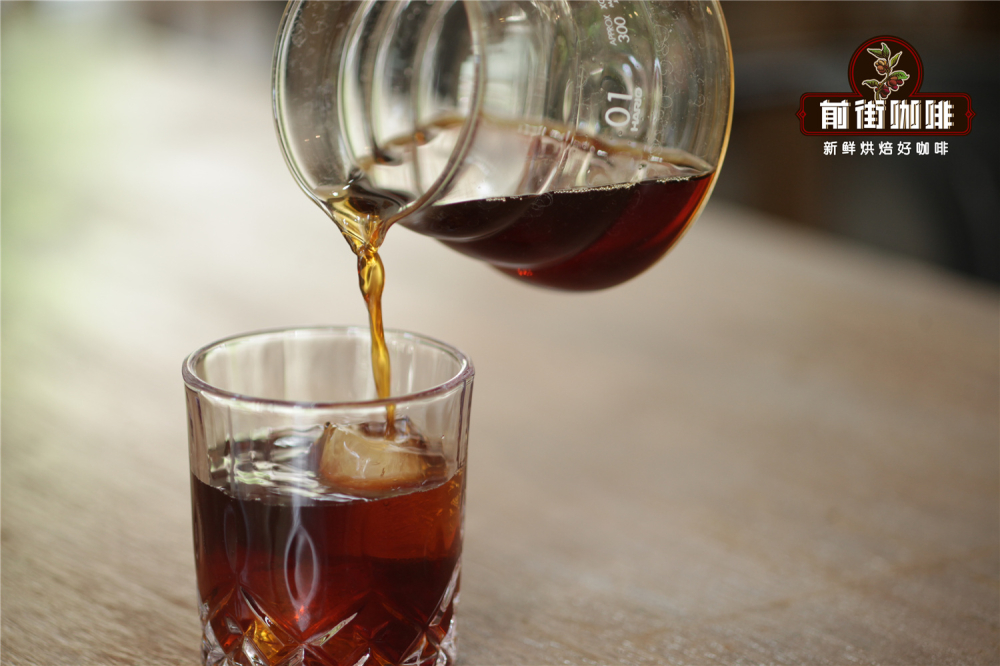
So how can you make cold brew coffee that tastes great? FrontStreet Coffee would like to share a few operational details.
Coffee Bean Selection
If you want to avoid mistakes, FrontStreet Coffee recommends medium-light roast coffee beans, which are more forgiving than medium-dark roasts. The market today offers beans in all sorts of processing methods and roast levels—any single-origin beans marked for pour-over use can be turned into cold brew. Deep-roasted coffee, when extracted with hot water, presents a rich coffee aroma, mellow and bitter at first before returning to sweetness; but made into cold brew and consumed ice-cold, it mostly delivers burnt bitterness and carbonized flavors, and it is difficult to achieve the refinement of hot coffee.

That is why light to medium roast beans are the safer recommendation. For a refreshing, juice-like sensation, choose light-roasted washed coffees such as washed Yirgacheffe or Kenya AA. For stronger fruit and wine aromas, use barrel-processed or honey-processed coffees such as Colombia Rose Valley or Honduras Lychee Lan. And if you dislike acidic coffee and prefer a balanced "coffee flavor," Papua New Guinea's Bird of Paradise is also a fine option.
Coffee Grind Size
Because cold brew happens in a low-temperature environment, cold water extracts from the grounds relatively slowly, and bitter substances are not easily released. Grind size, coffee-to-water ratio, and steeping time therefore do not need to be as precise as pour-over coffee. Stay within an approximate range, pick the right beans, and you can easily make a delicious iced coffee with a few simple steps.

Taking FrontStreet Coffee's daily cold brew production as an example, the grind is slightly finer than pour-over—that is, a 75-80% pass rate through a China #20 standard sieve. Visually, that is roughly a fine granulated sugar consistency, corresponding to 9.5-10 on the EK43s scale, or about 22-26 clicks on a C40 hand grinder.
Steeping Time
In pour-over coffee we watch water temperature and time closely, because water, as the main brewing medium, directly affects extraction efficiency—too high or too low changes the cup. Cold brew, by contrast, only ever touches 4-10°C water, so extraction is extremely slow. That means the steeping time must be extended to release more aromatic compounds and let sugars and organic acids extract more fully, giving better balance of acidity, sweetness, and body. Typically, cold brew steeping time is recommended between 8-18 hours.
FrontStreet Coffee once ran a cold brew experiment with time as the only variable, steeping the same coffee for 6 hours, 10 hours, 16 hours, and 24 hours. The 6-hour batch tasted thin with flat aromas, while the 24-hour batch was clearly bitter, showing signs of over-extraction. The 10-hour and 16-hour groups performed best, with rich aromas and a full-bodied taste.
Coffee-to-Water Ratio
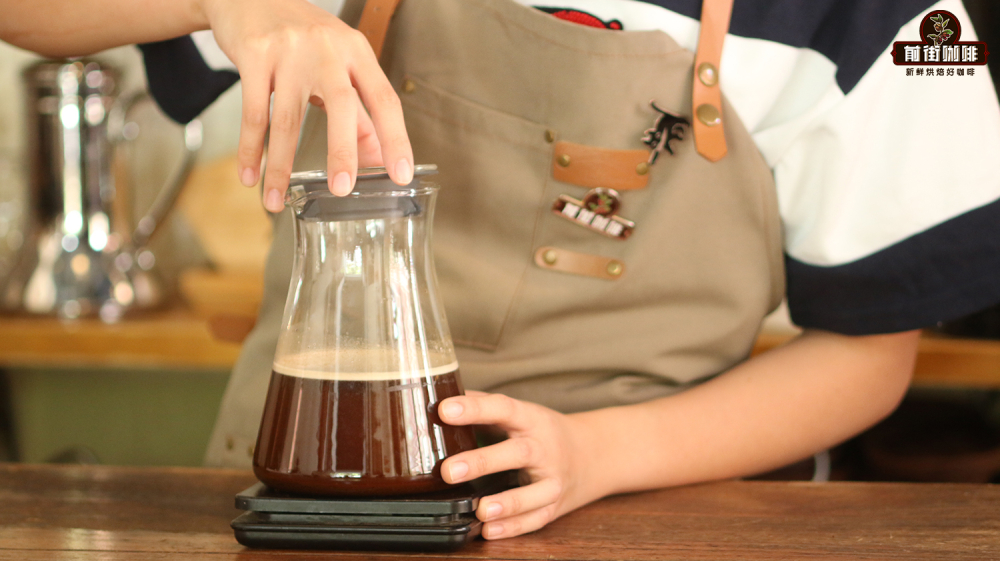
FrontStreet Coffee has noticed that some people, for convenience, simply dump grounds and water into a pot and start steeping. Every coffee extraction involves the coffee-to-water ratio. Without weighing, coffee becomes a blind box—you never know what taste you will get. To keep the flavor consistent, FrontStreet Coffee recommends a cold brew ratio between 1:10-1:13. If the concentration runs too high, simply dilute with ice cubes.
Finally, here is FrontStreet Coffee's own cold brew method! For beans, medium-light roasts are the go-to. For equipment, you only need a clean, sealable container. Prepare 40g of coffee grounds, grind to a fine grind (85% pass rate on the #20 sieve), pour them into the container, then add 480ml of cold water, stir evenly with a wooden stick, and cover with the lid.
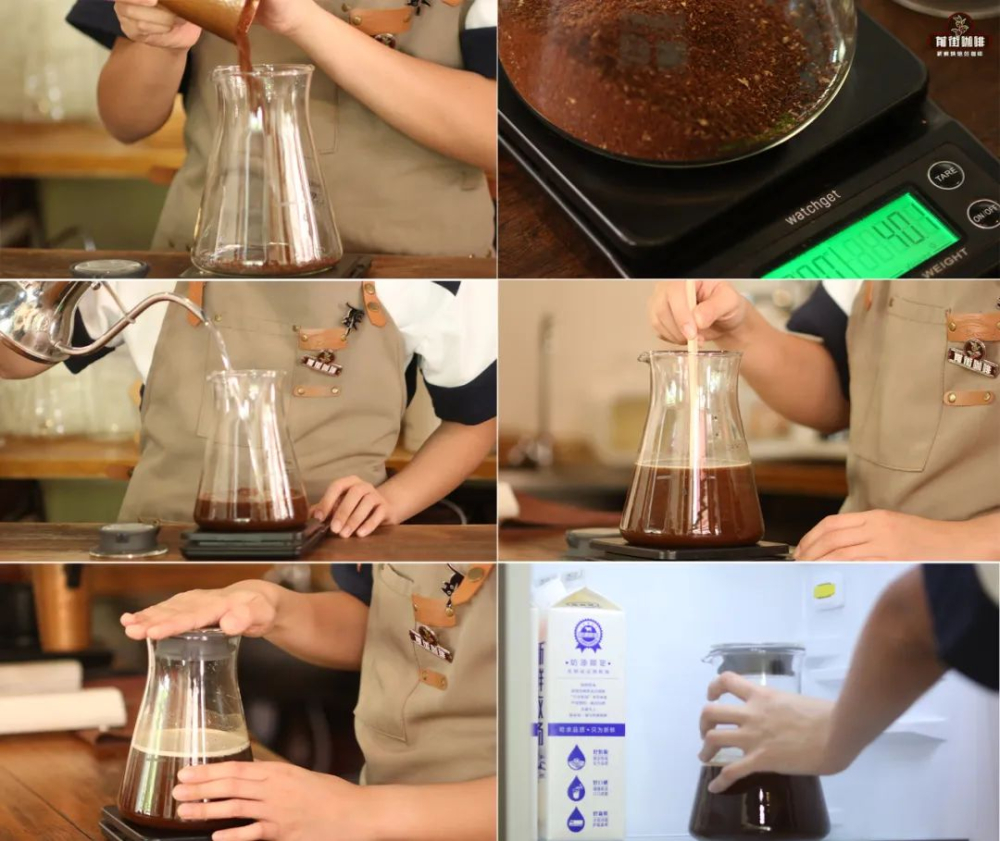
After stirring, seal with plastic wrap and refrigerate to cold-steep for 12 hours. Then remove and filter out the grounds. You can drink the clear coffee liquid immediately, or bottle the filtered coffee and refrigerate it for another 4 hours for even better flavor and texture.
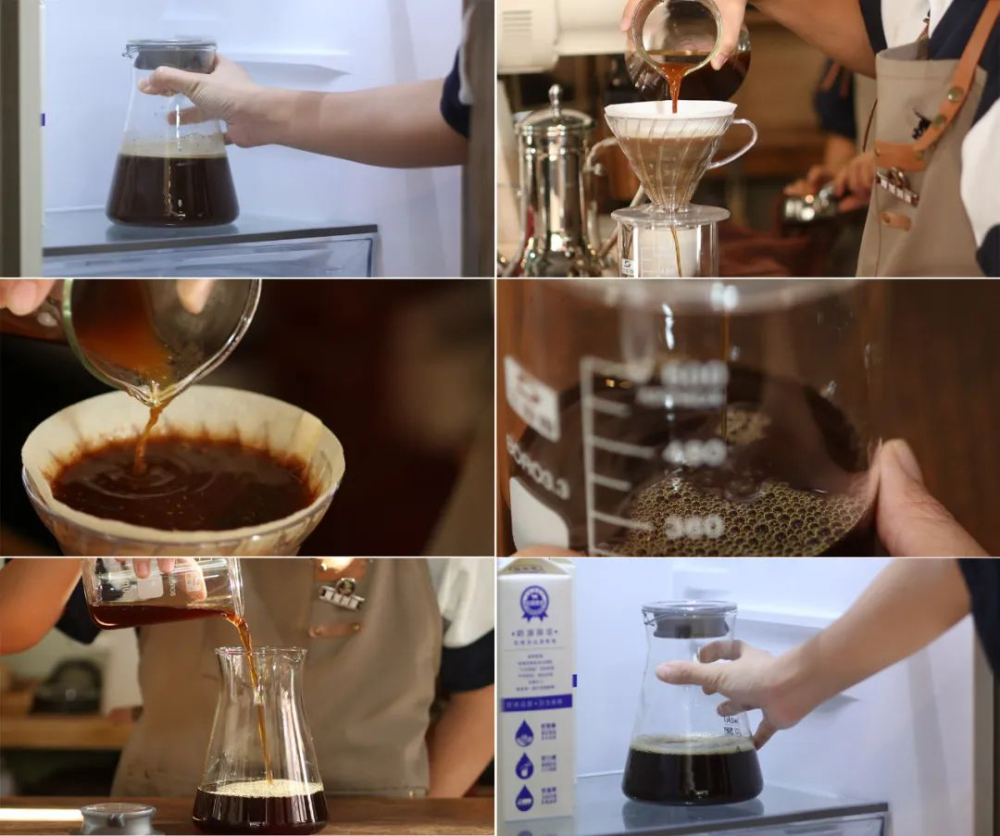
Generally, for both flavor and food safety, whether ice drip or immersion, FrontStreet Coffee recommends finishing any low-temperature extraction within 5 days (counting from the day it was made).
FrontStreet Coffee Recommendation: Beans Born for the Cold
For a cold brew bursting with juice, FrontStreet Coffee's Kenya "Little Tomato" is the first pick. Grown at 1550-1750 meters in Kenya's Thika (Sika) region on the classic SL28 and SL34 varieties, this washed lot goes through the local signature K72 72-hour double-wash fermentation, and a light roast keeps its lively acidity intact. Under low-temperature extraction, the cherry tomato, snow pear, black plum, and dried dark plum notes show at their fullest: low bitterness, plump acidity, wonderfully refreshing over ice, with a lingering sweet finish. If floral iced coffee is more your style, the natural Ethiopia "Huakui" (Blossom Queen) from the Hambela area brings magnolia, creamy strawberry, dried mango, guava, and black tea tones. And for everyday batches, the washed Yirgacheffe Worka Gedingding lot—honeyed berries, layered sweetness, and a honey finish—delivers superb quality at a friendly price. Whichever you choose, steep it cold and let the fruit do the talking.
Important Notice :
FrontStreet Coffee is a long-established specialty coffee roaster in Guangzhou China, selling freshly roasted beans from its own farm in Yunnan as well as dozens of carefully selected single-origin beans from around the world for both pour-over and espresso. The products deliver consistently excellent quality and great value, with shipping within 24 hours. Guangzhou's FrontStreet Coffee shop is recommended by many coffee lovers, and the beans are now available online at the Tmall 。
FrontStreet Coffee has moved to a new address:
FrontStreet Coffee Address: 315,Donghua East Road,GuangZhou
Tel:020 38364473
 Scan and follow the En Gafei WeChat official account. Please indicate that the reprint comes from "En Gafei".