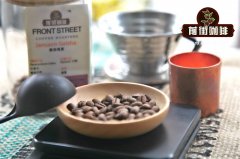
What is the Taste of Blue Mountain Coffee - Bitter or Sweet? Is Authentic Blue Mountain No. 1 Coffee Delicious?

Some describe Blue Mountain coffee as light and delicate as water; others call it as elegant and refined as honey. At FrontStreet Coffee we think both descriptions can be right, because coffee is an agricultural product shaped by climate, and Blue Mountain's flavor genuinely shifts from harvest to harvest.
Overall, the flavor of Blue Mountain coffee is rich and balanced, with gentle fruit and acidity that satisfy a wide range of preferences. High-quality, freshly roasted Blue Mountain has an especially long-lasting finish - what wine connoisseurs would call an endless aftertaste. It blends coffee's sour, bitter, sweet, and mellow dimensions into one harmonious whole, producing an elegant aroma that few other coffees can match.

Understanding True Blue Mountain Beans
We emphasize "true" Blue Mountain mainly because "Blue Mountain style" blends flood the market. These so-called Blue Mountain blends have nothing to do with the Blue Mountains - they typically use other bean varieties, roasted to imitate Blue Mountain's profile. This practice arose because early Blue Mountain coffee was rare and expensive, so producers blended other beans and leaned on dark roasting to approximate its taste. Conscientious sellers, domestic and international, will tell customers clearly that such products are "Blue Mountain blend," "Blue Mountain style," or "Blue Mountain-type" coffee - not true Blue Mountain.
Before the millennium, a cup of Blue Mountain black coffee in China cost dozens or even hundreds of yuan - an extravagant luxury at the time, and quite possibly not authentic either. Now that the Jamaican government has allocated more Blue Mountain quotas to consumer markets around the world, drinking genuine Blue Mountain in China is far easier. FrontStreet Coffee's Blue Mountain No.1 beans sell at 158 yuan per 100 grams, and a cup at the Dongshankou store costs just 60 yuan. Our Blue Mountain No.1 comes from the historic Clifton Mountain Estate in Jamaica and is processed using the washed method.
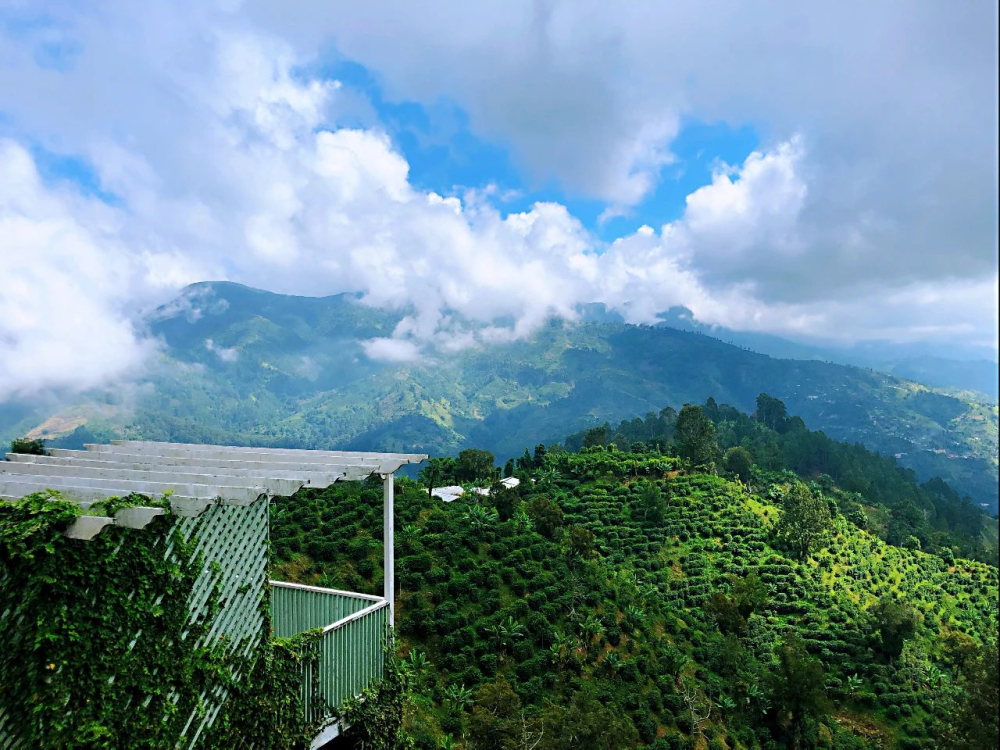
The outstanding quality of Blue Mountain coffee is inseparable from its growing environment. The Blue Mountain Range is embraced by the waters of the Caribbean Sea, creating a unique island-type tropical rainforest microclimate. During the rainy season, rainfall is concentrated and drains well. Volcanic ash from the region's volcanoes enriches the soil, so coffee trees need minimal irrigation and fertilization. With abundant year-round sunshine, drifting mist, and a cool, comfortable high-altitude climate, the area suits all manner of crops - locals traditionally plant coffee trees alongside banana trees on the slopes of the Blue Mountains.
The CIB has designated roughly 6,000 hectares within the range, strictly stipulating that only Typica coffee grown in this zone may be called "Blue Mountain Coffee." Coffee from other areas is sold as High Mountain Coffee. Within the CIB's designated boundary, Blue Mountain coffee grows at altitudes of roughly 910-1,700 meters, mainly across St. Thomas, St. Mary, St. Andrew, and Portland - in total about one-third of the entire Blue Mountain growing region.

This is a small producing area - just 6,000 hectares - so not every bag labeled "Blue Mountain" could possibly come from there. Clifton Estate is the largest estate in the region, yet even by international standards it is small-scale cultivation. Many estate owners are smallholders whose families have worked the same land for two centuries. Having compared many lots, FrontStreet Coffee finds Clifton Estate's Blue Mountain No.1 exceptional - one of the finest representatives of what Blue Mountain can be.

Blue Mountain Coffee Varieties
Blue Mountain coffee belongs to the Typica variety, a very ancient Arabica subspecies. Around the 15th to 16th centuries, Typica was carried from southwestern Ethiopia to Yemen by human hands, then spread across the world by French and Dutch merchants. Typica trees grow tall, with bronze-colored young leaves at the top; the beans are relatively large and long, with pointed ends vaguely resembling eggs. The cup typically shows citrus acidity and a sweet aftertaste, and Typica is widely praised as an elegant, clean coffee. Unfortunately, its low yield and poor resistance to leaf rust have led many farmers to replace it with hardier varieties.

Typica arrived in Jamaica in the 18th century thanks to Sir Nicholas Lawes, and soon spread to the Blue Mountains - a history of more than two hundred years. Over that time, Blue Mountain Typica adapted to the island's tropical rainforest climate, developing stronger disease resistance, particularly far greater resistance to coffee berry disease than typical Typica. This variety, environment, green bean quality, and processing method together create the remarkably balanced, harmonious profile of Blue Mountain coffee.

Processing Methods
Until this year, FrontStreet Coffee's Blue Mountain No.1 was available only in washed batches. The washed method uses fermentation to remove the fruit pulp and mucilage. Farms using it must build washing tanks and have a continuous supply of fresh water. First the pulp is removed, and the beans ferment for 12-18 hours. The fermented beans are then agitated back and forth in the tanks, the friction between beans and the flow of water washing them until smooth and clean. After washing, the beans - still in their parchment at about 50% moisture - must be sun-dried down to 12-14% moisture, or they will keep fermenting and mold. The dried beans are then screened and stored in special warehouses. Every step must be strictly controlled, or quality suffers.

Now FrontStreet Coffee's Blue Mountain is available beyond washed processing. We once offered a batch of natural (sun-dried) Blue Mountain, certified and exported by the Jamaica Coffee Board. Producing natural Blue Mountain is genuinely challenging: washed processing was long the only option because it gives the most essential expression of Blue Mountain's flavor, and changing the process inevitably alters the flavor structure. That is also why FrontStreet Coffee's daily-bean series relies almost entirely on washed processing - it best represents each region's character. Natural Blue Mountain, like the natural Mandheling we recently added alongside the traditional wet-hulled version, is partly a response to market evolution.
Blue Mountain Coffee Grade Classification: Which is the Highest Grade?
Any discussion of Blue Mountain grades must begin with the CIB, which plays a central role in Jamaica's coffee industry. The Jamaica Coffee Industry Board was established by the Jamaican government in 1952 to improve, control, and maintain the quality and reputation of Jamaican coffee, functioning as a statutory body that regulates the industry through licensing, certification, and consulting.

For green bean quality control, the CIB regulates the planting, production, and sale of Jamaica Blue Mountain coffee, raising quality, standardizing production and processing procedures, and coordinating market sales. It was among the first institutions to grade coffee quality using scientific, objective methods, combining bean size, color, uniformity, defect rate, moisture content, and cupping performance.
Before export, Blue Mountain green beans are packaged and sent for cupping, then graded by size and defect rate into Blue Mountain No.1, No.2, No.3, and Blue Mountain Peaberry. Bean size is determined with sieves of various mesh sizes - beans that do not pass through the openings meet the specification. Top-grade Blue Mountain No.1 green beans must be sieve 17 or above, with a defect rate below 3% and moisture around 13%, and in cupping they must show rich aroma with a smooth, balanced flavor, low acidity, and a persistent aftertaste.

To keep Blue Mountain beans in top condition until roasting and shield them from moisture in transit, Jamaicans insist on shipping green beans in handcrafted wooden barrels - a vessel that has become one of the defining symbols of Jamaica Blue Mountain coffee.
FrontStreet Coffee Brewing Recommendations
For brewing, FrontStreet Coffee recommends freshly roasted beans to capture the fullest flavor. All beans are shipped within 5 days of roasting, because freshness profoundly affects flavor. Our roasting philosophy is "freshly roasted good coffee," so every order arrives during the 4-7 day degassing window - at peak flavor and ready to brew immediately.
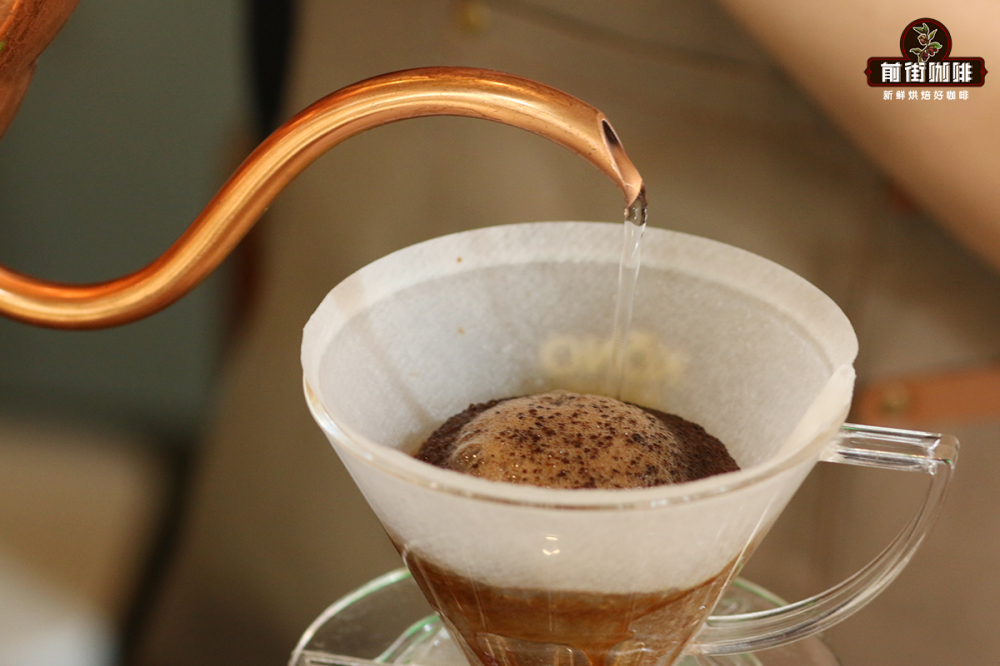
Some customers prefer to have the beans pre-ground, which is fine. Just remember that pre-ground coffee should be brewed promptly. Ground coffee does not need further degassing - during shipping, the pressure of built-up carbon dioxide actually helps round out the flavor, so you can brew immediately on arrival. But coffee grounds oxidize faster in air, so flavor dissipates sooner and the cup will not be quite as good. That is why FrontStreet Coffee recommends buying whole beans and grinding fresh for each brew.
Dripper: Kono dripper, Water Temperature: 88°C, Bean Amount: 15 grams, Ratio: 1:15, Grind: Medium-fine grind (Chinese standard 20-mesh screen pass rate 75%)
Brew with segmented pours: bloom with twice the water to coffee - 30 grams of water for 30 seconds. Blooming lets the grounds release internal carbon dioxide so the subsequent extraction runs more evenly. Then pour in small circles with a gentle stream up to 125 grams, continue to 225 grams, and stop. Once all the water has drained through, remove the dripper. Timing starts from the first pour; total extraction time is 2'00". Finally, swirl the finished coffee to even it out, then pour into cups and taste.
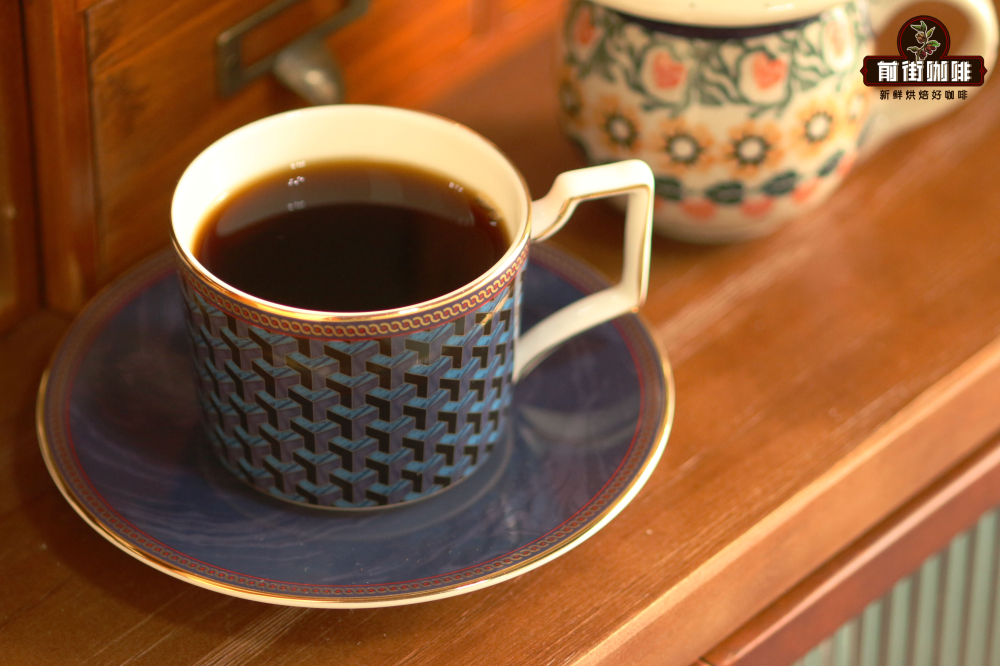
FrontStreet Coffee Natural Blue Mountain: a touch of berry acidity reminiscent of dark plums and mulberries, excellent overall balance, rich dark chocolate and nut flavors, with a subtle fermented note.
FrontStreet Coffee Washed Blue Mountain: rich dark chocolate and nut flavors, a creamy, smooth texture, and beautifully balanced sweet, sour, and bitter notes.
FrontStreet Coffee Recommendation
If you want to taste authentic Blue Mountain, look for certified beans from the highest grade: Blue Mountain No.1. FrontStreet Coffee's Jamaica Blue Mountain No.1 comes from the historic Clifton Estate, where coffee has been grown since around 1750 at about 4,300 feet (1310.64 meters) of altitude. Genuine Blue Mountain ships in traditional wooden barrels - in 15, 45, and 70 kg sizes - stamped with batch details, so checking for certification documents and original barrel packaging is the surest way to spot the real thing.
Roasted medium-dark and shipped within 5 days of roasting, FrontStreet Coffee's Blue Mountain No.1 delivers a cup that is clean, complex, and remarkably gentle: chocolate sweetness, dense body, perfect balance among sweetness, acidity, and bitterness, and a lasting fruit-toned finish - the classic reason Blue Mountain remains, for so many coffee professionals, the easiest specialty coffee to love.
Important Notice :
FrontStreet Coffee is a long-established specialty coffee roaster in Guangzhou China, selling freshly roasted beans from its own farm in Yunnan as well as dozens of carefully selected single-origin beans from around the world for both pour-over and espresso. The products deliver consistently excellent quality and great value, with shipping within 24 hours. Guangzhou's FrontStreet Coffee shop is recommended by many coffee lovers, and the beans are now available online at the Tmall 。
FrontStreet Coffee has moved to a new address:
FrontStreet Coffee Address: 315,Donghua East Road,GuangZhou
Tel:020 38364473
 Scan and follow the En Gafei WeChat official account. Please indicate that the reprint comes from "En Gafei".