Geisha Coffee Estate - Panama Elida Estate

Elida Estate is a renowned Panamanian coffee farm with a century-long history of producing premium coffee. Last year, a Geisha from Elida Estate won the championship in the Geisha Processing Category at the BOP competition. FrontStreet Coffee selected Geisha coffee from the same plot and altitude at Elida Estate for tasting. When it comes to Geisha, we must mention the famous Esmeralda Estate, also in Panama. Comparing these two Geishas from different estates, FrontStreet Coffee found that due to different processing methods, Elida Geisha shows more complex layers than the Panamanian Geisha from Esmeralda. FrontStreet Coffee also conducted a comparative tasting of Geisha and Typica from Elida Estate to explore the differences between varieties from the same estate.

Panama - Elida Estate Geisha
Region: Boquete, Panama
Estate: Elida Estate
Altitude: 1900 meters
Variety: Geisha
Processing: Anaerobic Fermentation Low-Temperature Slow Natural Process

Panama - Elida Estate Typica
Region: Boquete, Panama
Estate: Elida Estate
Altitude: 1850 meters
Variety: Typica
Processing: Natural Process
Boquete Region
Panama's Elida Estate sits in the renowned specialty coffee region of Boquete — a town in Chiriqui province near the border between Panama and Costa Rica, close to the famous Baru Volcano. With beautiful scenery, fertile soil and a climate ideal for high-quality coffee, the microclimate of Panama's Boquete highlands is a unique resource for the region's specialty coffee. The east-to-west environmental pattern draws cold air currents through the central mountain range above 6,500 feet, creating a range of microclimates in Boquete with temperatures and rainfall levels that are perfect for plant growth.
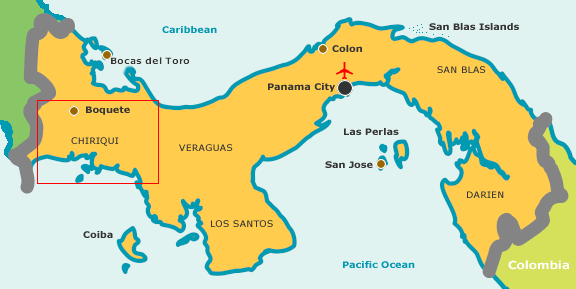
Elida Estate
Elida Estate covers a total area of 65 hectares, more than half of it within Baru Volcano National Park. Only 30 hectares are used for coffee cultivation; the rest remains primary forest. Coffee is grown at altitudes ranging from 1,670 to 1,850 meters, making it one of the two highest-altitude coffee farms in Panama (the other being Carmen Estate in the Volcán Valley).
In such high-altitude conditions, low temperatures delay the ripening of the cherries by about a month compared with normal. The fertile volcanic soil feeds the coffee generously, and combined with the excellent microclimate brought by Baru Volcano, it lets Elida Estate consistently post outstanding results in cupping competitions.

Elida Estate's history dates back to 1918. The estate is owned by the Lamastus family, and the name "Elida" came from Mrs. Robert Louis Lamastus, the estate owner at the time.
Coffee Varieties
Elida Estate primarily cultivates three coffee varieties: Catuai, Typica and Geisha. The processing plant sits halfway up the mountain, so cherries can be transported for processing immediately after picking and their quality isn't compromised. Elida's environment also suits other high-quality temperate crops, especially tree tomatoes and some uncommon high-altitude fruits.
FrontStreet Coffee often hears the question of whether coffee grown alongside other crops takes on the flavors of those crops. Elida Estate grows tree tomatoes and other fruit, and coincidentally, when FrontStreet Coffee tastes Elida coffee we detect rich, full fruit flavors. But FrontStreet Coffee wants to remind everyone not to be misled by such coincidences. Coffee flavor is shaped by variety, altitude, processing method and roasting — all essential components that form the basis of specialty coffee evaluation today. This is what FrontStreet Coffee has always emphasized: understanding coffee goes beyond surface appearances.
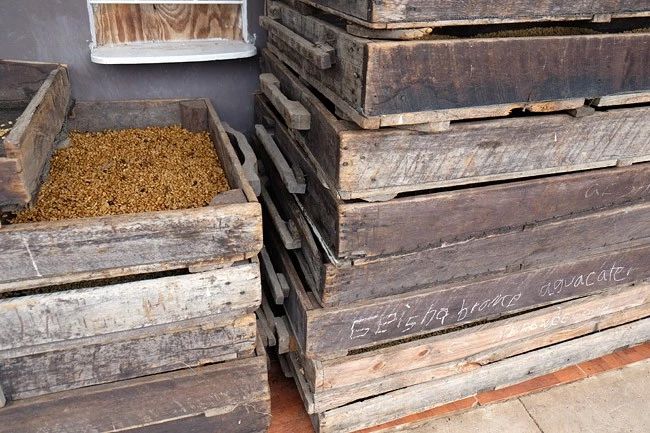
In addition to the exceptionally high altitude and unique microclimate, estate owner Mr. Wilford has invested considerable effort in harvesting and processing. To meet the highest standards, Elida Estate's coffee is picked by hand only at the ripest stage (Ripe on Pinton). High fruit maturity naturally means higher sugar content in the mucilage, which is the foundation of Elida's premium flavors. Beyond being strict about cultivation and processing, Mr. Wilford is more rigorous than his peers in the "purification" of green beans after processing.
Catuai
Catuai comes from the Agronomic Institute of Campinas (IAC) in São Paulo, Brazil, and is a hybrid of Mundo Novo and Caturra. Because of its short stature it can be planted densely, at nearly double the density of Bourbon coffee, which makes its yield much higher than Bourbon's. And although its disease and pest resistance isn't strong, its compact shape makes manual control relatively easy. Beyond the higher yield, Catuai doesn't easily drop once ripe and stands up well to wind and rain, making it popular in regions with frequent storms.

FrontStreet Coffee cupped Elida Estate's Catuai. The coffee shows fermented wine aroma and rose fragrance, with berry, citrus and green tea flavors on entry, a creamy, nutty aftertaste and sucrose sweetness, and overall balance.
Typica
Typica is one of the oldest native varieties of Ethiopia, with bronze-colored young leaves and oval or slender-pointed beans. Typica offers elegant flavor but has a weak constitution, poor disease resistance and low fruit yield. Well-known varieties such as Mandheling, Blue Mountain, Maragogipe, Yunnan Peaberry and Geisha all descend from Typica.
Geisha
Geisha was discovered in the Geisha forest of Ethiopia in 1931 and later sent to a coffee research institute in Kenya. In 1936 it was introduced to Uganda and Tanzania, then to Costa Rica in 1953, and afterward entered Panama along the southern route. Panama's Esmeralda Estate isolated it from other varieties, and it went on to win the national coffee competition championship, bringing Geisha into the spotlight. Geisha is particularly particular about its growing environment, requiring high altitude, cloud cover, fertile soil and sufficient accumulated temperature. Its beans have a slender-pointed shape, making it easy to recognize.
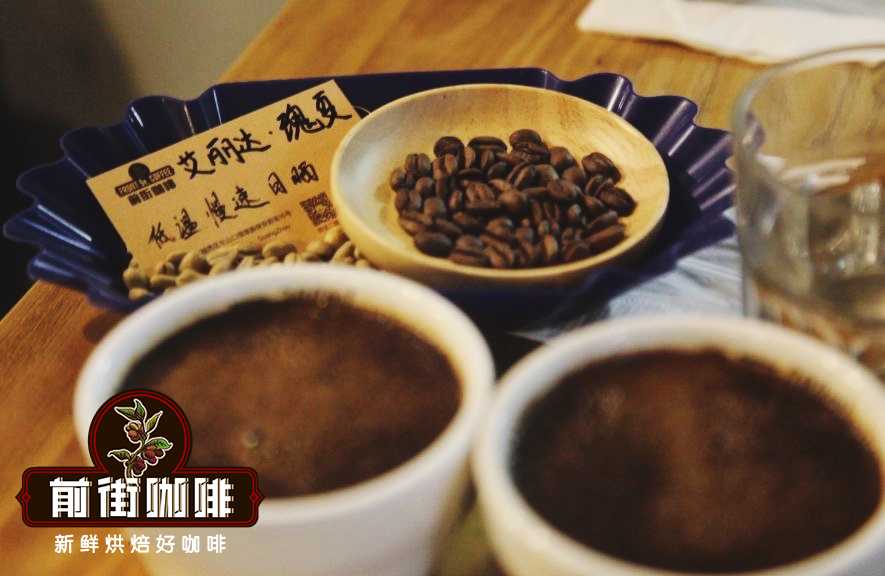
When discussing the Geisha variety, we can't bypass the Geisha from Panama's Esmeralda Estate. Esmeralda's Geisha can be described as one of the top estates in the specialty coffee field, known to everyone in the coffee world. FrontStreet Coffee believes that whether as the discoverer and promoter of Geisha flavor or for repeatedly breaking auction records, these achievements established Esmeralda Estate's current success.
FrontStreet Coffee — 2020 New Harvest Panama Blue Label Geisha
Region: Boquete
Estate: Esmeralda Estate
Altitude: 1500m
Variety: Geisha
Processing: Washed Process
Flavor: Subtle jasmine fragrance and citrus aroma, with distinct citrus and plum flavors on entry, fresh and bright acidity, nutty notes in the mid-section, honey sweetness in the aftertaste, with persistent sweetness.

Coffee Bean Processing Methods
Natural Process
The natural process reduces the moisture content of coffee through a period of sun-drying. It is the oldest processing method in coffee history, passed down since coffee entered large-scale production, and to this day a considerable portion of the world's coffee still uses it. Elida Estate, however, has made detailed adjustments on top of the natural process. After the green beans are processed, they need more than 5 months of low-temperature resting to remove greenness, allowing the flavors to develop more balanced and full. Low-temperature resting is a green-bean purification concept strongly promoted by coffee master George Howell since 2006. Different processing methods and altitudes change the resting time; for Elida Estate, 5 months is optimal.

Anaerobic Fermentation Low-Temperature Slow Natural Process
Elida Estate, known for its expertise in traditional natural processing, spent years experimenting before finally mastering the NATURAL-ASD (Anaerobic Fermentation Low-Temperature Slow Natural Process) technique last year. With it, their Geisha won the championship in the Geisha Processing Category at last year's BOP competition. The process ferments harvested cherries in sealed containers for 4-5 days, then spreads thick layers of cherries on drying beds for slow drying. By controlling the "drying rate" to encourage specific types of microorganisms, they can steer the type and degree of fermentation to some extent — this is the specialty of current estate owner Wilford Jr.
Low-temperature slow natural processing requires producers to invest more time and energy. Over time, slow drying lets the cherries develop optimal water activity, resulting in better flavor development and helping green beans keep longer through seasonal storage cycles. This method, however, not only depends on favorable weather but also extends the production time for each batch, raising the cost of green beans.
Green Bean Analysis
Elida Estate Geisha
This is a Geisha-variety bean. The green beans appear yellowish-green and smell of snow pear, orange fragrance and a subtle fermented aroma.

Green Tip Geisha and Bronze Tip Geisha: Green Tip is characterized by floral fragrance, strong acidity and sweetness. By contrast, Bronze Tip emphasizes body weight and sweetness, with less prominent acidity.
Elida Estate Typica
Typica is one of the oldest varieties of Arabica coffee discovered to date, the other being Bourbon. Arabica originates from Ethiopia, where this variety still grows naturally in the highlands of the local primary rainforest.

Typica beans are slender, the plant is tall, the cherries are oval-shaped and the branches are slightly inclined. Typica has slender branches with a spreading habit at an inclination angle of 50-70 degrees. The coffee yield per tree is very low, but cupping scores are high.
Roasting Recommendations
Elida Estate Geisha
Elida Geisha beans are slender-shaped too. The green beans appear yellowish-green and smell of snow pear, orange fragrance and a subtle fermented aroma. FrontStreet Coffee uses a light roast approach. These beans have medium density and absorb more heat during roasting, with a relatively fast Maillard reaction. FrontStreet Coffee opens the damper when the beans begin to turn yellow to develop more fermented aroma, enhancing sweetness and balance.
Preheat the roaster to 160°C, set heat to 100, damper to 3. Return temperature at 1'42''. When the temperature reaches 146°C, open the damper to 4. At 146°C the bean surface turns yellow and the grassy aroma completely disappears. When the temperature reaches 166°C, reduce heat to 80, keeping the damper unchanged.

At 7'31'', ugly wrinkles and black spots appear on the bean surface, and the toast aroma clearly transitions to coffee aroma — the prelude to first crack. At this point, listen carefully for the first crack. At 8'28'' first crack begins; reduce heat to 50 and open the damper fully to 5. After first crack, develop for 1'45'' and drop at 194.5°C.
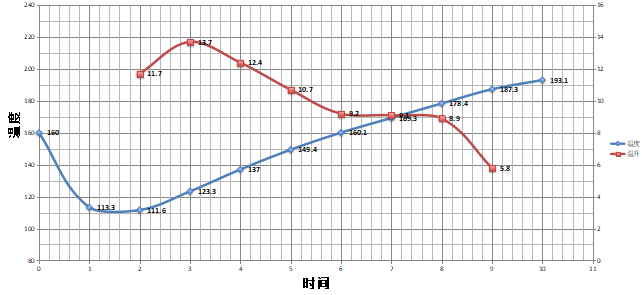
Elida Estate Typica
Elida Typica beans are slender, with green beans appearing yellowish-green. FrontStreet Coffee uses a light-medium roast approach, with a roasting concept that introduces the beans at lower temperatures. Although this doesn't deliver the clean, intense quality of a high-temperature charge, the benefit is a mellow, smooth mouthfeel. Since development after first crack is very short, heat must be sufficient, or the expected drop temperature won't reach adequate caramelization. FrontStreet Coffee uses a glide action — reducing or turning off the heat while using the roaster's residual temperature to keep roasting. Throughout, the beans are in heat-absorption mode; only first and second crack are exothermic phases. During those two stages it's best not to add heat, or the beans can easily develop spicy notes.
FrontStreet Coffee adds that the glide action emphasizes turning off the heat and using both the roaster's residual temperature and the heat generated by bean exotherm during the crack periods to continue a slow roast.
Yangjia 600g Semi-direct Heat Roaster
Preheat the roaster to 170°C, set the damper to 3. After 30 seconds, adjust heat to 140°C, keeping the damper unchanged. Return temperature at 1'25''. Adjust heat once at 140°C — at this point the bean surface turns yellow, the grassy aroma disappears completely and dehydration is complete. Adjust heat to 110°C and the damper to 4.

At 8'45'', ugly wrinkles and black spots appear on the bean surface, and the toast aroma clearly transitions to coffee aroma — the prelude to first crack. Listen carefully for the first crack. At 9'07'' first crack begins; reduce heat to 90°C and adjust the damper to 4 (adjust heat very carefully — not so low that the crack sound disappears). After first crack for 1'45'', drop at 190°C.

Cupping Flavors
Elida Estate Geisha
Dry Aroma: Floral fragrance
Wet Aroma: Berry, fermented aroma
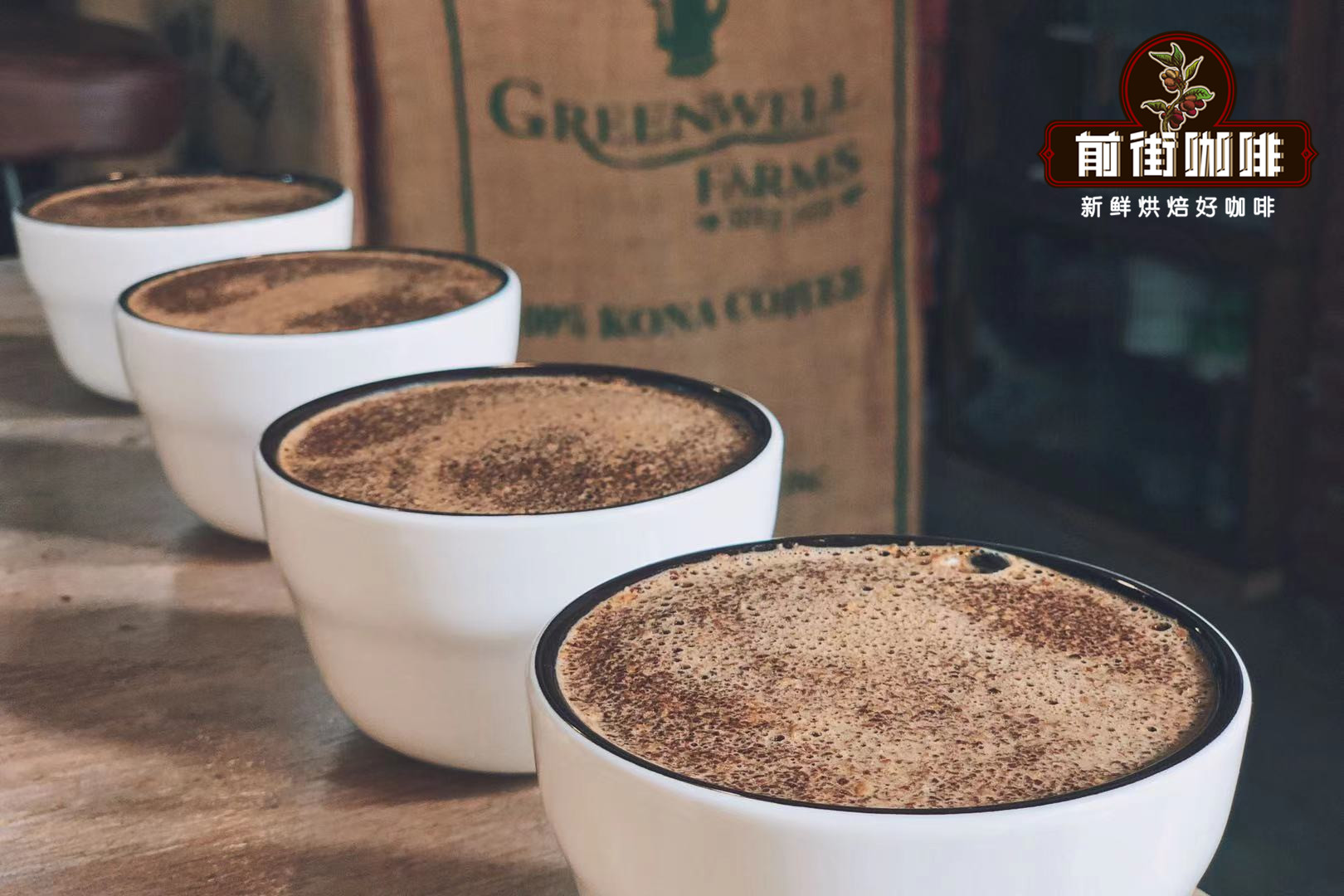
Taste: Smooth entry with orange, guava, grapefruit, apricot, honey and cream flavors, with high clarity.
Elida Estate Typica
Dry Aroma: Caramel, roasted almond, floral fragrance
Wet Aroma: Jackfruit, fermented wine aroma
Taste: Smooth entry with raisin, peach, orange and melon flavors, distinct sucrose and caramel notes, a green tea sensation, with high clarity.
Brewing Demonstration
FrontStreet Coffee's brewing parameters: V60 dripper, water temperature 90°C, powder-to-water ratio 1:15, grind size calibrated to 80% pass-through on a #20 standard sieve.

FrontStreet Coffee uses segmented extraction, a three-stage pouring method. Bloom with 30g of water for 30 seconds. Pour in a small circular motion to reach 95g, then segment at 125g. Continue pouring to 225g when the water level drops and is about to expose the coffee bed. Remove the dripper when the water level drops and is about to expose the coffee bed again. Total extraction time is 2.00 minutes (including blooming time).
Flavor Description
Elida Estate Anaerobic Fermentation Low-Temperature Natural Geisha
It has a subtle fermented aroma and floral fragrance. On entry it offers grapefruit, lemon and guava flavors, with honey sweetness in the mid-section and a black tea aftertaste.
Elida Estate Natural Typica
On entry you can distinctly taste peach, raisin and orange. Gradually, sucrose and melon sweetness emerge, with grapefruit and green tea notes in the finish.

FrontStreet Coffee Recommendation
Geisha is one of the most sought-after varieties in Arabica, and its price stays high for good reason: low yields, weak disease resistance and demanding cultivation. If you want to understand what all the fuss is about, it helps to know the different tiers. Panama's Esmeralda Estate, the estate that put Geisha on the map, divides its Geisha range into Red Label and Green Label. FrontStreet's Red Label Geisha, formally "Esmeralda Special," is grown between 1,600 and 1,800 meters; each batch must cup above 90 and carries its own number, and every batch comes from a single small plot — FrontStreet's Red Label, for instance, comes from the Jaramillo plot — so buyers can chase the subtle flavor differences between batches.
FrontStreet's Green Label Geisha, originally "Private Collection," puts less emphasis on individual plots and blends batches from several of them to express the estate's signature high-altitude Geisha character. Think of it as Geisha without the plot distinction, at a friendlier price — which makes the Green Label excellent value.
For a first taste of the famous "Geisha flavor," FrontStreet usually points newcomers to the Panama Boquete Geisha, an entry-level Geisha that delivers the classic Panamanian orange-blossom honey note, an oolong-tea sensation and delicate fruit sweetness at an accessible price. If you'd rather explore Geisha's birthplace, Ethiopia, look to FrontStreet's Gesha Village bottlings. The Gesha Village estate grows three Geisha varieties — Gori Gesha, Gesha 1931 and Illubabor Forest — and grades them into Gold Label RARITIES, Red Label GROWERS RESERVE, Green Label SINGLE-TERROIR and the Chaka batch. The Gold Label belongs to the Gesha 1931 variety, about 10% of the estate's total output, and is often chosen by competition baristas; FrontStreet's Gold Label is a refined natural-process lot with complex, layered flavor. FrontStreet's Red Label is the Gori Gesha variety, roughly 15% of production, scoring 88 or above on the SCA 100-point scale, and as a single-terroir series every lot is fully traceable — farm block, variety and processing date included.
Geisha is a light-medium roast, floral and fruit-forward, with a fairly hard bean that can sink and clog the drain holes during brewing. FrontStreet suggests grinding to about fine-sugar size — around 78% passing the China standard #20 sieve — and brewing at roughly 91°C. Using 15g of coffee in a small Hario V60 at a 1:16 ratio, the three-stage pour runs: start the timer and pour to 30g for a 30-second bloom; then a low-flow circular pour to 125g, waiting until the bed is half drained before continuing; then more low-flow circular pouring to 225g. Total extraction takes about 2 minutes 10 seconds to 2 minutes 20 seconds.
Important Notice :
FrontStreet Coffee is a long-established specialty coffee roaster in Guangzhou China, selling freshly roasted beans from its own farm in Yunnan as well as dozens of carefully selected single-origin beans from around the world for both pour-over and espresso. The products deliver consistently excellent quality and great value, with shipping within 24 hours. Guangzhou's FrontStreet Coffee shop is recommended by many coffee lovers, and the beans are now available online at the Tmall 。
FrontStreet Coffee has moved to a new address:
FrontStreet Coffee Address: 315,Donghua East Road,GuangZhou
Tel:020 38364473
 Scan and follow the En Gafei WeChat official account. Please indicate that the reprint comes from "En Gafei".