Blend Coffee - How Are Coffee Beans Blended? Can Blended Coffee Beans Be Used for Pour-Over?
Is Blend Coffee Specialty Coffee? Why Blend Coffee? How Are Coffee Blends Created? Can Blend Coffee Be Hand-Poured?
These four questions come up constantly when friends talk with FrontStreet Coffee's baristas. In this article, FrontStreet Coffee gives detailed answers to all four.
Q1: Is Blend Coffee Specialty Coffee?
First, the definition. In 1978, Ms. Erna Knutsen proposed the concept of specialty coffee at the International Coffee Conference in France, and it has been widely used in the industry ever since. She described specialty coffee as beans cultivated under unique microclimates and geographical conditions in producing regions, carrying regional flavor characteristics. FrontStreet Coffee believes that beyond that fundamental principle, several other criteria must be screened as well: raw bean moisture content, uniformity of bean size, identification of defective or flawed beans, basic grading selection by producing region, and cupping of the coffee's flavor. Only beans that pass all of these layered standards are truly specialty.
Early blending was undoubtedly aimed at cutting costs. A typical example was using 70% cheap base beans to produce inexpensive coffee, with a few better-flavored beans added for adjustment. In the specialty coffee era, cost reduction is no longer the only objective. Customers care more about flavor and are willing to pay higher prices for tastes they love.
Take the Warm Sun Blend that FrontStreet Coffee consistently uses for espresso. It consists of 40% sun-dried red cherry from Yirgacheffe and 60% Honduras whiskey barrel-fermented Sherry coffee beans. Both can be traced back to their producing regions, regional altitudes, and coffee varieties, and both are carefully selected beans. So is this blended coffee a specialty coffee? Yes, it is. If a coffee mixture includes Robusta beans to make the blend richer, however, Robusta does not fall within the category of specialty coffee, so that type of blend is not specialty coffee.
Q2: Why Blend Coffee?
Blended coffee is also known as mixed coffee or espresso beans. FrontStreet Coffee holds that blending is about mixing various single-origin coffees to fully leverage the strengths of each. Blends are built from beans of different producing regions to create a more balanced flavor profile. If one bean is smooth but lacks aroma, for example, a bean rich in aroma can be added so the two complement each other, either filling a gap or amplifying a quality, to create a richer new taste experience. Sometimes the beans are mixed before roasting, which is called raw blending. Sometimes they are mixed after roasting, which is called post-roast blending.
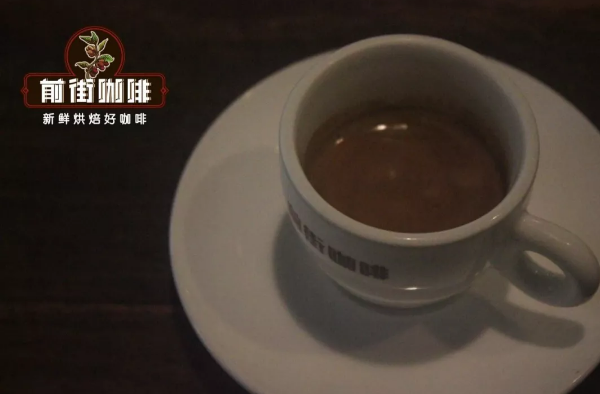
The main purposes of mixing different coffees include the following.
1. Stable flavor
Because coffee is an agricultural product, even the same type of bean tastes different from year to year. Mixing several types of coffee together solves this problem neatly, keeping the taste basically consistent year after year.
2. Balanced taste
Espresso machines have a way of amplifying the most prominent flavor characteristic of a coffee, which is why single-origin coffees are almost never used for espresso. If that bean is quite bitter, the resulting espresso will be exceptionally bitter; if it leans toward acidity, it will be very acidic. Blending is how we balance those flavors.
Q3: How Are Coffee Blends Created?
As mentioned above, coffee blends are made either by raw blending or post-roast blending. What are the advantages and disadvantages of each?
FrontStreet Coffee believes the advantage of raw blending is that a single roast degree can push the coffee toward stability and uniformity. It also reduces the number of roasting sessions, since everything is finished in one roast, which improves efficiency. One roast degree greatly reduces quality control difficulty as well, because there is only one bean aging date to track; with raw blending it is otherwise easy to end up with several different roasting dates, which creates differences in taste. The disadvantages of raw blending are equally obvious. It is significantly limited in practice and is generally recommended only for beans of similar density. Blending a coffee suited to a light roast with one suited to a dark roast and roasting them to the same degree, for example, can easily produce a cup where the two beans work against each other instead of complementing each other.
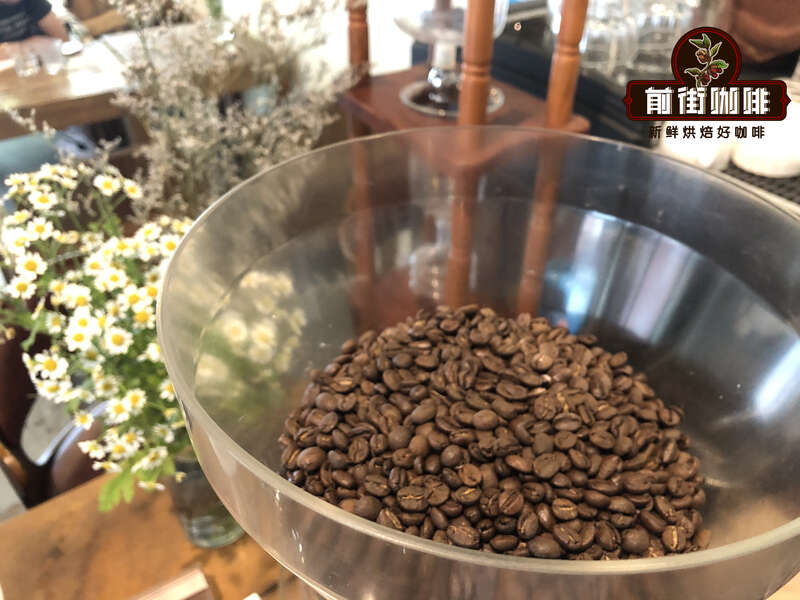
FrontStreet Coffee believes the advantage of post-roast blending is that each bean can be roasted to its own optimal degree, maximizing its characteristics. The disadvantage is that daily quality control and management become more difficult, since inconsistent roasting dates mean more aging periods to watch. Imagine using 4-5 different beans in a post-roast blend; that product would require attention to 4-5 different roasting dates. When FrontStreet Coffee roasts the Warm Sun Blend, it uses post-roast blending, roasting the Honduras Sherry barrel beans and the sun-dried Yirgacheffe red cherry separately so as to maximize the wine aroma of the Sherry barrel beans while preserving as much as possible the fruity acidity and citrus-berry aroma of the sun-dried Yirgacheffe.
Q4: Can Blend Coffee Be Hand-Poured?
To summarize what was said above, a blend simply means a mixture of two or more different coffees. In many people's minds, the stereotype of blends is still tied to the blended beans used in traditional espresso. In fact, blending does not equal espresso beans. Blending is just the concept of mixing different coffees for certain reasons, and it is not exclusive to espresso. Blend beans are not the same as espresso beans. Hand-pour coffee is only an extraction method, and a blend is only a type of coffee bean; the two have no direct, mutually determining relationship. So can blended coffee be used for hand-pour? Yes.
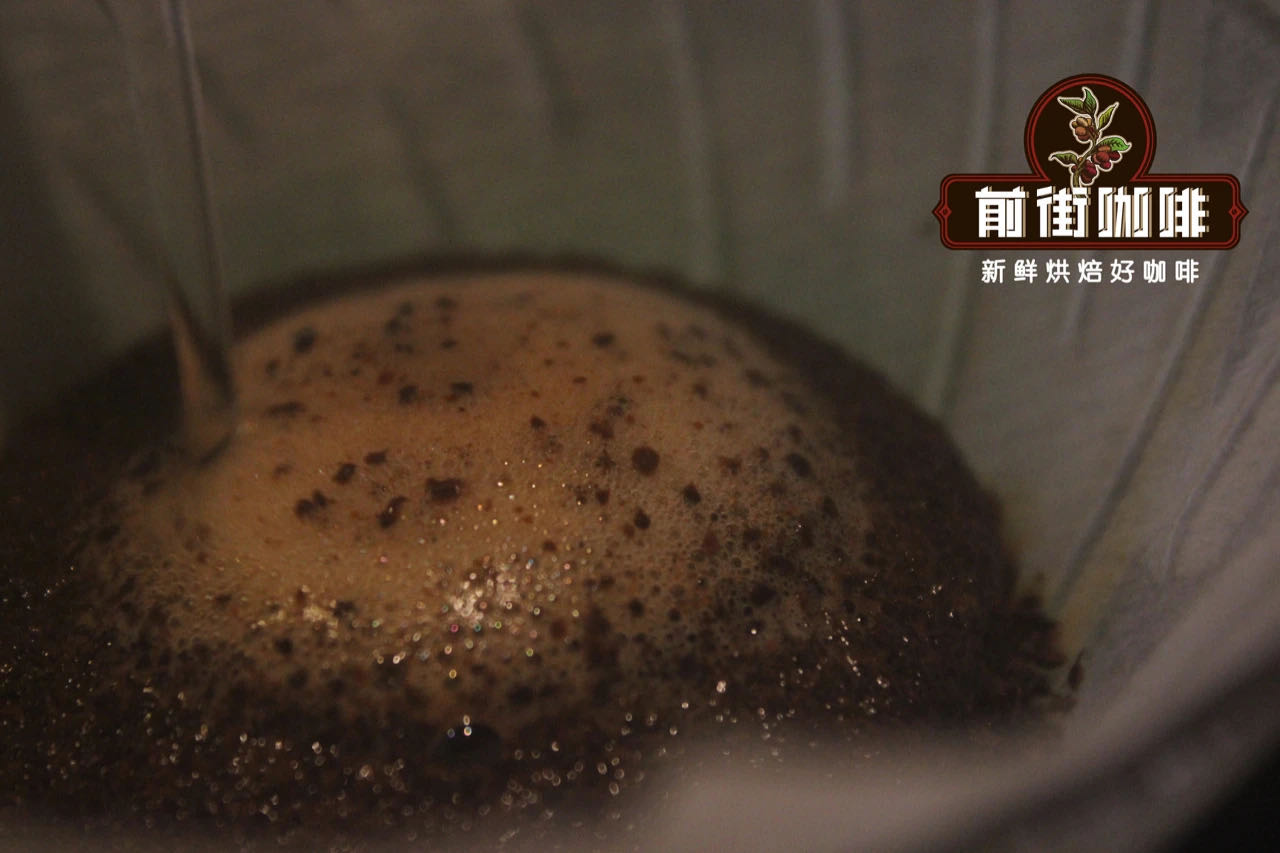
There are mainly two types of blended beans on the market. One is blends from different producing regions, such as the FrontStreet Coffee Warm Sun Blend espresso beans mentioned above, which combines beans from Honduras and Ethiopia Yirgacheffe, with the Honduras Sherry barrel providing most of the flavor and the Yirgacheffe providing more aroma and acidity.
The other is blends of different coffee varieties. As the name suggests, this means mixing different varieties into one blended bean. FrontStreet Coffee's Flower Butterfly, for example, is known for mixing about 70% Geisha. There is also FrontStreet Coffee's Costa Rica Mirazu Estate Geisha Blend, which mixes half Geisha with half SL28, ET47, and Maico. FrontStreet Coffee believes, however, that calling beans mixed from different varieties a blend is really about highlighting a particular variety rather than blending in the traditional sense. Interestingly, if we called beans mixed from different varieties a blend, then most of the coffees we encounter would count as blends, such as common Kenyan coffees that often mix SL28 with SL34.
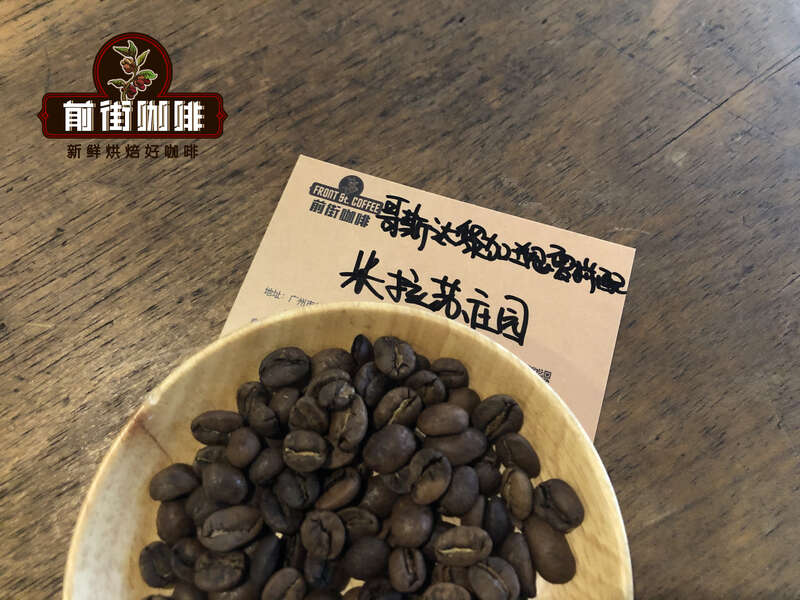
So, to return to the question: can blend beans be used for hand-pour coffee? There is no hard rule prohibiting it. If the beans are of good quality, properly roasted, and brewed correctly, then blend beans can taste very good as well. If you can taste flavors in the cup that a single bean could not provide, why not enjoy them?
FrontStreet Coffee Recommendation
Since a blend is only a mixture, what actually determines the quality of a pour-over is the bean quality, the roast, and the brewing. FrontStreet Coffee's Gedingding, a washed Yirgacheffe from the Worka area, is an easy pour-over to start with: it shows citrus, berry, and floral notes with a green-tea-like finish, bright and clean. For a livelier, more complex cup, FrontStreet Coffee's Kenya Small Tomato comes from the Thika region at 1,550-1,750 meters, grown from the classic SL28 and SL34 varieties, processed with a 72-hour double washed fermentation, and roasted light. The dry aroma is full of dried cherry tomato and floral notes, and the cup delivers clear cherry tomato and dark plum, a bright, solid acidity, a juicy mid-palate, pear and black plum, and a clean, long finish with brown sugar sweetness and a light green tea aroma.
If you prefer a low-acid, full-bodied cup, FrontStreet Coffee's PWN Golden Mandheling is a good counterpart. Deep roasted, it is low in acidity with a thick, lingering body, carrying herbal and dark chocolate aromas with a faint earthy note and plenty of layers. It suits anyone who favors a strong coffee without bright acidity.
Whichever you choose, remember the point of this article: a blend and a single origin are brewed exactly the same way, and both reward a V60 with water at about 90-91°C and a three-stage pour. The beans and the roast decide the flavor; the brewing method only decides how much of it you get.
Important Notice :
FrontStreet Coffee is a long-established specialty coffee roaster in Guangzhou China, selling freshly roasted beans from its own farm in Yunnan as well as dozens of carefully selected single-origin beans from around the world for both pour-over and espresso. The products deliver consistently excellent quality and great value, with shipping within 24 hours. Guangzhou's FrontStreet Coffee shop is recommended by many coffee lovers, and the beans are now available online at the Tmall 。
FrontStreet Coffee has moved to a new address:
FrontStreet Coffee Address: 315,Donghua East Road,GuangZhou
Tel:020 38364473
 Scan and follow the En Gafei WeChat official account. Please indicate that the reprint comes from "En Gafei".