Is Blue Mountain Coffee American Coffee? Blue Mountain No.1 Coffee Bean Brewing Method and Flavor Profile

Coffee is a good friend to working professionals. Many coffee enthusiasts frequently drink black coffee to cut their fat and sugar intake, and when visiting coffee shops they typically order an Americano for a quick caffeine fix. This unsweetened black coffee not only seems guilt-free but also offers an enticing aroma. Blue Mountain coffee, similarly, is drunk without sugar or milk - so does that make Blue Mountain coffee just another Americano?
Yes, black coffee is coffee without sugar or milk, but Blue Mountain coffee is not the same as Americano. The fundamental difference lies in how each is made. As a single-origin coffee bean, Blue Mountain is most commonly brewed as pour-over drip; Americano, by contrast, is an espresso-based beverage made by mixing a certain proportion of iced or hot water into espresso.
What is Americano Coffee?
Americano is said to have emerged from American soldiers stationed on the European front during World War II. Europeans preferred rich, aromatic coffee, which the American soldiers found too intense to accept - so they added hot water, and discovered the diluted result was surprisingly delicious. To Europeans, though, this way of drinking coffee bordered on sacrilege, so they named the water-diluted coffee "Americano."
Since Americano is built on espresso, extracting the espresso well is extremely important. Note that espresso extraction uses pressure as high as 9 bar to force near-boiling water through a compact coffee puck in a relatively short time.

When pulling espresso, FrontStreet Coffee uses its Sunflower Warm Blend, made of 70% Honduras Shirley and 30% Ethiopia natural red cherry, offering rich vanilla and cream flavors with whiskey notes and a hint of berry acidity. With their dialled-in parameters, FrontStreet Coffee uses 20 grams of grounds to extract 40 grams of espresso in approximately 28 seconds.

For a hot Americano, FrontStreet Coffee mixes 40 grams of coffee liquid with 70°C hot water at a 1:4.5 ratio. Made this way, you can clearly taste the blend's vanilla cream flavors, whiskey notes, and rich, smooth mouthfeel.
For an iced Americano, FrontStreet Coffee mixes 40 grams of coffee liquid with ice and water at a 1:2.5:3 ratio. Built this way, the drink isn't too concentrated at first, and as the ice melts the coffee flavor doesn't become too weak either.
What is Blue Mountain Coffee?
Blue Mountain coffee beans are named for the Blue Mountain region of Jamaica where they grow. The Blue Mountain is actually a range in Jamaica surrounded by the Caribbean Sea. On clear, sunny days, direct sunlight hits the azure sea, and the brilliant blue light from the water reflects onto the mountain.

Jamaica's coffee history dates back to the 18th century: in 1717, French King Louis XV ordered coffee to be planted in Jamaica, and in the mid-1720s Jamaica's Governor, Lord Nicholas Lawes, introduced Typica cultivation from Martinique and began promoting coffee growing from the Saint Andrew region.
Today, Jamaica's coffee-producing region is mainly the Blue Mountain area, which spans four administrative regions: Portland, Saint Andrew, Saint Mary, and Saint Thomas.
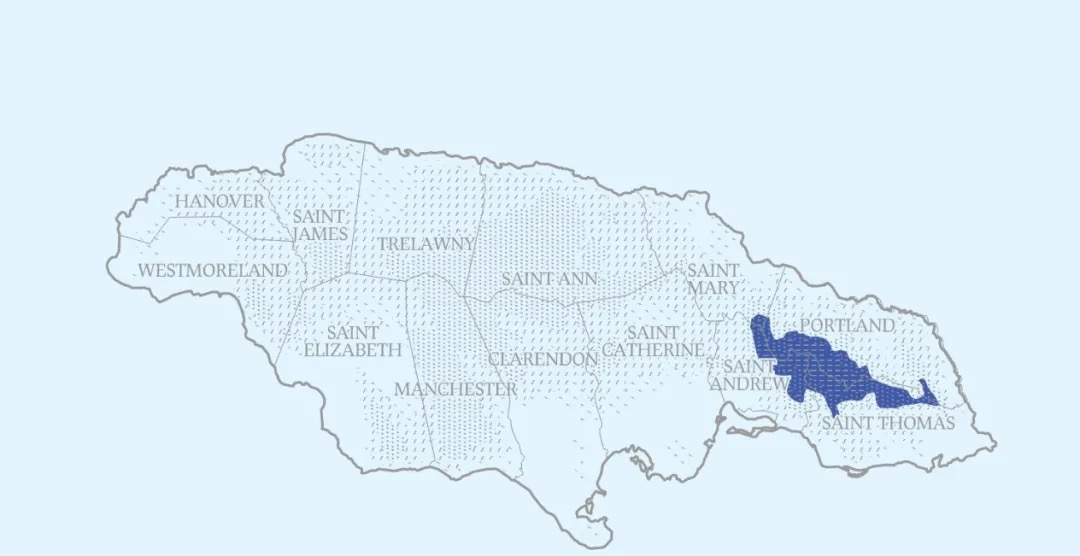
Those familiar with Jamaica's green coffee grading system know that not every bean grown in the Blue Mountain range can be called Blue Mountain coffee. Although the range's highest peak tops 2,000 meters, the area suitable for coffee cultivation lies below 1,700 meters. First, land above 1,700 meters is designated a protected zone where growing is not permitted; second, frost risk rises as altitude increases.
Jamaican coffee beans are graded into three levels by cultivation altitude: Jamaica Blue Mountain coffee is grown between 1,000 and 1,700 meters; Jamaica High Mountain coffee between 500 and 1,000 meters; and Jamaica Prime coffee below 500 meters. Under such strict regulations, only one-quarter of Jamaica's coffee beans qualify as Blue Mountain beans.

The Jamaica Coffee Industry Board's grading system is extremely strict, and within Jamaica Blue Mountain coffee there are four grades: No. 1, No. 2, No. 3, and Peaberry.
Blue Mountain No. 1 is the highest grade, requiring cultivation between 1,000 and 1,700 meters, a green bean screen size of 17/18, and a defect rate below 2%.
Strict standards create exceptional Blue Mountain flavor - and also determine Blue Mountain prices. Some merchants label products "Blue Mountain Blend" or "Blue Mountain Flavor" to sell them at Blue Mountain prices, yet they may not contain a single bean actually grown in Jamaica's Blue Mountains.
The Blue Mountain No. 1 beans sourced by FrontStreet Coffee come from Clifton Mount Farm, located near Catherine's Peak in the Blue Mountain range. Clifton Mount is the oldest coffee estate in the region, with over 200 years of history, and it holds Rainforest Alliance certification - proof of its excellent growing environment.

After comparing multiple Blue Mountain No. 1 beans, FrontStreet Coffee believes Clifton Mount's beans perform outstandingly and make an excellent representative of Blue Mountain coffee.
Those familiar with coffee import and export know that green beans typically ship in jute bags. Jamaica, however, is now the only origin that packs green coffee in wooden barrels. FrontStreet Coffee's shop displays barrels containing Blue Mountain green beans, along with the Jamaica Blue Mountain certification certificate - the two items proving that FrontStreet's Blue Mountain beans originate from Jamaica's Blue Mountains, both displayed inside the store.
Because Blue Mountain coffee is prized for its balanced acidity, bitterness, and sweetness with a rich mouthfeel, FrontStreet Coffee's roaster uses a darker roast level for these washed Blue Mountain beans. As for how to bring out the best of this coffee, refer to FrontStreet's brewing parameters:

Filter: KONO filter
Water temperature: 88°C
Coffee dose: 15 grams
Coffee-to-water ratio: 1:15
Grind size: 75% pass-through rate on a #20 sieve
Since a darker roast highlights Blue Mountain's rich mouthfeel, flavor extraction accelerates during brewing - meaning an overly high water temperature or overly fine grind will lead to burnt, bitter flavors. At the same time, to achieve a fuller mouthfeel, FrontStreet Coffee recommends a dripper with immersion capability, such as the KONO.

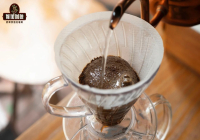
Pour 30 grams of hot water for a 30-second bloom, then pour from the center with a fine stream in slow circles to 125 grams. When the water level is about to expose the coffee bed, continue circular pouring to 225 grams. Total extraction time is approximately 2 minutes.
Blue Mountain No. 1 brewed with these parameters offers balanced acidity, bitterness, and sweetness, with rich nutty and chocolate flavors and a velvety mouthfeel.

If you're unsure about grind size, you might think of asking FrontStreet Coffee to grind the beans for you - which, of course, we do. But a reminder: once beans are ground, degassing accelerates and flavor compounds dissipate accordingly, so buying whole beans and grinding fresh before brewing gives better flavor. FrontStreet Coffee ships beans roasted within the last 5 days, so when they arrive they've just completed a 4 to 7-day resting period, when flavor is at its peak.
FrontStreet Coffee Recommendation
Wondering how to tell genuine Blue Mountain from fake? Start with the paperwork and the packaging. Authentic Jamaica Blue Mountain coffee carries certificates issued by the Jamaican government and full origin documentation, and it traditionally ships in wooden barrels - in 15, 45, and 70 kg specifications - each barrel itself a hallmark of the real thing. From the beans, look for well-formed, plump, slightly upturned ends and a greenish color; from the cup, genuine Blue Mountain is dense, clean, and quietly aromatic with no off-flavors.
FrontStreet Coffee's Blue Mountain No. 1 is the highest-grade batch, from the historic Clifton Mount estate, which has been growing and producing coffee since around 1750. Its growing and processing areas sit at an average of 4,300 feet (1,310.64 meters), where sufficient altitude, mild afternoon clouds shading the forested slopes, ample sunshine, and mineral-rich soil give the trees ideal conditions and extend the ripening of the coffee cherries.
Beyond pour-over, Blue Mountain's superb balance shines in other methods too. In a moka pot - slightly finer grind, hot water in the base, medium-low heat, removing from the flame just as the brew finishes - it intensifies the chocolate, caramel, and nut notes into a thick, full-bodied cup that also makes an excellent latte or flat white with milk.
Important Notice :
FrontStreet Coffee is a long-established specialty coffee roaster in Guangzhou China, selling freshly roasted beans from its own farm in Yunnan as well as dozens of carefully selected single-origin beans from around the world for both pour-over and espresso. The products deliver consistently excellent quality and great value, with shipping within 24 hours. Guangzhou's FrontStreet Coffee shop is recommended by many coffee lovers, and the beans are now available online at the Tmall 。
FrontStreet Coffee has moved to a new address:
FrontStreet Coffee Address: 315,Donghua East Road,GuangZhou
Tel:020 38364473
 Scan and follow the En Gafei WeChat official account. Please indicate that the reprint comes from "En Gafei".