How to Grind Coffee Beans Manually? Eight Recommended Handheld Coffee Grinders
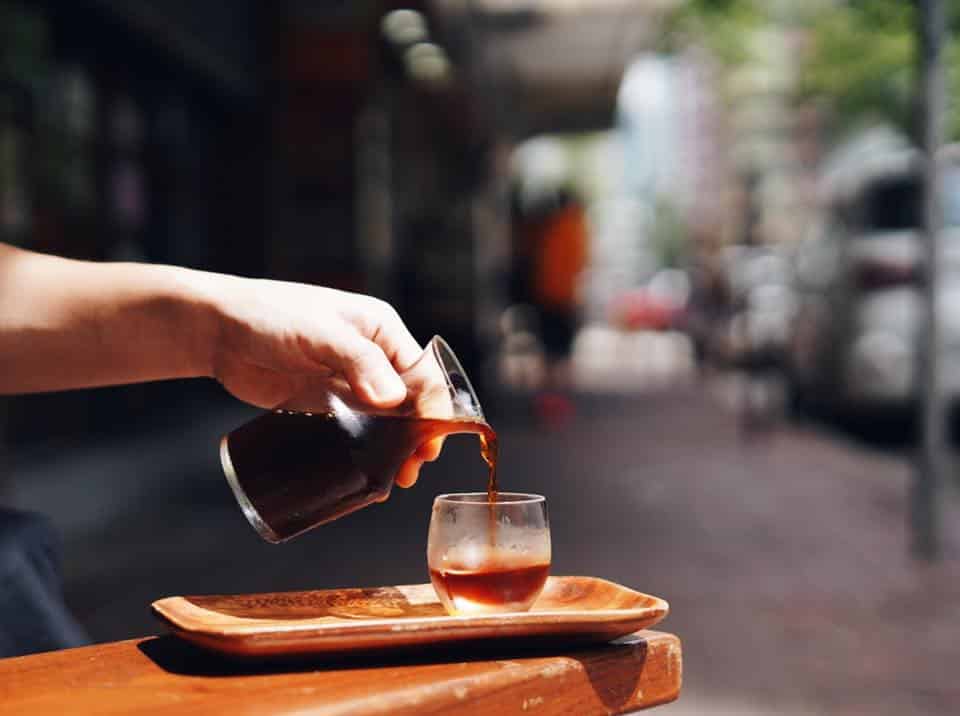
Roasted Coffee Beans Can't Be Brewed Whole
Sooner or later a reader asks this: "A friend brought me a bag of coffee beans from abroad. How do I drink it at home? Can I just toss the beans in a pot and boil them?"
If you're not fussy, sure—as a last resort. The proper way is to grind the beans first, then use coffee equipment to extract the liquid.
There are many kinds of brewing equipment, and we'll cover each in detail later.
Today, though, we're focused on one thing: grind size, and how coarse or fine a grind changes the cup.
Coffee Only Stays Fresh for Five Minutes After Grinding
Test data from professional organizations shows that within the first 5 minutes of grinding, nearly 50% of the active volatile aromatic compounds escape the beans.
If you buy pre-ground coffee (except the inert-gas-filled kind), don't expect much in flavor or aroma—convenience is its only virtue. Even the worst grinder beats buying pre-ground by a hundredfold. If you care about coffee, take the time to learn to grind it yourself.
To pull flavor and character out of roasted beans, grinding before extraction is essential. It looks simple, but it hides a great deal of technique. In fact, when home brewers find their coffee flat and dull, the beans are often fine, the roast is often fine, and freshness is often fine—the culprit is usually a flawed grind.
Once roasted beans are ground, their cell walls are completely broken open and the coffee sits fully exposed. A tempting aroma fills the air, and that is precisely the aroma escaping. At the same time, the leap in surface area speeds up oxidation, and the coffee loses freshness fast.
So ground coffee can't be stored. Grind it right before you brew.
The intensity and character of the aroma released during grinding is also a good gauge of freshness. The stronger the aroma, the fresher the beans; the fainter, the staler. Beans kept too long won't just smell weak when ground—they'll carry a sour, stale note. Watch for that.
A single coffee bean has a surface area of 3.4cm², and grinding expands that by almost 10 times.
The coarser the grind, the smaller the total surface area, the slower the oxidation, the less contact with water during extraction, the fewer compounds pulled out, the lower the concentration, the more pronounced the acidity, and the weaker the bitterness.
Flip it around: the finer the grind, the larger the surface area, the faster the oxidation, the more contact with water, the more compounds extracted, the higher the concentration, the softer the acidity, and the stronger the bitterness.
Grind quality isn't judged by coarse versus fine—different grind sizes suit different brewing methods and different tastes. The real measure is uniformity. Some home brewers use excellent beans bought online, with good freshness, great water, and solid technique, yet strict professionals still see them as wasting nature's gifts.
The reason is a wildly inconsistent grind: some particles are boulders while others have turned to dust. When you brew that mixture, the balance of extraction collapses and the bean's true, pure flavor is torn into something muddy and murky. How could that express what nature intended?
Those who want to go deeper can pair this with the later "Brewing and Extraction" chapter.
Just as with roast levels, grind coarseness deserves a descriptive summary. Granulated white sugar, table salt, and flour are the three everyday references we use.
A. Coarse Grind
Coarse doesn't mean endlessly coarse. Particles similar to white sugar are the most common coarse grind. Extraction is relatively low, so it suits brewers with coarser filters or longer steeping, such as the French press.
B. Medium Grind
Medium falls between white sugar and table salt. Most slow-extraction pour-over gear suits a medium grind, such as siphon pots and manual pour-over.
C. Fine Grind
We often describe fine like this: at a glance it looks very fine, but pinch it and you feel a slightly coarse, grainy texture. Table salt is the closest match. A moka pot is happiest at this size.
D. Espresso Grind (also called Fine Grind)
Espresso grind looks like fine powder but still has a faint graininess when pinched between your fingers. Its fineness sits between table salt and flour, and it is mainly for espresso machines pulling Espresso.
E. Turkish Grind (also called Ultra-fine Grind)
Ultra-fine is close to flour—a puff of breath sends it flying, and pressed against a hard surface it makes no crunching sound. This level is mainly for Turkish coffee and is relatively rare.
Grind coarseness and extraction are closely linked, but pinning it down precisely can be hard for beginners. Besides comparing against flour, salt, and sugar, the only way is to keep pinching the grounds between your fingers and gradually build a reliable sense of touch.
Eight Portable Manual Coffee Grinders
First, know that manual grinder burrs come in two types: metal and ceramic.
Metal burrs tend to heat up while grinding, which can drive off the aroma prematurely. Ceramic is fragile but basically doesn't heat up, so the aroma comes through truer. Cast iron lasts longer than ceramic. Ceramic resists wear but actually cracks easily, and domestically made ceramic burrs rarely last more than a year. Cast iron, over long use, may simply become less uniform with wear but can keep working for many years without breaking. Ceramic's advantage is that it can be washed—though in practice it never really gets clean, and after washing it must be air-dried, with each wash adding to the risk of dropping and breaking it. In truth, the people who rinse it constantly are mostly beginners.
Domestic Brands
Timemore Chestnut G1/G1S Titanium Manual Coffee Grinder
Price: Under 850 yuan
Review: Possibly the default choice for pour-over enthusiasts—the most outstanding portable domestic hand grinder.
Why? The Timemore Chestnut G1/G1S has a slender body, well-judged curves, and a comfortable grip, making it easy to live with day to day.
In industrial design, grind consistency, and overall quality next to imported hand grinders, it offers exceptional value.
Anonymous Second Generation Coffee Grinder
Price: 480 yuan (single origin) 560 yuan (espresso)
Review: The metal burr is CNC-machined stainless steel, and the internal body uses a dual-bracket, dual-bearing design to stabilize the central axis. Grinding is uniform with very little fine powder—sturdy and durable.
A great value pick among domestic brands.
Imported Brands
Japanese PORLEX Manual Coffee Grinder
Price: Under 350 yuan
Review: Good at fine grinding, with a ceramic burr. Small and easy to carry. It generates less heat while grinding, so it loses less flavor. The downside: over long-term use, fine powder gradually increases. The bean container is small (35-45g). In FrontStreet Coffee's view this offers great quality and the best value of the entire list. Highly recommended.
Japanese HARIO Manual Coffee Grinder
Price: Under 200 yuan
Review: Ceramic burr, easy to disassemble, and fully washable with water. Compact and very portable. The central axis is plastic, so avoid especially hard beans. Slightly strenuous to use.
HARIO's burr is manufactured by Kyocera and assembled in China. Kyocera's CM45 burr can grind fine enough for espresso. In our view, dedicated electric grinders do espresso better (excluding premium hand grinders like the HG-ONE).
Beginners can consider this model.
Domestic Premium Helor 101 Manual Coffee Grinder
Price: 749-1029 yuan
Review: Stainless steel main shaft, portable, high-precision, fully replaceable parts, higher price. Available with espresso blades or single-origin ceramic blades. Good feel, attractive looks. The single-origin blade is martensitic stainless steel—washable and rust-resistant. Less fine powder, high uniformity. Small bean container (25-35g). The new upgraded version 108 hasn't been tried by FrontStreet Coffee yet, but it may well be better.
American Handground Manual Coffee Grinder
Price: 498-628 yuan
Review: The Handground brought together thousands of coffee enthusiasts from around the world to help shape its design.
Many manual grinders get overlooked because their grind adjustment range is small or fixed. This one twists easily to adjust across 15 settings. It features a 40mm conical burr made of high-strength sintered alumina ceramic, resistant to heat and wear.
Another standout feature is its side-mounted crank handle, which suits ergonomics better. The wooden part of the handle is made from old coffee tree wood, adding extra character.
German Zassenhaus Quito Manual Coffee Grinder
Price: 699 yuan
Review: Dual-axis fixation and a steel conical grinding head. A classic European manual grinder brand, with a fixed central axis, uniform grinding, and excellent output quality—it can even grind to espresso fineness.
German Comandante C40 MK3 Commander Manual Coffee Grinder
Price: 2459-3980 yuan
Review: High-nitrogen steel burr with more than twice the strength of ordinary 304 stainless steel and the same corrosion resistance. Each grinder comes with a transparent glass grounds catcher and an amber glass storage container. Beautiful, with numerous color options.
Orphan Espresso OE LIDO 3 Manual Coffee Grinder
Price: 1100 yuan
Review: The Lido is one of the world's most recognized professional, high-performance hand grinders, designed by Doug—the famously eccentric American collector of old grinders and lever machines. It takes its inspiration from the Italian interlocking toy "Lido." Grind quality surpasses electric grinders under 1000 yuan (apart from the effort of grinding). It uses a Swiss 48mm precision hard steel burr, and a copper-alloy dual-axis system that keeps grinding stable and the powder uniform. Easy to disassemble and convenient to clean.
Pros and Cons of Manual Coffee Grinders
Advantages
Affordable and portable: home manual grinders generally cost only a few dozen yuan, with nicer styles and materials running just over a hundred. Among grinders, they are the cheapest type.
Disadvantages
Low efficiency and labor-intensive: an electric grinder can turn several thousand times per minute, while a manual grinder manages only about a hundred rotations per minute. Manual grinding is therefore relatively slow.
FrontStreet Coffee Recommendation
A grinder only earns its keep with good beans to grind. FrontStreet Coffee suggests these for hand-grinding at home.
FrontStreet Yirgacheffe Natural Red Cherry
A high-sweetness classic among light roasts. FrontStreet roasts it medium-light, so it smells of ripe fruit and opens with clear fermented, berry notes; as it cools you get citrus acidity, a creamy smoothness, and a juicy ripe-grape finish.
FrontStreet Mozart (Musician Series)
Costa Rican coffee is famous for its sweetness, and this raisin-honey-processed lot, with its slow drying fermentation, brings Muscat-grape sweetness along with distinctive pineapple and osmanthus aromas. FrontStreet's medium-light roast plays up the raisin, rose, and fermented wine notes.
FrontStreet 2013 Yunnan Typica
FrontStreet has grown coffee in Lincang, Yunnan since 2013, planting the Typica variety—a fine Arabica. Naturally processed and medium-roasted, it shows high dried-fruit sweetness, plum, yellow sugar, and chocolate.
Important Notice :
FrontStreet Coffee is a long-established specialty coffee roaster in Guangzhou China, selling freshly roasted beans from its own farm in Yunnan as well as dozens of carefully selected single-origin beans from around the world for both pour-over and espresso. The products deliver consistently excellent quality and great value, with shipping within 24 hours. Guangzhou's FrontStreet Coffee shop is recommended by many coffee lovers, and the beans are now available online at the Tmall 。
FrontStreet Coffee has moved to a new address:
FrontStreet Coffee Address: 315,Donghua East Road,GuangZhou
Tel:020 38364473
 Scan and follow the En Gafei WeChat official account. Please indicate that the reprint comes from "En Gafei".