What Roast Level is Suitable for Yirgacheffe Coffee? Introduction to Flavor Characteristics of Washed Yirgacheffe Coffee Processing
Few beans are as familiar as "Yirgacheffe coffee." It is a signature offering that permanently resides on the menus of specialty coffee shops everywhere — you've likely spotted it on your own café visits. For friends not yet acquainted with this bean, FrontStreet Coffee offers a brief introduction to the story behind the coffee that graces so many counters.
The Origin of Yirgacheffe
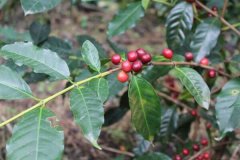
Of all coffee-producing countries, Ethiopia may command the most attention: universally recognized as coffee's birthplace and one of the largest Arabica cultivation areas. Yirgacheffe is one of its most important growing regions — a small town in southwestern Ethiopia, originally part of the Gedeo zone. The town has been a natural wetland since ancient times, with abundant water, an average annual temperature between 15 to 25 degrees Celsius, and an altitude of 1,700-2,100 meters. High-altitude day-night temperature swings, warm winters, and cool summers give the town precisely the conditions Arabica coffee demands.
Yirgacheffe originally belonged to another great Ethiopian coffee region — Sidamo. But because Yirgacheffe coffee carries delicate floral aromas found nowhere else, and because the specialty market's appetite for beans that express fresh flavors keeps growing, the region was split from Sidamo and quickly rose to become one of Ethiopia's most important coffee origins.

Coffee Processing Methods
Yirgacheffe green beans are refined in two broad categories: natural processing and washed processing.
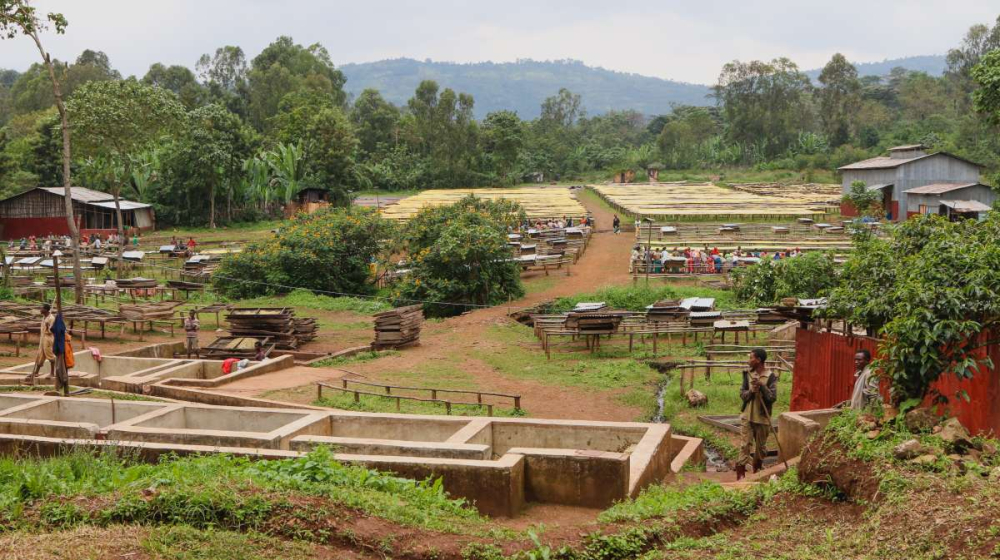
In the earliest days, the region's beans were processed mainly by the natural method — also called the drying method, the most ancient of all green-bean refinements. Coffee cherries are spread evenly on brick patios or raised drying tables built for sun drying, allowing more air convection around the fruit and a more uniform drying result.
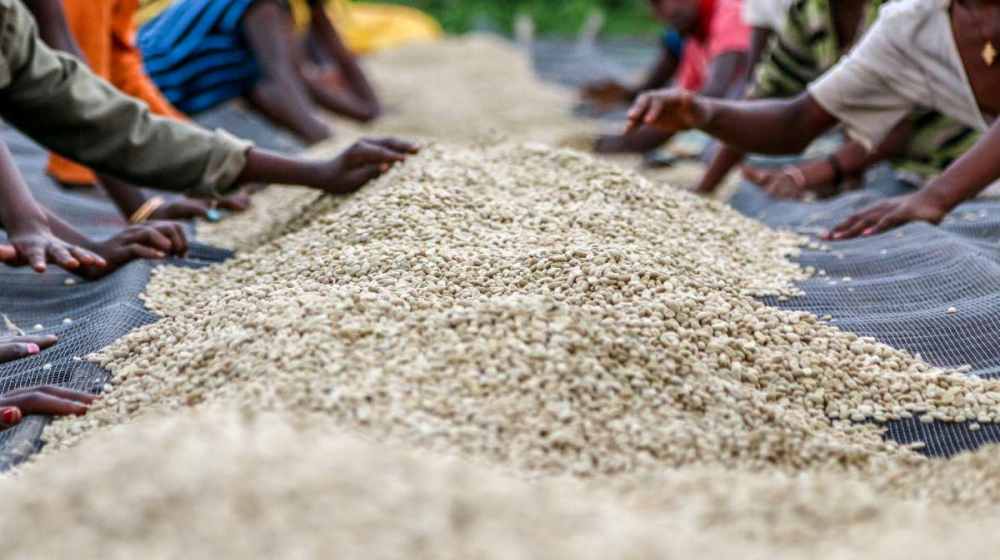
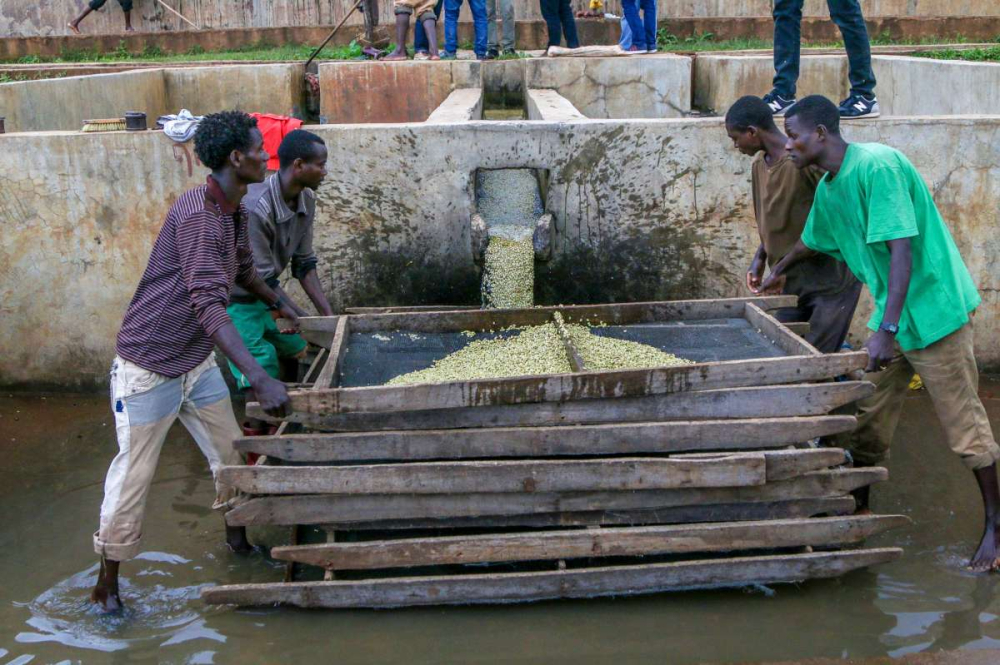
In the 1970s, aiming to improve green coffee quality, the Ethiopian government introduced the advanced washed method from Central and South America. Washing removes the sticky flesh layer before drying, dramatically reducing the variables that can arise during drying. After repeated washings of the mucilage coating the cherry, the beans are finally spread on brick patios or raised beds to sun dry.
Under both refinement methods, Yirgacheffe's flavors stay exceptionally clean and rich in fruit and florals. Naturally processed Yirgacheffe has explosive berry aromas, richer flavor, and distinct fruit-like smooth acidity; washed Yirgacheffe carries clear florals, bright fresh citrus, a relatively softer mouthfeel, and a warm tea-like finish.
Optimal Roast Level for Yirgacheffe
Having covered green-bean refinement, we arrive at today's question: what roast level suits Yirgacheffe?
Simply put, coffee roasting describes both how dark the beans finish (light vs. dark) and how long it takes (fast vs. slow roast). Calling a coffee simply "light roast" is incomplete — it could be fast-roasted or slow-roasted, and roasting speed brings completely different flavor expressions. Three elements determine a coffee's final flavor and must be properly controlled: acidity, sweetness, and bitterness. As a rule, the longer the overall roast, the less acidity remains; bitterness rises with roast time, and darker roasts grow more bitter.

Yirgacheffe's flavors shift subtly with roast level depending on processing.
Washed Yirgacheffe roasted light-to-medium presents rich florals, berry aromas, and abundant fruit acidity. Pushed medium-to-dark, the florals, fruit, and acidity recede while sweetness climbs with the deepening roast.
Take FrontStreet Coffee's washed Yirgacheffe [Goddint] as an example: we chose a medium-light roast that beautifully highlights the bean's berry and citrus flavors while preserving its tea-like quality and full floral aromas.
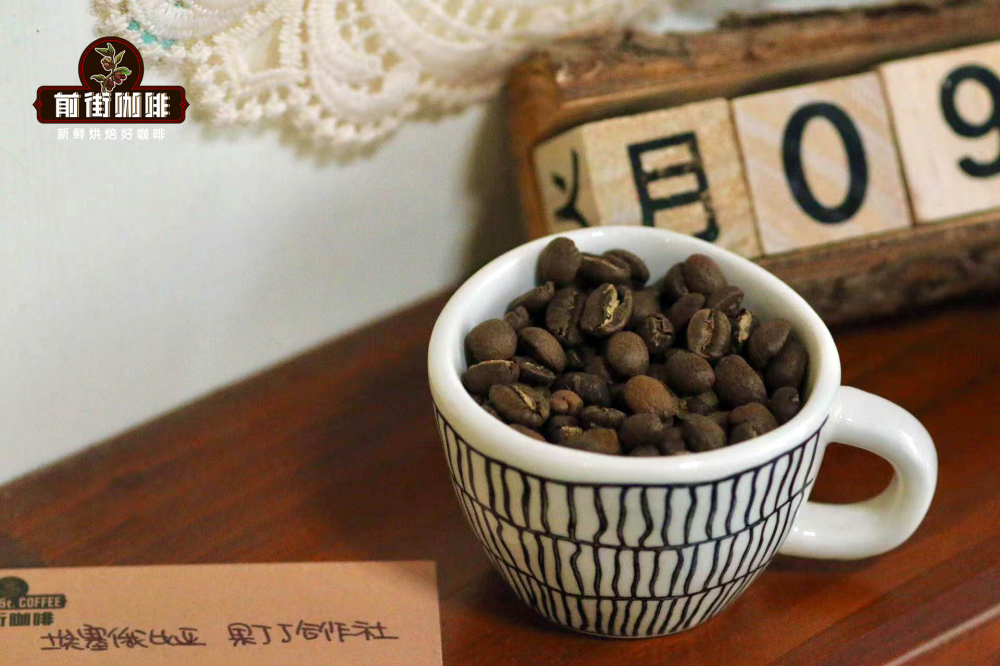
Thanks to its high altitude (2,000-2,100 meters), the bean has a denser texture — a harder consistency — and that is one more reason most roasters choose medium-light for Yirgacheffe: it preserves the clean, bright acidity that defines the region.
Brewing Recommendations
That density also means soluble substances release relatively slowly during extraction, so use a medium-fine grind (fine-sugar size, 80% pass-through rate with China No. 20 standard sieve) paired with 90-92°C water.

FrontStreet Coffee recommends a brewing ratio of 1:15, using a three-stage pouring technique: Start timing, first pour to 30g water and let it bloom for 30 seconds; then begin the second stage with small water flow in circular pouring to 125g, wait until the water level in the coffee bed drops to half before continuing to pour, then continue with small water flow circular pouring to 225g. After complete drip filtration, the total extraction time is approximately 2 minutes 00 seconds to 2 minutes 10 seconds.
For more coffee bean information, please follow Coffee Workshop (WeChat public account: cafe_style)
FrontStreet Coffee Recommendation
For a first taste of washed Yirgacheffe, FrontStreet Coffee's everyday washed lot is the classic starting point — white jasmine, bright citrus and lemon acidity, and a tea-like finish at an accessible price, the very reason it's so many drinkers' first specialty bean. To go deeper, seek out the FrontStreet Guodingding Cooperative lot from the Worka area at Yirgacheffe's southeastern edge: a traditional washed coffee from one of the region's most experienced cooperatives, once part of the Yirgacheffe Union (YCFCU) and later unearthed by coffee hunters worldwide as traceable single-origin lots. It shows none of the classic bitterness — just clean, luminous citrus-lemon acidity and jasmine fragrance that wins people over at the first sip.
If you'd rather taste the natural side of the region, the FrontStreet Red Cherry is built from only fully ripe, defect-free cherries: sorted again at the station, spread on raised beds, and turned every 2-3 hours through the first days to prevent overheating and over-fermentation, then sun-dried three to five weeks before hulling. Drying with the pulp intact gives the cup its Yirgacheffe core plus tropical fruit from the natural process — citrus acidity, berry juiciness, honeyed sweetness, and creamy smoothness.
Either way, brew gently and precisely: a V60 with 15g of coffee, a 1:15 ratio, 90-91°C water, and a grind of EK43s at 10 (fine-sugar texture, 80% pass-through on a #20 sieve). Bloom with 30g for 30 seconds, pour to 125g, then finish to 225g once the bed falls to two-thirds, with drawdown ending at 2'00"-2'10" — swirl the server, and enjoy Yirgacheffe at its brightest.
Important Notice :
FrontStreet Coffee is a long-established specialty coffee roaster in Guangzhou China, selling freshly roasted beans from its own farm in Yunnan as well as dozens of carefully selected single-origin beans from around the world for both pour-over and espresso. The products deliver consistently excellent quality and great value, with shipping within 24 hours. Guangzhou's FrontStreet Coffee shop is recommended by many coffee lovers, and the beans are now available online at the Tmall 。
FrontStreet Coffee has moved to a new address:
FrontStreet Coffee Address: 315,Donghua East Road,GuangZhou
Tel:020 38364473
 Scan and follow the En Gafei WeChat official account. Please indicate that the reprint comes from "En Gafei".