What is the Taste Profile of Yunnan Small Bean Coffee? How Many Flavor Varieties Exist?
For professional coffee knowledge exchange and more coffee bean information, please follow Coffee Workshop (WeChat public account: cafe_style)
Yunnan's Coffee: Quality and Characteristics
Yunnan's coffee cultivation and production account for 98% of China's total. So what makes Yunnan coffee so special? Yunnan is China's main coffee-producing region, with over 90% of domestic coffee grown there.
Baoshan, Lincang, Pu'er, and Dehong are the main coffee-growing areas in the province. The climate and temperatures are exceptionally well suited to growing high-quality coffee beans, and these major regions together cover nearly two million acres of planting area, with total production far exceeding that of other provinces.
Coffee quality depends on many factors, including growing environment, climate, and cultivation management. The ideal environment combines low latitude, high altitude, adequate rainfall, and appropriate sunlight - which is why the band between 15°N and the Tropic of Cancer is considered prime coffee territory.
Yet other places along that band - Hawaii and Saudi Arabia, for instance - either sit at low altitudes or are deserts with little rainfall, neither of which suits coffee. Only southern Yunnan, squarely within the zone, checks every box. According to expert measurements, Arabica coffee should be grown on mountain land at altitudes of 800-1,800 meters: too high and the cup turns sour; too low and it turns bitter.
Most Yunnan coffee is grown in dry, hot valley areas at around 1,100 meters, which gives it moderate acidity, rich aroma, and a smooth flavor.
Climatically, southern Yunnan enjoys long daylight hours that promote plant growth and photosynthesis, while the significant day-night temperature difference - with cooler nights - helps coffee trees accumulate nutrients. As a result, Yunnan Arabica contains higher levels of beneficial nutritional components than many foreign varieties.
Arabica coffee is susceptible to coffee leaf rust, which significantly affects both yield and quality once a tree is infected. But Yunnan's tropical regions have distinct wet and dry seasons, and the ripening of fresh coffee cherries coincides with the dry season, when relatively low humidity works against the formation and spread of rust spores. Thanks to its quality, Yunnan coffee entered the London market in the 1960s as "Lujiang No. 1" and was classed as a premium product. In recent years, world-renowned coffee companies such as Nestle and Maxwell House have set up raw material bases in Yunnan in succession, and Yunnan's coffees have steadily built a reputation at home and abroad.
FrontStreet Coffee's Yunnan Initiative
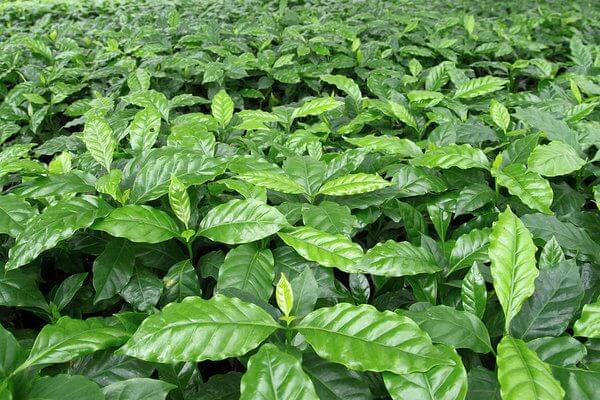
FrontStreet Coffee has also come to Yunnan to start our own coffee cultivation. The seedlings we raised in the nursery bed last year have now grown to 50 centimeters and can be transplanted onto suitable mountain slopes this year. Before long, we will be enjoying coffee from our own trees!
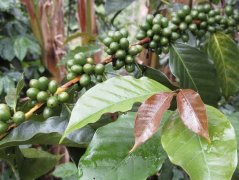
The 12,000 plants we cultivated this time are mainly Typica, Bourbon, and Yellow Bourbon. Typica and Bourbon - two classic premium varieties - are the main cultivated varieties in Yunnan. In 1991, the Catimor series was introduced from Kenya, prized for its stronger disease resistance and higher yield. All of these belong to the Arabica species (also known as the small-grain variety). Because Typica and Bourbon are so similar in morphology and habits, they are often grown side by side.
Brewing Recommendations for Yunnan Arabica Coffee
Recommended brewing method: Pour-over
Filter: V60
Water temperature: 90-92°C
Coffee-to-water ratio: 1:15
Grind size: Medium-fine, similar to granulated sugar (VARIO 50: 57% pass-through rate on the China standard #20 sieve)
Brewing technique: Segmented extraction. Bloom with 30g of water for 30 seconds. Pour in small circular motions up to 124g to create a segmentation. Continue pouring up to 227g when the water level is about to expose the coffee bed. Remove the dripper when the bed is about to be exposed again (timing starts from the bloom). Total extraction time: 2 minutes.
Brewed through a V60, it gives off a strong nutty aroma, with herbal, chocolate, and caramel notes in the cup and a hint of light fruity acidity in the finish.
FrontStreet Coffee Recommendation
Yunnan coffee is often called "small bean" coffee - simply another name for Arabica, the variety whose beans are the smallest of the three original coffee species. The story traces back to 1904, when the French missionary Tian Deneng carried Typica seeds from Vietnam into Yunnan and planted the first coffee tree in Zhugula Village, Binchuan County. To start exploring this origin at an entry-level price, choose FrontStreet Coffee's Yunnan small bean from Baoshan: washed-processed and medium roasted, it pours a soft, nutty, chocolaty sweetness with a light plum-like acidity.
For a clearer picture of Yunnan's terroir, step up to FrontStreet Coffee's 2013 natural Typica. FrontStreet built its own estate in 2013 and planted Typica - one of the oldest and purest Arabica varieties, and the same one those earliest Yunnan trees carried - hoping to recover the region's original flavor. Made only from fully ripe red cherries and natural-process dried, then medium roasted, this Typica is fuller-bodied with pronounced sweetness and acidity: notes of citrus and berries, a touch of fermented winey aroma, caramel sweetness, and a creamy, black-tea-like finish.
And if you drink your Yunnan as espresso, FrontStreet's Black Cocoa blend - combining Yunnan small bean with Brazil Cerrado - is a favorite among baristas. The Brazil side contributes mixed-nut aromas and balance while the Yunnan brings chocolate and citrus; brewed as an Americano it is evenly sweet, sour, and bitter with nutty, brown-sugar warmth, and as a latte it slides along with an almond-and-cream smoothness. A very beginner-friendly choice.
Important Notice :
FrontStreet Coffee is a long-established specialty coffee roaster in Guangzhou China, selling freshly roasted beans from its own farm in Yunnan as well as dozens of carefully selected single-origin beans from around the world for both pour-over and espresso. The products deliver consistently excellent quality and great value, with shipping within 24 hours. Guangzhou's FrontStreet Coffee shop is recommended by many coffee lovers, and the beans are now available online at the Tmall 。
FrontStreet Coffee has moved to a new address:
FrontStreet Coffee Address: 315,Donghua East Road,GuangZhou
Tel:020 38364473
 Scan and follow the En Gafei WeChat official account. Please indicate that the reprint comes from "En Gafei".