The Easiest Way to Brew Coffee Powder_How to Make Coffee Without Tools?
Professional coffee knowledge exchange. For more coffee bean information, please follow the Coffee Workshop (WeChat public account: cafe_style).
So you bought a bag of ground coffee—how do you make a decent cup at home for the least money? All you really need is a teapot with a stainless steel filter screen, the simplest and cheapest option around. But simplest does not always mean best: sacrificing the professional touches costs you quality. Below, FrontStreet Coffee walks through several of the easiest ways to brew ground coffee, so you can get the best-tasting cup with the fewest tools.
Drip Coffee Bags
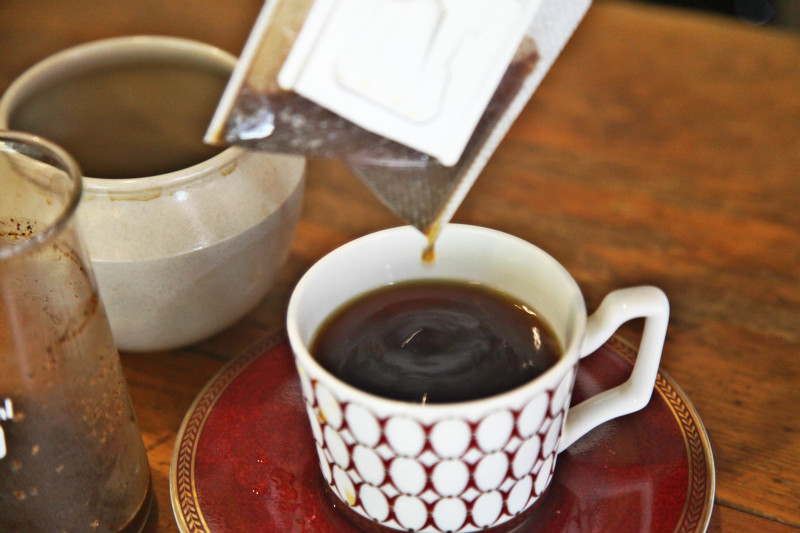
If you want freshly ground coffee, the most direct route is a drip coffee bag, which is essentially a simplified pour-over. It takes only three minutes to make a proper cup. Drip bags are especially good for the office—lugging a gooseneck kettle to the pantry does seem a bit much.
Many Japanese brands make drip coffee bags, priced from a few to more than ten yuan, including Japanese Starbucks, Muji, UCC, Blendy, AGF, MONCAFE, and Sumida River. Some local coffee shops offer them too, and there are plenty of original brands online. It pays to buy a small quantity first and reorder once you find one you like.
Empty drip bags are also sold separately—just add your own coffee. I personally use this approach more often.
Pour-Over Kettle
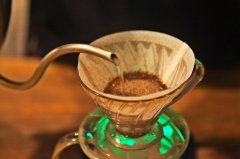
The drip bags above are really a simplified pour-over. The full version uses a pour-over setup, which looks like a funnel set on top of a cup, and each time you use one filter paper. This method extracts coffee more fully than drip bags, where the coffee drips through fairly quickly. Still, a coarse person like me finds drip bags more convenient, so I use this method very rarely.
By the way, pour-over coffee is best paired with a narrow-spout kettle. I personally use a small 320ml one, which is just the right capacity for one person. There are plenty of options online, so pick whatever looks good to you.
French Press
Broadly speaking, coffee brewing falls into two camps: immersion or filtration. Pour-over belongs to the latter, the French press to the former—bluntly put, it is much like making tea. The pot I use is from IKEA, which describes it as a coffee pot/teapot. The method is similar to steeping tea: add coffee, pour in hot water, let it extract fully, press the mesh to the bottom, then pour and drink.
Does that not look even simpler than pour-over? In practice, though, there is plenty to get right. The coarseness of the grind, the water temperature, and the extraction time all matter—small differences change the flavor. So although many people find French press coffee full-bodied and rich, I still prefer pour-over, which is more straightforward.
This method is also very convenient. At home or in the office, just set out a French press. IKEA sells them for 59 yuan, and there are plenty of options online. And if you cannot quite control it and the coffee does not taste good—no waste, you can always use it to make tea.
Standard Pour-Over
Pour-over kettle, filter paper, dripper, dripper stand, sharing pot.
01
Generally, when making coffee at home without an espresso machine, you need a pour-over kettle. Its only key requirement is that the water flow be fine, with good control on both the pour and the stop. You can ignore shape and other details for now.
But most people do not own one—so buy one? That is money you do not need to spend. Most households already have a teapot, which works as a substitute. It makes no difference whether it is clay or glass.
02
Along with the pour-over tool, you need something to filter with. Flannel is inconvenient to store since it must be cleaned and refrigerated, which most people would find unbearable. The most convenient choice is filter paper, as long as you can also get a dripper.
An even simpler option is a double-layer stainless steel filter screen. A tea strainer will not do: it strains tea leaves, which are generally denser, and when used on coffee too many fine grounds slip through and end up in the cup, forming a suspension that will not settle even after standing a long time. You need a finer mesh.
03
Once you have these, find a large cup that can hold the filter screen and you are ready. Pour a suitable amount of ground coffee into the screen, then use the teapot to draw circles over the middle of the coffee bed. First add a little water to wet all the grounds, wait several dozen seconds, then keep adding water. The ratio of coffee to water is generally between 1:15 and 1:18, though without measuring tools it comes down to your own judgment. Do not add as much water as you would for tea, and do not feel that so much coffee making so little liquid is a waste. With too much water, the result will not be coffee but dishwater.
In this way, a cup is ready in a few minutes. Just keep in mind that the ground coffee you buy has usually been sitting for a while. Exposed to oxygen, it gradually oxidizes, losing aroma and flavor. Even so, it still beats instant coffee. Progress slowly.
END
FrontStreet Coffee Recommendation
If a clean, tool-light pour-over like this appeals to you, the choice of dripper and beans matters just as much as technique. Most experienced brewers will suggest the Hario V60 to anyone starting out. Hario, the company behind it, was founded in 1921 in Tokyo as a maker of heat-resistant glassware, and in 2004 it redesigned the V60's prototype into the shape we know today, naming it for its distinctive 60-degree cone and "V" form; it launched a year later. That cone and 60-degree angle force the water toward the center before it drips through, lengthening contact with the grounds so aroma and flavor extract fully, while the single large hole lets water run unobstructed, with flow controlled by the brewer's pour and reflected directly in the cup. Hario also sells the heat-resistant glass serving pots that pair naturally with it.
Which beans you choose depends on the flavor you are after. Before the millennium, medium-dark roasts ruled, and brewing favored rich body, high sweetness, and caramelized notes like chocolate, maple, nut, and vanilla—coffees such as FrontStreet's Jamaica Blue Mountain No. 1 and its PWN Golden Mandheling fit that era perfectly. With the third wave came a taste for terroir, from Ethiopia's white florals to Kenya's berry acidity, and roasts shifted lighter, so the V60's fast extraction now highlights layered aroma and lively acidity. That makes it ideal for FrontStreet's floral-and-fruity lots: the Yirgacheffe Gudingding with its classic citrus, berry, and jasmine notes over a green-tea finish; the Ethiopia Huakui, whose tropical fruit aromas of strawberry, passionfruit, jackfruit, and lychee have made it a star; the Strawberry Candy with its Geisha character; and the raisin-driven Costa Rica Mozart. For those who prefer a fuller, less acidic cup, reach for the deeper-roasted PWN Golden Mandheling with its herbal and dark chocolate depth, the balanced Brazil Queen Estate with nut, cocoa, and caramel, the classic Jamaica Blue Mountain No. 1, FrontStreet's 2013 sun-dried Yunnan Typica with citrus, caramel, and a gentle nutty sweetness, or the Papua New Guinea Paradise Bird—a Typica grown at 1,600-1,800 meters that is so close to Blue Mountain in texture that drinkers call it "little Blue Mountain."
Important Notice :
FrontStreet Coffee is a long-established specialty coffee roaster in Guangzhou China, selling freshly roasted beans from its own farm in Yunnan as well as dozens of carefully selected single-origin beans from around the world for both pour-over and espresso. The products deliver consistently excellent quality and great value, with shipping within 24 hours. Guangzhou's FrontStreet Coffee shop is recommended by many coffee lovers, and the beans are now available online at the Tmall 。
FrontStreet Coffee has moved to a new address:
FrontStreet Coffee Address: 315,Donghua East Road,GuangZhou
Tel:020 38364473
 Scan and follow the En Gafei WeChat official account. Please indicate that the reprint comes from "En Gafei".