Costa Rica Musician Series Chopin Raisin Honey Process with Osmanthus Rose Aroma

Today FrontStreet Coffee would like to introduce a coffee from the Musician Series produced at Hacienda Cañet. The bean is Yellow Catuai, processed with the raisin honey method, yet it plays a completely different tune from the rest of the lineup. That contrast is exactly what makes this Chopin so captivating.
Chopin holds a special place in the FrontStreet Coffee lineup. It is a remarkably clean cup that never feels thin on flavor. Coffees tend to fall into families: some lean floral, others lean fruity. Chopin bridges both, wrapping a youthful floral perfume around a sweet, peach-and-honey core. Knowing the dramatic highs and lows the composer Chopin lived through in the first half of his life before settling into a calmer later period, it is tempting to hear this coffee as a retelling of that whole journey.

Introduction to the Growing Region
Costa Rica sits on the Central American isthmus, where Pacific and Atlantic currents and sea breezes together temper the climate. The country is studded with towering volcanoes that climb to altitudes of 2000 meters, letting coffee cherries ripen slowly in fertile volcanic-ash soil and cool highland air. The result is a bean with a complete, layered flavor. The year splits into two seasons: a dry season from December to April, which coincides with the harvest, and a wet season from May to November. In recent years many micro-mills have appeared; they use only 5% of the water that traditional washed-processing stations consume and do not need large water tanks or drying patios, so the required investment is far smaller. Honey-processed coffee, prized for its low acidity, added complexity and deep sweet aroma, has consequently become one of the most sought-after categories in the industry.
Coffee has been grown in Costa Rica for as long as two hundred years, first on the slopes of the Poas and Barva volcanoes, the area we now call the Central Valley. Today the country has eight main growing regions: West Valley, Central Valley, Tarrazu, Tres Rios, Orosi, Brunca, Turrialba and Guanacaste. Tarrazu is one of the leading producing areas. Its coffee heritage runs deep, and it once earned the favor and recognition of the British royal family, even drawing praise in papal speeches.

Hacienda Cañet
Hacienda Cañet occupies the highest ground in the Tarrazu region, which is itself the most intensively fruit-producing area in Costa Rica. The estate's main crop is passion fruit, and its coffee output is quite limited. Only a specific plot is planted with coffee, and it receives special attention. Every cherry is hand-picked, with only ripe red fruit selected, and after harvest the cherries pass through one more screening step to remove underripe or overripe beans before processing begins.
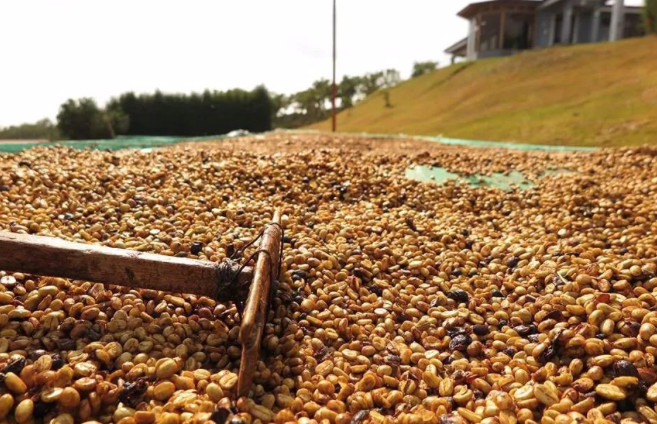
Raisin Honey Processing Method
The raisin honey method is essentially a double-fermentation honey process. On harvest day the picked cherries are poured into large water tanks. Mature, full fruit sinks to the bottom, while underdeveloped or overripe fruit floats and must be skimmed off. The selected cherries are then laid on raised beds and dried until they look like raisins, after which the pulp and skin are removed while the mucilage is left intact for further drying. In the cup this translates to a more intense fermentation aroma and richer, fuller layers of flavor. It also preserves more mucilage than other honey methods. Throughout drying the cherries must be turned constantly for even results, but the turning frequency has to be controlled so the fruit dries slowly enough to develop fermented character without tipping into over-fermentation.
Variety (Yellow Catuai)
Yellow Catuai (Catuai Amarillo) is a hybrid of Mundo Novo and Caturra, first cultivated in 1949 by Brazil's Instituto Agronomico de Campinas. Like Red Catuai (Catuai Rojo), Yellow Catuai shows very high disease resistance and suits high-altitude, windy sites. Both Catuai types share a delicate, clean acidity. The green beans look bluish-green and smell of rich tea with a light fermented note. Costa Rica's Cañet Musician Series includes Mozart, Beethoven and Bach, and this year it welcomed a new bean called Chopin. Unlike the others, this Chopin carries a distinct rose floral aroma and a more prominent sweetness.

FrontStreet Coffee Roasting Analysis
Roaster: Yangjia 800N semi-direct fire (batch size: 300g)
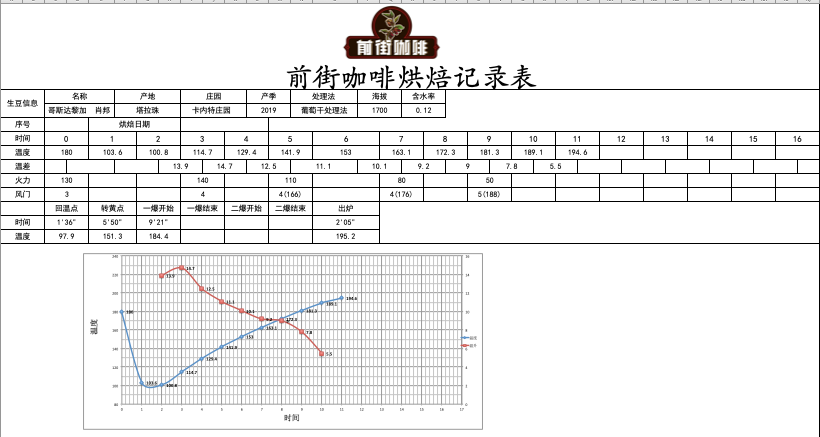
Preheat the roaster to 180°C, then load the beans. Set the heat to 130 and open the damper to 3; the temperature recovery point comes at 1'36", and heat is held there. At 140°C keep the heat unchanged and open the damper to 4. At 5'20" the beans turn yellow and the grassy aroma fades, marking the dehydration stage. At 166°C reduce the heat to 110 and leave the damper at 4. At 176°C set the heat to 80 and keep the damper where it is. At 8'15" dehydration is complete, with wrinkles and dark markings on the bean surface and the toast aroma shifting to coffee aroma, the prelude to first crack. Listen closely for the first crack sound from this point. First crack begins at 9'21"; open the damper fully to 5 and hold the heat. Post-first-crack development lasts 2'05", with the drop at 195.2°C.
FrontStreet Coffee Chopin Color Values
The Agtron bean color value is 70.3 (see the image above), the Agtron ground color value is 78.3 (see the image below), and the Roast Delta value is 8.
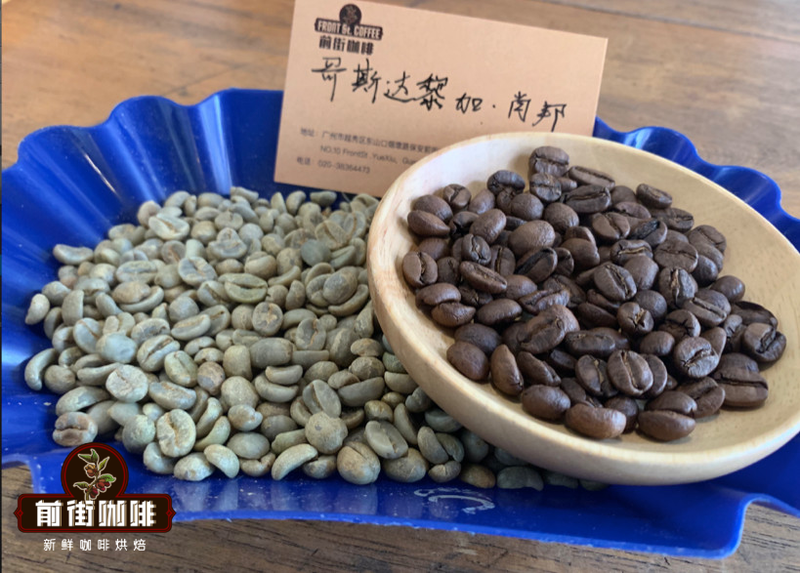
Costa Rica Musician Series - Chopin
- Grade: SHB
- Region: Tarrazu
- Processing Method: Raisin Honey Process
- Variety: Yellow Catuai
- Estate: Hacienda Cañet
- Altitude: 1700m
- Flavor Notes: Raisin, Berries, Lime, Rose Tea
FrontStreet Coffee Brewing Guide
Dripper: Hario V60
Water Temperature: 90-92°C
Coffee-to-Water Ratio: 1:15
Grind Size: Fine sugar (80% pass-through rate with China standard #20 sieve)

Brewing Method: Poured Extraction
For today's brew FrontStreet Coffee chose the Hario V60, which is one of our favorite drippers. Its design emphasizes the speed at which the water level drops, and the internal ribs use a curved vortex structure to speed up the flow. That makes the thickness of the pour and the height of the water level especially important. FrontStreet Coffee usually pairs this dripper with a poured extraction, which slows the flow of coffee liquid and improves extraction from the grounds.
Use 30g of water for a 30-second bloom. Pour in a small circular motion up to 125g, then pause to segment the pour. When the water level is about to expose the coffee bed, continue pouring to 228g and stop. When the level is about to expose the bed again, remove the dripper (timing starts from the bloom). Total extraction time is 1'56".

Flavor Profile
Brewed with 92°C water, this Chopin leads with citrus acidity and a pronounced tea-like quality on entry, followed by berry notes. As the cup cools slightly, a rich fermented aroma emerges, and the sweetness lingers between the lips and teeth for a long time. Brewed with 90°C water, the rose floral aroma stands out more, with raisin and tea sensations on entry; as it cools there is a fermented note, the mouthfeel is comparatively smooth, and the sweetness is clearly present.
For anyone who wants to keep exploring how a single processing method can reshape flavor, the Musician Series is a rewarding place to start; each bean offers a different reading of the same estate.
FrontStreet Coffee Recommendation
Honey processing grew out of semi-washed processing, which removes the coffee skin before drying and shortens the drying time while avoiding the off-flavors of uneven fermentation. Brazil led the way: the FrontStreet Brazil Cerrado, a classic semi-washed coffee, shows clear cream, peanut, nut and chocolate notes. Brazil's success drew the attention of Costa Rica, which adapted the method by varying how much mucilage is retained and how long the cherries dry, giving rise to honey processing and to the more detailed black, red, yellow and white honey styles.
Among FrontStreet Coffee's honey-processed offerings, the FrontStreet Costa Rica Blackberry uses a distinctive black honey process that removes almost no mucilage. Drying takes longer, lasting at least two weeks, and covers are used to keep strong sunlight from drying the fruit too quickly so the sugars convert fully; the cherries are turned at intervals to prevent uneven heat and over-fermentation, making black honey the most labor-intensive of the styles. Roasted medium-light, the FrontStreet Costa Rica Blackberry releases a deep floral fragrance when ground and drinks with the singular flavors of grape, berry and ripe blackberry.
The FrontStreet Strawberry Candy Geisha Blend lives up to its name: it combines Panama Geisha with Costa Rican coffee, the Geisha supplying its classic orange-blossom honey character while the Costa Rican component is processed with the raisin honey method, retaining 100% of the mucilage with zero-water processing. On harvest day the cherries go into large water tanks, where mature fruit sinks and underdeveloped or overripe fruit floats and is removed. The selected cherries dry on raised beds for at least three days before the skin is taken off; the mucilage is kept for further drying, and the fruit is turned constantly for even results. The finished coffee carries not only the floral-tea character of Geisha but also the clean aroma of grape and dried blueberry, soft fruit acidity, an almond finish and obvious sweetness.
Beyond standard honey processing, some estates have introduced an innovative raisin honey method, a modified version that departs from the traditional yellow, red and black styles. The cherries are dried first, spending at least three days on raised beds, and only afterward are the skin and pulp removed so the remaining honey steps can be completed. Its hallmark is that 100% of the mucilage is retained, which is what makes the process so demanding: it requires strict control of timing and is generally considered harder than black honey processing. Raisin honey brings a richer, warmer dried-fruit sweetness to the cup, and the FrontStreet Costa Rica Mozart is a fine example, showing its distinctive osmanthus, pineapple and raisin aroma whether brewed as pour-over, cold brew or in a moka pot.
Important Notice :
FrontStreet Coffee is a long-established specialty coffee roaster in Guangzhou China, selling freshly roasted beans from its own farm in Yunnan as well as dozens of carefully selected single-origin beans from around the world for both pour-over and espresso. The products deliver consistently excellent quality and great value, with shipping within 24 hours. Guangzhou's FrontStreet Coffee shop is recommended by many coffee lovers, and the beans are now available online at the Tmall 。
FrontStreet Coffee has moved to a new address:
FrontStreet Coffee Address: 315,Donghua East Road,GuangZhou
Tel:020 38364473
 Scan and follow the En Gafei WeChat official account. Please indicate that the reprint comes from "En Gafei".