Understanding the Pros and Cons of Siphon Coffee Brewing | Which Tastes Better: Hand-Drip or Siphon Coffee?

The siphon brewer is a coffee maker unlike any other. With its theatrical, almost laboratory-like setup and its striking visual payoff, it became the most beloved brewing apparatus of the last century. Last winter, FrontStreet Coffee noted that as vintage trends make a comeback, more and more cafés are putting siphon coffee back on their menus, giving a new generation the chance to taste what earlier drinkers once enjoyed.

Because the siphon is also a way to brew single-origin coffee, it inevitably gets compared with today's mainstream method: pour-over. Anyone who has tasted siphon coffee knows the two differ dramatically, both in mouthfeel and in flavor.

Pour-over tastes cleaner. Its layers are more distinct and its flavors more pronounced. Siphon coffee, by contrast, feels richer on the palate, carries a more intense aroma, and delivers a weightier, more substantial flavor. So why are the differences so great? Today FrontStreet Coffee explains why siphon and pour-over produce such different cups.
1. Different Extraction Methods
Pour-over relies mainly on drip filtration, the process most people simply call filtration. Hot water is poured over the grounds, and the coffee liquid seeps out through the filter paper as it brews. Sharp-eyed readers may notice we said "mainly" rather than "entirely." That is because pour-over also shows immersion characteristics: the water does not simply wash over the grounds but lingers briefly before draining through the paper. Pour-over, then, is not purely drip filtration.

Many people assume the siphon's extraction method is "siphon style," but that is not quite right. The siphon principle is used only to draw hot water up into the upper chamber; that step is not what extracts the coffee.

Extraction actually begins the moment hot water reaches the upper chamber and the grounds are added for immersion. Strictly speaking, then, the siphon's method is immersion. Water and grounds steep together, and flavor compounds dissolve out of the coffee.

Because immersion brings all of the hot water into contact with the grounds, once the concentration in the water reaches a certain level the dissolution rate slows down and the water stops pulling out much more flavor. We call this reaching saturation. The result is a relatively balanced cup with a full aroma, though the individual flavors are less sharply defined (a point also tied to the second factor below). Drip filtration works differently: it keeps introducing fresh hot water, which has plenty of "room" left and keeps extracting compounds from the coffee. Pour-over therefore delivers a broader, more abundant flavor range, but it is also easier to over-extract. It is worth noting that siphon immersion differs from ordinary immersion in one key respect. Thanks to the siphon principle, the water is heated continuously throughout the brew, and the lower chamber holds enough air to keep the water suspended upstairs. Siphon immersion is therefore fully constant-temperature, whereas ordinary immersion and drip filtration both lose heat as they go, with the water temperature steadily falling over time. That is why the siphon achieves a higher extraction rate and, with a little stirring, can finish the job in less time.

2. Different Filtration Methods
Besides extraction, the way each brewer filters also shapes the final cup. Pour-over uses very dense filter paper that lets only the coffee liquid through; nothing else gets past it.

Siphon brewers mainly rely on cloth (flannel) filters. Filter paper can be used too, but it cannot cover the assembly completely, so it never forms the sealed barrier that pour-over does. Fine particles and oils slip through the gaps and drop into the lower chamber, joining the coffee, which is why siphon coffee often looks cloudy. Oils and fine particles may reduce clarity, but they also give the liquid a richer mouthfeel. That is another reason siphon coffee tastes so full-bodied.

Pour-over, meanwhile, is filtered so thoroughly that it sacrifices some of that richness, yet this is precisely one of its great strengths: it is exceptionally clean. Now it becomes clear why siphon and pour-over differ so much in the cup. It is not only the extraction method but, even more importantly, the different filtration systems that give the two brews completely different mouthfeels.
FrontStreet Coffee Recommendation
If this comparison has you curious, the beans you choose matter as much as the brewer. For the clean, layered character that pour-over shows off so well, FrontStreet's Yirgacheffe Gudingding is a classic starting point, with its bright citrus, berry, and floral notes and a green-tea-like sweetness on the finish. If you want something more dramatic in fruit, FrontStreet Ethiopia Huakui is known for its intense tropical aromas, where strawberry, passion fruit, and jackfruit lead into a sweet, low-bitterness cup that many drinkers describe as the coffee that does not taste like coffee.
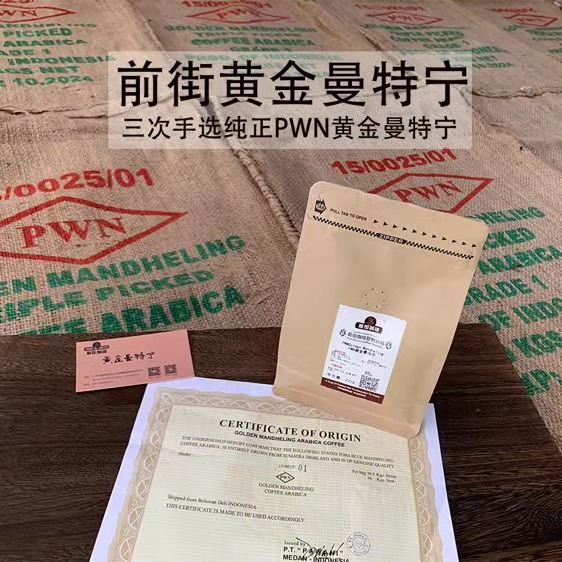
Siphon brewing, with its heavier body and fuller aroma, tends to flatter deeper, more classic profiles. That makes a bean such as FrontStreet's PWN Indonesian Golden Mandheling a natural match: deep-roasted with very low acidity, thick and lingering on the palate, and loaded with herbal and dark-chocolate notes with a faint earthy edge. FrontStreet Jamaica Blue Mountain No. 1 is another fine candidate, prized for its near-perfect balance of acidity, sweetness, bitterness, and aroma, with creamy, caramel, chocolate, and nutty layers. Whichever brewer you reach for, let the bean and the method work for each other.
Important Notice :
FrontStreet Coffee is a long-established specialty coffee roaster in Guangzhou China, selling freshly roasted beans from its own farm in Yunnan as well as dozens of carefully selected single-origin beans from around the world for both pour-over and espresso. The products deliver consistently excellent quality and great value, with shipping within 24 hours. Guangzhou's FrontStreet Coffee shop is recommended by many coffee lovers, and the beans are now available online at the Tmall 。
FrontStreet Coffee has moved to a new address:
FrontStreet Coffee Address: 315,Donghua East Road,GuangZhou
Tel:020 38364473
 Scan and follow the En Gafei WeChat official account. Please indicate that the reprint comes from "En Gafei".