
Traditional Coffee Bean Processing Methods: Introduction to Common Natural, Washed, and Honey Processed Coffee Beans
Some coffee friends seem almost superhuman: one sip and they can name a bean, or one glance and they can guess its origin, variety and processing method. It isn't innate talent. It comes down to knowing a few reliable cues.
Observing the Amount of Silver Skin
FrontStreet Coffee has written before about identifying varieties. This time, let's look at how to tell coffee processing methods apart.
There are many processing methods in use today, but they all trace back to two methods found worldwide and two that developed regionally. The universal pair are washed and natural, and they are by far the most widely used. Washed processing in turn covers anaerobic washing and post-wash barrel fermentation.
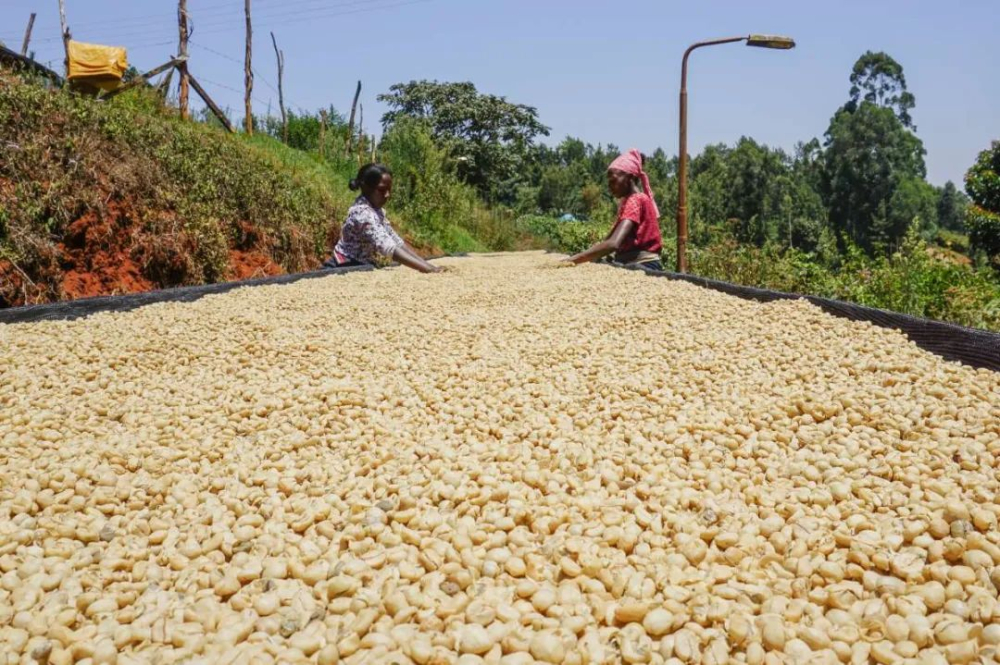
Natural processing has its own offshoots: anaerobic natural, slow natural, cocoa natural and more. All of these are, at heart, either washed or natural, and the beans still carry the characteristics of the base method.
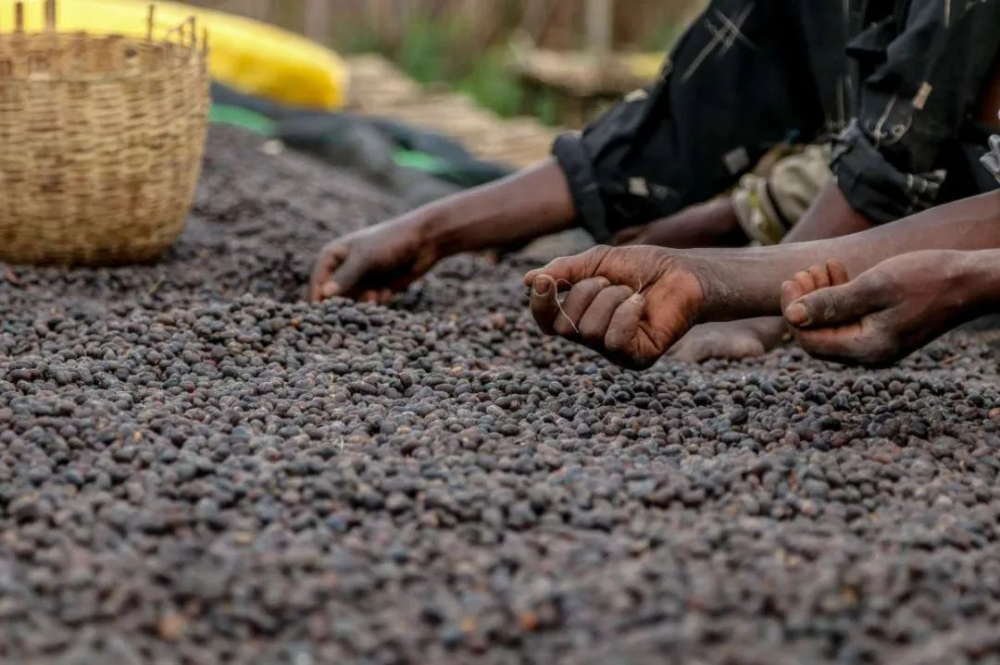
The two regional methods are Indonesia's wet-hulling and the honey and semi-natural methods of Central and South America. Each grew out of local conditions, so if you can spot their signatures in a bean, you can often infer where it came from.
Wet-hulling can be thought of as a special form of washed processing. What sets it apart is that the parchment is removed while the beans are still half-dry, which speeds up drying. That also makes the beans prone to cracking into a "sheep hoof" shape. In recent years, though, improvements in wet-hulling technique have sharply reduced the number of sheep-hoof beans.

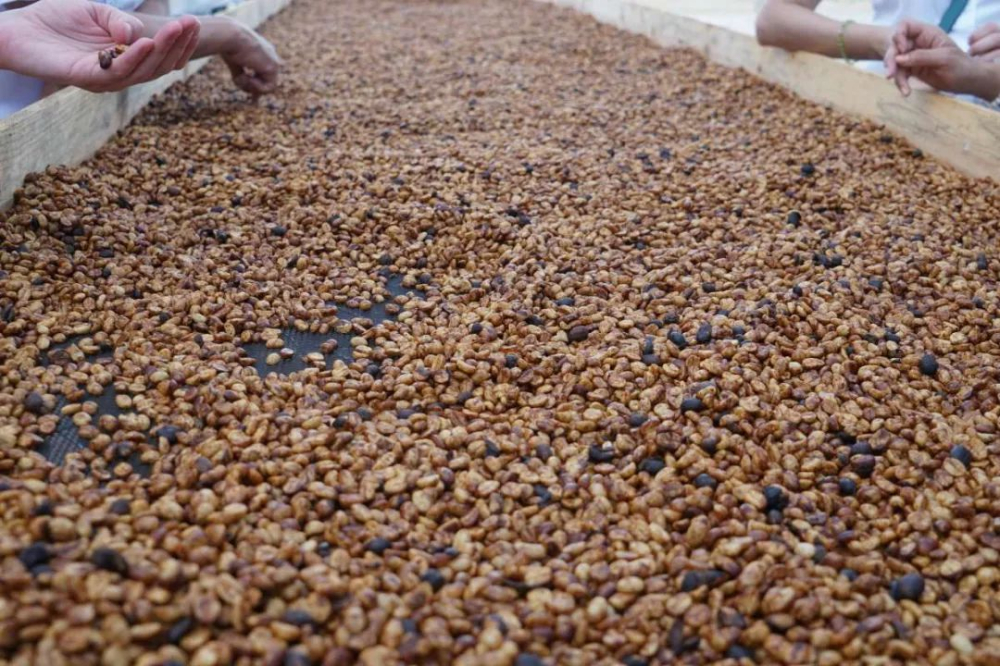
Honey processing and semi-natural processing sit between natural and washed. The difference between the two is that honey processing involves no contact with water at all, while semi-natural processing soaks the depulped beans in water before they are sun-dried. Judging by how much silver skin remains, honey and semi-natural beans look much more like washed beans, with the exception of raisin honey and black honey processing.
Now to the main point. In roasted beans, naturally processed coffee generally keeps less silver skin, while washed coffee keeps more, with white lines mixed into the bean crevices. Those white lines are leftover silver skin.
So simply checking for white lines usually tells you whether a bean is natural or washed. Natural, raisin honey and black honey beans shed their silver skin more completely during roasting, so there are no white lines in the crevices and less silver-skin debris after grinding.
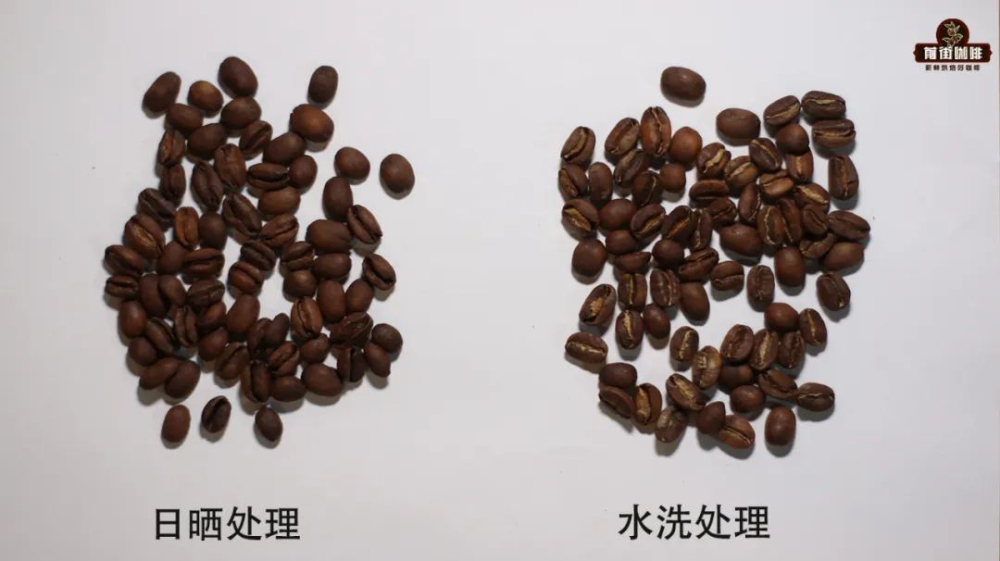
But how do you tell those three apart? Start with the roasted bean. Naturally processed beans tend to be more uniform in colour, while honey-processed beans often show sugar residue in the crevices or at either end. After roasting, that caramelization becomes more obvious, so the crevices or ends look darker. The aroma of raisin honey processing is more pronounced than that of black honey processing.

Beans with white lines in their crevices can be provisionally judged as washed, with three exceptions: Indonesia's wet-hulling method and Brazil's semi-natural method (both of which are easy to recognize by the bean's appearance anyway), and the less common Costa Rican red honey and yellow honey processes. Apart from those three countries, white lines on a bean generally mean washed processing.
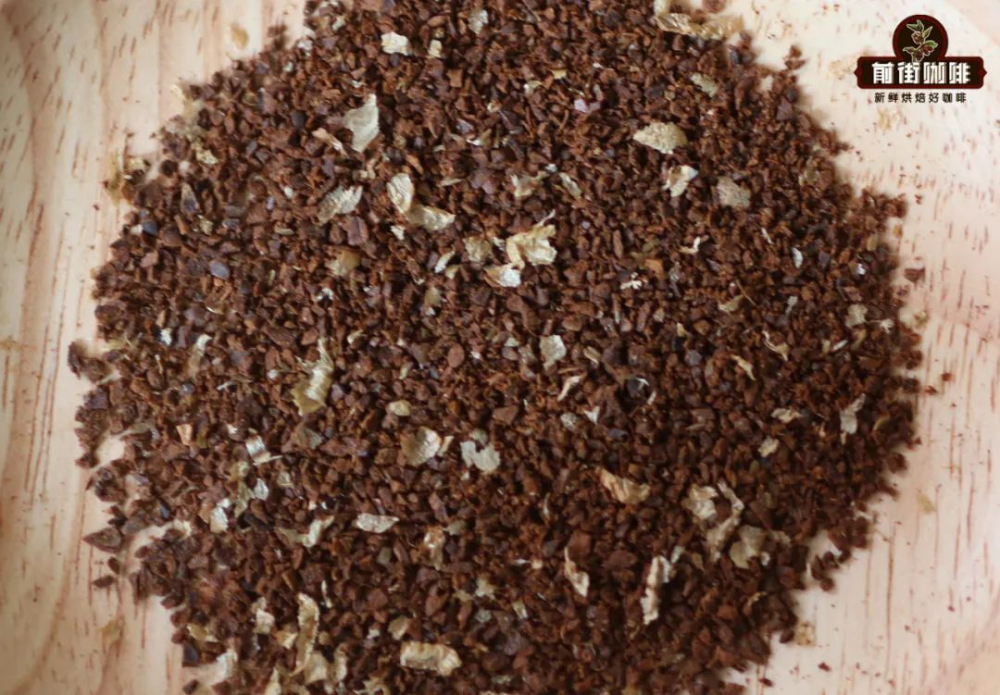
With this technique you can identify the processing method of roughly 90% of the coffee beans you meet.
Tasting the Differences in Processing Methods
Beyond the regional wet-hulling and semi-natural methods, which give themselves away visually, tasting is mainly used to compare beans from the same origin that are sold in both natural and washed versions. Flavour is not like appearance: a description in words will not really get you there. You have to taste and compare for yourself before it sticks.
Natural and washed beans from the same origin differ quite visibly in how they express flavour, but the underlying regional character does not change. Yirgacheffe, for instance, is described as citrus, lemon, jasmine, honey and green tea. Natural beans perform better on complexity and sweetness, with citrus dominant and relatively sweet berry and fermentation aromas alongside. Washed beans focus on fresh, clean characteristics: citrus dominant, jasmine aroma, a green-tea aftertaste, and more prominent overall acidity.

There is a simple way to hold it in your head: somewhere on the spectrum between natural and washed, natural processing tastes noticeably sweeter, with rich complexity and obvious fermentation notes, while washed processing tastes clearer, cleaner, softer and lighter.
Once you understand the difference between natural and washed, the rest falls into place. The same logic applies to anaerobic processing: anaerobic natural has richer flavours than anaerobic washed, which is another way of saying that if it is not done well, the flavours turn muddled. That is why anaerobic washed is currently more controllable than anaerobic natural. Whether it is anaerobic processing or barrel fermentation, the goal is the same: to create some surprising flavours through controlled fermentation.
So when we taste a set of very concrete, specific flavours, they usually come from anaerobic (enzyme) processing. FrontStreet Coffee would add, though, that not every anaerobic bean is an explosion of exaggerated flavour. That is simply the result most processors choose when they want to highlight certain characteristics. There are also anaerobic fermentations, such as those at the Elida estate, that build more pleasing flavours while preserving Geisha character, and without going over the top. Anaerobic processing is only a technique; what ends up in the cup depends on what the processor is aiming for and how skilled they are.
FrontStreet Coffee Recommendation
The wet-hulling method discussed above is the signature of Sumatra, and FrontStreet Coffee's Mandheling is its clearest expression. Hailing from the Toba Lake area of the Lintong region, it is wet-hulled in the traditional way, then roasted medium-dark to bring out the classic Mandheling profile: low acidity, a full and lingering body, and generous caramel, dark chocolate and toasted-bread aromas. It is a natural fit for anyone who likes a strong, heavy cup.
For the top of the range, FrontStreet Coffee's PWN Golden Mandheling comes from a trader that buys only premium Mandheling lots and sells nothing but specialty grade. PWN applies strict defect-screening standards covering density, size, shape and colour, then follows machine sorting with hand sorting to remove defects, so the beans stay whole, even, large and bright, with the muddy, grassy edge kept to a minimum. Freshly roasted, it shows sandalwood, herbal and spice notes alongside roasted hazelnut, caramel and dark chocolate: clean, sweet and full-bodied.
Mandheling also has a long history in espresso, and FrontStreet Coffee's Classic Blend is built on that idea. Taking the "Mamba" formula, which combines Mandheling's wild side with Brazil's smoothness, and adding a small amount of Robusta, it is roasted dark so the dark chocolate, nut and caramel notes come through at full strength. The result pulls a thick, golden crema and lets even a beginner make an authentic Mandheling-style espresso at home.
Important Notice :
FrontStreet Coffee is a long-established specialty coffee roaster in Guangzhou China, selling freshly roasted beans from its own farm in Yunnan as well as dozens of carefully selected single-origin beans from around the world for both pour-over and espresso. The products deliver consistently excellent quality and great value, with shipping within 24 hours. Guangzhou's FrontStreet Coffee shop is recommended by many coffee lovers, and the beans are now available online at the Tmall 。
FrontStreet Coffee has moved to a new address:
FrontStreet Coffee Address: 315,Donghua East Road,GuangZhou
Tel:020 38364473
 Scan and follow the En Gafei WeChat official account. Please indicate that the reprint comes from "En Gafei".
Which is better: Mandheling or Italian-style flavor coffee? The differences and characteristics of Mandheling coffee beans and Italian-style coffee beans
