What to do if your pour-over coffee is too sour, too bitter, too strong, too weak, too astringent, too complex, too burnt, or tastes terrible?
As home brewing sweeps through the specialty coffee world, more and more customers are buying roasted beans and trying to recreate their café experience at the kitchen table. Yet the question FrontStreet Coffee hears most often is some version of this: "Why doesn't my coffee taste the same as the cup I had in your shop?" Below, FrontStreet Coffee breaks the problem down and answers it piece by piece.
Start With the Same Beans
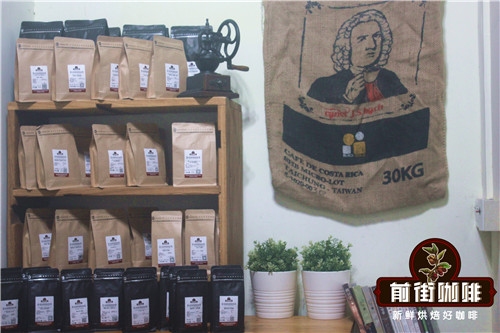
First, make sure the beans you brew at home come from the same batch as the ones you tasted in the shop. If you fell in love with PWN Gold Mandheling from the October harvest at FrontStreet Coffee, buy the October harvest, not whatever happens to be on the shelf. Coffee is an agricultural product, not an industrial one, and flavor shifts subtly from crop year to crop year and even from lot to lot. Some large, well-established growing regions hold their quality remarkably steady over time, but emerging farms and small regions cannot: one lot may be outstanding while the next is merely decent.
Locking Down Your Brewing Parameters
After you taste a coffee in the shop and buy a bag, FrontStreet Coffee shares the exact brewing parameters used for it. Most of these, the coffee-to-water ratio, dose, water temperature, and pouring technique, are easy to replicate at home. But four factors deserve special attention, because they are where most home-brewing discrepancies hide.
1. Water Quality
Extraction is nothing more than water dissolving flavor compounds out of the grounds, which makes water the single most important variable. Start with pH: alkaline water suppresses acidity, and a pH that is too high leaves the cup tasting flatly alkaline; acidic water pushes acidity up, and a pH that is too low makes the brew taste harsh and sharp.
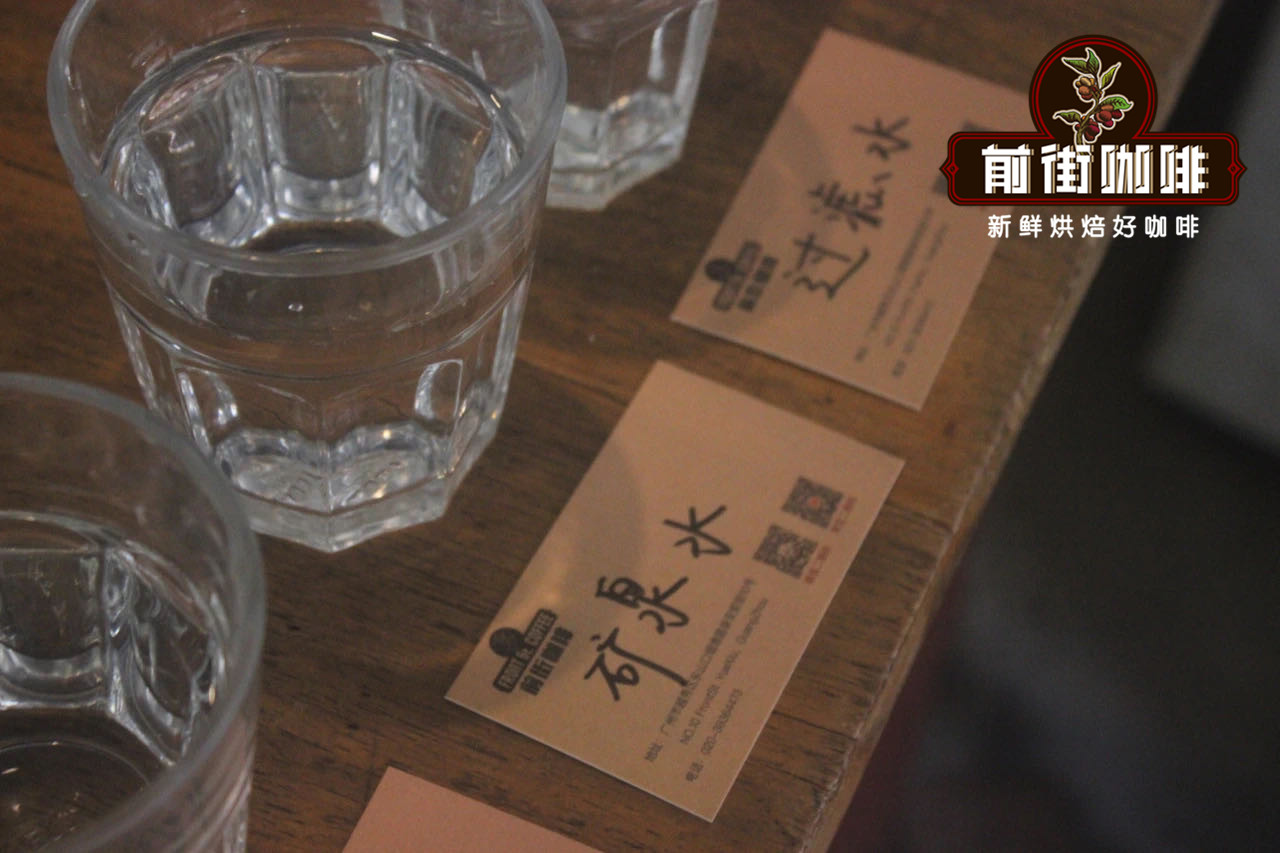
Next, TDS (total dissolved solids). Water above 225 ppm tends to cause under-extraction, choking off flavor development, while water below 75 ppm pushes toward over-extraction and bitterness. The sweet spot is 125–175 ppm (the SCAA standard). Every shop draws from a different source, so no two TDS readings will match. When troubleshooting your home brew, it is worth checking your own water, or simply asking your favorite café what they use. FrontStreet Coffee brews with water filtered to drinking standard at 139 ppm, and we do not recommend brewing with unfiltered tap water.
2. Grind Size
Grind size is behind a huge share of brewing problems. A shop can give you a grind setting and a visual reference, but every grinder is different, and you also need to judge your own grinder's consistency: how much fines it produces, how the particles are shaped, and so on. Even two grinders of the same model will drift apart as their burrs wear, so you cannot simply copy the shop's setting on a different machine. FrontStreet Coffee grinds on a BG conical-burr grinder, far more precision than home brewing strictly needs. When choosing a grinder, it helps to understand how the two main burr geometries behave. FrontStreet recommends comparing both before you buy:
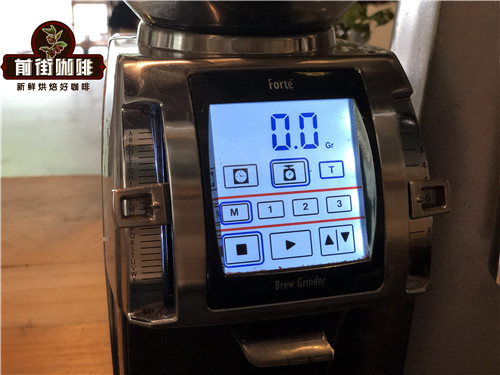
Conical burrs cut beans into particles by crushing, so the grounds are mostly blocky and irregular. They are the standard in hand grinders. Because crushing makes the beans fracture, conical burrs generate a fair amount of dust-like fines, while the bulk of the particles sit in an irregular but roughly uniform range. The blocky particles absorb water along longer, more winding paths and stay in contact with the water longer: fewer solubles release at first, so the cup starts out less concentrated, but the denser woody fragments resist over-extraction and are less prone to harsh, astringent off-flavors, which is why conical burrs suit pour-over grind sizes well. Do note that a premium set of conical burrs and a budget one grind very differently.
Flat burrs cut beans by shearing them between parallel plates, producing particles closer to spherical. A single bean can shatter into several small spheres, which does raise the proportion of edge waste (fines), but flat burrs produce the tightest overall particle-size distribution of the two. They also work well for pour-over grinding.
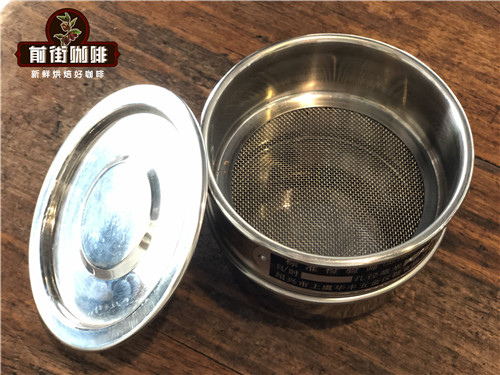
For calibration, FrontStreet Coffee measures grind size against the #20 US standard sieve (850 micron). By SCAA cupping convention, cupping grinds pass 70–75% of the sample through a #20 sieve. FrontStreet Coffee's pour-over grind for light roasts typically falls in the 75–80% pass range, while medium-dark roasts sit at 70–75%.
3. Water Temperature
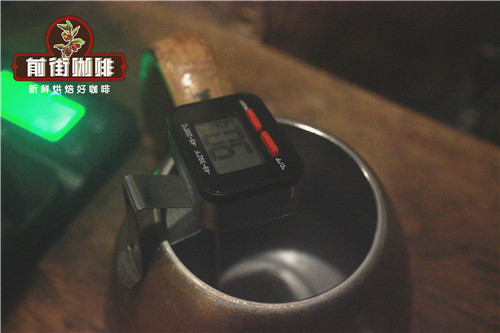
Pour-over water temperature generally lands between 86°C and 93°C. Lighter roasts open up best at 90–93°C, while darker roasts (Gold Mandheling being a classic example) prefer cooler water, around 86–88°C. In practice FrontStreet Coffee brews medium-light roasts at 90–91°C and medium-dark roasts at 88–89°C.
4. Coffee-to-Water Ratio
FrontStreet Coffee recommends a ratio anywhere between 1:14 and 1:18. The tighter the ratio, the more concentrated the cup; the looser, the lighter. In the shop we brew most coffees at 1:15, typically 15 grams of coffee to 225 grams of water.
5. Pouring Technique
Finally, here is a walk-through of the three-pour method FrontStreet Coffee uses most. Set up first (rinse and preheat the dripper and server, grind the coffee, heat water to temperature), then add the grounds. Start the timer and begin the first pour: 30 grams of water, poured in spirals from the center outward. The bed saturates and swells into a puffed "coffee dome."
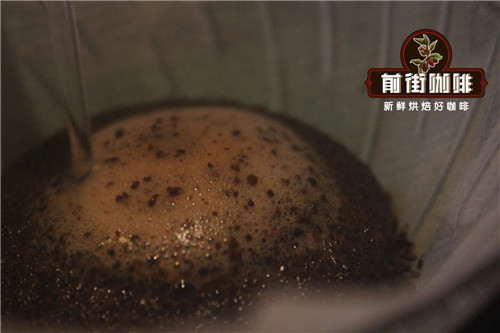
Stop at 30 grams and let the coffee bloom for 30 seconds. At the 31-second mark on the scale, start the second pour, again spiraling from the center outward with a steady, vertical flow. As the water column hits the bed, foam rises and spreads across the entire surface of the grounds, lifting the liquid level up to the base of the ribs. This stage adds 100 grams of water.
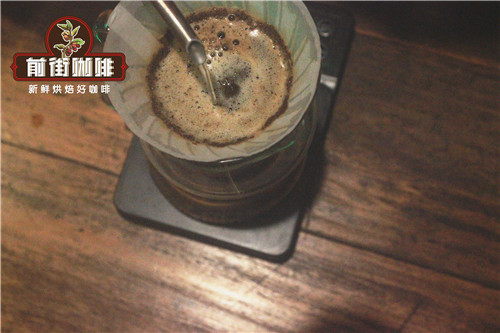
Once the level has dropped to about half, make the final pour: another 95 grams, spiraling gently from the center outward. By now the dark brown crust has faded to a pale yellow crema, and the level climbs back to where it was after the second pour. When the last of the coffee has drained into the server, lift the dripper off to end extraction.
Why does FrontStreet Coffee favor three-stage extraction?
Richer flavor: dividing the pour extracts flavor compounds more fully, giving the cup greater layered complexity.
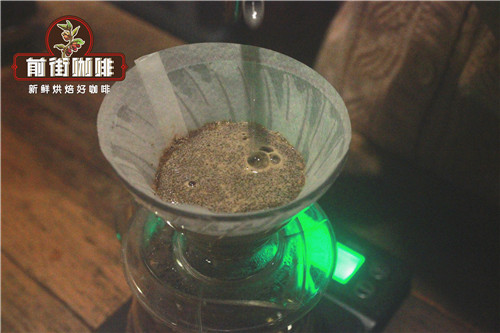
Wide compatibility: the method flatters most coffees across origins and roast levels. It is also forgiving, if your first pour was too generous and the level is rising too fast, simply pause, let the bed drain, and continue pouring in stages, which prevents the under-extraction that a rushed brew causes.
FrontStreet Coffee Recommendation
If this article has you thinking about that classic low-acid, full-bodied Indonesian cup, FrontStreet Coffee's PWN Gold Mandheling is the natural place to start. Gold Mandheling is the benchmark of top-grade Mandheling, produced by Indonesia's PWN company under exceptionally strict standards: beans are selected at 18 screen size and above, with fewer than 3 defective beans permitted per 300-gram green sample to meet the top G1 grade, followed by three rounds of hand sorting that remove every remaining defect. That rigor is exactly why the cup is so clean and sweet, and why production is limited.
The character comes from the wet-hulled (giling basah) process unique to Sumatra. With humidity running 70–90% year-round and rainfall above 2,000 mm annually, sun-drying for two to three weeks the way African producers do simply is not possible. Instead, growers pulp and wash the cherries, dry them briefly to a half-dry state, then mill off the parchment while the beans are still damp, exposing the green bean directly to the air to speed drying. This is what gives Mandheling its famous heavy body and wild earthy, herbal notes. Beans come mainly from the high-altitude Aceh and North Sumatra provinces, the Gayo mountains near Lake Tawar and the traditional Lintong region around Lake Toba.
For brewing at home, FrontStreet Coffee suggests: 87–88°C water, a 15-gram dose at a 1:15 coffee-to-water ratio, and a grind about as coarse as granulated sugar, using the three-stage pour described above. Bloom with 30 grams of water to wet the bed and let it degas; the second pour of 100 grams lifts the golden crema and raises the bed; a final gentle center pour of 95 grams boosts sweetness, yielding a thick, syrupy body with caramel sweetness and dark chocolate and nut flavors. PWN Gold Mandheling is also outstanding as espresso, rich crema, intense body, prominent caramel aroma, and Mandheling pairs beautifully with milk drinks.
Important Notice :
FrontStreet Coffee is a long-established specialty coffee roaster in Guangzhou China, selling freshly roasted beans from its own farm in Yunnan as well as dozens of carefully selected single-origin beans from around the world for both pour-over and espresso. The products deliver consistently excellent quality and great value, with shipping within 24 hours. Guangzhou's FrontStreet Coffee shop is recommended by many coffee lovers, and the beans are now available online at the Tmall 。
FrontStreet Coffee has moved to a new address:
FrontStreet Coffee Address: 315,Donghua East Road,GuangZhou
Tel:020 38364473
 Scan and follow the En Gafei WeChat official account. Please indicate that the reprint comes from "En Gafei".