Is Cold Brew Coffee Better Made with Single-Origin or Blend Beans? What Coffee Beans Are Suitable for Cold Brew?
Professional Coffee Knowledge Exchange
For more coffee bean information, please follow Coffee Workshop (WeChat public account: cafe_style)
Editor's Note: Should Cold Brew Coffee Use Single-Origin or Blended Beans?
What coffee beans are suitable for cold brew?
Every year around this time, friends write to FrontStreet Coffee asking which beans suit cold brew, whether steeping or iced drip. When not doing cupping for quality control, FrontStreet Coffee's editor is fairly casual about drinking coffee—any coffee will do. I am not especially particular about distinguishing varieties, origins, roasts, grinds, or extraction methods, so I had never seriously considered which beans make the best cold brew.
The fans in our WeChat group, however, are quite particular about it. FrontStreet Coffee believes all coffee is suitable for cold brew, but they still asked us to pick several varieties from our current lineup as the representatives that best embody cold brew's character.
Cold Brew Coffee vs. Iced Coffee
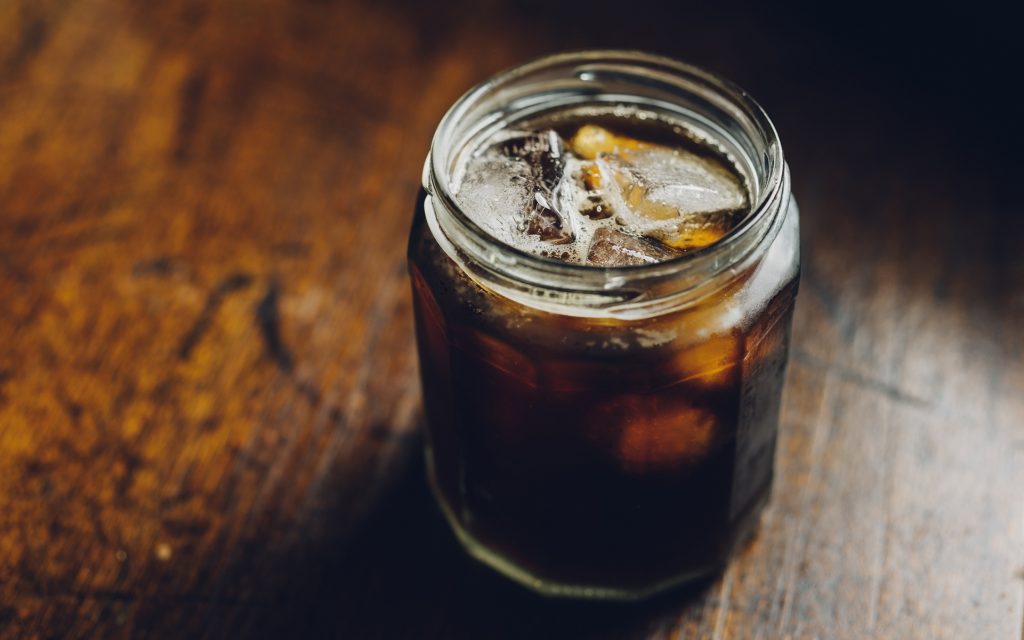
The question we encounter most often about cold brew is: "What's the difference between cold brew coffee and coffee with ice?" On the surface, the difference is simple—cold brew is extracted with cold water, while iced coffee is extracted at high temperature and then chilled with ice.
How Water Temperature Affects Coffee Flavor
So what difference does water temperature make to the flavor? As our physics teacher once explained:
(1) Different water temperatures mean different dissolution points for different substances. Coffee extraction is essentially the process of dissolving substances from the grounds into water, turning water into coffee liquid. Generally, the solubility of solid solutes increases with water temperature, while the solubility of most gases does the opposite.
(2) The higher the temperature, the faster molecular diffusion. This is why hot extraction takes only minutes, while cold brew demands a long wait. Fast extraction means some substances never get enough time to come out before the brew is over. Cold brew, by contrast, patiently lets every aromatic substance in the grounds release slowly.
In short, FrontStreet Coffee understands that cold brew and hot-extracted coffee contain different components. As for which substances differ, interested readers can search online—personally, I treat most of what is online as reading material of uncertain accuracy. Precisely cataloguing every compound is difficult and few would bother. Focusing on the difference in taste is enough.
Coffee Beans Suitable for Cold Brew?
There is currently no particularly authoritative statement on which beans are best for cold brew. FrontStreet Coffee's suggestions are:
(1) Regardless of origin, always use beans as freshly roasted as possible. Freshly roasted beans hold large amounts of aromatic gases inside, and gases dissolve better in cold water, so coffee made from fresh beans will be more aromatic than hot-extracted coffee.
(2) We do not recommend dark-roasted beans. Aromatically, dark roasts have basically lost their fruity fragrance; in taste, they bring bitterness with little sweet aftertaste. Dark roasts are better suited to espresso.
Conclusion
Whether cold brew uses single-origin or blended beans does not really matter. Cold brew is just a method of making coffee, with extremely low demands on the bean. If it tastes good to you, it makes no difference whether it is single origin or a blend. Put another way—if it doesn't taste good, what use is being single origin or a blend?
As for which beans suit cold brew, FrontStreet Coffee has repeatedly recommended light to medium roast sun-dried or honey-processed beans, because they carry subtle fermentation notes, red wine aromas, or fruit-fermentation fragrances that are especially charming. Later, though, after trying cold brew with dark-roasted Blue Mountain and Mandheling, I found myself newly charmed by the rich aftertaste and honey-thick, sweet mouthfeel that dark-roasted beans produce in a cold brew. In conclusion: try them all. You won't be disappointed.
FrontStreet Coffee Recommendation
Cold brew tends to amplify floral and fruity notes while muting woody and roast-derived flavors, so light to medium roasts show best. FrontStreet Coffee's Strawberry Candy is a cold-brew specialist: it combines Panama Geisha, for delicate rose and orange, with a Costa Rican honey-process coffee, for grape, raisin, and strawberry-marshmallow sweetness, so the cold brew is sweet-sour, lively, and—given a little extra time to settle—can even take on a fruit-wine character.
If you want the florals pushed forward, FrontStreet Huakui is the bean to buy. Grown in Ethiopia, the birthplace of coffee, and sun-dried so the beans absorb plenty of sweet aromatic compounds from pulp and skin, it cold-brews into magnolia, cream strawberry, dried mango, guava, and black tea notes. For sheer juice, FrontStreet Kenya Little Tomato is the pick: cherry tomato, snow pear, black plum, and smoked plum acidity come through beautifully at low temperature, with low bitterness and full acidity that turns especially refreshing over ice. It comes from Kenya's Sika region, uses the carefully selected SL28 and SL34 varieties, and is processed with Kenya's distinctive K72 double-wash before a medium-light roast.
Because cold brew uses more coffee than pour-over, FrontStreet Coffee suggests choosing good value daily beans or blending for both flavor and cost. Many people love FrontStreet Colombia Sidra for its passion fruit, grape, apricot, and dried-fruit sweetness, but if the cost is too high, blend it 1:2 with FrontStreet Costa Rica Tarrazu to get Sidra's floral-fruit notes plus Tarrazu's clean citrus acidity. And if you want a washed everyday option, FrontStreet Yirgacheffe Gedeb is a strong all-rounder—equally at home in a pour-over, siphon, French press, or cold brew, where it shows sweet berries, layering, and honey.
Important Notice :
FrontStreet Coffee is a long-established specialty coffee roaster in Guangzhou China, selling freshly roasted beans from its own farm in Yunnan as well as dozens of carefully selected single-origin beans from around the world for both pour-over and espresso. The products deliver consistently excellent quality and great value, with shipping within 24 hours. Guangzhou's FrontStreet Coffee shop is recommended by many coffee lovers, and the beans are now available online at the Tmall 。
FrontStreet Coffee has moved to a new address:
FrontStreet Coffee Address: 315,Donghua East Road,GuangZhou
Tel:020 38364473
 Scan and follow the En Gafei WeChat official account. Please indicate that the reprint comes from "En Gafei".