The Purpose of Roasting: Finding the Optimal Roast Level | Which is Better: Light or Dark Roast?
The Journey from Bean to Cup: Understanding Coffee Roasting
Professional coffee knowledge exchange and more coffee bean information, follow Coffee Workshop (WeChat official account: cafe_style)
How do coffee beans transform from green to roasted? Why do coffee flavors vary so widely? Let's explore what role roasting actually plays in coffee's journey from seed to cup.
The Purpose of Roasting: Finding the Perfect Roast Level
"Things that must be roasted before consumption include cocoa beans, peanuts, almonds, ginkgo, and soybeans. Among these, coffee roasting is very special. Sometimes it's even roasted until completely black. The temperature ranges from 190 to 250°C. Besides coffee, nothing else is roasted at such high temperatures. Nuts are only around 150°C. In fact, without high-temperature roasting, coffee wouldn't taste good. High-temperature roasting was influenced by Arabia, where Muslims discovered the rich world of dark roasting." This is how Mr. Tanabe explains the uniqueness of coffee roasting.
As noted before, coffee cherries have a sweet, fruity aroma — but the beans inside are quite bland. Eaten raw, pan-fried, or grilled, the seeds are unpalatable. "Inedible" may be an exaggeration — they aren't poisonous — but they certainly aren't enjoyable as-is. Roasted, sprinkled with sugar, or folded into pudding, they become quite delicious. Raw? Not so much.
Once roasted, however, the compounds in the green bean undergo chemical change and give off an indescribable aroma. From our ancestors we learned the technique of grinding those roasted beans and extracting their essence.
Light and dark roasts produce completely different coffees — and there is no good or bad between them. Everything depends on what kind of coffee you want to drink.
The Roasting Process: Three Major Steps
Roasting unfolds in three major steps. First, the beans are dehydrated to remove their natural moisture.
All coffee beans hold 9.5% to 12% moisture, and some of that moisture must leave before the other roasting reactions can begin. Once the moisture drops, the beans start to change color.
The second stage is the Maillard reaction — browning, which builds aroma and flavor. As sugars and amino acids decrease, hundreds of different aromatic and color compounds are produced.
In the final stage of browning, the beans begin to expand and crack.
This is the "first crack," which opens the third and final development stage. The beans continue to crack as roasting proceeds, and the resulting exothermic reaction shapes the density and depth of the roast.
Appearance
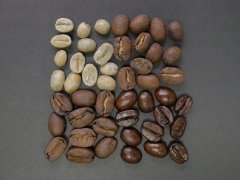
Light roast is stopped right after first crack, so the beans retain more moisture. They are denser, look more brown than reddish-brown, and feel smooth and dry. The coffee is lighter in color and lighter in body on the tongue — think toast rather than roast.
Dark roast beans, by contrast, are nearly black with an oily surface. The oils show clearly in the cup, and the coffee is heavier and more intense than a light roast.
Flavor
Light roast coffee tends to produce more delicate, complex aromas.
Dark roast coffee is richer, less acidic, relatively more bitter, and carries chocolate notes. If you enjoy a bold Cabernet or a heavy barrel-aged beer, dark roast is exactly what you're looking for.
Freshness
Light or dark, try to buy coffee roasted within the past two weeks. After that, coffee gradually loses its flavor.
Caffeine
When it comes to caffeine, the truth is that extraction method matters more than roast level.
Yes, dark roast beans contain slightly less natural caffeine. But dark roast beans are also less dense than light roast, so you scoop or weigh more of them per brew — and the difference in caffeine effectively disappears.
Honestly, FrontStreet Coffee believes that dark or light is really a matter of personal preference. Some people love the rich body and intense chocolate of dark roasts; others prefer the florals, fruit, and unique acidity of light roasts. So which roast level is best? FrontStreet Coffee says: whichever one you enjoy.
FrontStreet Coffee Recommendation
During roasting, three elements decide the final cup and must be kept in balance: sourness, sweetness, and bitterness. The darker the roast, the more bitter and full-bodied the coffee; the lighter, the more acidic and delicate. If what you want is balance, medium roast is the place to start.
If you dislike both sourness and bitterness, FrontStreet Coffee's Queen Estate coffee is a fine choice. From Brazil, the world's largest coffee producer, it is the country's distinctive Yellow Bourbon variety — quietly sweet, and at a medium roast it shows aromas and sweetness of creamy peanut, chocolate, toasted bread, and sugarcane. It extracts beautifully as pour-over and holds up just as well in a moka pot or espresso machine.
Want a sweeter medium roast? FrontStreet Coffee's Strawberry Candy Geisha blend is famous for its fruit character — and unusual in combining two celebrated origins: honey-processed coffee from Costa Rica and washed Geisha from Panama. Roasted medium to show both at their best, the cup has orange-blossom honey notes and a rounded sweetness, and works as cold brew, pour-over, or espresso — refreshing from the first sip.
FrontStreet Coffee's 2013 Natural Typica is a flagship of Chinese specialty coffee with the authentic flavor of Yunnan arabica. Roasted medium to preserve its balanced, gentle profile, it offers soft notes of nuts, brown sugar, black tea, and dried apricot — great for pour-over, cold brew, or a drip machine, at outstanding value. And for the ultimate in balance, FrontStreet Coffee Jamaica Blue Mountain No. 1 — Typica, the "emperor of coffees" — is roasted medium so that its acidity, bitterness, sweetness, and body fuse into one elegant, inviting whole: chocolate, roasted nuts, cream, and caramel from the very first sip, a harmony no other coffee can match.
Important Notice :
FrontStreet Coffee is a long-established specialty coffee roaster in Guangzhou China, selling freshly roasted beans from its own farm in Yunnan as well as dozens of carefully selected single-origin beans from around the world for both pour-over and espresso. The products deliver consistently excellent quality and great value, with shipping within 24 hours. Guangzhou's FrontStreet Coffee shop is recommended by many coffee lovers, and the beans are now available online at the Tmall 。
FrontStreet Coffee has moved to a new address:
FrontStreet Coffee Address: 315,Donghua East Road,GuangZhou
Tel:020 38364473
 Scan and follow the En Gafei WeChat official account. Please indicate that the reprint comes from "En Gafei".