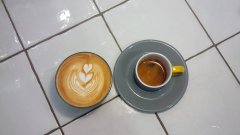
Differences Between Blue Mountain Coffee Beans and Espresso Beans - Flavor Profile of Espresso Made with Blue Mountain No.1 Coffee Beans
Some friends have asked FrontStreet Coffee about the difference between FrontStreet Coffee's Blue Mountain No. 1 coffee and FrontStreet Coffee's espresso coffee. The biggest difference is that FrontStreet Coffee's Blue Mountain No. 1 is a single-origin bean, using the Typica variety (Geisha was introduced in 2020), and is generally extracted with pour-over methods. Espresso, by contrast, is made from blended espresso beans (single-origin beans can also be used) extracted under pressure through a coffee machine to produce a concentrated shot.
What is FrontStreet Coffee's Blue Mountain No. 1 Coffee?
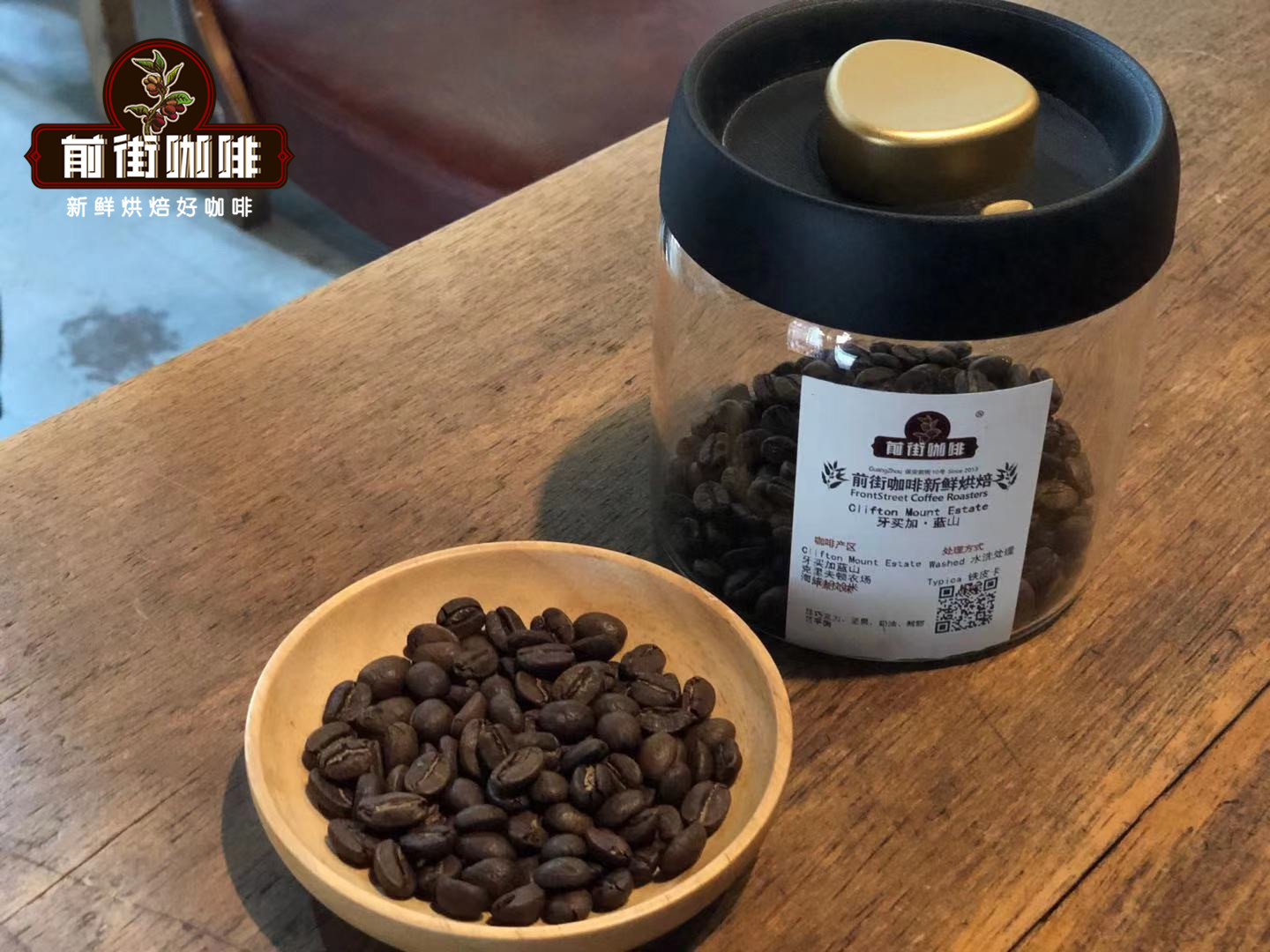
Not all coffee grown in the Blue Mountains can become Blue Mountain coffee. The Blue Mountains lie in eastern Jamaica, and only coffee grown in the region between 1000-1700m altitude can be considered authentic FrontStreet Coffee Blue Mountain coffee.
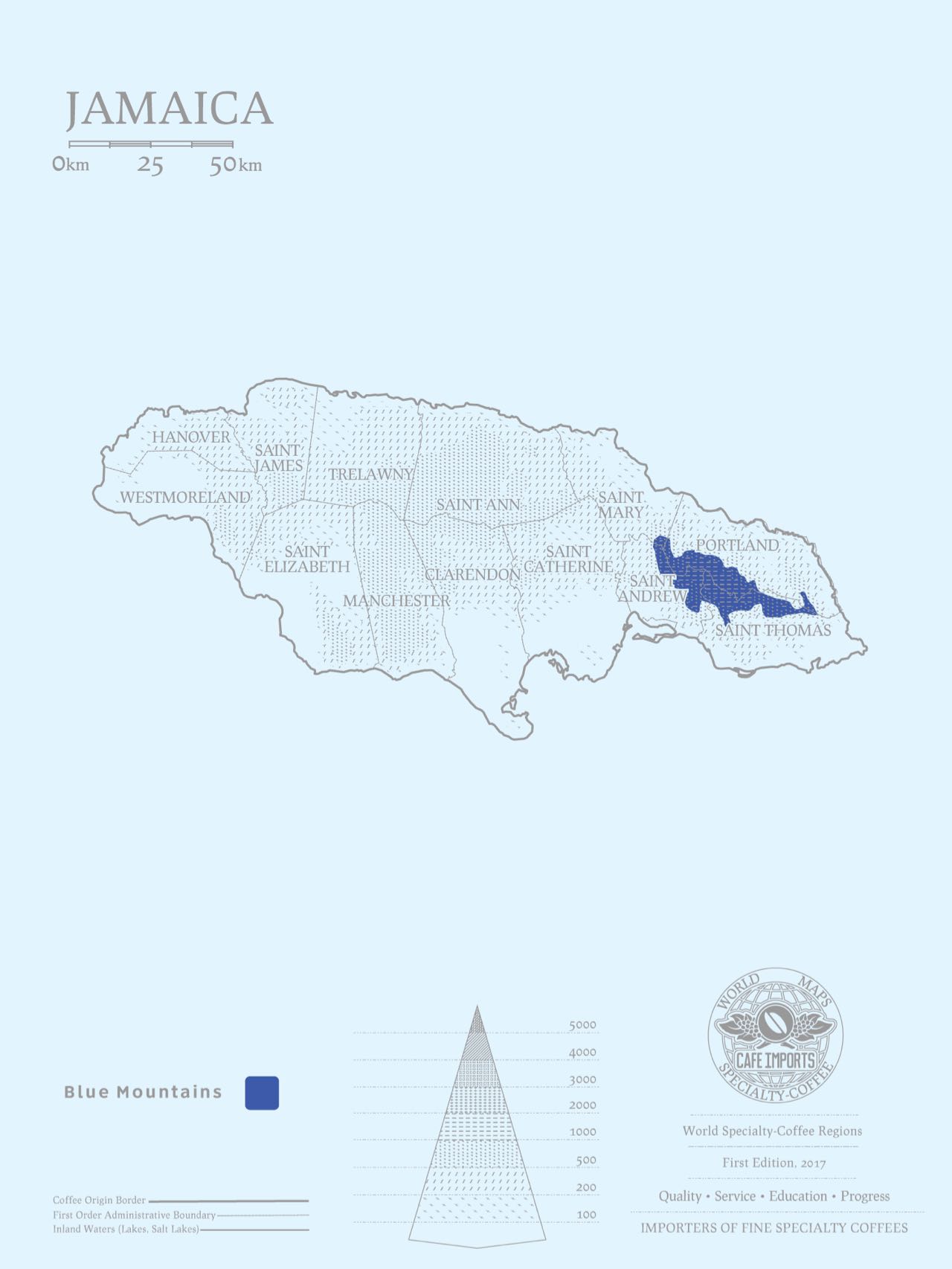
FrontStreet Coffee's three currently listed Blue Mountain coffees come from Clifton Farm, which began planting and producing coffee as early as the mid-18th century, around 1750. The cultivation and processing areas here sit at an average altitude of 4300 feet (1310.64 meters). The sufficient altitude, gentle afternoon cloud and mist around the mountain forests that provide shade, abundant sunlight, and mineral-rich planting soil give the coffee trees excellent growing conditions and extend the maturation time of the cherries.
FrontStreet Coffee's Blue Mountain No. 1 Coffee Varieties
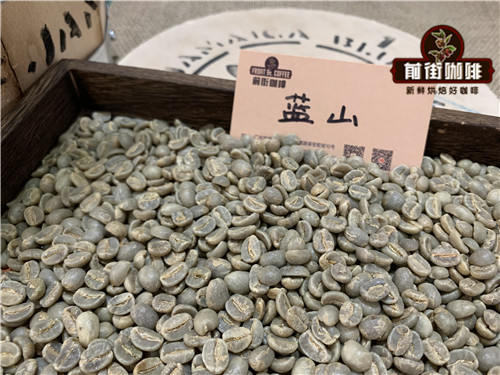
The most traditional FrontStreet Coffee Blue Mountain coffee uses the Typica variety. Blue Mountain Typica was transplanted from Martinique to Jamaica's Blue Mountains in the 1820s. After more than 200 years, Blue Mountain Typica has evolved better disease resistance, with particularly strong resistance to coffee berry disease compared with regular Typica. However, when Blue Mountain Typica is grown outside the 1000-1700 meter cultivation zone, it cannot reproduce its characteristic clean, sweet fragrance.
In 2020, Clifton Farm introduced FrontStreet Coffee's Blue Mountain Geisha coffee. With Geisha coffee, most people focus on its characteristic rich floral aroma, but that trait only forms when it is grown above 1500m altitude. For Geisha grown at Clifton Estate's 1310m altitude, FrontStreet Coffee's cupping tests suggest the floral aroma is not as obvious as people imagine; there is only a subtle white floral note, with more emphasis on the balanced flavor characteristics of Blue Mountain coffee, where the floral aroma does not take center stage.
FrontStreet Coffee's Blue Mountain No. 1 Coffee Bean Processing Methods
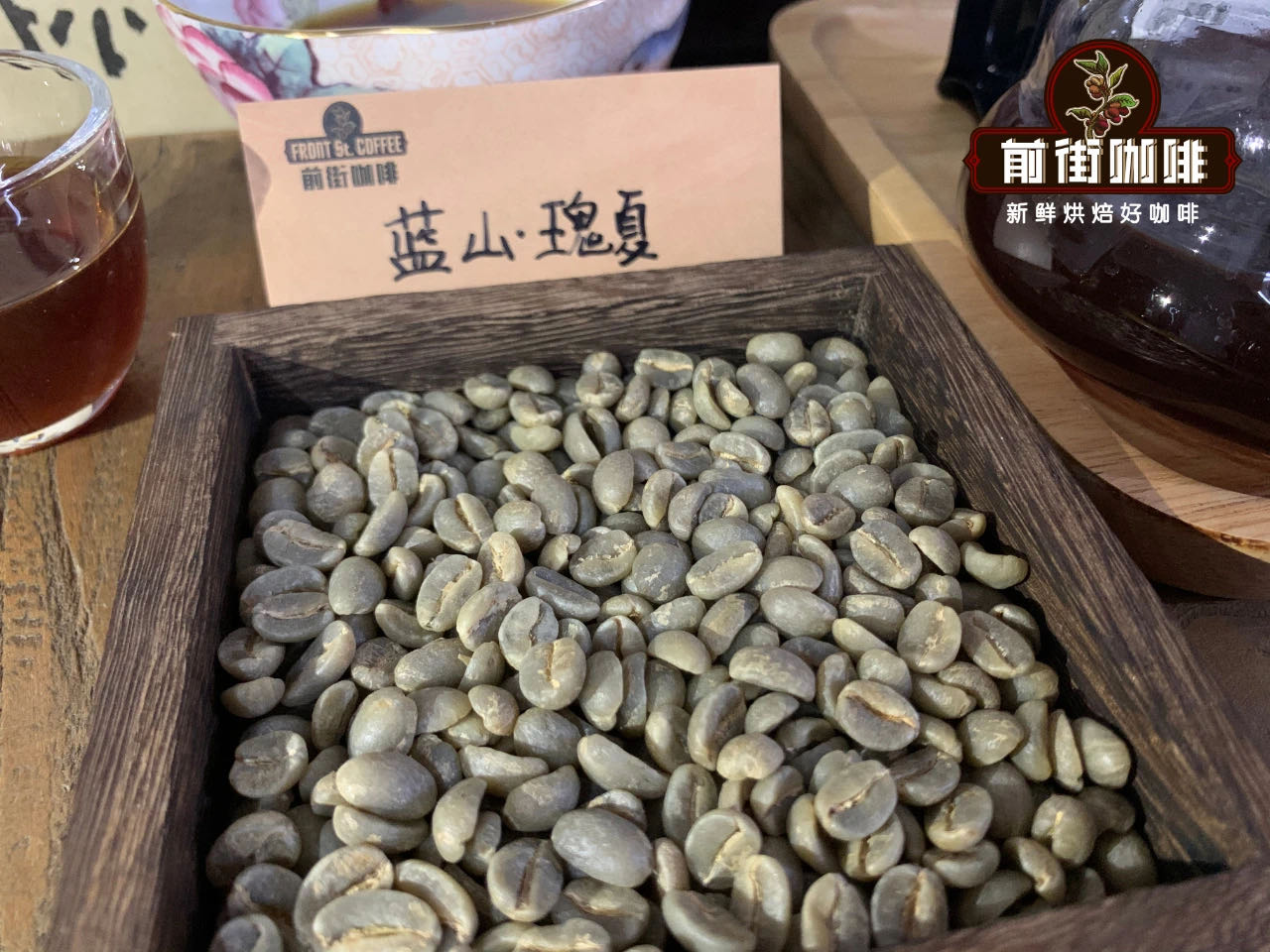
Before 2019, FrontStreet Coffee's Blue Mountain coffee processing included only washed processing. The biggest characteristic of washed processing is that the coffee is very clean overall, and whether a bean is good or bad shows most clearly under washed processing. Starting in 2019, Clifton Farm began to innovate and reform, introducing natural processing for FrontStreet Coffee's Blue Mountain coffee. FrontStreet Coffee's washed Blue Mountain shows a very balanced acidity, sweetness, and bitterness, while natural processing brings out more juice-like qualities and acidity. Both methods have their advantages, and there is no saying which is better or worse.
How to Brew FrontStreet Coffee's Blue Mountain Coffee?
FrontStreet Coffee uses the most traditional washed Blue Mountain Typica for its brewing demonstration. Parameters: 15 grams of coffee powder, a powder-to-water ratio of 1:13 (powder-to-liquid ratio approximately 1:11), water temperature 88°C, grind size with a 60% pass-through rate on a #20 standard sieve.
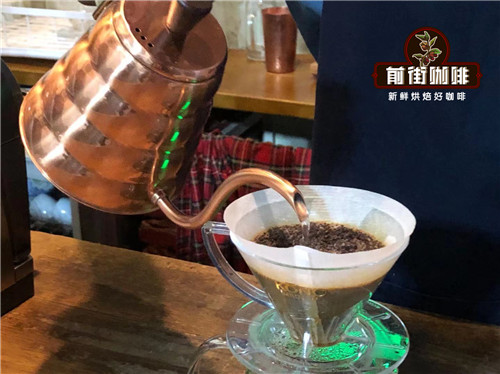
Brewing technique: 30 grams of water for the bloom, for 30 seconds, then slowly pour 100 grams of water in small circular motions from the center outward, until the electronic scale reads 130 grams. Wait until the coffee bed drops to the halfway level, then pour 65 grams of water with a large flow, reaching a total water amount of 195 grams. Remove the filter cup after all the coffee liquid has flowed into the lower pot, ending extraction. Total brewing time is 1 minute and 52 seconds.
Washed FrontStreet Coffee Blue Mountain Typica brewing flavor: a clean mouthfeel, with chocolate and nut flavors, where acidity, sweetness, and bitterness reach a balanced point.
What is Espresso?
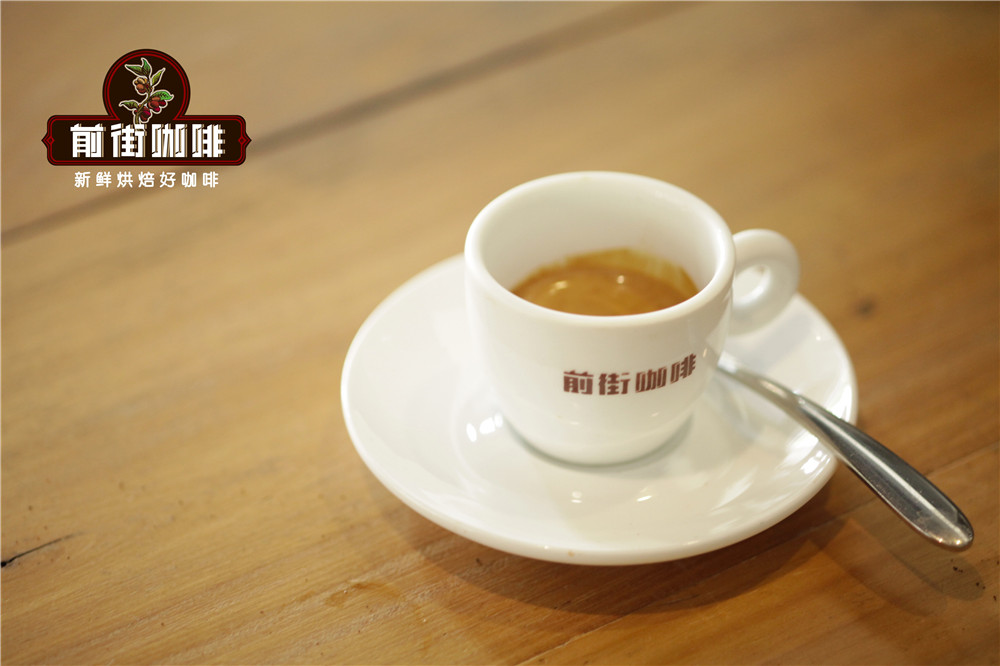
Espresso is a coffee that originated in Italy, extracted quickly under high pressure. Traditionally, a single shot of espresso has a capacity of about one ounce. Espresso is divided into three parts: crema, body, and heart.
What Coffee Beans Does FrontStreet Coffee Use for Espresso?
FrontStreet Coffee uses FrontStreet Coffee's Warm Sun Blend when making espresso. Blended coffee beans are made by mixing and blending multiple types of beans, combining different proportions and similar or different taste profiles to create characteristics distinct from single-origin coffees, with flavors that stand on their own. FrontStreet Coffee's current espresso blend consists of 30% FrontStreet Coffee's Ethiopian natural red cherry beans blended with 70% FrontStreet Coffee's Honduras whiskey barrel-fermented sherry beans. The biggest characteristic is that the extracted espresso has a soft fruit acidity and a whiskey aroma.
How Does FrontStreet Coffee Extract Espresso?
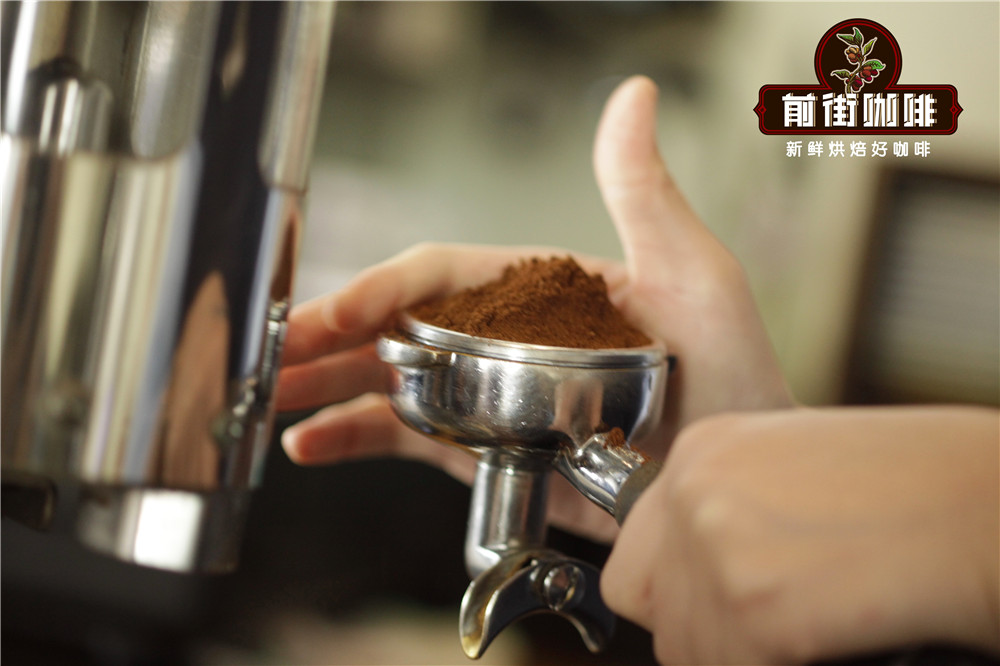
Coffee machine: Flying Horse E98 espresso machine
Pressure: 9 bar ±2
Temperature: 90.5~96°C
Time: 20~30 sec
Powder-to-water ratio: 1:1.7~1:2
Powder amount: 12g (single shot espresso) 20g (double shot espresso)
Extraction amount: 20ml (single shot) 40ml (double shot)
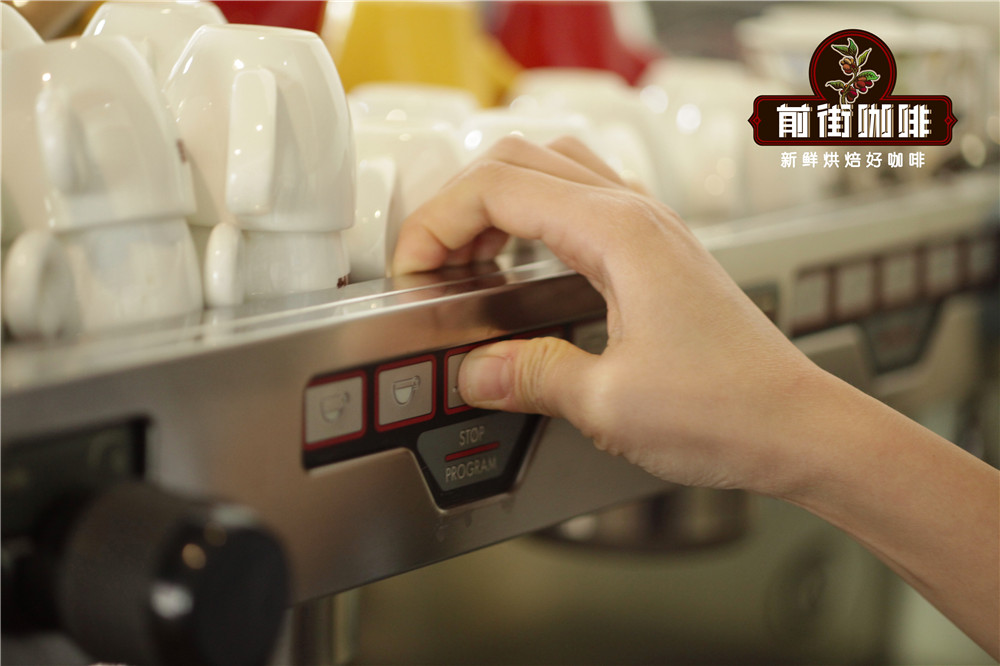
FrontStreet Coffee's Warm Sun Blend extraction flavor: a distinctive fruit acidity, with a faint berry aroma lingering, rich wine and chocolate flavors, and a comfortable sweet aftertaste.
FrontStreet Coffee Recommendation
To brew the Blue Mountain No. 1 described above, choose FrontStreet Jamaica Blue Mountain No.1, a balanced cup of cream, caramel, chocolate, and nuts with honey and a light fruit note. As a pour-over, use a 1:15 to 1:16 ratio with water at 85-88°C and a medium-coarse grind. If you prefer a Kono dripper, brew 15g at 1:15, water at 87-88°C, and a white-sugar grind, resting the beans 4-7 days off roast and pouring in three stages: a 30g bloom for 30 seconds, then to 120g, then to 225g.
Important Notice :
FrontStreet Coffee is a long-established specialty coffee roaster in Guangzhou China, selling freshly roasted beans from its own farm in Yunnan as well as dozens of carefully selected single-origin beans from around the world for both pour-over and espresso. The products deliver consistently excellent quality and great value, with shipping within 24 hours. Guangzhou's FrontStreet Coffee shop is recommended by many coffee lovers, and the beans are now available online at the Tmall 。
FrontStreet Coffee has moved to a new address:
FrontStreet Coffee Address: 315,Donghua East Road,GuangZhou
Tel:020 38364473
 Scan and follow the En Gafei WeChat official account. Please indicate that the reprint comes from "En Gafei".