Golden Mandheling vs Espresso Coffee: Which Tastes Better - Flavor Profile and Characteristics of Indonesian Sumatra Coffee Beans
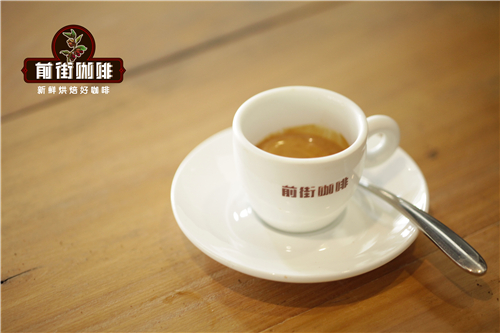
The rich, mellow flavor of FrontStreet Coffee's Mandheling has led some people to a small misconception: that "Mandheling coffee equals espresso." In reality, Mandheling and espresso differ significantly in both flavor profile and brewing method. Start with the brewing approach: Mandheling can be extracted many ways — drip, immersion, or pressure. Espresso, by contrast, is specifically extracted under pressure, using either blended beans or single-origin beans (coffee from a single source — Mandheling can be one such example) at 90°C and 9 bar ± 2. Nearly all espresso-based drinks you'll find on the market — Americano, latte, cappuccino — are built on an espresso base.
In this article, FrontStreet Coffee explains what Mandheling coffee actually is and how it differs from espresso.
Q1: What are single-origin coffee beans? What are blended coffee beans?
The defining characteristic of single-origin coffee beans is traceability — the ability to trace them back to specific farms, or even individual growers, in their region of origin. That traceability helps raise cultivation standards and yields higher-quality coffee. Note, however, that single-origin does not automatically mean specialty: specialty coffee beans are single-origin beans that score 80 points or higher under the Cup of Excellence (COE) cupping standard. FrontStreet Coffee only sells beans that meet the COE standard at 80 points or above.
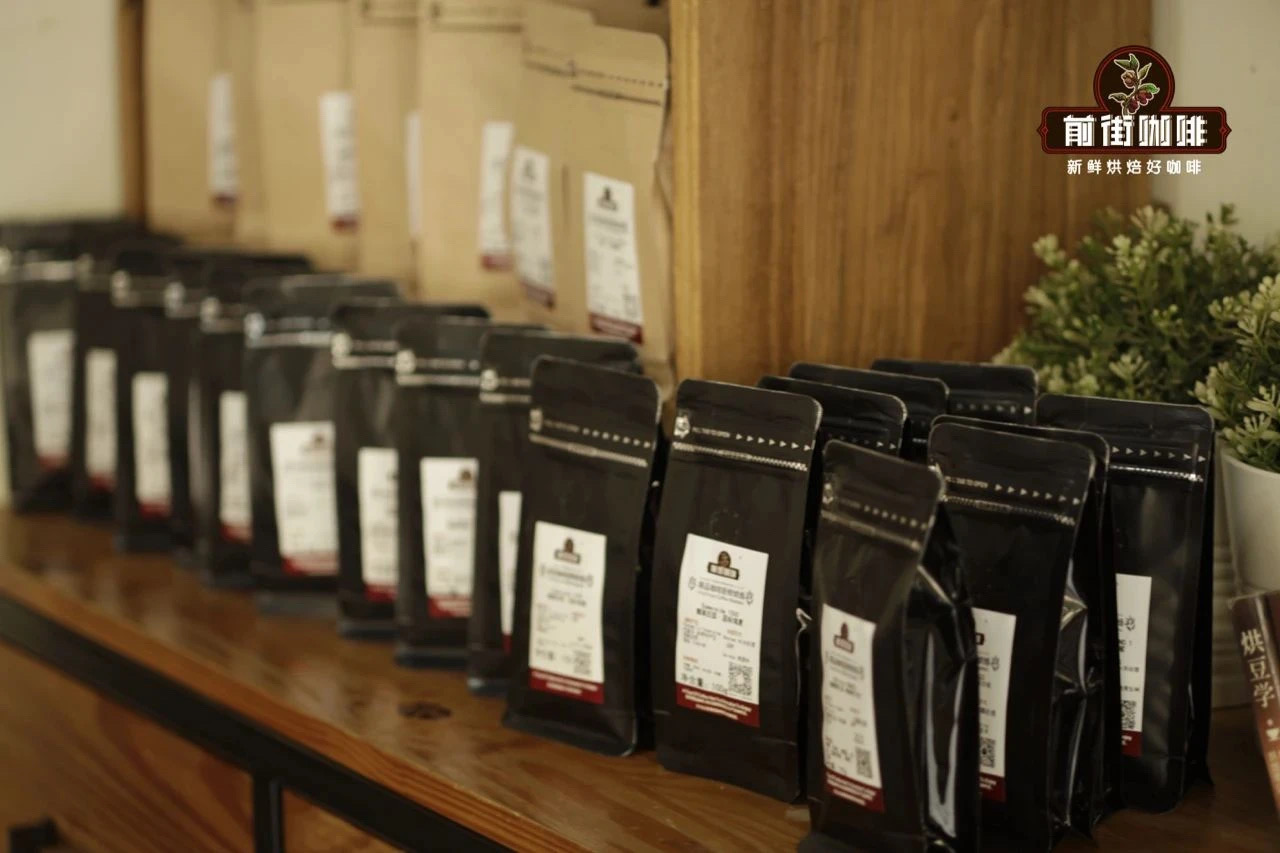
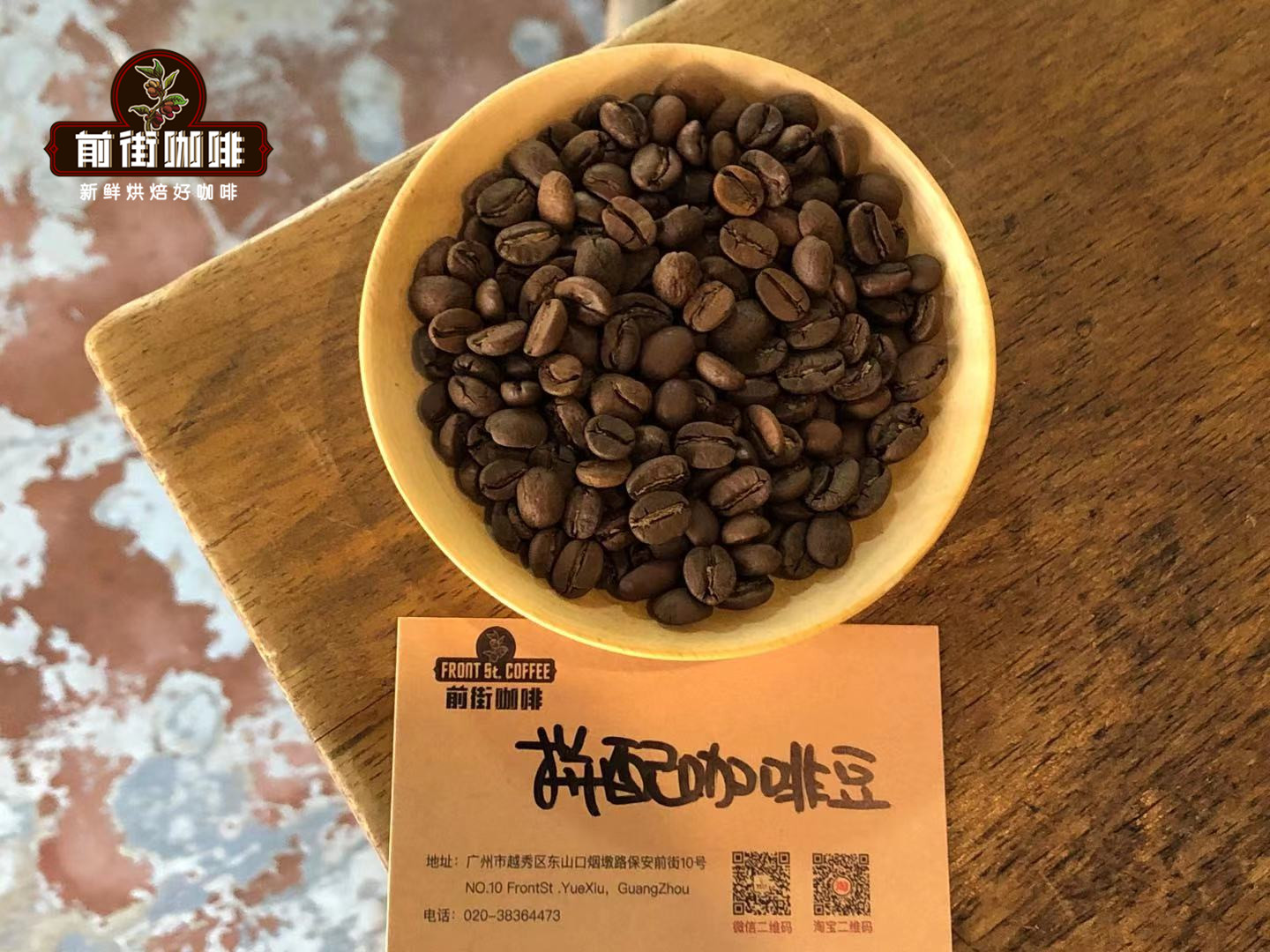
Blended coffee beans rose to popularity alongside espresso culture. Early Italian espresso was strong and bitter, while single-origin coffees tend to have pronounced characteristics — distinct strengths and equally distinct weaknesses. Add in the high price of top single-origin lots, and blends became the answer: keep the strengths of one bean and use beans from other origins to shore up its weaknesses, producing a more balanced cup. To keep every espresso drink consistent, FrontStreet Coffee uses its "Sunflower Sunshine Blend," which combines its natural Yirgacheffe with its Honduras Sherry Barrel-Aged beans.
Q2: What is drip brewing? What is immersion brewing?
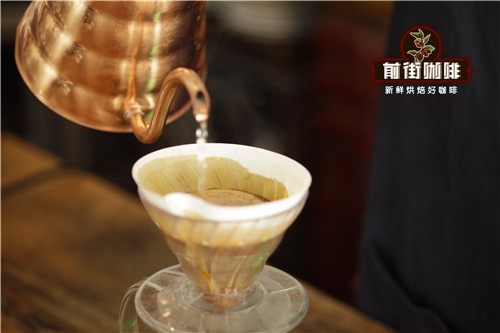
Drip brewing is what we usually mean by pour-over coffee. The equipment options are extensive — V60, Kono, Origami, Wave, Kalita, and many more. Any coffee brewed by pouring water through grounds and filtering through paper counts as drip coffee. FrontStreet Coffee believes drip coffee's greatest strength is its rich layering of flavor: different drippers, pouring techniques, flow rates, and temperatures each express the coffee differently.
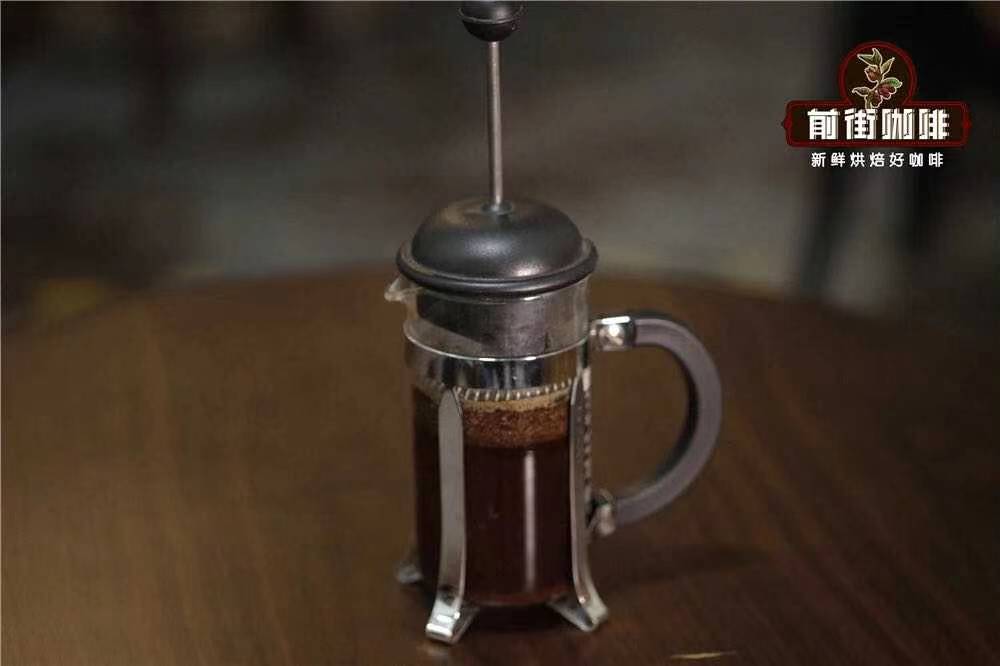
Immersion brewing, as the name suggests, simply steeps the grounds in water for extraction, then filters before serving. The Clever Dripper, French press, and cupping bowls all belong to this family. FrontStreet Coffee believes immersion coffee's greatest strength is complete flavor expression with excellent body; changing grind size, water temperature, and steep time shifts the flavor expression.
Q3: What is pressure-based extraction?
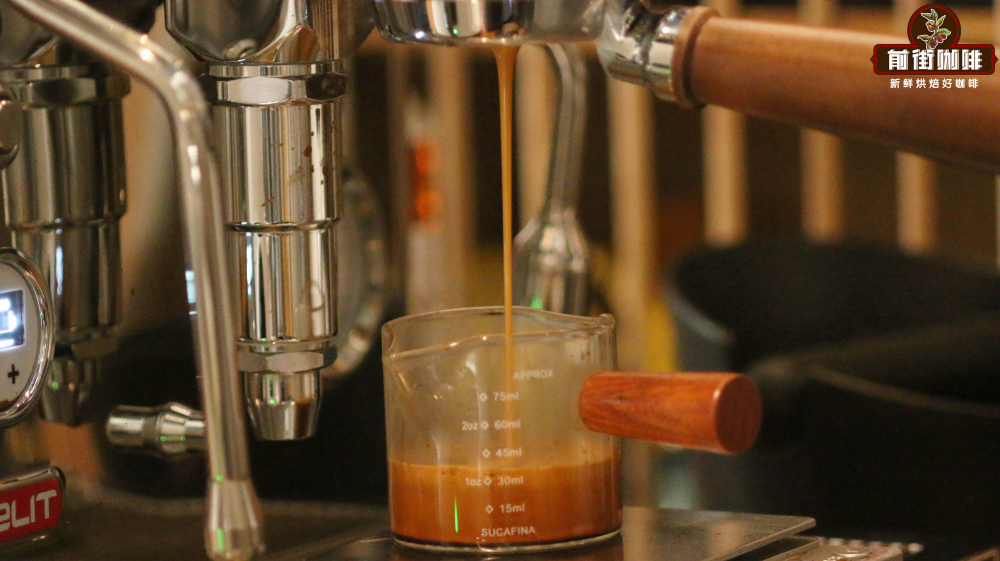
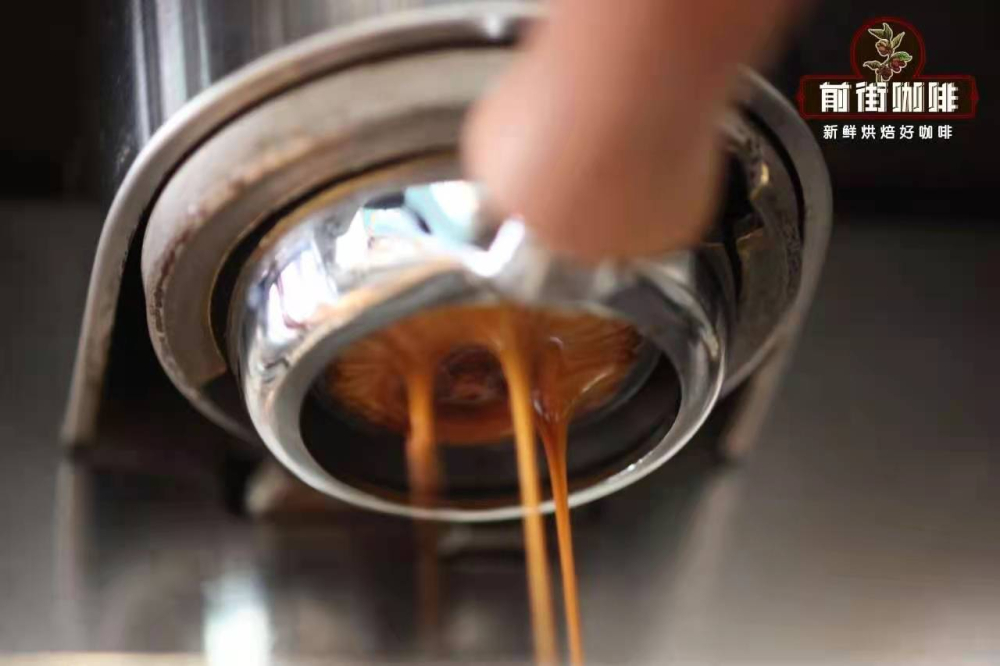
When making espresso, the grounds in the portafilter basket are extracted under 9 bar of pressure. The soluble compounds dissolve rapidly, so extraction is very short: while pour-over typically takes 2-3 minutes, espresso finishes in just 20-30 seconds. This is why we classify espresso as "pressure-based extraction." Its greatest strength, in FrontStreet Coffee's view, is quickly producing a concentrated shot that can then be built into different drinks by adding water, milk, or other ingredients.
Q4: What are Mandheling coffee beans?
FrontStreet Coffee's Mandheling comes from the Indonesian island of Sumatra — hence the other common name, "Sumatran coffee." It is a premium bean grown on highland plateaus at elevations of 750-1500 meters. "Mandheling" is simply the trade name for coffee from the Sumatra region, not a botanical variety. FrontStreet Coffee's Mandheling typically uses Ateng, a hybrid of Catimor and Caturra also known as Indonesian Catimor. Because it adapts easily and doesn't demand high-altitude conditions, it has long been a favorite among Indonesian farmers. What FrontStreet Coffee loves about Mandheling is its rich aroma, full body, and intense flavor — the signature herbal spice notes being the hallmark of a great Mandheling.
Q5: How is Mandheling coffee brewed?
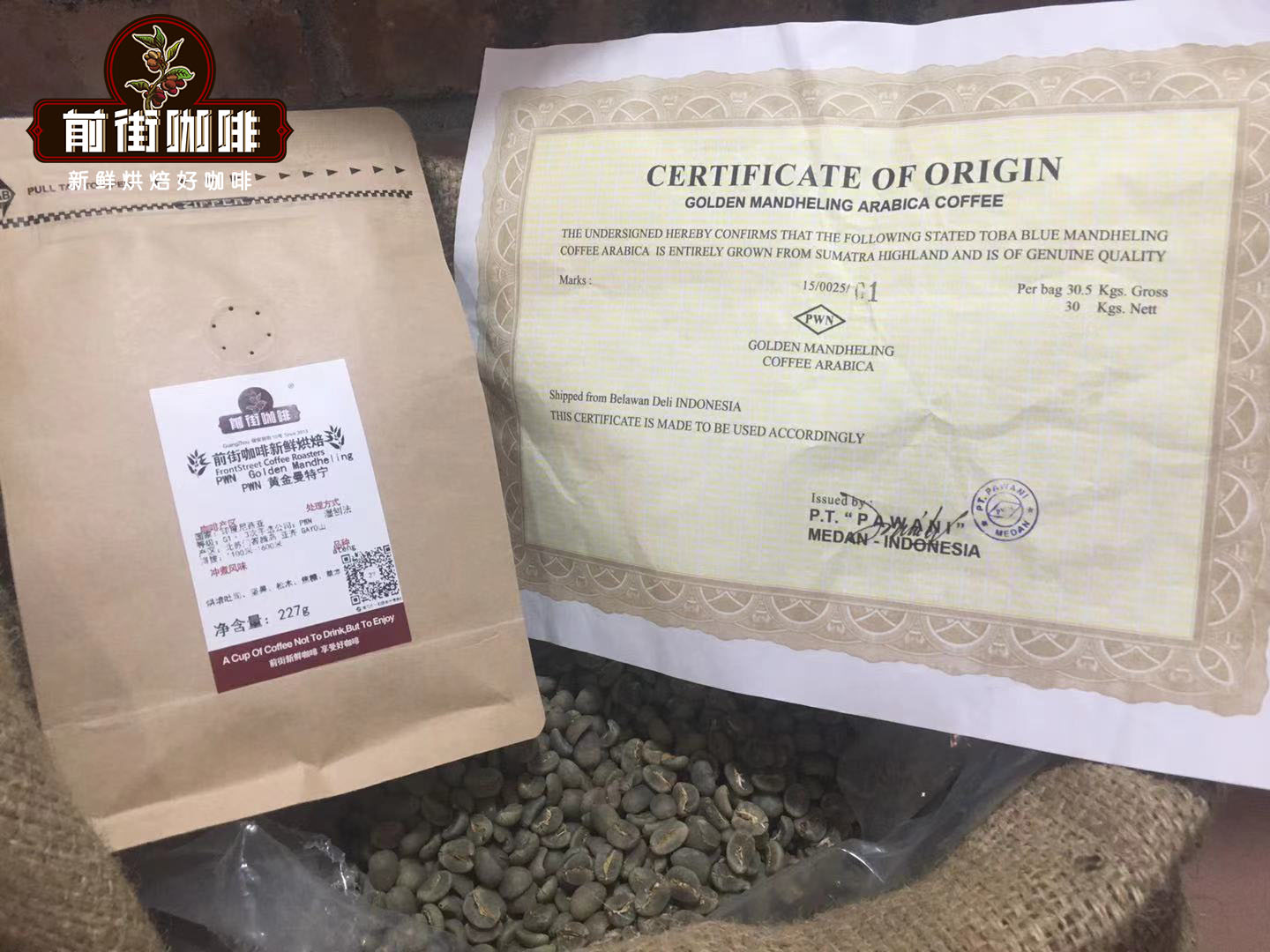
FrontStreet Coffee brews Mandheling as a drip coffee. So what separates FrontStreet Coffee's PWN Golden Mandheling from its regular Mandheling? Taking the PWN Golden Mandheling as an example: the beans come from Lake Tawar in the Gayo Mountains of northwestern Sumatra. FrontStreet Coffee's PWN Golden Mandheling specifications require screen 18 or larger, fewer than 3 defective beans in a 300g green sample, and the highest G1 grade. The beans are dark green with uniform, flat shapes. After strict selection, FrontStreet Coffee found that the PWN Golden Mandheling not only lacks the earthy impurities typical of ordinary Mandheling but also tastes cleaner and brighter.
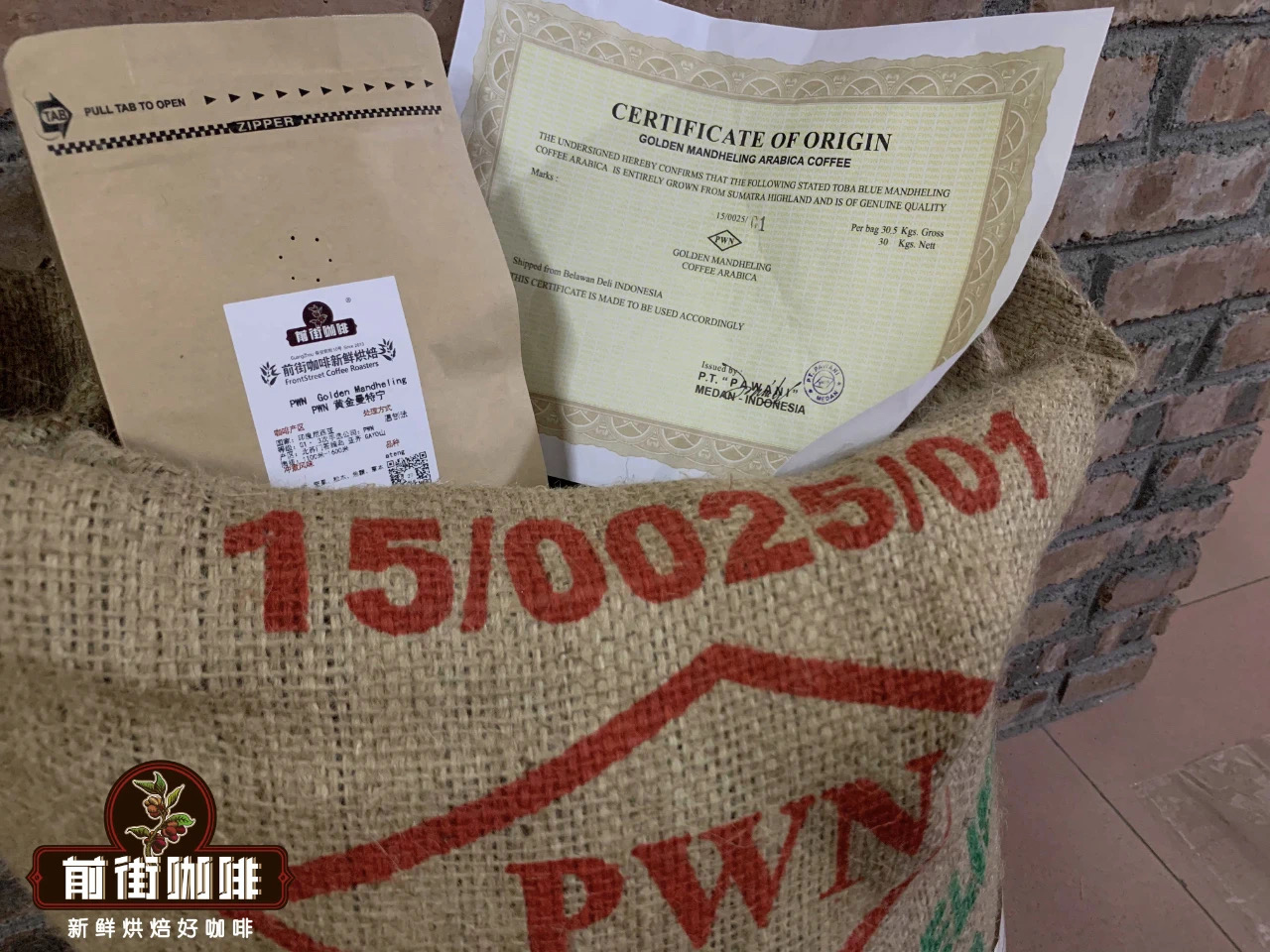
FrontStreet Coffee recommends brewing with freshly roasted beans to fully experience the coffee's richness. Every bag it ships was roasted within the past 5 days — freshness has a decisive impact on flavor, and FrontStreet Coffee's roasting philosophy is "freshly roasted, good coffee," so every order goes out at its best. Coffee needs a resting period of about 4-7 days, meaning beans arrive right at their flavor peak.
FrontStreet Coffee brews with a Kono dripper. The Kono's distinguishing feature is that it drips and immerses at the same time: unlike the V60's continuous spiral ribs, the Kono's divergent rib design and small-diameter hole slow filtration down, leaning toward immersion and producing a fuller-flavored cup. That makes the Kono ideal for highlighting the rich body of the PWN Golden Mandheling.
FrontStreet Coffee's brewing parameters: 15g coffee; coffee-to-water ratio 1:15; water temperature 88°C; grind size: medium-coarse (65% retention rate on 0.85mm sieve)
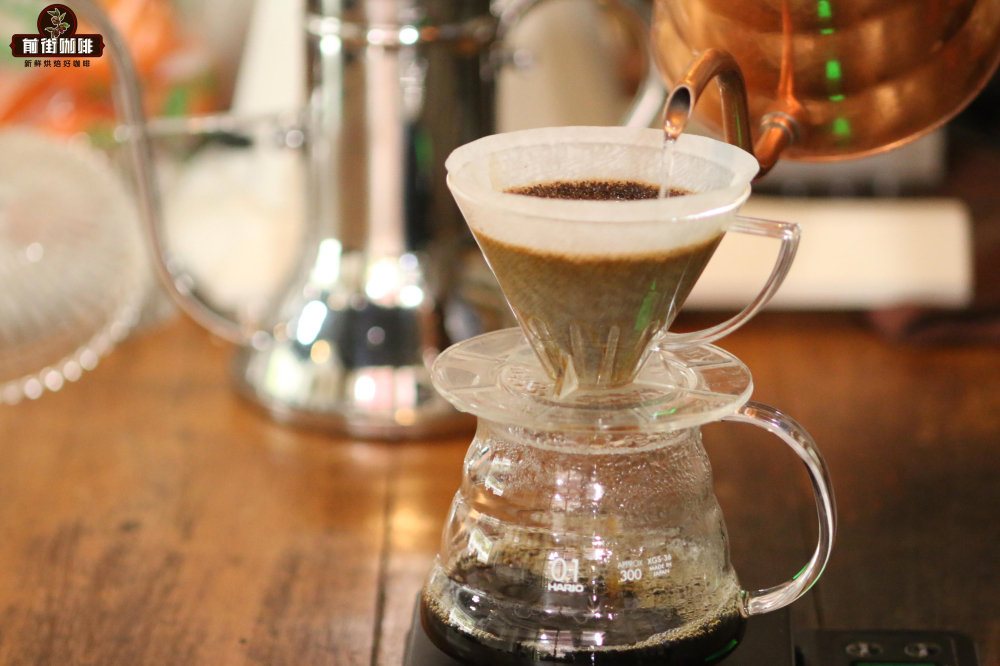
FrontStreet Coffee's technique: wet the filter paper first, then add the grounds and level the bed gently. For the first pour, inject 30g of 88°C water for blooming, with a bloom time of 30 seconds. After blooming, pour the second stage up to a total of 125g, using gentle circular pouring to avoid collapsing the bed. Let the water filter through slowly. When the level drops to one-third, pour the final stage up to a total of 225g, finishing the last pour around 1 minute 30 seconds, and remove the dripper around 2 minutes to end the extraction.
FrontStreet Coffee's PWN Golden Mandheling brewing flavor: nuts, spices, herbal notes, licorice, chocolate, caramel — clean and smooth.
Q6: What is espresso?
Espresso is a style of coffee that originated in Italy: near-boiling water is forced through finely ground coffee at high pressure. Traditionally, a single shot of espresso is about one ounce.
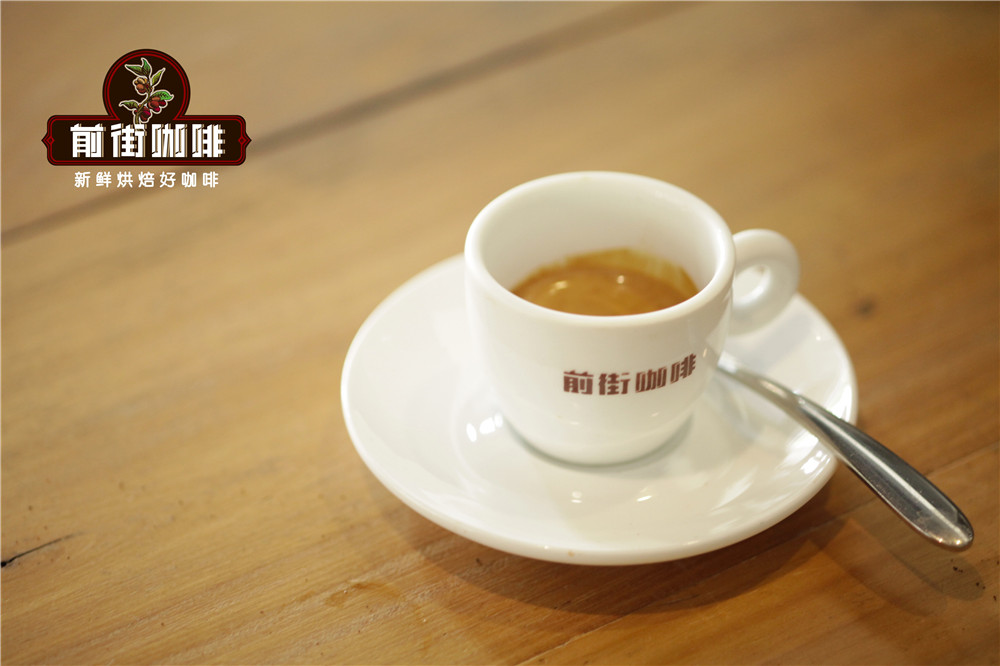
Q7: How is espresso extracted?
FrontStreet Coffee uses a Faema E98 espresso machine with the following extraction parameters:
Pressure: 9 bar ± 2
Temperature: 90.5~96°C
Time: 20~30 seconds
Coffee-to-water ratio: 1:1.7~1:2
Dose: 12g (single shot) 20g (double shot)
Yield: 20ml (single) 40ml (double)
FrontStreet Coffee uses its Sunflower Blend for espresso, combining its natural Yirgacheffe with its Honduras Sherry Barrel-Aged beans. The resulting shot shows distinct fruit acidity with subtle berry aromas, rich wine and chocolate flavors, and a comfortable sweet aftertaste.
Q8: Can FrontStreet Coffee's Mandheling single-origin coffee beans be used to make espresso?
Technically yes, but FrontStreet Coffee doesn't recommend it. First, Mandheling is already a full-bodied coffee; under pressure its flavors are amplified enormously, and the richness that's so enjoyable as pour-over can become intense to the point of being hard to drink. Second, Mandheling's suggested brewing temperature is 88-89°C, while espresso machines extract above 90°C — that extra heat easily pushes the shot into over-extraction, bringing out bitterness and other unpleasant flavors.
For professional coffee knowledge exchange and more coffee bean information, please follow Coffee Workshop (WeChat official account: cafe_style).
For more specialty coffee beans, please add FrontStreet Coffee's private WeChat account: kaixinguoguo0925
FrontStreet Coffee Recommendation
Sumatra is now Indonesia's largest source of both arabica and robusta, accounting for more than 60% of the country's output. The high-elevation provinces of Aceh and North Sumatra grow mostly arabica, and the arabica they produce is what the trade calls Mandheling: the Aceh lots come from the Gayo Mountains around Lake Tawar, where the coffee shows delicate aromatics and a bright cup, while the traditional Mandheling heartland lies around Lake Toba in the Lintong region of North Sumatra. Indonesia's rainy season overlaps with coffee harvest, which makes sun-drying nearly impossible — and that is how Sumatra's signature wet-hulled (giling basah) process was born. Producers strip the pulp, wash the beans briefly, and when the parchment is half-dry, hull it off with machines so the green beans dry directly in the open air. Combined with local microbial fermentation, it creates the mysterious, wild Mandheling character: intense aromatics, thick body, and strong flavor.
FrontStreet Coffee's Golden Mandheling comes from Indonesia's PWN company, the gold standard among Mandheling producers. PWN starts from beans of screen 18 and above, allows fewer than 3 defects per 300g of green sample to meet the top G1 grade, and then adds three rounds of hand sorting to completely remove defective beans — dramatically improving cup cleanliness and sweetness. Strict standards like these mean limited production, and authentic Golden Mandheling is mainly supplied to the Japanese and US markets. FrontStreet Coffee shows PWN's certificates and the unmistakable PWN-stamped bags in its product listings — that's the difference between its PWN Golden Mandheling and imitations.
If you love that thick, earthy, herbal Mandheling character, FrontStreet Coffee's Lintong Mandheling is the everyday pick: mellow and intense, with clove and woody aromatics, low acidity from a medium-dark roast, spice and mint notes, and a strong, lasting, full sweetness.
For brewing at home, FrontStreet Coffee suggests pouring over with 87-88°C water, 15g of coffee, a 1:15 ratio, and a coarse granulated-sugar grind, in three pours: a 30ml bloom to saturate and degas the grounds, a second pour to lift the bed and draw out the golden crema, and a gentle final center pour to lift sweetness — yielding a full, syrupy body with caramel sweetness, chocolate, and nuts. And if you'd rather run Mandheling through your espresso machine, the best-seller FrontStreet Classic Blend adds medium-dark Mandheling to Brazilian coffee's creamy nuttiness, with standout butter, roasted chestnut, and caramel notes, a touch of Robusta for richer crema, and enough body to make latte art or a Dirty effortless.
Important Notice :
FrontStreet Coffee is a long-established specialty coffee roaster in Guangzhou China, selling freshly roasted beans from its own farm in Yunnan as well as dozens of carefully selected single-origin beans from around the world for both pour-over and espresso. The products deliver consistently excellent quality and great value, with shipping within 24 hours. Guangzhou's FrontStreet Coffee shop is recommended by many coffee lovers, and the beans are now available online at the Tmall 。
FrontStreet Coffee has moved to a new address:
FrontStreet Coffee Address: 315,Donghua East Road,GuangZhou
Tel:020 38364473
 Scan and follow the En Gafei WeChat official account. Please indicate that the reprint comes from "En Gafei".