What is the Difference Between Espresso Coffee Beans and Mandheling Coffee Beans - Introduction to Mandheling Flavor and Taste Characteristics
What's the Difference Between Espresso Coffee and Mandheling Coffee?
Walk into a coffee shop and you will often see both espresso coffee and Mandheling coffee on the menu. In a larger shop, espresso usually splits into subcategories -- latte, mocha, cappuccino, Americano -- while Mandheling has no such family tree. So what actually is espresso coffee, what is Mandheling coffee, and does the difference lie in the beans or in the brewing method?
Espresso
The word "Espresso" comes from the Italian for "fast," because both making it and serving it happen quickly. Espresso drips slowly from the filter like warm honey and appears deep reddish-brown, with crema making up 10% to 30% of the volume. The brewing of espresso can be defined by the four Ms:
Macinazione -- the correct grinding method for a properly built blend;
Miscela -- the coffee blend itself;
Macchina -- the machine that makes the espresso;
Mano -- the skilled hand of the barista.
Only when all four Ms are precisely controlled does the espresso come out excellent. Drink it and a single small sip quickly fills the mouth with flavor and aroma -- which is exactly what sets espresso apart from other coffees. Aroma and intensity are the two measures of whether an espresso is good.
Put simply, espresso beans are Italian-style blended beans, built by combining coffees from several origins and varieties. A typical espresso blend is made up of 6-8 different coffees. The espresso, latte, and cappuccino you drink most often all come from Italian-style blends -- and lattes and cappuccinos are simply espresso plus whole milk.
Nothing else compares to the richness and intensity of a straight Italian espresso. Precise pressure forces constant-temperature water to emulsify the oils and proteins naturally present in the coffee fibers, producing a syrup-like liquid. That rich, intense flavor spreads slowly across the tongue, fills the whole palate, and lasts for dozens of minutes. Under careful, precise operating conditions, a layer of fine, dense, reddish-brown crema forms on the surface -- the highest state many Italian baristas chase.
Espresso beans have an intense flavor, while single-origin and specialty beans draw their taste mainly from the fruit's aroma, which shifts by origin. Unlike Mandheling beans, espresso beans are built from a blend of several coffees. Someone might say, "Blending? Just tip a few coffees together and stir." It is not that simple. Building a good Italian-style blend takes deep knowledge of coffee, precise scientific calculation, and years of persistence. Like a painter mixing pigments into a grand canvas, espresso beans are the blender's artwork.
The combination and ratio come from coffee characteristics around the world, married to green bean processing methods and different roast levels, to produce something suited to a broad public. Blends use beans with distinct characteristics and avoid beans with similar flavors. Once the main profile is chosen, hundreds of ratio tests and countless trials produce a blend for the general public.
Mandheling Coffee
Mandheling coffee is produced in Sumatra, Indonesia, in Asia, and is also known as Sumatra coffee. It has a very rich flavor, a sweet fragrance, clean bitterness, and a full body, with a slight sweetness and very little acidity, leaving a long-lasting aftertaste and finish. Most coffee lovers drink it as a single origin, but it is also an indispensable component in blends.
Origin
The gentleman of coffee: Sumatra Mandheling. Mandheling is a premium bean grown on highland plateaus at elevations of 750-1500 meters. It stands for perseverance and the ability to take things up and set them down, and its taste is hearty and unrestrained -- a flavor that many drinkers find fascinating.
Life feels fuller of achievement and pride because of Mandheling, just as the world feels brighter because of it -- much as life becomes great through ideals and extraordinary through practice. FrontStreet Coffee's Indonesian Mandheling has always expressed its most distinctive sweetness through its most distinctive bitterness, much like life itself. The first taste can catch you off guard, because even extra sugar cannot mask that bitterness, yet the aroma keeps pulling you back, like thorns beside a flower, keeping you awake and aware.
The bitterness of Mandheling does not upset you; it sharpens you. Before you meet real pain, Mandheling is just an ordinary bitter drink -- a liquid to refresh yourself with, a reason to pause. It cannot sense your grievances, yet many people are obsessed with its bitterness, unable to quit. Ask them why and they will answer with a smile: "Because love is refined from bitterness." The charm of Mandheling lies in the leaping sliver of acidity mixed with the richest aroma, letting you feel the lively elements inside its gentle richness. Its remarkable taste has a long list of admirers.
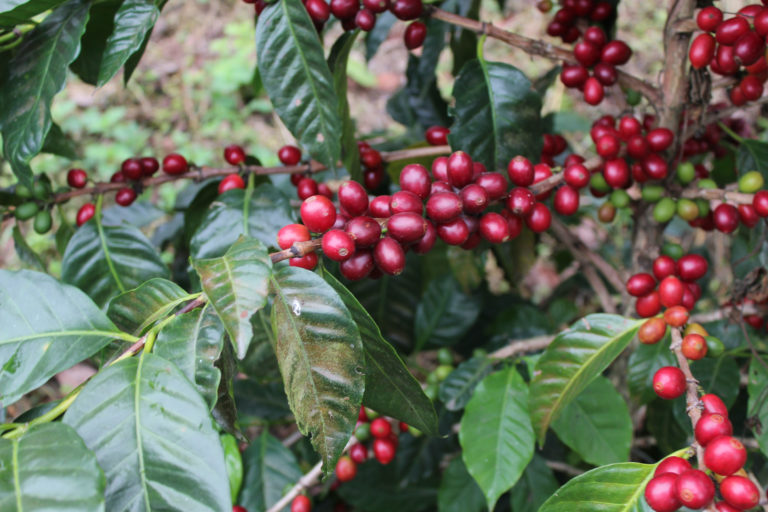
In the 17th century, the Dutch first introduced Arabica seedlings to Ceylon, today's Sri Lanka, and to Indonesia. In 1877 disaster struck the Indonesian islands: coffee leaf rust destroyed almost all the coffee trees, forcing growers to abandon the Arabica they had cultivated for years and import disease-resistant Robusta trees from Africa. Today Indonesia is a major coffee-producing country, growing coffee mainly in Java, Sumatra, and Sulawesi, with Robusta accounting for 90% of total production. Sumatra Mandheling is the rare Arabica exception. Those trees are planted on hillside slopes between 750 and 1500 meters above sea level. The mysterious, distinctive Sumatra variety is what gives Mandheling its rich aroma, full body, and strong flavor, with slight chocolate and syrup notes.
Characteristics
FrontStreet Coffee's Indonesian Mandheling has a very rich flavor, with fragrance, bitterness, and a full body, plus a slight sweetness. Because Mandheling beans have essentially no acidic character, it is often used as a base in special brewing methods. Held warm for hours or served as iced coffee, it never develops an unpleasant sour note.
After roasting the beans are quite large. The raw beans are brown or dark green, with a distinctive caramel-like fragrance and a mellow, rich taste.
Preparation
As a high-quality variety, Mandheling is mostly enjoyed as a single-origin drink. It is also an indispensable component of other coffee styles.
Single-origin preparation
Roasting: coffee beans hold their freshness for only 1-7 days after roasting, after which they begin to lose flavor and leave only bitterness without the mellow taste. Roasting your own beans is the surest way to keep them fresh.
Traditional roasters are drum-type, and the stewing character of a drum makes the bean's flavor more mature and the taste fuller. A home drum roaster can roast half a pound of beans at a time, and each session -- including cooling and unloading -- takes about 21-25 minutes. For a darker roast, simply increase the time. To use one, load the raw beans, set the roast level, and press start; the machine completes everything from roasting to cooling automatically.
Grinding: to blend with water, coffee makes its greatest sacrifice and is broken into pieces. Before brewing, the beans must be ground into fine particles to increase the contact area between water and coffee and let the good flavors extract. In fact, a grinder matters more than a coffee machine. Most people now choose burr grinders because they quickly and consistently produce uniform grounds. Burr grinders are simple to operate, usually with two settings -- one for grind size, one for grinding time. Grind size is generally shown as Arabic numerals, with smaller numbers meaning finer grinds. The grinder has a funnel-shaped hopper on top for unground beans and a drawer below to catch the grounds. When choosing a grinder, pay attention to power, typically between 70-150 watts -- higher is better. Higher power grinds faster, so the grounds spend less time between the burrs and come out cooler.
Brewing: to brew a good cup you need fresh grounds, slightly hard water, and a set of tools that feel comfortable to use. There are three main categories of brewer:
Drip method: water is poured over the grounds and the coffee passes through cloth or paper under gravity into a container. Essentially the grounds are not soaked; hot water simply runs through them. Drip cones and electric coffee makers fall into this category -- the simplest tools, producing clean, brightly colored coffee.
Immersion method: grounds go into a pot, steep in hot water for several minutes, then are filtered out through cloth or mesh to leave a cup of coffee. Siphon pots, French presses, Belgian coffee pots, and Vietnamese coffee pots are all immersion brewers. Each has a soaking stage, which builds more complex flavors.
Pressure method: pressurized hot water is forced through tightly packed grounds to produce a thick coffee. Moka pots and espresso machines belong here.
Quick brewing method: an espresso machine gives a comparatively fast brew and can extract several cups in a row. The high pressure emulsifies and dissolves the oils and colloids from the beans, pulling out their essence completely and producing a more concentrated coffee with better taste and aroma.
Conclusion
So espresso coffee is a general term for coffee made with an espresso machine. It covers many drinks and uses various types of espresso blends. Mandheling coffee, by contrast, refers specifically to beans from Sumatra, and how you brew and drink it can follow personal preference rather than being tied to an espresso machine. That is the difference between espresso coffee and Mandheling coffee.
FrontStreet Coffee Recommendation
If the espresso-versus-Mandheling question has you curious, start with the beans themselves. FrontStreet Coffee's PWN Golden Mandheling is the top tier of the style: beans of 18 mesh or larger, fewer than 3 defective beans in a 300g sample, which meets the highest G1 standard, then hand-sorted three times to strip out what remains. The result is a cleaner, sweeter, fuller cup than ordinary Mandheling.
PWN Golden Mandheling comes from the Ateng variety, grown at 1100m-1600m in Sumatra and processed by the wet-hulled method -- the same technique that gives Indonesian coffee its earthy, herbal signature. In the cup look for nuts, spices, herbs, and caramel.
For pour-over, FrontStreet Coffee suggests 87-88C water, 15g of coffee, a 1:15 ratio, and a coarse-caster-sugar grind size, poured in three stages: 30ml to bloom and fully saturate the grounds, then 100ml to lift the bed and bring out the golden foam, then a gentle 95ml down the center to raise the sweetness. The whole cup lands on a thick body with caramel sweetness, chocolate, and nuts.
If you want Mandheling in an espresso, look at FrontStreet Coffee's Classic Blend, which layers a medium-dark Mandheling onto a creamy, nutty Brazilian base -- butter, roasted chestnut, and caramel to the front, plus sandalwood, herbal, and spice notes, and a small amount of Robusta to build a richer crema. It is easy to pour latte art with or to build a layered Dirty.
Important Notice :
FrontStreet Coffee is a long-established specialty coffee roaster in Guangzhou China, selling freshly roasted beans from its own farm in Yunnan as well as dozens of carefully selected single-origin beans from around the world for both pour-over and espresso. The products deliver consistently excellent quality and great value, with shipping within 24 hours. Guangzhou's FrontStreet Coffee shop is recommended by many coffee lovers, and the beans are now available online at the Tmall 。
FrontStreet Coffee has moved to a new address:
FrontStreet Coffee Address: 315,Donghua East Road,GuangZhou
Tel:020 38364473
 Scan and follow the En Gafei WeChat official account. Please indicate that the reprint comes from "En Gafei".