Honduras Coffee COE Lot 29# Introduction to Honduras Las Gemelas Estate Coffee
Honduras Las Gemelas
Honduras Las Gemelas Estate
Region: Copan
Estate: Las Gemelas
Altitude: 1250 meters
Variety: Red Catuai
Processing Method: Natural
Region Introduction
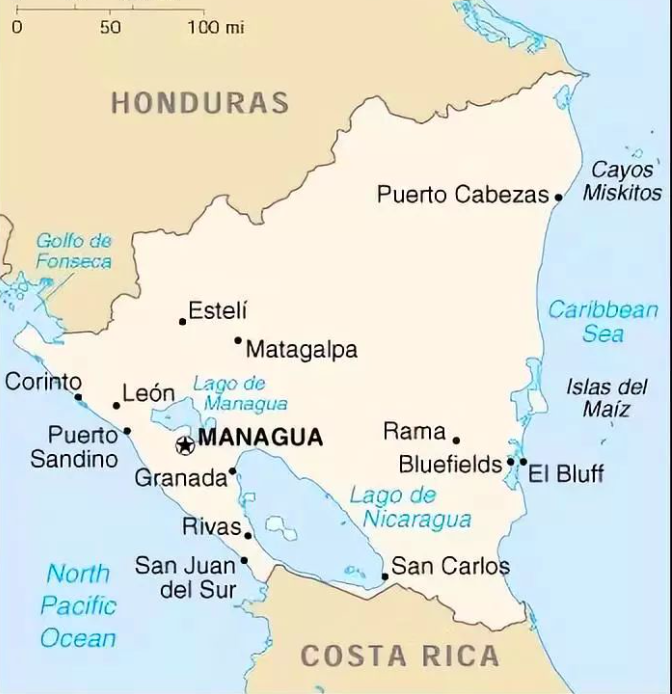
Honduras sits in northern Central America, with the Caribbean Sea to the north and the Gulf of Fonseca to the south. It shares borders with Nicaragua and El Salvador to the east and south, and Guatemala to the west. The country is made up mainly of mountains and plateaus, and its tropical climate — moderate temperatures and abundant rainfall — provides ideal conditions for coffee cultivation.
Honduras produces two categories of high-quality coffee that are highly regarded by enthusiasts: "Highland Coffee," grown at 1000-1500 meters, and "Selected Highland Coffee," grown at 1500-2000 meters, which represents the highest grade of Honduran coffee.
Honduran beans are large, uniform, consistent in color, and lustrous. For harvesting convenience, farmers prune the trees to no more than 150 centimeters; taller trees would demand ladders, slowing the work and risking damage from bent branches. Because each cherry ripens on its own schedule, hand-picking is essential for quality, with only ripe fruit selected — a single branch can take several weeks to harvest completely.
Honduran coffee spans six major producing regions, mainly in the west and south: Copan, Opalaca, Montecillos, Comayagua, Agalta Tropical, and El Paraiso. Specialty coffee in these regions grows at an average altitude above 1,100 meters, and the varieties planted break down into 69% HG grade, 12% SHG, and 19% CS.
Copan Region:
Spanning the Copan, Ocotepeque, and Lempira areas, this region shows intense chocolate flavors, characterized by the sweetness of honey and caramel with relatively subtle fruit notes. Cultivation altitude ranges from 1,000-1,500 meters, with harvest season from November to March.
Las Gemelas Estate
Neri Suaba Orianá Aguilar inherited the estate from her father and family. To safeguard quality, the family sends their coffee to the ARUCO ENTERPRISE association every year for cupping and quality control. The estate's name, Las Gemelas — "The Twins" — was chosen by Neri to commemorate the birth of her twin daughters.
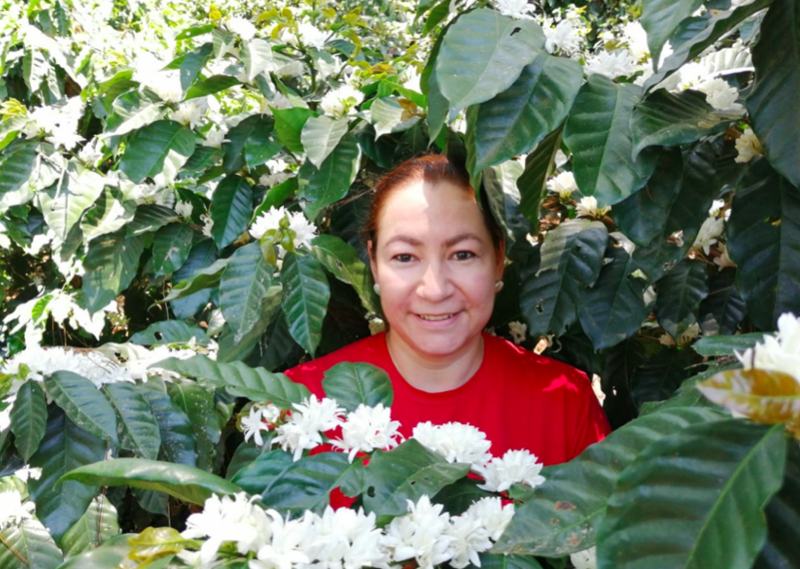
Historically, the Neri family grew Yellow Catuai. This year, Neri changed her approach by transplanting the existing Yellow Catuai and planting Red Catuai in its place.
She also broke from the family's traditional washed method, experimenting with natural processing for competition. Two experimental batches were processed with different fermentation times: one fermented for 72 hours before drying, the other for 90 hours. This award-winning lot comes from the 72-hour fermentation batch.
Variety (Red Catuai)
Red Catuai is a natural mutation of the Arabica Bourbon variety, discovered in Brazil in 1937. Compared with other varieties, Red Catuai bears more compact fruit, which makes harvesting harder. It has strong disease resistance and suits high-altitude cultivation, producing delicate, clean acidity.
In the cup, Red Catuai shows medium acidity with a smooth mouthfeel and a gentle, approachable flavor. It offers both good body and sweetness, and blends harmoniously with most other beans without dominating the profile.
Natural Processing Method
This COE competition Lot #29 from Las Gemelas Estate uses the natural processing method.
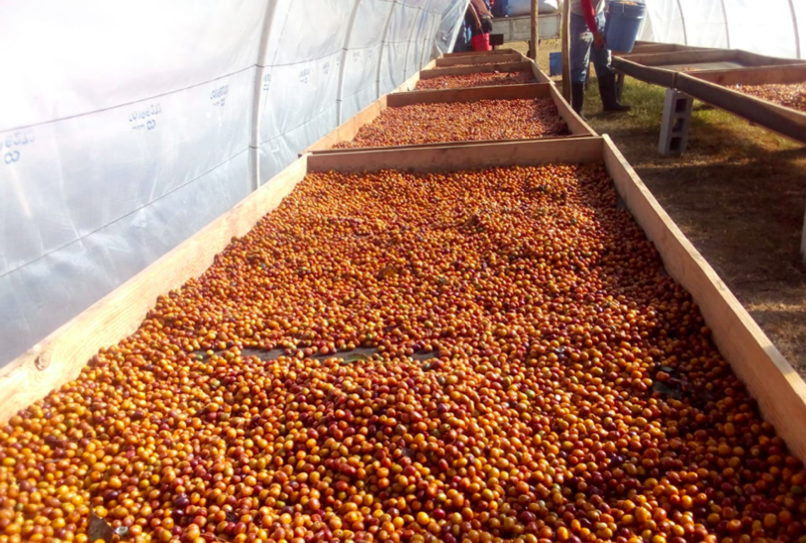
Natural processing is the oldest and most original way to prepare coffee. Harvested cherries are laid out on patios — or sometimes simply spread along roadsides — and dried in direct sunlight for approximately 27-30 days, until moisture drops from 60% to about 12%. Naturally processed beans show the lowest acidity, with pronounced sweetness and full body, though slightly less clarity.
Green Bean Analysis
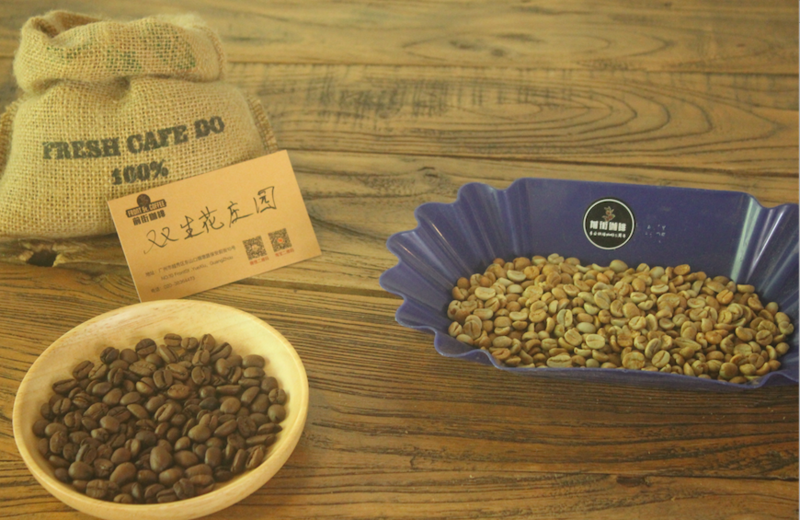
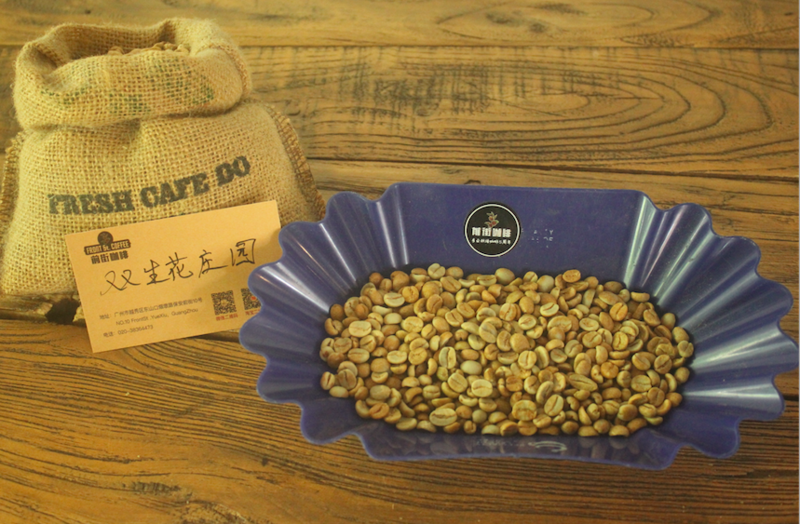
This coffee displays a light green color with considerable silver skin still on the surface. The beans are relatively round, short, and uniform. The dry aroma carries acidic grassy notes and hints of pear.
Roast Profile Analysis
When FrontStreet Coffee's roaster examined this coffee, noting its moderate altitude and natural processing, they chose a lower charge temperature and a medium-heat approach with gradual reduction.
Roasting machine: Yangjia 800N (300g batch size)
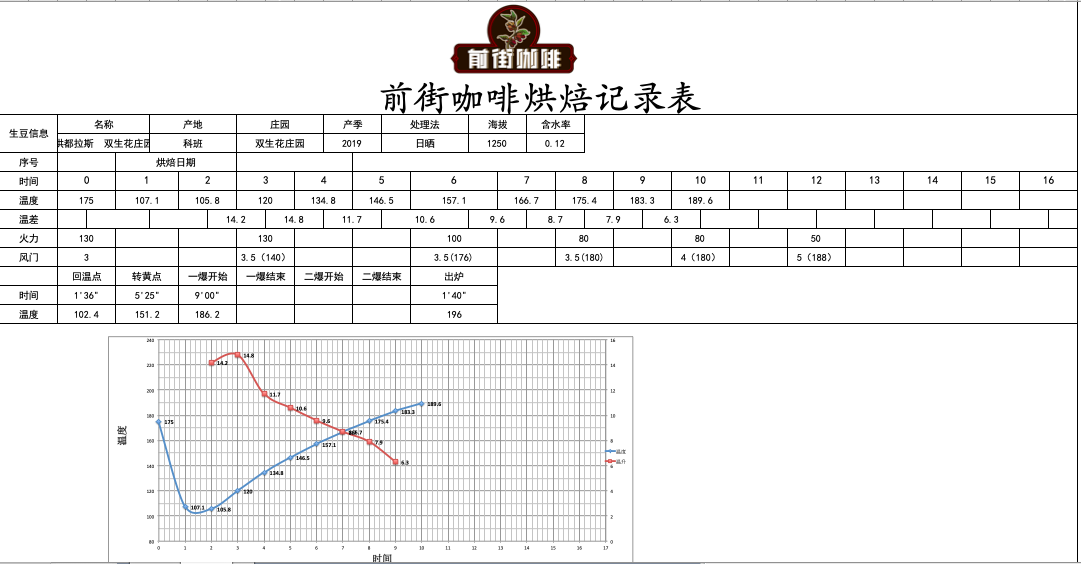
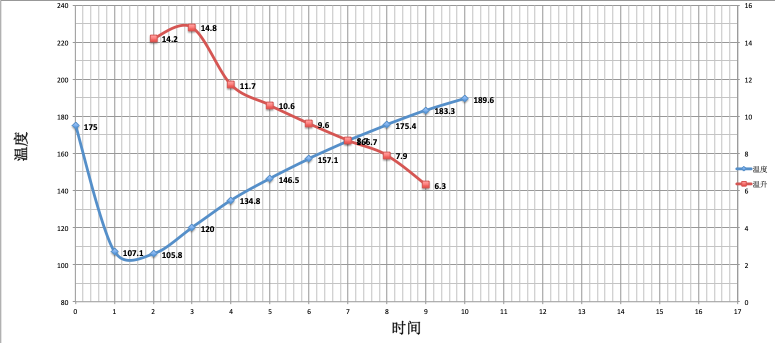
When the drum temperature reached 175°C, the beans were charged immediately. Heat was set to 130, damper opened to 3. The temperature recovery point came at 1'36". When drum temperature reached 140°C, the damper was opened to 3.5 with heat unchanged. At 151.1°C the bean surface turned yellow, the grassy aromas disappeared completely, and the roasting entered the dehydration stage. When drum temperature reached 176°C, heat was reduced to 100 with the damper unchanged.
At 8'28", the bean surface developed uneven wrinkles and dark spots, and the toasted bread aroma clearly shifted toward coffee fragrance — the prelude to first crack. From here, careful attention to the crack sound is crucial. First crack began at 9'00", and the damper was adjusted to 4. Development time after first crack was 1'40", discharged at 196°C.
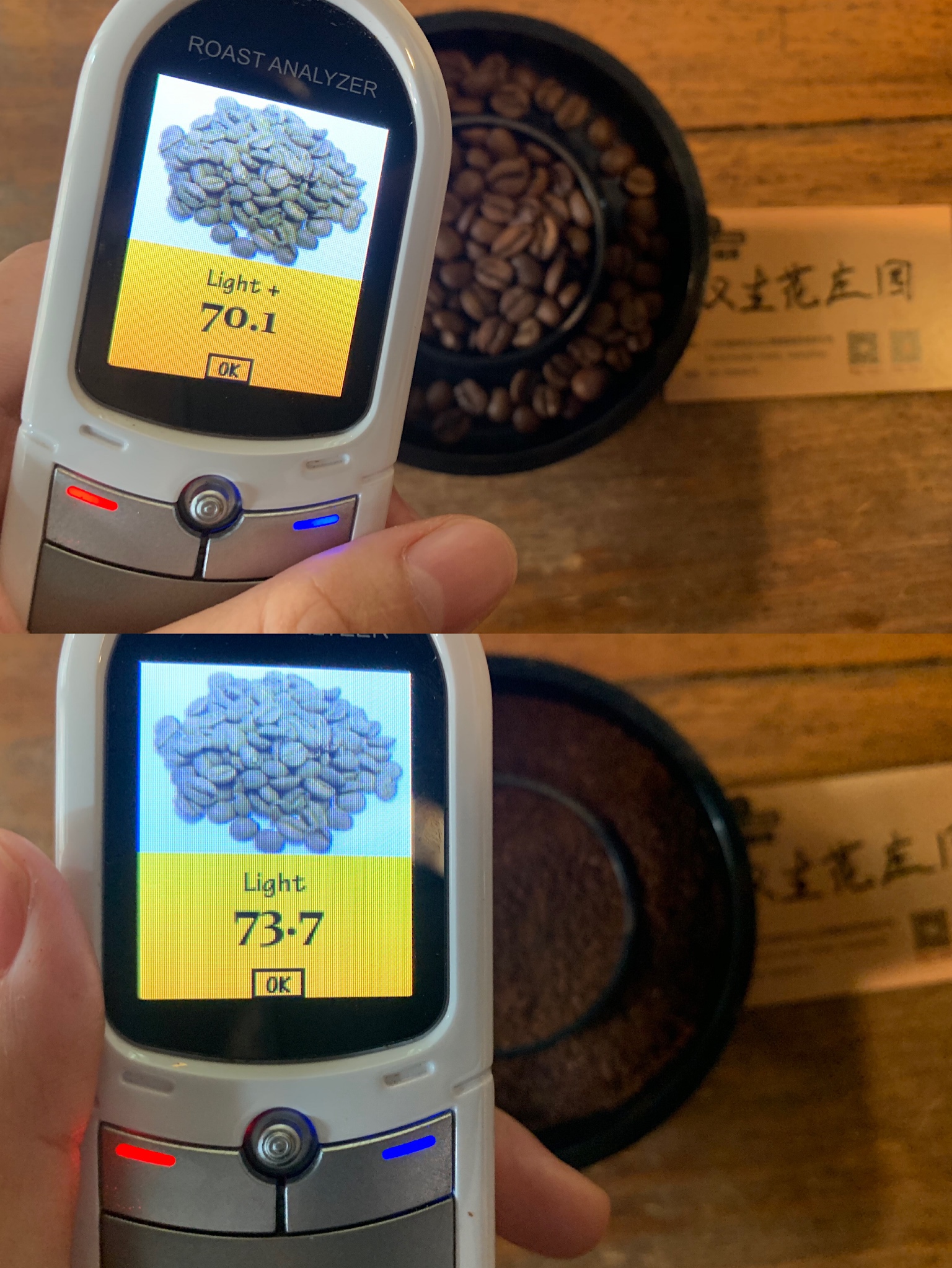
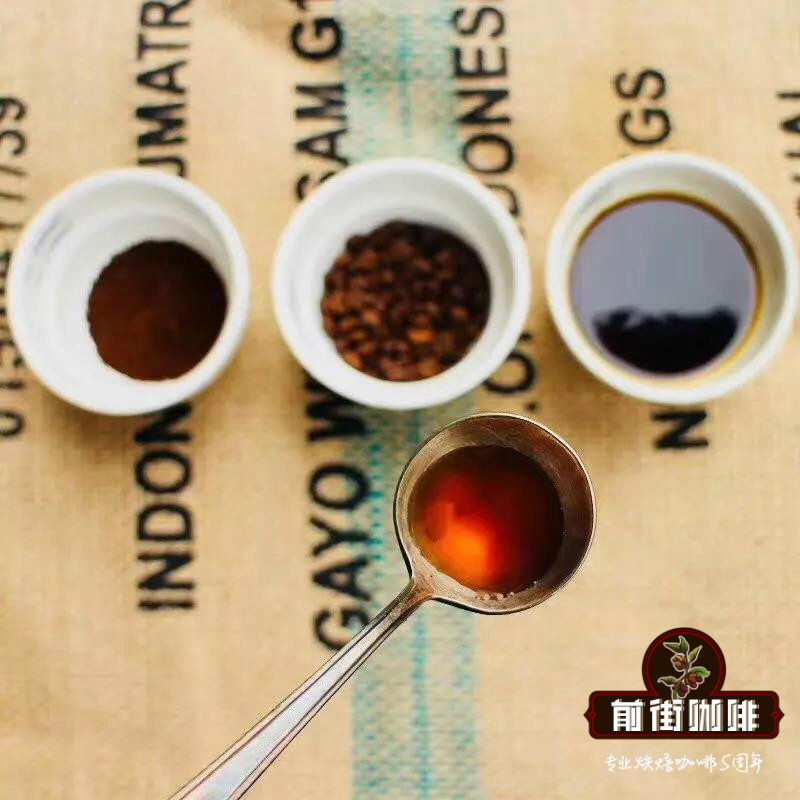
Agtron bean color value: 70.1 (image above), Agtron ground color value: 73.7 (image below), Roast Delta value: 3.6.
Cupping Notes
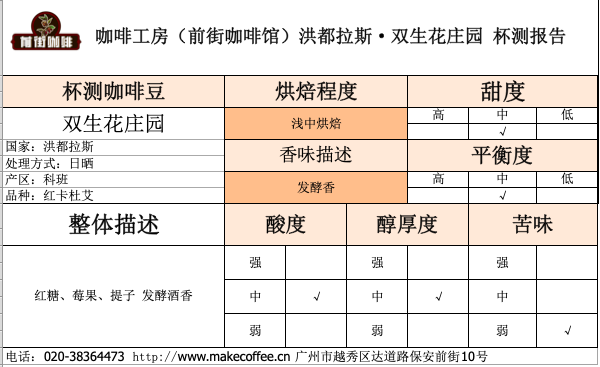
Flavor: Brown sugar, berries, raisins, fermented wine notes
1. Flavor descriptions vary by individual and are influenced by water temperature and brewing method. This cupping report uses descriptions based on the flavor wheel framework, with identical brewing equipment and parameters, for reference only.
2. Content may be revised as new information comes in; the latest updates should be considered authoritative.
FrontStreet Coffee Recommendation
If a naturally processed Honduran lot like this has you curious about entry-level specialty beans, FrontStreet Brazil Queen Estate is a wonderful starting point: grown at higher altitude from the rare Yellow Bourbon variety, it layers Brazil's signature compound nut aromas — butter, melon seeds, macadamia, almond — over a sugarcane-like sweetness, with a thick, silky texture that shines black or with milk.
For a floral-fruit contrast, FrontStreet Washed Gedeb (Yirgacheffe) delivers jasmine florals, lemon brightness, and berry tones in a clean washed cup — the kind of everyday specialty bean that makes brewing at home genuinely exciting.
Important Notice :
FrontStreet Coffee is a long-established specialty coffee roaster in Guangzhou China, selling freshly roasted beans from its own farm in Yunnan as well as dozens of carefully selected single-origin beans from around the world for both pour-over and espresso. The products deliver consistently excellent quality and great value, with shipping within 24 hours. Guangzhou's FrontStreet Coffee shop is recommended by many coffee lovers, and the beans are now available online at the Tmall 。
FrontStreet Coffee has moved to a new address:
FrontStreet Coffee Address: 315,Donghua East Road,GuangZhou
Tel:020 38364473
 Scan and follow the En Gafei WeChat official account. Please indicate that the reprint comes from "En Gafei".