Green Mountain Coffee and Blue Mountain Coffee | Green Mountain Coffee is Not a Counterfeit of Blue Mountain Coffee

Blue Mountain Coffee is a name everyone hears often, but what exactly is Green Mountain Coffee? Blue Mountain Coffee has captivated countless enthusiasts with its rich, mellow aroma, so what makes Green Mountain Coffee stand out? In this article, FrontStreet Coffee discusses the two with you.
What is Green Mountain Coffee?
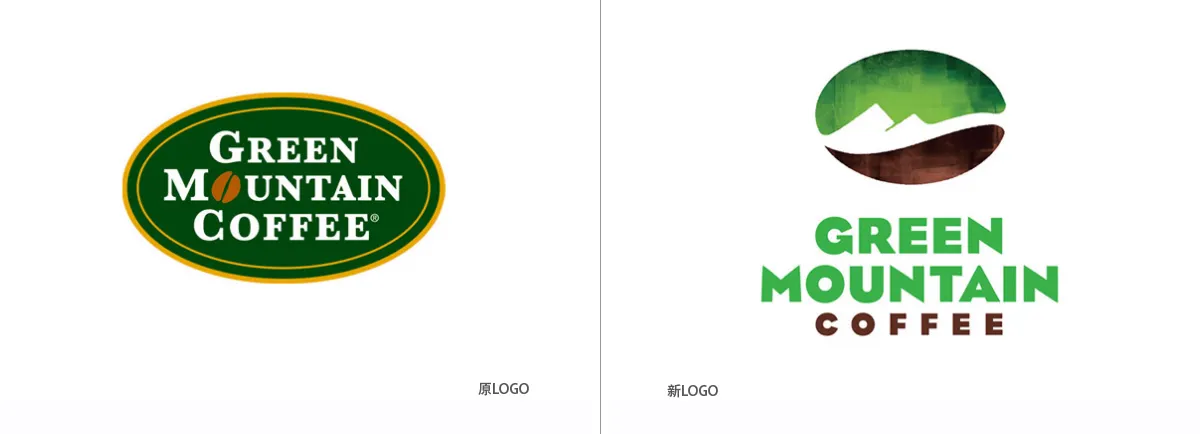
First, Green Mountain is not the name of a coffee-growing region. Green Mountain Coffee is a coffee brand founded in Vermont, USA in 1981 that went public in 1993. Both are brand marketing strategies, but unlike Starbucks' expensive "high-quality" positioning, Green Mountain Coffee sells high-quality Arabica beans at lower prices. It has also made real progress on environmental protection. Since 2002 Green Mountain Coffee has sold organic coffee and is certified as Fair Trade coffee. To obtain Fair Trade certification, a coffee merchant must pay farmers more than $1.26 per pound of beans and provide technology so farmers can cultivate coffee organically, a sustainable, environmentally friendly, and healthy approach.
With the coffee market booming in recent years, related products have multiplied, but Green Mountain Coffee still holds to its practical, environmentally minded approach. Among its many products, coffee K-Cups are especially practical. Following the design philosophy of KEURIG founders Peter Dragone and John Sylvan, that there is no need to brew a whole pot and one cup at a time is enough, they invented the Keurig K-Cup that brews a single cup along with the single-serve packaging it fits, and Keurig later developed dedicated single-cup machines.
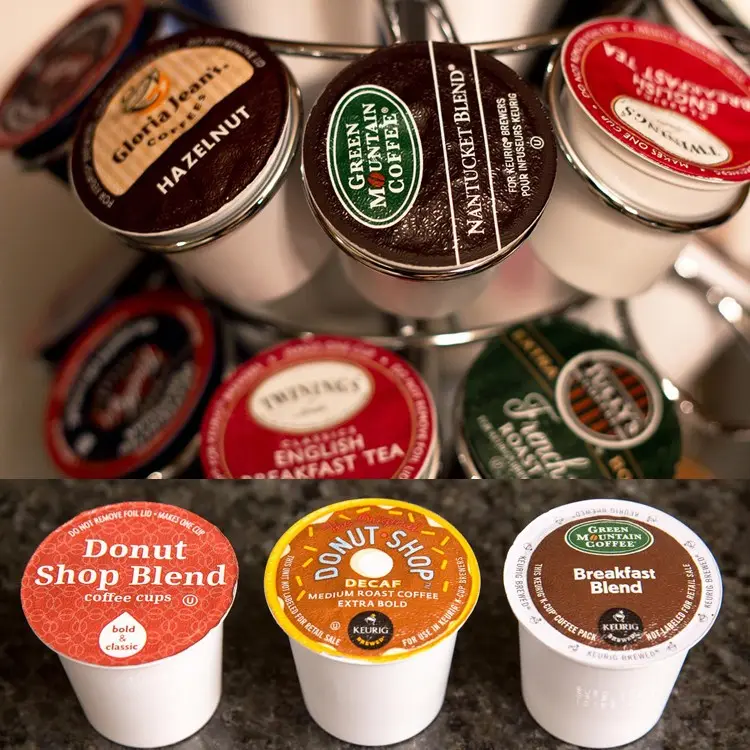
K-Cup advertising shows the appeal: place the K-Cup in the machine, and in just one minute you have a cup of hot coffee with an inviting aroma. No grinding, no measuring, no cleaning, and no grounds. Most importantly, each K-Cup sells for only 50 cents, one-tenth the price of a Starbucks coffee.
The K-Cup concept greatly increased Green Mountain Coffee's sales, and the company applied for multiple K-Cup patents, so other manufacturers must pay licensing fees to use K-Cup packaging.
Seen this way, Green Mountain Coffee and Blue Mountain Coffee appear to have no real connection.
Jamaica Blue Mountain
Jamaica's coffee history begins in the 18th century under British colonial rule, when Governor Nicholas Lawes brought a coffee tree back from Martinique and began promoting cultivation in the St. Andrew area. Coffee then spread widely across Jamaica, including into the Blue Mountain range.
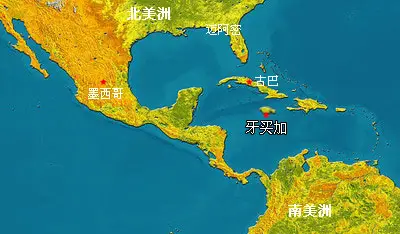
As the map shows, Jamaica is an island nation in the Caribbean, in the tropical zone, north of Cuba and near Central America. Its coffee areas are mainly around the Blue Mountain range in the east. On clear days, direct sunlight hits the blue sea and the mountain reflection also looks blue, which is how the range got its name. The Blue Mountains are the highest in the area, with the tallest peak roughly 2256 meters. Only land below 1700 m can grow coffee; anything above is protected forest.

Beyond suitable altitude, Blue Mountain has fertile volcanic soil, a humid, rainy climate year-round with an average temperature around 27°C, and virtually no local industrial pollution, all of which help produce high-quality Blue Mountain beans.
Blue Mountain Coffee Grade Standards
Since 1932 Jamaica has encouraged local coffee cultivation, focusing on quality rather than volume to raise farmers' income. In 1953 the Jamaica Coffee Industry Board set standards for Blue Mountain Coffee, laying the foundation for the high quality that followed.
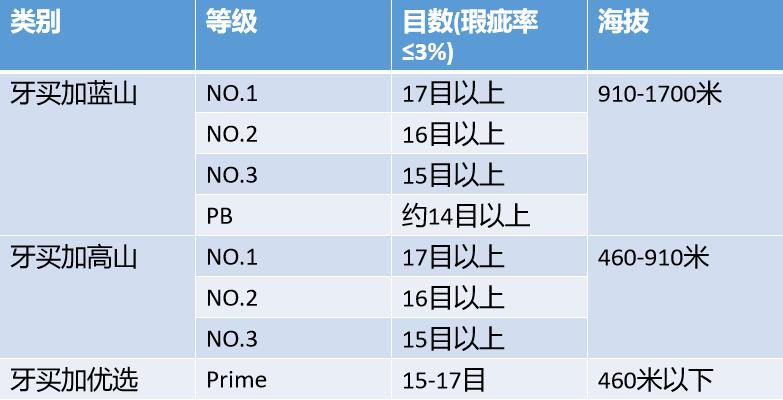
Under the board's standards, only Arabica Typica from growing regions at 910-1700 meters, including St. Andrew, St. Mary, St. Thomas, and Portland, may be called Jamaica Blue Mountain Coffee. Coffee grown below 910 meters and above 460 meters is Jamaica High Mountain Coffee, while coffee below 460 meters is Jamaica Prime Coffee.
Blue Mountain beans are further graded, mainly by altitude, defect rate, and bean size. FrontStreet Coffee's Blue Mountain No. 1, for example, is selected from the highest grade, with a defect rate below 2%, a screen size of 17 mesh or larger, and altitude between 910 and 1700 meters.
Authentic Blue Mountain Coffee
FrontStreet Coffee has found many low-priced products labeled "Blue Mountain flavor," "Blue Mountain special blend," "Blue Mountain blend," and the like. Are they real Blue Mountain? To answer, it helps to understand how Blue Mountain developed in the market.
In the early days Jamaica's Blue Mountain market was almost monopolized by Japan. When Jamaica suffered storm damage and heavy losses in its growing areas in 1969, Japan's UCC Coffee Group provided extensive help to get through the crisis, and kept investing in Jamaican coffee afterward. In 1972 Jamaica signed an agreement with Japan allocating 90% of the Blue Mountain quota to Japan, with Europe and the United States receiving 5% each. Japan then resold some Blue Mountain at high prices to other regions such as South Korea, Hong Kong, and Taiwan. For years it was therefore hard to drink authentic Blue Mountain domestically, or it was too expensive for ordinary people. The cheap "Blue Mountain flavor" instant coffee on the market is not what we call Blue Mountain Coffee.
Later, as the Japan agreement expired and Jamaica hoped to widen its buyer market, it began distributing quotas to more countries. China imported its first batch of Blue Mountain green coffee from Jamaica in 2010.
Blue Mountain Coffee also has unique packaging: it is the only coffee in the world packed in wooden barrels, which producers believe preserve the bean's aroma and flavor. On the Blue Mountain barrels from Clifton Farm that FrontStreet Coffee buys, you can see the bold words "Jamaica Blue Mountain Coffee" alongside the officially certified BLUEMOUNTAINCOFFEE registered trademark of the Jamaica Coffee Industry Board. There is also a green frog logo on the barrel, the Rainforest Alliance certification mark given only to those meeting the Sustainable Agriculture System Standards.
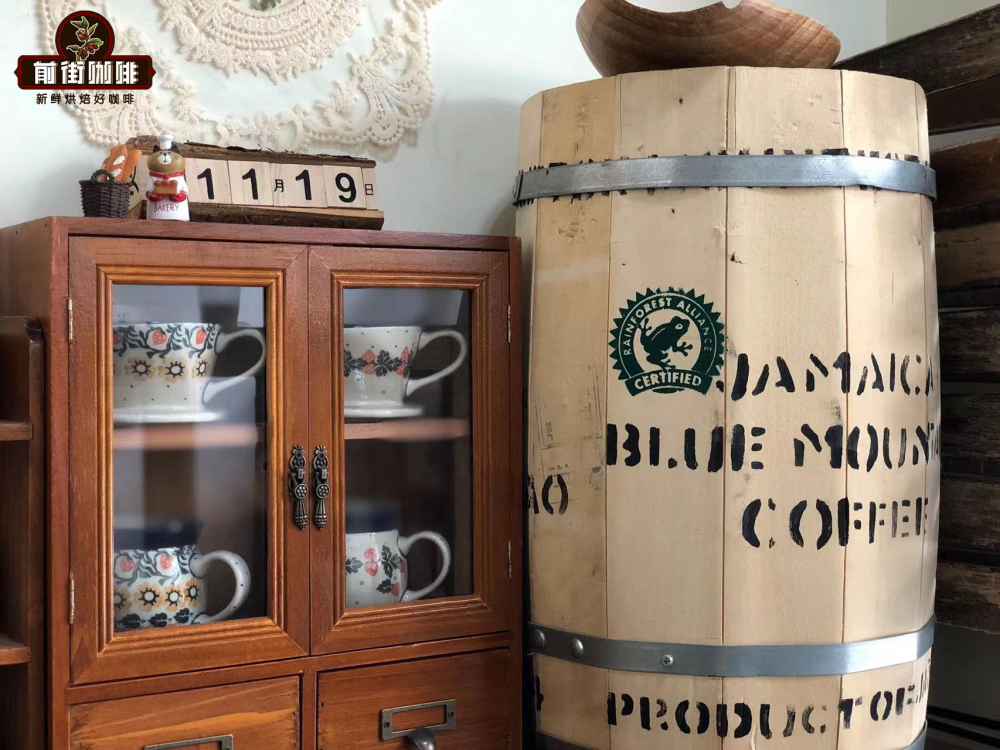
FrontStreet Coffee buys its Blue Mountain beans from original Clifton Farm barrels every year, and that is the Blue Mountain No. 1 currently on its shelves.
FrontStreet Coffee: Blue Mountain No. 1 Coffee Beans
Origin: Jamaica Blue Mountain, Clifton Manor
Altitude: 1310m
Processing: Washed
Variety: Typica
Flavor: Chocolate, Nut, Cream, Cocoa

Blue Mountain Coffee Brewing Suggestions
To enjoy coffee with a full, rich aroma, FrontStreet Coffee suggests brewing with freshly roasted beans. Because coffee needs 4-7 days of rest after roasting, FrontStreet ships beans roasted within 5 days, so they arrive at their optimal tasting window. If you do not have a grinder at home, FrontStreet offers a grinding service. Ground coffee releases aroma faster than whole beans, though, so where possible FrontStreet suggests getting a grinder to enjoy the aroma more fully.
FrontStreet Coffee believes the excellent flavor of Blue Mountain lies in its balanced acidity and bitterness, high body, and full aroma. For roasting, FrontStreet chose medium-dark to highlight the bean's nutty and cocoa notes. A KONO dripper brings out a better body.

First wet the KONO dripper so the filter paper sits well against it. Discard the water in the server, add 15 g of coffee, bloom with 30 g of water for 30 seconds, then pour in small circles from the center to 125 g. Wait for the coffee bed to drop to half the dripper's height, then pour again the same way to 225 g. Once dripping finishes, remove the dripper.
Blue Mountain beans have a relatively loose texture, so with a hand grinder you can feel the crisp sound of the beans and smell a rich aroma after grinding. During brewing the coffee carries a caramel-like sweetness, with nutty and chocolate richness on entry, moderate acidity and sweetness, a balanced, clean taste, and a long-lasting aftertaste.
FrontStreet Coffee Recommendation
For anyone who wants to try the real thing, the best starting point is FrontStreet Jamaica Blue Mountain No. 1. It is the top grade of the range, from the historic Clifton estate, one of the certified growing areas of the Blue Mountain range. The estate sits at an average of 4300 feet, or 1310.64 meters, with just enough altitude, gentle afternoon cloud cover to shade the hillsides, ample sunlight, and mineral-rich soil, all of which help the coffee trees grow well and extend the ripening of the cherries.
Authenticity is easy to verify. Genuine Blue Mountain has no traceability code, but the importer normally holds complete export certification and origin documents, and the beans show the telltale signs of the real origin. Traditional Blue Mountain is shipped in wooden barrels of 15, 45, and 70 kilograms, and every barrel is itself a mark of authenticity. With FrontStreet you can see the Clifton estate certificate and the used Blue Mountain barrels, so the source is clear.
On the palate, FrontStreet Jamaica Blue Mountain No. 1 is medium-dark roasted to bring out the classic balance. Use a KONO dripper, 15 g of coffee rested 4 to 7 days from the roast date, a grind slightly coarser than white sugar, water at 87-88°C, and a 1:15 ratio, poured in three stages: 30 g for a 30-second bloom, then to 120 g, then to 225 g. The cup is very clean, complex, and gentle, chocolate-sweet, with a strong body and a long fruit note at the finish.
Important Notice :
FrontStreet Coffee is a long-established specialty coffee roaster in Guangzhou China, selling freshly roasted beans from its own farm in Yunnan as well as dozens of carefully selected single-origin beans from around the world for both pour-over and espresso. The products deliver consistently excellent quality and great value, with shipping within 24 hours. Guangzhou's FrontStreet Coffee shop is recommended by many coffee lovers, and the beans are now available online at the Tmall 。
FrontStreet Coffee has moved to a new address:
FrontStreet Coffee Address: 315,Donghua East Road,GuangZhou
Tel:020 38364473
 Scan and follow the En Gafei WeChat official account. Please indicate that the reprint comes from "En Gafei".