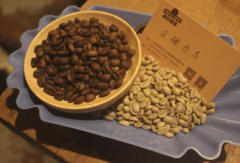
Why Are Coffee Beans Oily? Does Oily Coffee Mean They're Not Fresh?
Why Are Coffee Beans Oily? Does Oily Coffee Mean They're Not Fresh?
We often see coffee beans with an oily sheen on the surface. Why does this happen, and why do beans develop oil at all? FrontStreet Coffee is here to explain.
The common belief is that "coffee beans with oil on the surface are not fresh." That is not actually true. This misconception has led many people to the wrong conclusion, assuming oiliness means the beans have been stored too long while overlooking more important factors. In reality, there is no absolute link between oiliness and storage time. Long storage can add oil, but the biggest factors are roast level and roasting method.
A Key Factor: Roast Level
During roasting, coffee beans gradually expand and crack, allowing their natural oils to migrate toward the surface and form an oily sheen. The darker the roast, the more pronounced this becomes.
So generally speaking, light roast beans rarely develop an oily sheen, and you should never judge the freshness of a light roast by its oil. Medium to dark roasts, by contrast, are roasted longer and expand more, so carbon dioxide and other gases, along with oils, escape the beans more easily. These beans can turn fully oily within just a few days of storage, but that does not mean they are stale - it is simply the result of the roast.
If you really want to know how fresh a bean is, buy from quality specialty coffee shops where the packaging clearly states the roasting date. If you have further questions, ask the shop directly about bean condition, roasting method, and brewing suggestions, and learn together through the exchange.
Coffee bean "oiliness" is tied directly to roasting, and in the early days of coffee there was no roasting at all. For an entire millennium, coffee was simply harvested as fruit, washed, and boiled into a broth. What atmosphere or romance could such a drink have had? The only reason coffee survived was caffeine - that was the original reason coffee was discovered. Caffeine kept the broth from being abandoned, but the brew itself held no fatal attraction powerful enough to spread suddenly after the 15th century. (A thousand years ago, drinking coffee was a sacred ritual, not something consumed at any hour.)
FrontStreet Coffee Recommendation
Since roast level is what drives oiliness, medium roasts are the sweet spot - enough development for sweetness and body, without the heavy surface oil of a dark roast. These are the medium-roasted FrontStreet beans we suggest.
FrontStreet Brazil Queen's Manor - if you dislike both acidity and bitterness, start here. Grown in Brazil, the world's largest coffee producer, this is the rare Yellow Bourbon variety, with a clean, sweet character. Medium-roasted, it shows creamy peanut, chocolate, toasted bread, and sugarcane aroma and sweetness. It works as pour-over and also in a moka pot or espresso machine.
FrontStreet Strawberry Candy Geisha Blend - if you want a sweeter medium roast, this is our first pick. It blends two famous Central and South American origins: a honey-processed coffee from Costa Rica and a washed Geisha from Panama. To highlight the best of both, FrontStreet uses a medium roast, so the cup shows both orange-blossom honey sweetness and a rounded sweetness. It suits cold brew, pour-over, and espresso alike.
Important Notice :
FrontStreet Coffee is a long-established specialty coffee roaster in Guangzhou China, selling freshly roasted beans from its own farm in Yunnan as well as dozens of carefully selected single-origin beans from around the world for both pour-over and espresso. The products deliver consistently excellent quality and great value, with shipping within 24 hours. Guangzhou's FrontStreet Coffee shop is recommended by many coffee lovers, and the beans are now available online at the Tmall 。
FrontStreet Coffee has moved to a new address:
FrontStreet Coffee Address: 315,Donghua East Road,GuangZhou
Tel:020 38364473
 Scan and follow the En Gafei WeChat official account. Please indicate that the reprint comes from "En Gafei".