What Grade are Finca Hacienda La Esmeralda Red Label Geisha Coffee Beans - Are They Expensive? Geisha Coffee Flavor Characteristics and Taste Profile
How Expensive Can Coffee Get?
Ask a coffee newcomer what the most expensive coffee in the world is, and the usual answers are Blue Mountain or Kopi Luwak. FrontStreet Coffee would like to show you what prices Gesha can actually reach.
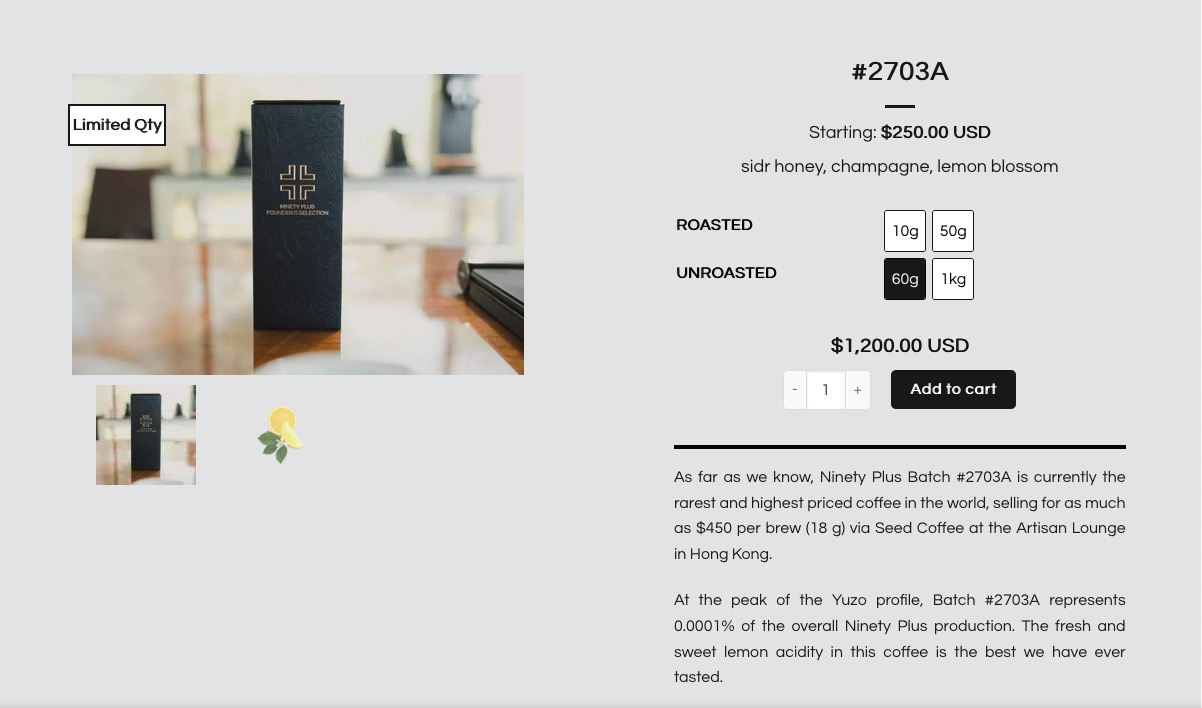
Yes, you read that correctly. That is a Gesha lot from Ninety Plus (known widely as 90+), batch #2703A: just 60 grams of green beans for $1200 — shipping not included. Surprising, isn't it? So what "grade" is Gesha, exactly?
What Is Gesha?
When people hear "Gesha," their minds jump straight to Panama. But the variety's story begins on the far side of the Atlantic, in Africa — the birthplace of coffee itself.
The Spread of Gesha
The variety was discovered in 1931 in the Gesha forest of Ethiopia and later sent to Kenya's Coffee Research Institute. In 1936 it was introduced to Uganda and Tanzania; in 1953 it reached Costa Rica; and in 1963 Don Pachi Serracin brought Gesha trees from Costa Rica into Panama. Because its low yields cut directly into harvest volume, farmers had little incentive to plant it, and for decades it was used mainly as a windbreak. It stayed obscure for nearly half a century — until Hacienda La Esmeralda in Panama separated it out from its other varieties, entered it in the 2003 Best of Panama (BOP) competition, and took the championship at the 2004 BOP, suddenly putting the whole coffee world on notice.
This Gesha Is Not That Gesha
Newcomers often assume Panama Gesha and Ethiopian Gesha are the same thing — after all, isn't it all "Gesha"? They are genuinely different: not only do the origins differ, the varieties themselves differ.
Ethiopian Gesha: Geisha Village Estate
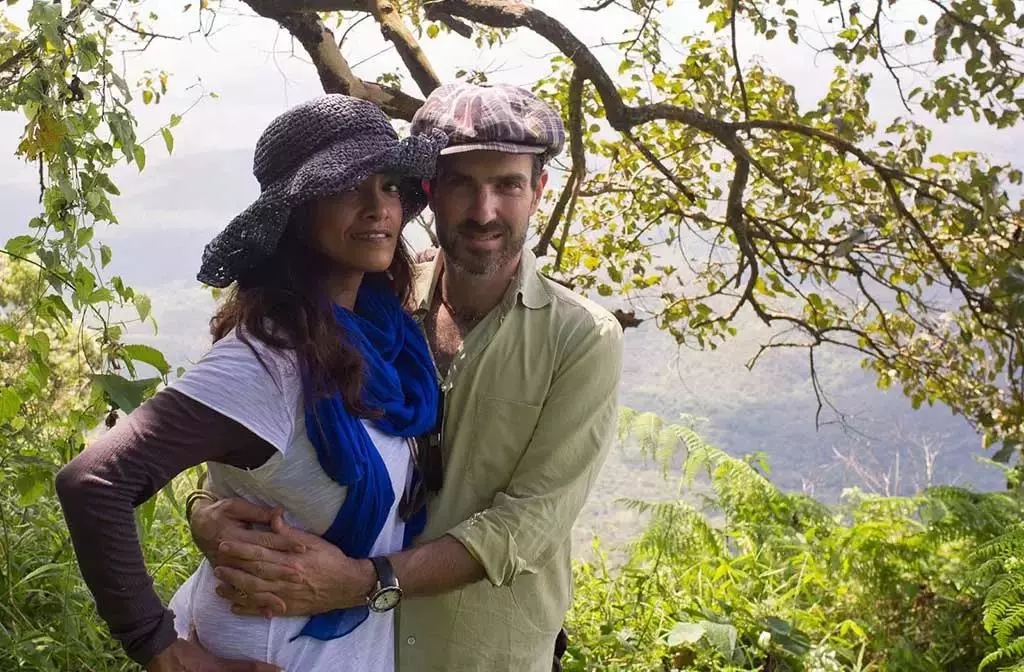
In Ethiopia, "Gesha" today usually means Geisha Village. In 2007, documentary director Adam Overton, after filming an Ethiopian coffee documentary, conceived the idea of building a coffee estate and brand. In 2009, an opportunity arrived courtesy of BOP judge Willem Boot, who wanted to find Gesha's birthplace. In 2011 Overton traveled to the Gesha area, found native Gesha varieties growing in the surrounding forests, planted them, and established Geisha Village Coffee Estate.
The Varieties
Despite the shared name, Ethiopian Gesha has no direct relationship with Panama's Gesha. The main varieties behind Ethiopian Gesha lots are: Gori Gesha (GG), Geisha 1931 (G31), and Illubabor Forest 1974 (IF).
Gori Gesha: Very close in size to native Heirloom, though some flat beans look remarkably like the familiar Geisha 1931. The green beans carry dense tropical-fruit aromatics. Named after the Gori Gesha Forest — the origin of the variety — it represents the genetic diversity within that forest.
Geisha 1931: This is the "classic" Gesha appearance, sized like Typica but tasting nothing like it. It was selected from multiple forest varieties as the one closest to Panama Gesha, chosen by observing plant morphology, bean appearance, screen size, and cup results. The name honors 1931, the year the variety was first discovered in Ethiopia.
IF: Collected during a 1974 expedition to the Illubabor Forest and later developed by the Ethiopian research center into a disease-resistant variety.
Geisha Village's Grading System
Willem Boot also brought Panama's commercial playbook to Geisha Village, creating the estate's own hierarchy — the auction lots, gold label, red label, green label, and Chaka batches you see on menus:
- Auction Batch: Only 3.7% of Geisha Village's annual production, rigorously screened as the estate's very top lots and sold exclusively through global auction.
- Gold Label Batch: Just 5% of annual production, essentially on the same level as the auction lots. FrontStreet Coffee's gold label came from batch OMA 059.
- Red Label Batch: Fully traceable lots with the estate's typical flavor signature — slightly softer in intensity and complexity than gold label, and one of the best value tiers.
- Green Label Batch: Officially SINGLE-TERROIR, sourced entirely from a single farm plot within Geisha Village, with complete traceability for each batch number: farm name, variety, and processing date.
- Chaka Batch: A blend of all three varieties — Gori Gesha, Geisha 1931, and Illubabor (the native Ethiopian disease-resistant variety).
Panamanian Gesha
Credit for Gesha's worldwide fame goes largely to its talent scout: Panama's Hacienda La Esmeralda.
Hacienda La Esmeralda
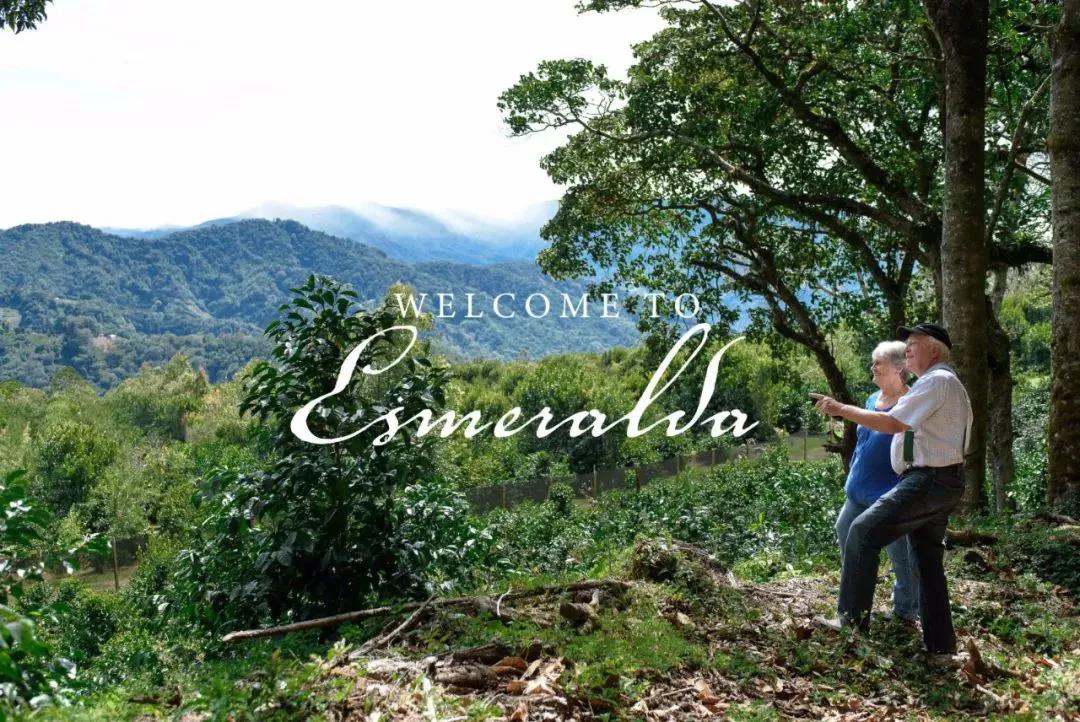
In 1964, American banker Rudolph Peterson retired, moved to Panama, and bought Hacienda La Esmeralda in Boquete, initially running it as a dairy farm. His son Price later left his medical practice to help run the estate, introducing the Caturra and Catuai varieties in 1987 and building the estate's own washed mill in 1994.
How the Estate Divides Its Gesha Plots
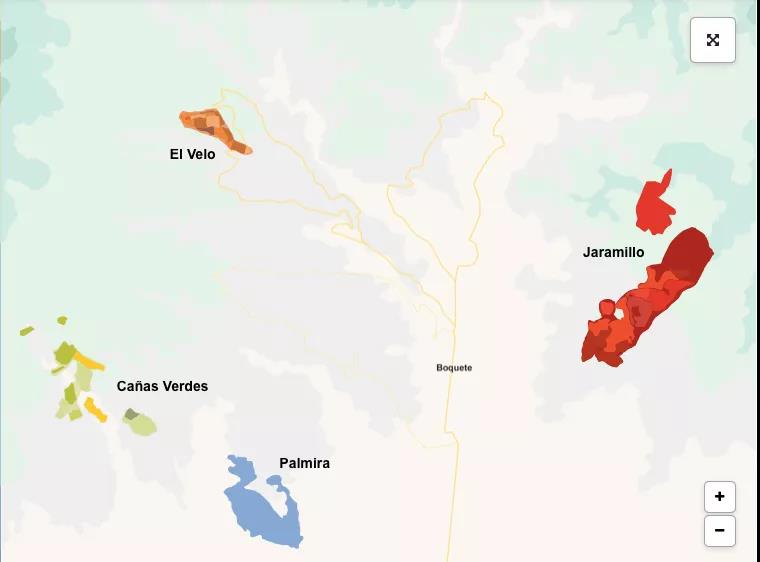
La Esmeralda maps its Gesha land with extraordinary precision, across three main plots, each subdivided further:
- Jaramillo: Annual rainfall of 4000 millimeters, average daytime temperature 19-25°C, average nighttime temperature 11-15°C, average altitude 1600-1700m. Subdivided into 5 small plots: Mario, Noria, Reina, Bosque, and Buenos Aires.
- Canas Verdes: Annual rainfall of 3500 millimeters, average daytime temperature 16-23°C, average nighttime temperature 10-15°C, average altitude 1600-1800m. Comprises 9 small plots: Lino, Coronado, Fundador, León, Montaña, Trapiche, Chinta, Cabaña, and Tumaco.
- El Velo: The estate's newest acquisition, averaging 1700-1900m. Alongside Gesha and Catuai it grows small amounts of exotic varieties such as Laurina, Pacamara, Mocha, and SL28. Divided into 7 small plots: Guabo, Portón, Durazno, Higuerón, Higo, Buena Vista, and Águila.
La Esmeralda's Grading System
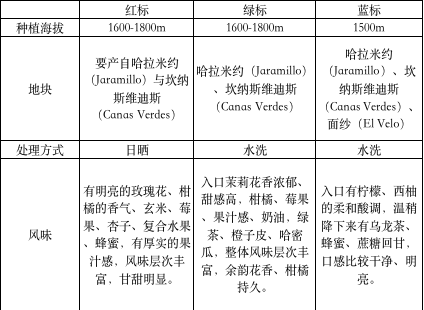
After years of experimentation the estate found that only Gesha grown above 1400 meters expresses its delicate flavors properly. It therefore grades its Gesha into three tiers, using planting altitude as the primary criterion and cup results as secondary.
Esmeralda Special (Red Label)

Esmeralda Special is what the trade calls the red label. It grows at 1600-1800 meters, cups above 90 points, and comes mainly from the Jaramillo and Canas Verdes plots. Red label lots may be washed or natural, and are sold only through the estate's global online auction.
FrontStreet Coffee — Panama Hacienda La Esmeralda Red Label Gesha Natural
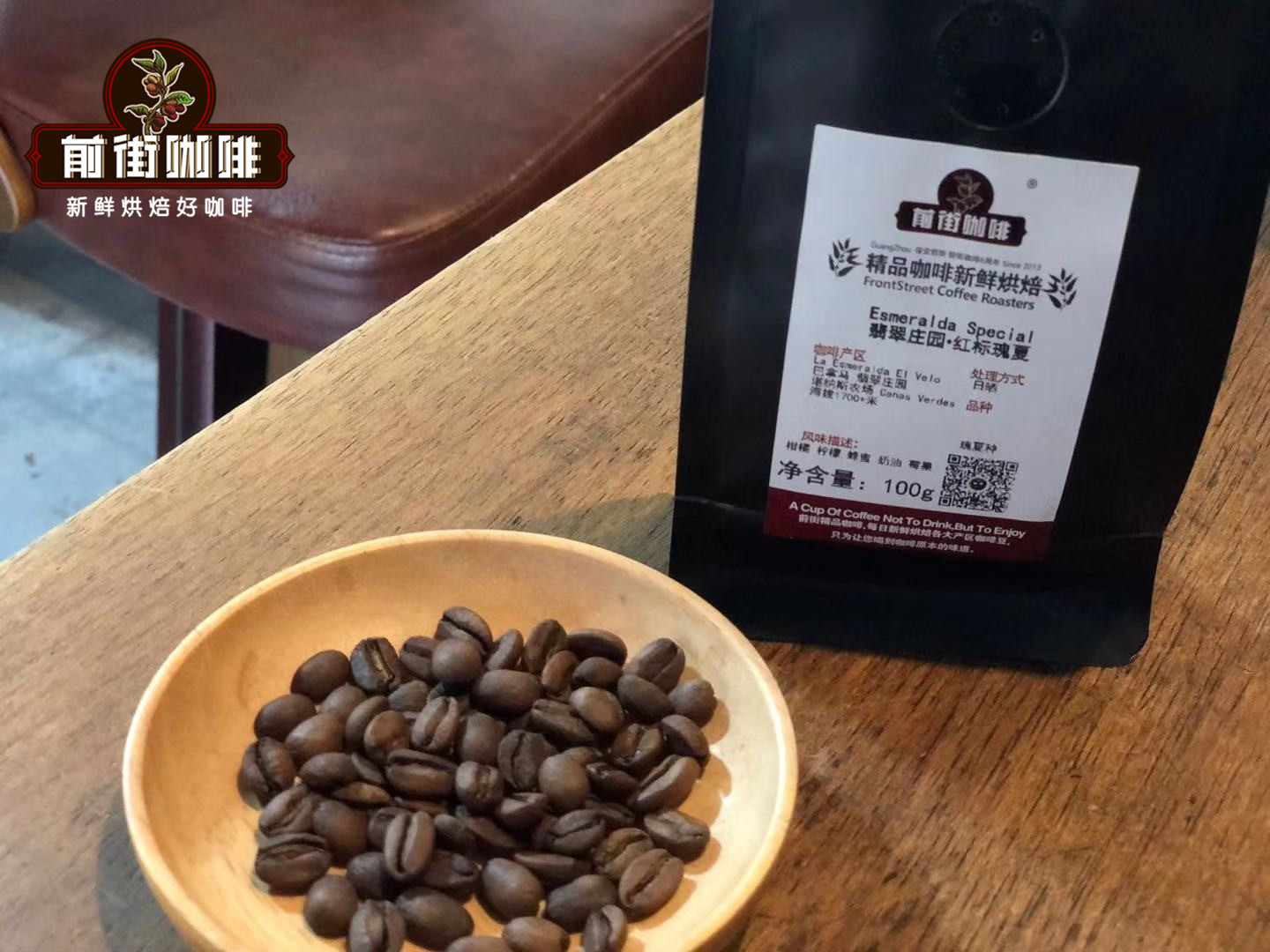
Country: Panama
Region: Boquete
Estate: Hacienda La Esmeralda
Altitude: 1600-1800 meters
Processing: Natural
Variety: Gesha
Private Collection (Green Label)

Private Collection is the green label. It skips the auction circuit but keeps the quality high: grown at 1600-1800 meters and blended from batches across different plots such as Jaramillo and Canas Verdes. Because lots from multiple plots are combined, the flavor occasionally lands remarkably close to a red label. And while it sits below the red label in rank, it still delivers classic Gesha character — florals, fruit, citrus acidity, and a thick, juicy body. Washed and natural lots both exist.
FrontStreet Coffee — Panama Hacienda La Esmeralda Green Label Gesha Washed
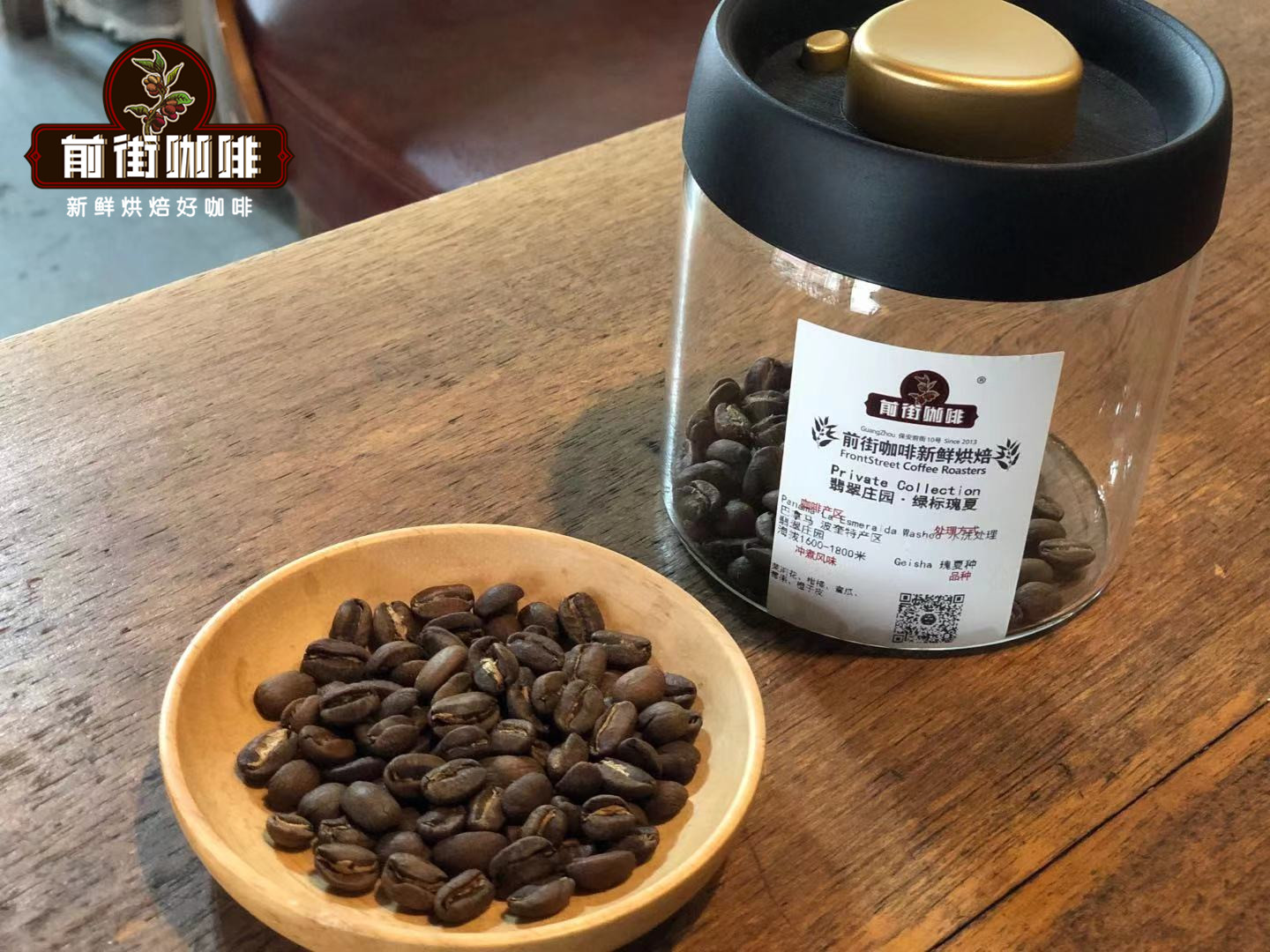
Country: Panama
Region: Boquete
Estate: Hacienda La Esmeralda
Altitude: 1600-1800 meters
Processing: Washed
Variety: Gesha
Geisha 1500 (Blue Label)
Geisha 1500 is the blue label, grown at 1400-1500 meters and blended from Gesha across three plots: Jaramillo, Canas Verdes, and El Velo. In previous years the blue label was washed-only, but the current harvest has added a natural process as well; the lot FrontStreet Coffee carries here is from that new season.
FrontStreet Coffee — Panama Hacienda La Esmeralda Blue Label Gesha Washed
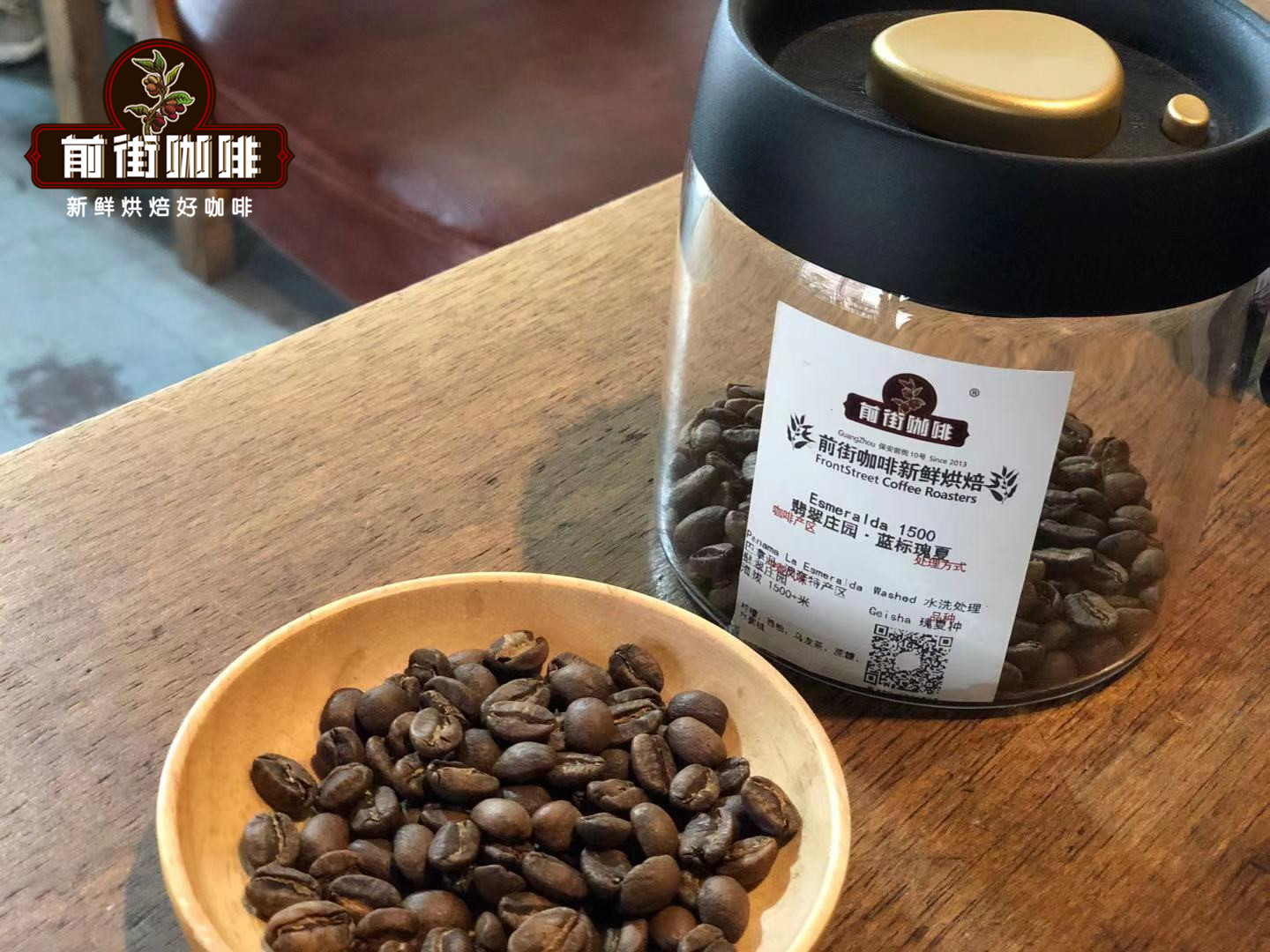
Country: Panama
Region: Boquete
Estate: Hacienda La Esmeralda
Altitude: 1400-1500 meters
Processing: Washed
Variety: Gesha
Why Is Gesha So Expensive?
Don't let the Ninety Plus price tag scare you off — within La Esmeralda's own lineup, the value for money is actually quite reasonable. Even so, searching for red label Gesha at retail gives plenty of people sticker shock. Four factors drive Panamanian Gesha's price:
- It has been named the best coffee by the Specialty Coffee Association (SCA), the international body spanning growers, producers, roasters, manufacturers, importers/exporters, and retailers.
- It is genuinely rare. Only a handful of producers grow Gesha in Panama, and Panama's growing conditions cannot be replicated elsewhere — the coffee simply cannot be reproduced in other regions. Climate change and leaf rust pressure make its cultivation even harder.
- Demand keeps rising while supply stays fixed. Demand has grown especially dramatically in Asian markets, which keeps pushing prices upward.
- The auction format itself inflates prices: with limited supply, the highest bidder takes the lot.
For what it's worth, FrontStreet Coffee's roasted Panama Hacienda La Esmeralda green label Gesha is fully guaranteed on both brand and quality, and the value is hard to beat: each 100-gram pack is priced at 168 yuan. At 15 grams of beans per cup, one pack brews 6 cups — about 28 yuan per cup, against cafe prices of well over 100 yuan for the same coffee.
FrontStreet Coffee Brewing Suggestions
Suggested parameters: Hario V60 dripper, 90°C water, 15g dose, 1:15 coffee-to-water ratio, medium-fine grind (80% pass-through rate on a China standard #20 sieve).
These Gesha lots are all light roasts, and light-roast beans dissolve their soluble material more slowly than dark roasts. To pull out Gesha's full flavor, FrontStreet Coffee therefore uses hotter water and a slightly finer grind than you might expect.
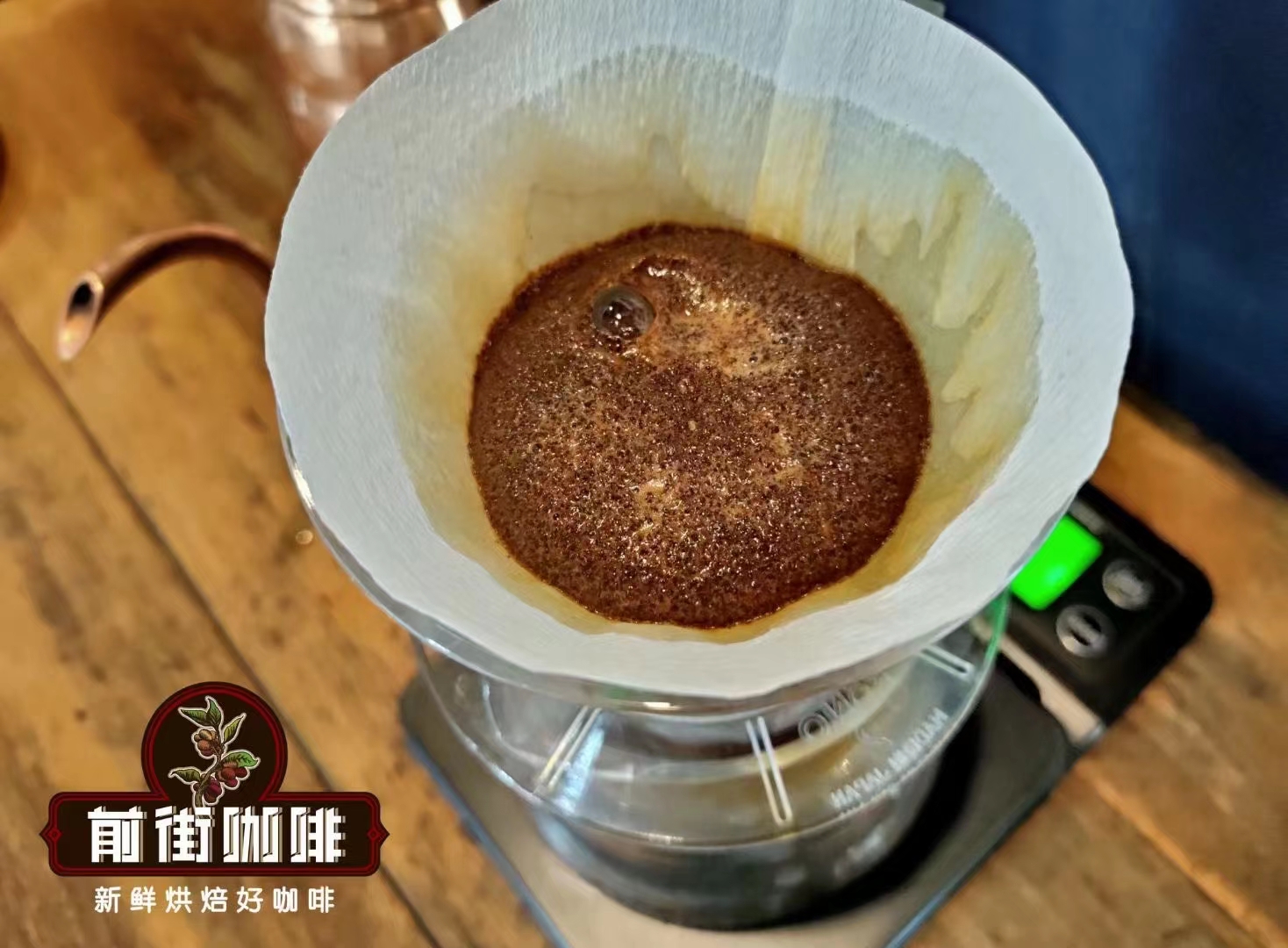
Brewing Technique
We use segmented extraction — three-stage pouring. Start with 30g of water for a 30-second bloom, then continue pouring in small circular motions up to 125g and pause. Once the water level drops and the bed is nearly exposed, pour again up to 225g and stop. When the level drops and the bed is about to show through, remove the dripper (timing from the start of the bloom). Total extraction time: 2'00".
FrontStreet Coffee Recommendation
Gesha fans chasing the modern pinnacle should start with the tiers above — but for a lesson in classic balance, FrontStreet Coffee also recommends Jamaica Blue Mountain No.1, the highest grade of Jamaica Blue Mountain coffee, sourced from the historic Clifton Estate, which has been growing coffee since roughly 1750. Its farms and processing sit at an average of 4300 feet (1310.64 meters), where cool afternoon cloud cover, ample sun, and mineral-rich soil slow cherry maturation and build sweetness. True Jamaica Blue Mountain is certified by the Jamaican government with full origin documentation, and is traditionally shipped in wooden barrels of 15, 45, and 70 kilograms — the barrels themselves are a hallmark of authenticity, alongside plump, greenish beans with slightly upturned ends. Jamaica's Blue Mountain region produces under 2500 tons a year, historically with more than 70% bought by Japan, and certified beans have been officially exported to China since 2003 — so buy from sellers who can show certificates and provenance.
In the cup, Blue Mountain is the great balancer: cream, caramel, chocolate, nuts, honey, and a whisper of fruit, with none of the sharp acidity of African coffees or the heavy bitterness of dark roasts. FrontStreet Coffee roasts it medium-dark and suggests a Kono dripper for extra body: rest the beans 4-7 days after roast, grind slightly coarser than for light roasts (white-sugar texture), brew at 87-88°C, 15 grams of coffee at 1:15, in three pours — 30g to bloom for 30 seconds, up to 120g, then up to 225g. The result is a clean, dense, remarkably smooth cup where sweetness, acidity, and bitterness sit in perfect accord.
Important Notice :
FrontStreet Coffee is a long-established specialty coffee roaster in Guangzhou China, selling freshly roasted beans from its own farm in Yunnan as well as dozens of carefully selected single-origin beans from around the world for both pour-over and espresso. The products deliver consistently excellent quality and great value, with shipping within 24 hours. Guangzhou's FrontStreet Coffee shop is recommended by many coffee lovers, and the beans are now available online at the Tmall 。
FrontStreet Coffee has moved to a new address:
FrontStreet Coffee Address: 315,Donghua East Road,GuangZhou
Tel:020 38364473
 Scan and follow the En Gafei WeChat official account. Please indicate that the reprint comes from "En Gafei".