Introduction to Honduras Lychee Lan Coffee Bean Wine Barrel Processing - Lychee Lan Coffee Brewing Parameters and Flavor Description
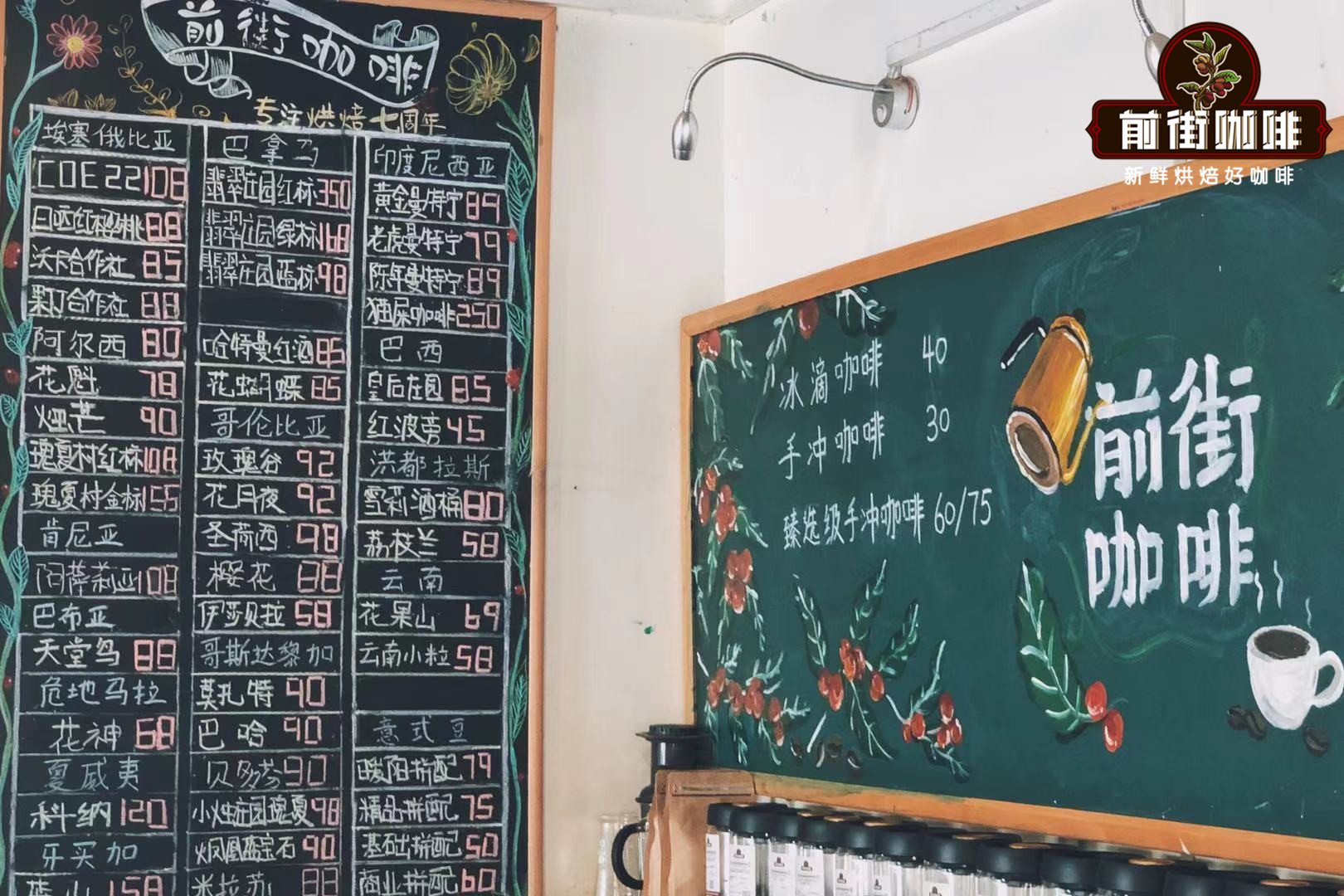
Customers often ask FrontStreet Coffee whether the Lychee Orchid coffee beans in the shop are the same as the 90+ Lychee Blue. FrontStreet Coffee would never make such a spelling error. The Lychee Orchid beans come from Honduras and are processed by barrel fermentation, while 90+ Lychee Blue is a washed Geisha from Panama. The two have completely different flavor profiles. Today, FrontStreet Coffee will compare these two beans that differ by only a single character to see how their flavors diverge.
FrontStreet Coffee · 90+ Lychee Blue Coffee Beans
Origin: 90+ Panama Geisha Estate
Variety: Heirloom
Level: 21
Altitude: 1250m-1650m
Processing Method: Washed
Flavor: Building on the inherent flavors of the Geisha variety, it shows rich aromas of green tea, musk and herbal plants such as basil. On tasting, you meet a gentle lemon flavor with sweet-and-sour notes reminiscent of lychee, along with nutty flavors like cashew.

About 90+ Lychee Blue
90+ refers to a premium coffee series containing 13 flavor profiles. Lychee Blue, which appeared in 2016, is one of them. Its English name is "y-cel-o," standing for "lychee and cello" - the "ly" from the prefix of lychee, and "cello" from David Darling's Cello Blue. What a fitting pairing of lychee and cello. FrontStreet Coffee was not especially influenced by the name, though - after all, the product has to live up to its reputation.
During cupping, FrontStreet Coffee even played David Darling's Cello Blue to set the mood. Against the backdrop of piano and vocals, the flavors were savored carefully. FrontStreet Coffee found the soft lemon acidity of this 90+ Lychee Blue, a captivating muskgrass note, and memorable basil and rose-jasmine flavors. The bright, lifted character typical of the Geisha variety came through well, leaving a gentle rose and jasmine aftertaste, a sweetness carried by an oolong Earl Grey tea sensation, and a texture as smooth as hazelnut cream. As it cooled, the lychee flavor grew more pronounced, with a lasting sweetness.

Ninety Plus Coffee
90+, or Ninety Plus Coffee, is a specialty coffee supplier from the United States founded in 2006. Ninety Plus is a world-renowned coffee production and sales company, known for supplying rare and unique green coffee around the globe. In 2007, Joseph Brodsky formally established Ninety Plus, and since then its award-winning coffees have appeared in competitions of every size worldwide. In the 2013 WBC World Barista Championship, six finalists - including competitors from Italy, South Korea and Canada - used Ninety Plus green beans. Refined cultivation and processing, excellent varieties and a unique grading system have made Ninety Plus a top-tier and distinctive presence in the green coffee market. Its Profile Processing system is tailored to each bean - planting, harvesting, processing, and repeated cupping and calibration - to ensure every variety expresses its own fruit flavors.

Ninety Plus's Unique Flavor Grading and Code Grading
For this FrontStreet 90+ Lychee Blue, a W2 level 39 coffee from Ninety Plus, we should first briefly explain the company's processing expression and grading system. Ninety Plus classifies coffee by "fruit flavor intensity," which differs from the traditional washed, honey and natural categories. Although it also uses three groups - W2, H2 and N2 - the different processing methods create differing levels of fruit flavor, so you may find washed or natural beans in the honey-processed flavor category "H2":
W2 = (Low) Lower fruit notes, emphasizing brightness, acidity and floral aromas
H2 = (Moderate) Moderate fruit notes, emphasizing sweetness, fruit texture (not aroma) and tea notes
N2 = (High) Stronger fruit notes, emphasizing bold flavor expression, sweet-and-sour notes, jam and dried fruit flavors

Ninety Plus also uses grading based on processing methods, expressed as levels:
Level 7: Single origin harvest. Rare varieties with delicate flavors and special characteristics are hand-selected and then processed through Ninety Plus's unique methods to reach standards beyond "Ninety Plus."
Level 12: Single origin harvest. Beans at this level represent unforgettable flavors for every coffee professional. Hakila is a fine example.
Level 21 (L21), Level 39 (L39): Most of these are Geisha varieties grown by Ninety Plus on its Panama estates. The specially Red-processed Ethiopian Nekisse Red also belongs to Level 39 (L39).
Level 95 (L95), Level 195 (L195): These come from high-end microenvironments on the Panama estates, processed through patented drying technology and lengthy screening. They represent the highest taste standards in the design, and most are processed under the personal supervision of founder Joseph. Annual production may reach only a dozen to a few dozen kilograms, making them collectible items.
This FrontStreet 90+ Lychee Blue can confuse people. In 2016, four bean varieties were upgraded and improved, and Lychee and Cello was one of them. On tasting, you meet a gentle lemon acidity with sweet-and-sour notes like lychee, along with cashew-like nuttiness. For that reason the bean was simply renamed later, and its level changed from the original 21 to 39.
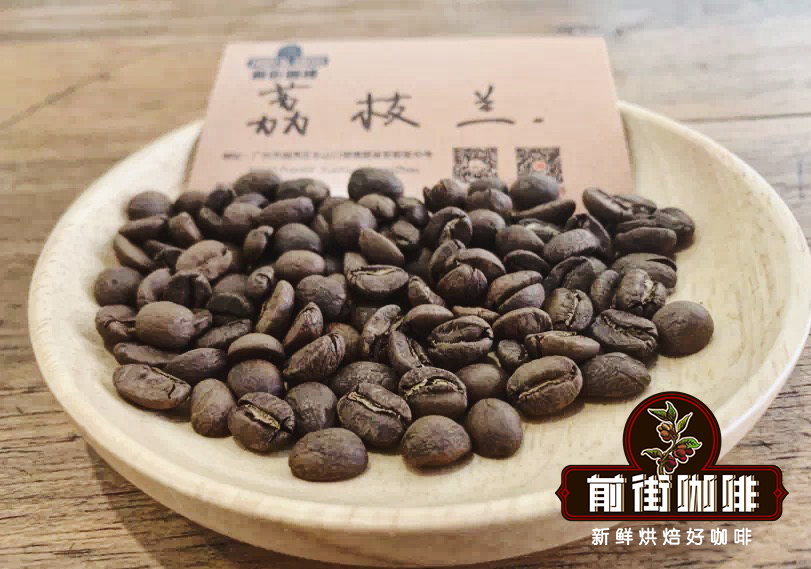
FrontStreet Coffee: Honduras Lychee Orchid Coffee Beans
Region: Masaguara
Estate: Mocca Estate
Altitude: 1500-1700m
Varieties: Caturra and Catuai
Processing Method: Refined washed and brandy barrel processing
Honduras lies in northern Central America, bordered by the Caribbean Sea to the north, the Gulf of Fonseca on the Pacific to the south, Nicaragua and El Salvador to the east and south, and Guatemala to the west. The terrain is mostly mountainous and plateau. The country covers 112,492 square kilometers with a coastline of about 1,033 kilometers. Apart from the coastal plains, the whole territory is mountainous, reaching 3,000 meters in the northwest and exceeding 2,400 meters in the south.
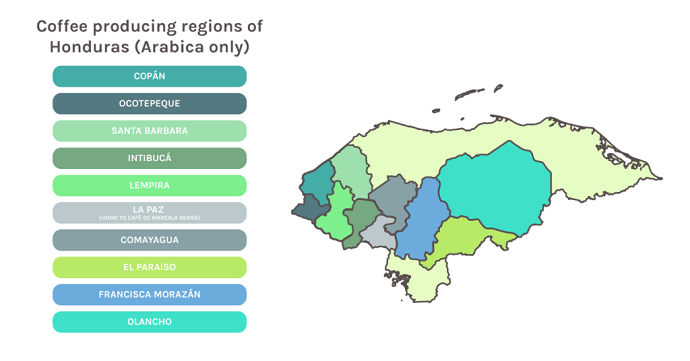
Honduran coffee can be divided into six major regions, located mainly in the west and south: Copan, Opalaca, Montecillos, Comayagua, Agalta Tropical and El Paraiso. This FrontStreet Lychee Orchid, however, does not come from any of those six but from the Mocca Estate in the Masaguara region. The area averages 853 meters in altitude, with high-altitude zones exceeding 1,500 meters, and Mocca Estate is a small property in the high part of Masaguara.
Coffee Varieties
This FrontStreet Honduras Lychee Orchid is a blend of Caturra and Catuai. Caturra is a natural variant of Bourbon, discovered in Brazil in 1937. Its plant is shorter and more compact than Bourbon. Because it inherits Bourbon's lineage, its disease resistance is relatively weak, but its yield is higher than Bourbon's. Although it was discovered in Brazil, Caturra does not grow well there, so it was never widely planted in Brazil; instead it became popular across Central and South America, in countries such as Colombia, Costa Rica and Nicaragua.
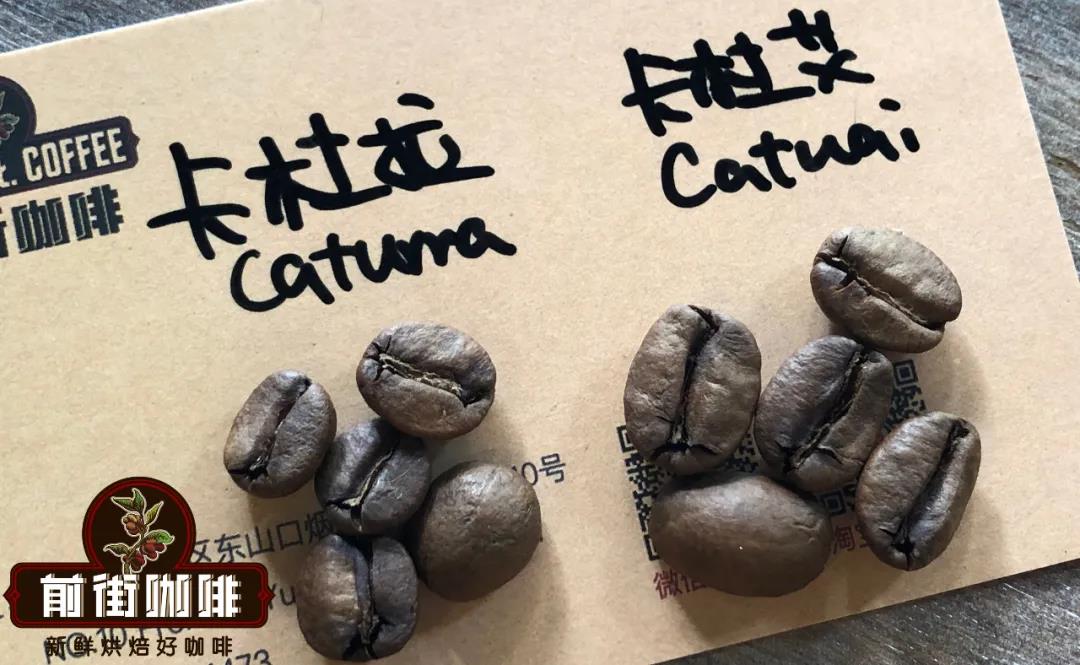
Catuai is an artificial hybrid of Caturra and Mundo Novo. It stands up well to natural setbacks, especially wind and rain. The Catuai tree is relatively short, and compared with other coffee trees its fruit grows more firmly attached and is not easy to harvest. The cherries come in both red and yellow types.
Processing Method
FrontStreet Honduras Lychee Orchid is a specialty coffee bean carefully selected by FrontStreet Coffee, similar in approach to its Sherry coffee beans. Both use barrel fermentation, which gives the beans very rich wine-like flavors. The difference is that the Sherry uses whiskey barrels, while the Lychee Orchid uses brandy barrels.
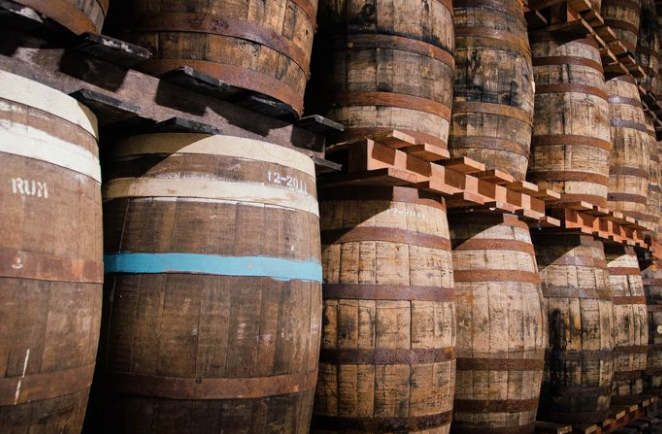
The Lychee Orchid beans carry a rich wine aroma with a solid chocolate flavor in the aftertaste, which is impressive. In recent years many processing plants have introduced innovative methods. Where the various processing approaches of early 90+ once felt novel, we now have anaerobic processing, red wine processing and even oak barrel processing. More and more new methods have made bean flavors far richer. This refined washed, brandy barrel fermented Lychee Orchid begins with freshly harvested cherries washed by the refined washed method, then placed in brandy oak barrels for low-temperature fermentation lasting 30-40 days (at roughly 15-20°C), allowing the green beans to absorb the barrel's flavors before finally being dried in the shade. Beans processed this way carry the sweet fragrance of gentle lychee and honey, integrated with a full brandy aroma and an oak barrel scent.

Roasting Suggestions
FrontStreet Coffee ran two different roasting adjustments for this Lychee Orchid, aiming for a light roast. This is the necessary path FrontStreet Coffee takes with every new bean. Roasting not only tests the roaster's understanding of the origin but also requires cupping and hand-brewing sessions to judge whether the curve is appropriate. That is why a single coffee often needs multiple evaluation items. Although time-consuming, FrontStreet Coffee believes it is necessary; without repeated trials, no bean is listed for sale.
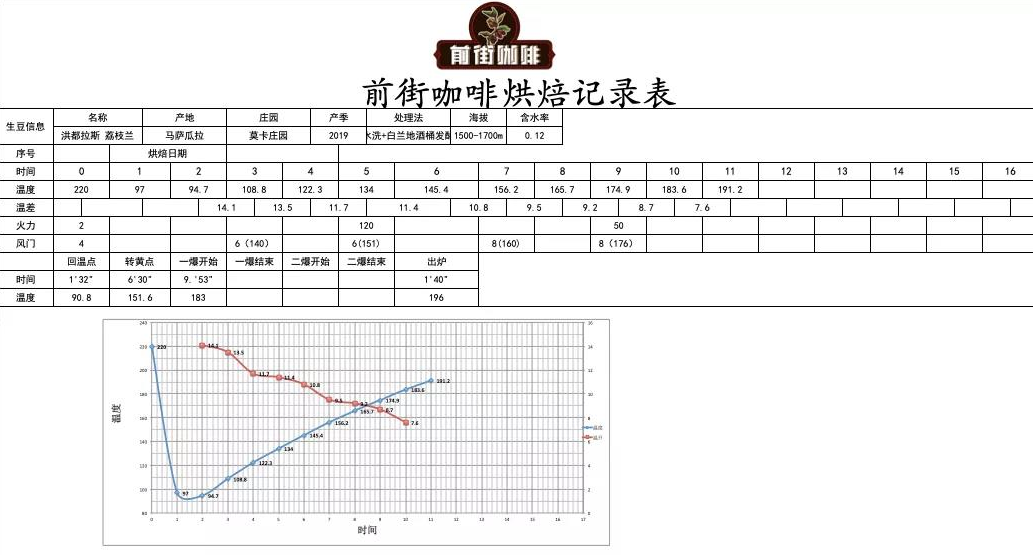
[FrontStreet Honduras Lychee Orchid Roast Curve 1]
Entry temperature: 220°C, Yellowing point: 6'30", 151.6°C, First crack: 9'53", 183°C, 1'40" development after first crack, discharged at 196°C.
[Cupping Report]
Dry aroma: Chocolate, berries
Wet aroma: Floral, wine
Taste: Chocolate, berries, honey, lychee. The texture shows an obvious berry acidity, and as the temperature changes, subtle wine notes emerge when slurping.
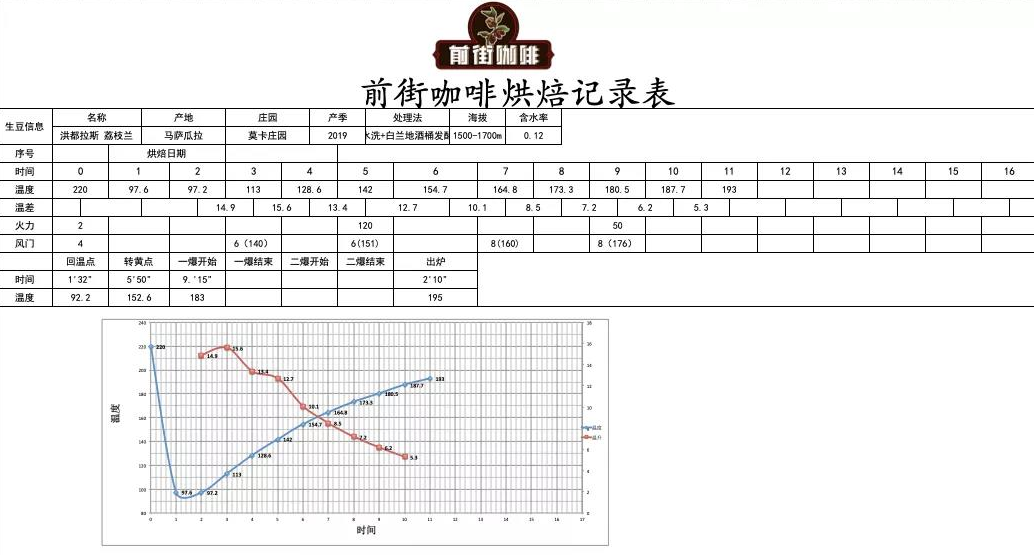
[FrontStreet Honduras Lychee Orchid Roast Curve 2]
Entry temperature: 220°C, Yellowing point: 5'50", 152.6°C, First crack: 9'15", 183°C, 2'10" development after first crack, discharged at 195°C.
[Cupping Report]
Dry aroma: Honey, chocolate
Wet aroma: Wine
Taste: Cream, dark chocolate, honey, lychee, brandy. The texture is relatively rich with obvious sweetness. As the temperature changes, wine notes become apparent when slurping.
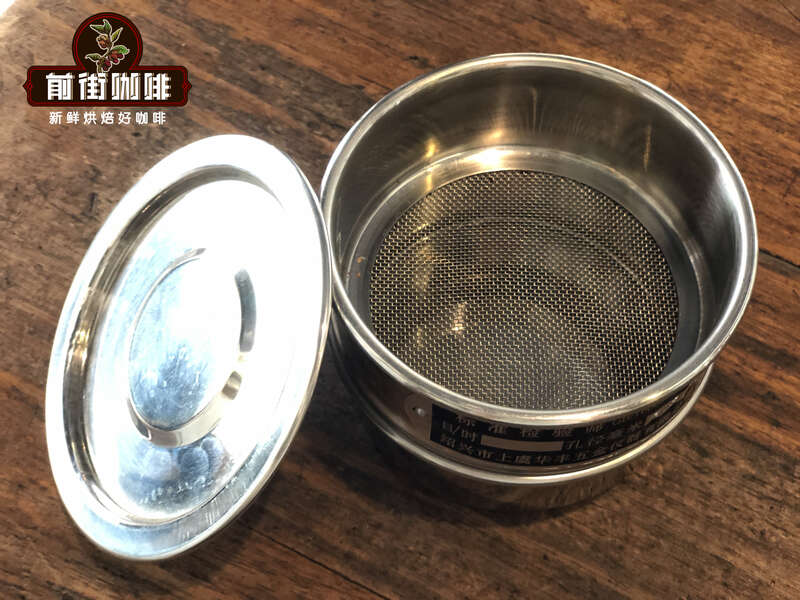
After cupping the two curves, FrontStreet Coffee also runs a brewing evaluation. The hand-brew parameters are: Hario V60 dripper, 90°C water, 1:15 coffee-to-water ratio, fine-sugar grind size (80% pass-through on a Chinese standard #20 sieve). Grind size varies from bean to bean depending on variety, altitude, processing method and roast, so when a newly roasted bean arrives, FrontStreet Coffee first sifts it to determine the right hand-brew grind.
Brewing Method
FrontStreet Coffee uses segmented extraction, which means a three-stage pour.
First Pour: Bloom (helps degassing)
During roasting, as beans turn from green to roasted, a series of chemical reactions and physical changes occur. After a certain degree of roast, beans accumulate a large amount of gas, mostly carbon dioxide.
Generally, the fresher the bean and the closer to the roast date, the more bubbles during the bloom. Dark-roasted beans also release more gas than light roasts. FrontStreet Coffee's beans are freshly roasted, so customers are usually advised to let them rest for three days first, allowing the carbon dioxide to escape and avoiding unstable, under-extracted brews.
Once the beans have degassed during the bloom, the coffee particles can absorb water evenly, allowing more uniform extraction afterward. A good bloom lets the grounds release gas quickly and evenly while bringing coffee and water into full, rapid contact, which helps the grounds extract evenly.

Second Pour
The second pour starts at the center, injecting a small stream of water into the base of the coffee bed. To concentrate the penetrating power of the stream, the circular movement should be small at first - about the size of a one-yuan coin - then extend outward. From the second pour on, watch the water volume: try not to let it exceed the height of the coffee bed, which means you can stop adding water once the stream comes close to the filter paper.
Third Pour
As the coffee bed near the filter paper grows heavier from absorbed water and slides down while the water level falls, the third pour can begin once the level has dropped to halfway.

From the third pour on, watch how fast the water level drops. Again, start from the center and pour in circles, keeping the water below the height of the coffee bed. At this point you will see foam covering the surface. The third pour should increase the tumbling of the coffee particles, so that all the settled grounds roll and their soluble substances dissolve.
The tumbling particles begin to settle as soon as pouring stops. At that point the flow created by the falling water level causes friction between particles. Once pouring stops, the grounds sink and can cause blockages, so pay special attention to the rhythm of the pour. Too many interruptions amount to letting the grounds soak continuously, which leads to astringency and off-flavors in the later stages of extraction.
Summary:
When FrontStreet Coffee brews this Lychee Orchid, the overall sequence is: use bloom water equal to twice the grounds' weight, meaning 30g of water for the bloom, with a bloom time of 30 seconds. Pour in small circles until 125g, then break the pour. When the water level drops and the coffee bed is about to be exposed, continue to 225g and stop. When the level falls and the bed is about to be exposed again, remove the dripper. Extraction time is 2 minutes, counting from the start of the bloom.

[FrontStreet Honduras Lychee Orchid Roast Curve 1]
Brewing flavor: The first sip shows berries, floral notes and honey; as the temperature changes, brandy wine aroma and cream gradually emerge. When hot, the berry fruit acidity is obvious, though with some astringency.
[FrontStreet Honduras Lychee Orchid Roast Curve 2]
Brewing flavor: The first sip shows lychee, brandy, dark chocolate and cream. As the temperature changes, wine notes and dark chocolate become obvious. The texture is rich with noticeable sweetness in the aftertaste.

Conclusion
Curve 1: Decent sweetness and berry aroma, with berry fruit acidity on entry, but the cleanliness is slightly poor and a touch astringent, and the aftertaste is insufficient. Although it has flavor, the fruit acidity is obvious and the bean's wine aroma never fully appears, proving it is not suited to a light, fast roast.
Curve 2: Distinct flavors and a rich, smooth texture. The wine aroma and dark chocolate are obvious from entry through the aftertaste, with some honey sweetness.
Because Curve 1 leaned toward fruit acidity with some astringency and did not fully express the bean, FrontStreet Coffee's roaster extended the development time in Curve 2 to draw out more flavor, making the bean's overall performance more balanced.

FrontStreet Coffee continually discovers coffee from around the world, with varieties numbering in the hundreds. It frequently compares different coffee regions, believing that comparison is the best way to understand regional flavors. Yet a bean's flavor has a time limit, which is why FrontStreet Coffee insists on fresh roasting: once coffee has been roasted for more than 50 days, it has basically lost most of its aroma. FrontStreet Coffee therefore recommends brewing and drinking after letting the beans rest for 3 days.
FrontStreet Coffee Recommendation
If barrel fermentation and wine-like fruit are what you enjoy, FrontStreet Strawberry Candy is an easy, versatile route into that style. It is a blend of a Costa Rican honey-processed coffee and Panama Geisha, so it carries both delicate florals and sweet fruit. It works as a pour-over, in a moka pot or on an espresso machine, and it also makes a refreshing cold brew - steeped cold you meet grape juice, rose, sweet orange and fruit wine flavors. As a friendlier alternative to Geisha, it delivers a similar elegance without the premium price.
For a single-origin coffee built around that same fruit-wine impression, FrontStreet Granada Estate Geisha is worth trying. Grown in Ethiopia near the border of the Kochore and Genlana Abaya areas and sun-dried on raised beds for 14-20 days, it is best roasted to a medium-light level, where it shows a bright citrus acidity, elegant ginger-lily florals, the full sweetness of ripe fruit and a delicate, silky body with the fine finish typical of the Geisha variety.
Important Notice :
FrontStreet Coffee is a long-established specialty coffee roaster in Guangzhou China, selling freshly roasted beans from its own farm in Yunnan as well as dozens of carefully selected single-origin beans from around the world for both pour-over and espresso. The products deliver consistently excellent quality and great value, with shipping within 24 hours. Guangzhou's FrontStreet Coffee shop is recommended by many coffee lovers, and the beans are now available online at the Tmall 。
FrontStreet Coffee has moved to a new address:
FrontStreet Coffee Address: 315,Donghua East Road,GuangZhou
Tel:020 38364473
 Scan and follow the En Gafei WeChat official account. Please indicate that the reprint comes from "En Gafei".