A Guide to Red Bourbon Coffee: Brazilian Origins, Flavor Profile, and Pour-over Brewing Techniques
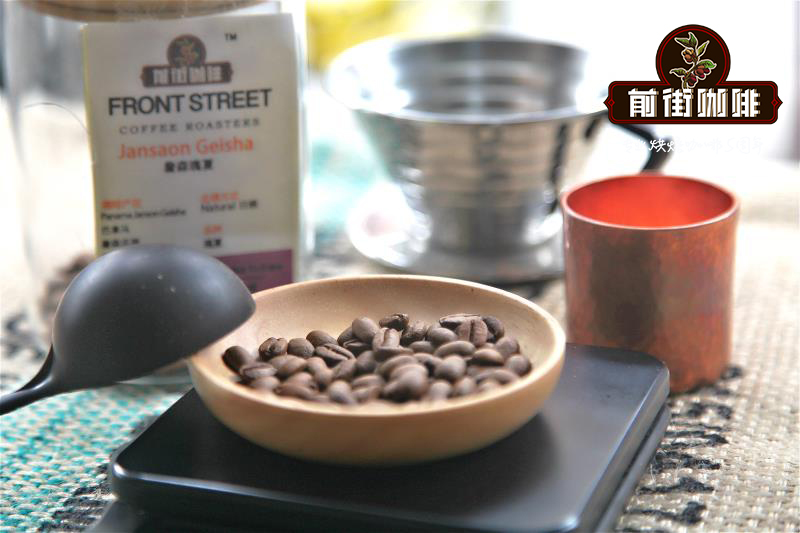
Bourbon and Typica both belong to the Arabica variety and are among the most ancient coffee varieties. Bourbon itself has a very long history, and FrontStreet Coffee has previously shared its route of dissemination, with Brazil currently its representative country. FrontStreet Coffee takes great interest in the Bourbon variety because it holds a pivotal place in specialty coffee. It is known for its rich body and prominent nutty flavors, and it also comes in different color variants, each with distinct characteristics, which brings fresh vitality and harvests to the coffee industry.
Coffee History
Brazil is the world's largest coffee producer and the largest coffee-producing area, with extensive cultivation. Brazil has 17 states that produce coffee, and it also cultivates numerous varieties, currently dominated by Red Bourbon, Yellow Bourbon, Mundo Novo and Catuai. Coffee entered Brazil from French Guiana in 1727. That year, Portuguese diplomat Francisco de Mello Palheta was sent to French Guiana to mediate territorial disputes. Francisco won the affection of the governor's wife, who hid several coffee seeds in the flowers she gave him, which let him successfully bring coffee seeds into Brazil.
Bourbon Variety
Bourbon classification: Red Bourbon, Yellow Bourbon, Orange Bourbon, Pink Bourbon, Blue Bourbon.
Bourbon coffee, like Typica, is an old variety belonging to the Arabica species. Bourbon was originally cultivated on Réunion Island, which was called Bourbon Island before 1789, hence the variety's name. As an old variety, and unlike Typica, Bourbon leaves are wider than Typica leaves, grow more densely, and yield 30% more than Typica. The beans are relatively round and short, with rich berry acidity, noticeable cream and fragrance, a strong acidic aroma and prominent fruit acidity. It shares the same weakness, though: poor disease resistance.
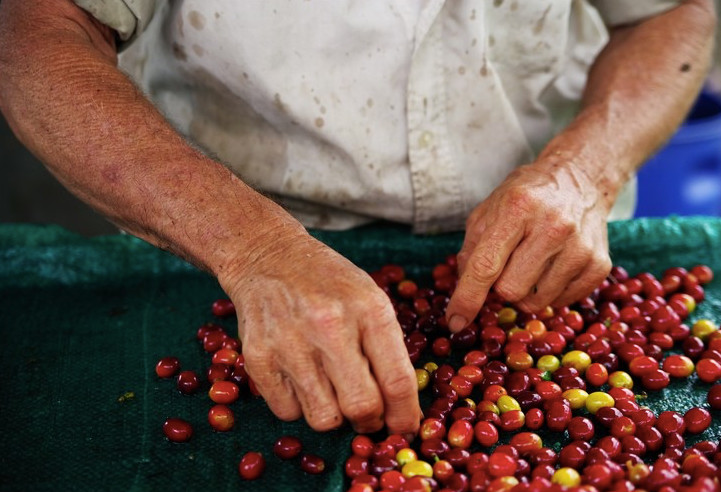
Red Bourbon: Generally, after coffee trees flower and bear fruit, the cherries change color in this order: green, light yellow, light orange, mature red, dark red, which is why some call it "Red Bourbon." Red Bourbon was introduced to Brazil around 1860 through Campinas in the south and is a typical coffee variety. Put simply, Bourbon is a coffee variety on one branch of the Arabica species. It generally bears red fruit, called Red Bourbon. Besides that, there are also Yellow Bourbon and Orange Bourbon. Yellow Bourbon has relatively lower yields but better quality.
South Minas Region in Brazil
South Minas, with hills at elevations of 700m-1200m, is Brazil's earliest coffee production area. Because of rising labor costs, mechanical harvesting is now used predominantly, and it was also the earliest commercialized coffee area. Many large exporters were established here. The Bahia production area in northern Brazil mainly produces washed Brazilian coffee, while the Espírito Santo production area near the coast is the main export region for Brazil's Robusta varieties. Brazil's coffee cultivation is dominated by two types of terrain: the Brazilian plateau above 500 meters in elevation, and the Brazilian plain below 200 meters. The main cultivated, well-known varieties include Bourbon (including Yellow Bourbon, Red Bourbon and Flat Bean Santos). Brazilian coffee's flavor is mainly characterized by low acidity, nutty flavors, balance and moderate body. In the world of specialty coffee, Brazilian coffee does not stand out, but in espresso blends it is often used as a component. Because of its high balance, merchants also often use it as a Blue Mountain flavor bean.
Processing Method - Semi-washed
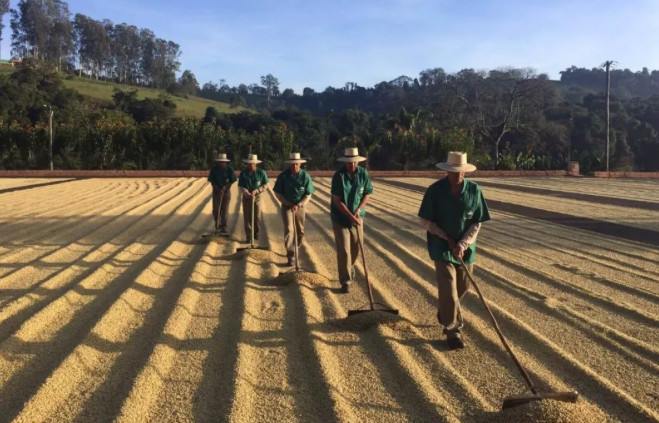
After harvesting, immature cherries and foreign objects are removed through water tanks, then the outer skin and part of the pulp are removed, followed by a mucilage remover to eliminate the mucilage. Removing mucilage shortens the required sun-drying time and lowers fermentation risk. This method is often used when climate conditions are less than ideal. If air humidity is high, the climate warm or rain falls, there is a risk of mold during drying. That is why most of Brazil's washed beans for commercial trade are processed using the semi-washed method.
Brazilian Coffee Bean Grades
The grading method for Brazilian coffee beans based on defect rate is the "deduction system." Grades are classified by the number of defective beans per 300 grams of main beans, with seven levels from No.2 to No.8. A deduction below 4 qualifies as No.2. Coffee with no defective beans could of course be called No.1, but that situation is rare and cannot sustain a regular supply, so Brazil sets No.2 as the highest grade instead of No.1. Bean size is categorized by screen count: the mesh is based on 1/64 inch as the standard, with mesh sizes typically ranging from 14 to 20. Note also that the size corresponding to the screen count refers to the short side of the coffee bean, its "width." Among Brazilian beans the largest screen count is 19, but production is limited, so 17/18 is the highest grade.
FrontStreet Coffee Roasting Analysis - Yangjia 600g Semi-direct Fire Roaster
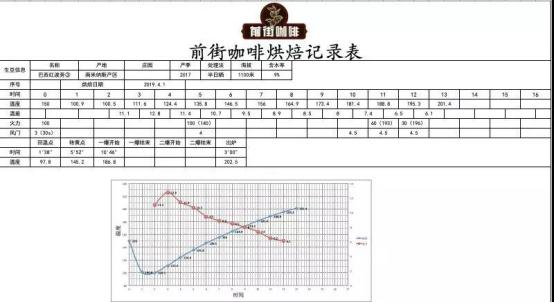
Brazilian coffee generally grows at altitudes of 1000-1300 meters, so its density is relatively low, its moisture content moderate, its bean texture relatively soft, and the thickness from bean surface to core thin, which makes it unsuitable for roasting at too high a temperature, as that would produce burnt bitterness. We choose a medium-fire bean-throwing method, maintain heat through the dehydration stage and make fine adjustments as the temperature rises after first crack begins, to promote more complete caramelization. This semi-washed coffee heats up slowly after first crack and can be discharged when it approaches second crack. Preheat the roaster to 200°C before loading, open the air vent to 3, turn on the fire after 30 seconds, adjust the fire to 160, keep the air vent unchanged, hit the return temperature point at 1'30, maintain the firepower, reach yellow at 5'00 as the grassy smell disappears and the dehydration stage begins, reduce the firepower to 130, open the air vent to 4. On reaching 168°C, reduce the firepower to 100 again. Dehydration is complete at 8'00, the bean surface shows wrinkles and black markings, and the toast smell turns to coffee aroma as a prelude to first crack, at which point listen for the sound of first crack. First crack starts at 8'50, air vent fully open to 5. Development time after first crack is 3 minutes and 10 seconds, firepower reduced to 50 on reaching 190°C, reduced to 30 again at 194°C, discharged at approximately 200°C.
FrontStreet Coffee Cupping Record
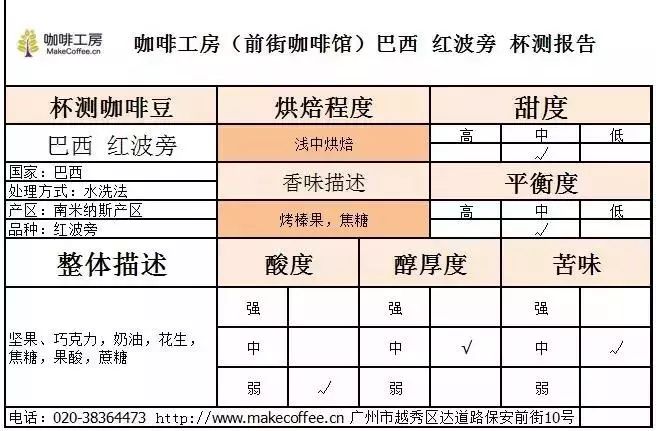
This is a flavor-balanced coffee with a typical Brazilian style. Nut and chocolate flavors are prominent, with low acidity.
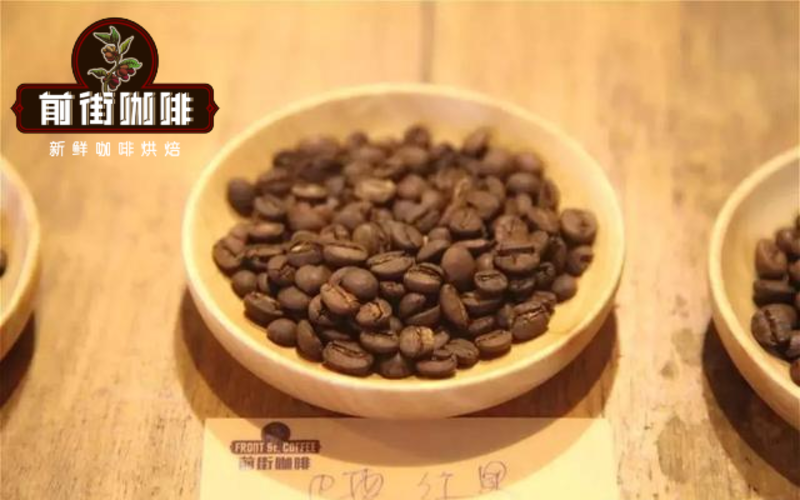
FrontStreet Coffee Brazil Red Bourbon
- Country: Brazil
- Variety: Red Bourbon
- Processing Method: Hand-picked, then semi-washed (semi-dried) process
- Origin: South Minas
- Elevation: 700m-1200m
- Processing Method: Semi-washed
- Flavor: High sweetness, clean, smooth, low acidity, with tropical fruit aroma
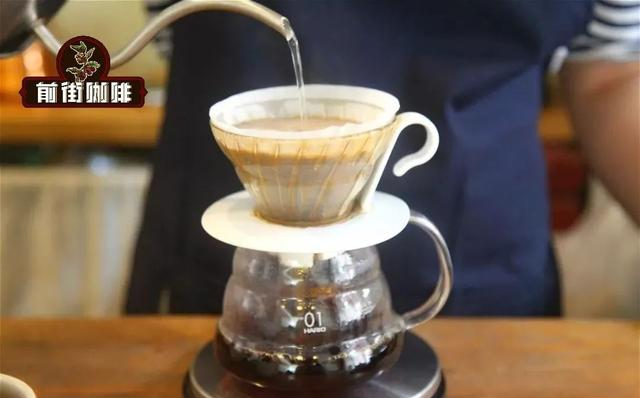
FrontStreet Coffee Brewing Parameters
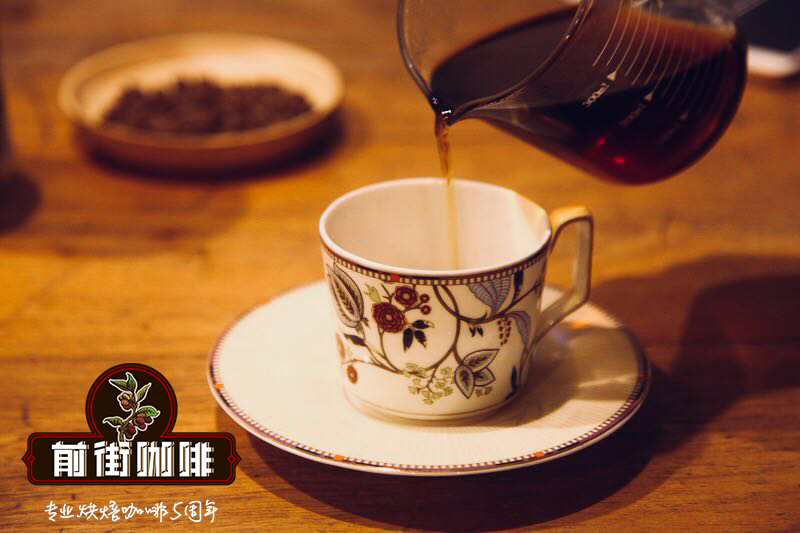
Grind size: 4 (Japanese Fuji R440). Water temperature: 89°C. V60 dripper, 15g of grounds, water temperature 90-91°C, grind 3.5, water-to-coffee ratio close to 1:15. 30g water for the bloom, bloom time 30s, segmented: pour water to 120ml then stop, slowly pour to 225ml, that is 30-120-75, total extraction time 2 minutes.
FrontStreet Coffee Recommendation
To taste Red Bourbon at its most classic, FrontStreet Brazil Cerrado Red Bourbon is the place to start. Cerrado is a well-known Brazilian region prized for quality beans, and this lot is roasted medium, showing creamy peanut, toasted bread, caramel and hazelnut with a rounded body, no sharp acidity and a faint bitter edge. It brews well as pour-over and also suits a moka pot, espresso SOE, siphon or French press.
For a rarer expression of the same family, FrontStreet Brazil Queen's Manor grows in Mogiana near South Minas, where fertile red volcanic soil feeds the fruit. Its Yellow Bourbon, a natural mutation of Red Bourbon, has a cleaner fruit character and the sugarcane-like sweetness few other regions offer, layered with fruit and chocolate. If you want Brazilian beans in an espresso blend, FrontStreet's Italian-style mixes lean on the country's low-acid, balanced cup for chocolate and cream aromas and steady, easy extraction.
Important Notice :
FrontStreet Coffee is a long-established specialty coffee roaster in Guangzhou China, selling freshly roasted beans from its own farm in Yunnan as well as dozens of carefully selected single-origin beans from around the world for both pour-over and espresso. The products deliver consistently excellent quality and great value, with shipping within 24 hours. Guangzhou's FrontStreet Coffee shop is recommended by many coffee lovers, and the beans are now available online at the Tmall 。
FrontStreet Coffee has moved to a new address:
FrontStreet Coffee Address: 315,Donghua East Road,GuangZhou
Tel:020 38364473
 Scan and follow the En Gafei WeChat official account. Please indicate that the reprint comes from "En Gafei".