Introduction to Colombian Huila Coffee Region - Flavor Characteristics of Colombian Huila Coffee Beans
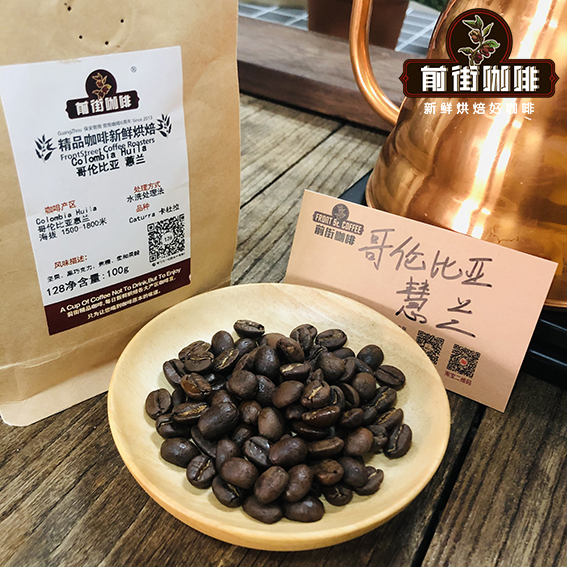
When FrontStreet Coffee recommends beans to beginners just starting with pour-over, the washed coffees from Colombia's Huila region are always at the top of the list. Compared with the bright acidity of Yirgacheffe or the heavy body of Mandheling, Colombian beans offer a far friendlier first experience.
Under traditional processing, Colombian coffee tastes clean, balanced, and gentle — a soft landing for anyone new to pour-over. A bean can show such gentle flavors only thanks to both its careful growing environment and the meticulous attention paid during processing.
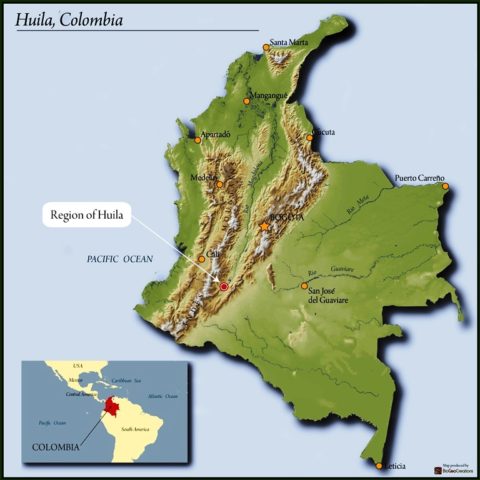
Geographical Environment of Huila Region
Colombia's Huila lies in the south of the country, a hilly area ringed by mountains. The mountains shield the coffee trees from cold winds while channeling cool breezes that carry away the heat. Major rivers from across Colombia also flow through this area, making it a uniquely favorable environment that nature created for coffee. These superior conditions have made Huila one of Colombia's most famous specialty coffee regions.
The Huila producing region spans the Andes and contains famous attractions: the Nevado del Huila volcano and the Magdalena River. The growing areas sit near the equator, at higher altitudes than the country's northern regions, which generally gives the coffee more distinct, bright fruit acidity. The southern coffee belt has clear dry and rainy seasons: the dry season runs from June to September, when the trees flower, and the rainy season extends from October through May, with harvest typically starting each April and ending around June.

Planting and Varieties
Coffee in Huila is typically planted on high-altitude hillside slopes above 1500 meters, in soil rich with volcanic ash nutrients. The day-night temperature difference at this altitude, combined with the minerals in volcanic soil, often yields beans with charming complex fruit-juice notes, roasted nut aromas, and caramel-like sweetness.
Colombia's vast producing region grows numerous varieties. Beyond the quality varieties most common in Central America — Caturra, Bourbon, and Typica — there are also disease-resistant varieties Colombia developed itself: Castillo, Tabi, and the variety named after the country itself, "Colombia." And as tastes diversify, some local estates have begun introducing popular varieties like Geisha.
Harvesting and Processing Methods
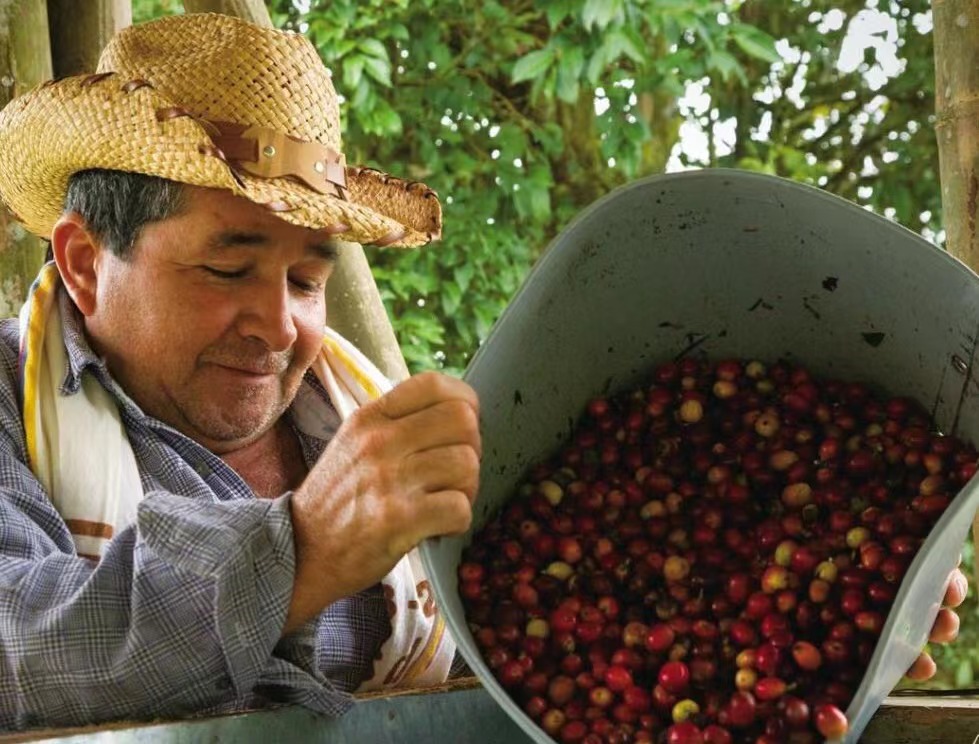
On these hillsides, harvesting is purely manual — partly to protect the coffee trees and the integrity of the cherries, and partly because only fully ripe cherries are picked. This better safeguards the final quality during processing, resulting in cleaner flavors and more pronounced sweetness.
The technique of obtaining green beans through tank fermentation is passed down through generations of Colombian farmers. The water used in Huila is natural mountain spring water, which contains more minerals than river water, letting the beans develop cleaner acidity and a refreshing sweetness during fermentation.

Colombia's producing regions are rich in water, and most coffee is washed. Family-run farms are equipped with specialized green-bean processors (Ecomill or Eco-Pulper). Harvested cherries are poured into these machines, which remove the skin and pulp and need only minimal water to strip most of the mucilage. The parchment beans with residual mucilage then go into a small pool — possibly a tiled one — for overnight fermentation to loosen what remains. The next day they are rinsed thoroughly with clean water and finally spread in the sun to dry to target moisture. Washing significantly reduces the defect rate, preserves the beans' inherent flavors, and delivers higher cleanliness in the cup.
Roasting and Brewing
For roasting, FrontStreet Coffee uses a medium-dark profile to let this Colombian bean show off its chocolate sweetness. Medium-dark keeps some fruit acidity while caramelization brings roasted nut and caramel aromas to the washed Huila beans.
Since the Huila daily bean is medium-dark roasted with flavors leaning toward rich nuts and chocolate, the deeper roast makes the beans more porous and the grounds more absorbent. To avoid over-extraction, FrontStreet Coffee uses a medium grind and moderate water temperature, paired with a KONO dripper.
Brewing parameters: KONO dripper, 90°C water, grind at 75% pass rate on a #20 standard sieve, 1:15 coffee-to-water ratio, 15g of coffee, three-stage pour.

Tip the grounds into the dripper and use twice the coffee's weight in water to wet the bed, forming a dome for a 30-second bloom. Then pour in small circles from the center outward up to 125g for the first segment. When the coffee bed drops to half the dripper's height, continue with the same fine stream to 225g for the final segment. Remove the dripper once all the liquid has drained — about 2 minutes total.

This Colombian Huila daily bean opens with distinct roasted aromas of chocolate, nuts, and caramel, with smooth sweetness, moderate body, and a clean mouthfeel. As it cools, a pleasant soft acidity emerges.
FrontStreet Coffee Recommendation
If gentle and balanced is what you love about Huila, FrontStreet Coffee's Washed Yirgacheffe is the natural next step — equally washed, equally clean, but pointing the other way: white jasmine florals, bright citrus and lemon acidity, and a tea-like finish. Its friendly price has made it the first specialty bean for countless beginners.
Want to explore washed processing further? FrontStreet Coffee's Washed Worka (Guodingding) Cooperative coffee comes from the Worka region at the southeastern tip of Yirgacheffe, once part of the YCFCU's Worka cooperative before coffee hunters traced it as a single-origin lot. The traditional washed method keeps out any old-school bitterness, leaving fresh citrus, lemon acidity, and jasmine fragrance.
And for contrast in the same region, the FrontStreet Coffee Red Cherry natural shows what sun-drying adds: only fully ripe all-red cherries, dried three to five weeks on raised beds and turned every 2-3 hours at the start. The cup keeps classic Yirgacheffe character while layering in tropical fruit — berry juiciness, honey sweetness, and creamy smoothness.
Important Notice :
FrontStreet Coffee is a long-established specialty coffee roaster in Guangzhou China, selling freshly roasted beans from its own farm in Yunnan as well as dozens of carefully selected single-origin beans from around the world for both pour-over and espresso. The products deliver consistently excellent quality and great value, with shipping within 24 hours. Guangzhou's FrontStreet Coffee shop is recommended by many coffee lovers, and the beans are now available online at the Tmall 。
FrontStreet Coffee has moved to a new address:
FrontStreet Coffee Address: 315,Donghua East Road,GuangZhou
Tel:020 38364473
 Scan and follow the En Gafei WeChat official account. Please indicate that the reprint comes from "En Gafei".