What is Medium Bean Coffee and Its Relationship with Robusta

Coffee has a long developmental history, and it wasn't until the third wave of coffee culture that people became passionate about exploring every step of the coffee production process: including how farmers plant, how workers harvest, how coffee is processed, and how roasters find the most suitable roasting methods for each coffee bean.
The Beauty from Seeds
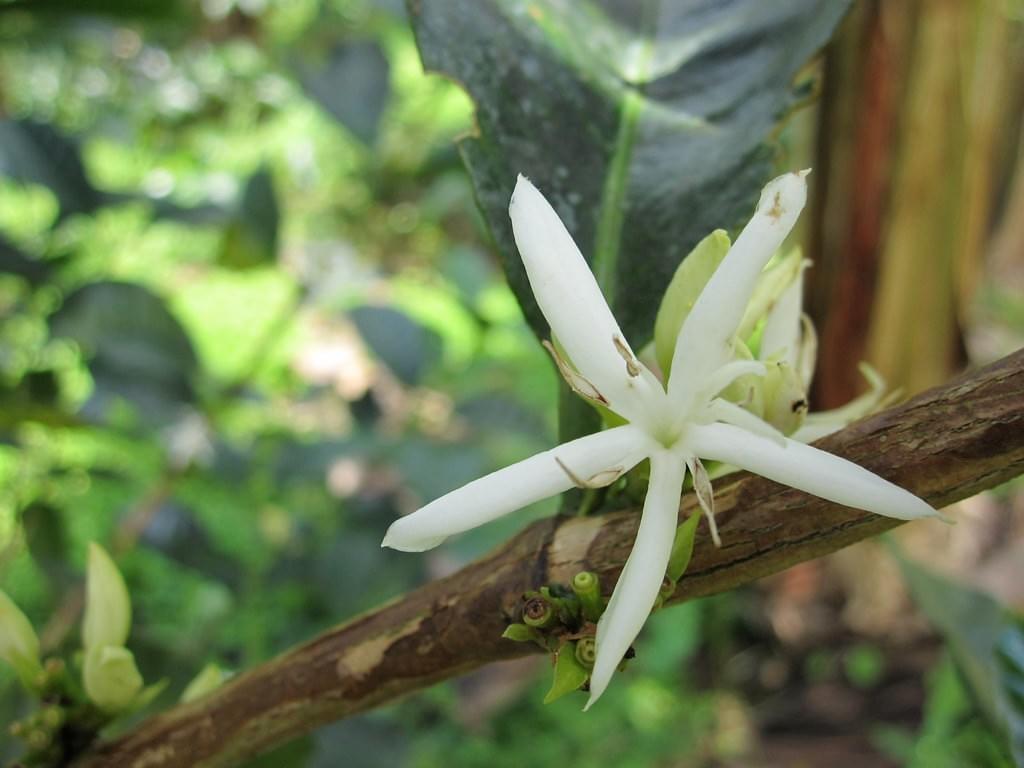
Coffee originates from a seed, from a tree that produces white flowers with jasmine-like fragrance. The tree bears fruit that resembles cherries in appearance, and at the center of these fruits lies the coffee bean. London's Royal Botanic Gardens, Kew is responsible for identifying over 120 different species of coffee, many of which are varieties from Madagascar, Asia, and Australia. Among these species, Coffea arabica (Arabica) and Coffea canephora (Robusta) are the two main varieties consumed by many people daily. While the Coffea genus has many other species, none have so far proven suitable for mass production.

What is Arabica?
Arabica coffee accounts for approximately 80% of the world's coffee production. It is native to Ethiopia and typically grows at altitudes between 1000-2300 meters, distributed within the "coffee belt" between tropical and subtropical regions. This area provides nutrient-rich (often volcanic) soil, regular rainfall, and abundant sunshine - conditions essential for optimal coffee growth.

Arabica requires special care because its coffee trees are susceptible to diseases and pests, such as coffee leaf rust or fungal infections, which cause orange patches on leaves, affect photosynthesis, lead to leaf drop, and can kill the trees if not properly treated, potentially destroying entire plantations. Arabica coffee is also easily affected by pests like the coffee berry borer, which lay eggs in coffee cherries and, upon hatching, eat the pulp, significantly reducing coffee quality.
Despite these obstacles, compared to Robusta, Arabica coffee has a smooth taste and complex flavor profile that makes it the preferred choice for consumers. A cup of Arabica coffee is rich in aroma and flavor, sometimes described as having notes of flowers, fruits, citrus, earth, cream, chocolate, caramel, honey, or sugar. The flavor can range from light and sweet to rich and bold, depending on the coffee's origin and processing method.

What is Robusta?
Robusta is a natural species from West Africa, cultivated in lower altitudes and higher temperature regions. It essentially accounts for the remaining world coffee production. Its beans are small and round, but their caffeine content is nearly twice that of Arabica. This high caffeine content serves as a natural insect repellent, helping to deter most pests, making Robusta coffee cheaper and easier to grow. Additionally, because brewing produces more crema, Robusta is often used in espresso blends.

Despite Robusta having its quality advantages, it is not a popular coffee among the general public. In fact, most coffee enthusiasts are somewhat dismissive of Robusta, mainly because it's commonly used in instant coffee or lower-quality blends, producing products that are relatively inexpensive and of lower quality. Once roasted and brewed, Robusta coffee is often described as bitter, sharp, with woody and rubbery flavors. Despite Robusta's unpopularity among most coffee enthusiasts and not being the preferred choice for mass consumption, it still has its supporters.
Without Human Protection, Robusta Would Ultimately Survive
Gabe Shohet is the co-founder of London's Black Sheep Coffee, dedicated to providing specialty Robusta coffee. This coffee shop was created by Shohet and a group of friends who wanted to make something quite different from the usual coffee; they preferred its rich, full-bodied, high-caffeine characteristics. True to the coffee shop's name, they have broken away from mainstream coffee culture.

However, Shohet's appreciation for Robusta is well-founded. In his article "Fairness and E-Quality: The Case for Robusta," Shohet points out that while Robusta's reputation is often poor, this shouldn't be blamed on the bean itself. Robusta is typically harvested by machines, which means the harvested coffee includes rotten and underripe beans, as well as debris like insects and twigs. This combination guarantees to produce a terrible cup of coffee.

So Shohet began to determine what Robusta would taste like if given the same care and attention as Arabica. After months of repeated trials, Shohet and his company arrived at the world's first specialty-grade Robusta farm. India's Sethuraman Estate is responsible for hand-picking, double-washing, and rack-drying Robusta coffee beans, resulting in flavor characteristics more distinctive than Arabica. This high-caffeine beverage can help people stay energized throughout the day, with very distinct walnut and chocolate flavors.
Although Arabica may remain the consumer's first choice, Robusta has begun to prove itself, as people like Shohet are doing things that ask consumers to give it another chance.
FrontStreet Coffee Recommendation
Arabica at its best is exactly what FrontStreet Coffee's washed Yirgacheffe delivers. The town of Yirgacheffe, spring-like year round and wrapped in mist, sits high in southern Ethiopia with coffee planted above 1800 meters—some of the highest elevations in the coffee world. The cup is light and elegant: clear jasmine florals, bright citrus acidity, and a gentle tea body, like a refreshing, clean lemon tea.
Brew it as a pour-over with a V60: 15 grams of coffee, a 1:15 ratio, 90-91°C water, and a medium-fine grind (about 80% through a #20 sieve). Bloom with 30 grams of water for 30 seconds, pour to about 125 grams in the first minute, then finish to about 225 grams by 1 minute 35 seconds, with extraction completing between 2'00" and 2'10".
Important Notice :
FrontStreet Coffee is a long-established specialty coffee roaster in Guangzhou China, selling freshly roasted beans from its own farm in Yunnan as well as dozens of carefully selected single-origin beans from around the world for both pour-over and espresso. The products deliver consistently excellent quality and great value, with shipping within 24 hours. Guangzhou's FrontStreet Coffee shop is recommended by many coffee lovers, and the beans are now available online at the Tmall 。
FrontStreet Coffee has moved to a new address:
FrontStreet Coffee Address: 315,Donghua East Road,GuangZhou
Tel:020 38364473
 Scan and follow the En Gafei WeChat official account. Please indicate that the reprint comes from "En Gafei".