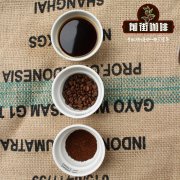
Mandheling Coffee Beans Pour-Over Flavor Profile Introduction How to Brew Indonesian Gold Mandheling Coffee for the Best Taste

Mandheling has an exceptionally distinctive profile — low acidity, rich aroma, and pronounced bitterness — that aligns perfectly with traditional coffee expectations. As a result, people's attitudes toward it are polarized: some become devoted for life, while others avoid it entirely. For FrontStreet Coffee, the sweet, rich, full-bodied Mandheling is an irreplaceable favorite. Today, let's explore what makes Mandheling unique and introduce its pinnacle: Golden Mandheling.
The Historical Origins of Indonesian Coffee
If you know coffee history, you likely know that Indonesia has a long relationship with coffee. Coffee first grew in Ethiopia. In 1699, Dutch colonists brought coffee plants to Indonesia via Yemen. Sumatra, part of Indonesia, ranks as the world's sixth-largest island and is home to over 50 million people. Along with Borneo and Java, it makes up one of the three main islands forming the nation.
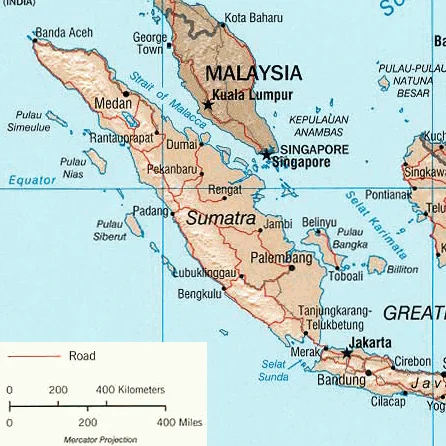
Coffee then spread rapidly throughout Indonesia, which became one of the world's largest coffee-producing nations. In that era, Indonesian coffee was exported from Jakarta on Java, which is why Java was historically recognized as producing the world's finest coffee, and why it became commonplace for coffee packaging and export bags to bear the label "Java."
The Legend of Mandheling Coffee
Legends and stories about coffee abound, especially from ancient, traditional regions. Sumatran coffee, for instance, is sold predominantly under the name "Mandheling." In reality, "Mandheling" refers to an indigenous tribe living on Sumatra, not to coffee from a specific growing region.
The legend dates back to World War II, when a Japanese soldier tasted a mellow coffee and asked the shop owner for its name. Mistaking the question for an inquiry about his background, the owner answered "Mandaining." In Japanese pronunciation, "Mandaining" closely resembles "Mandheling," and so the name was recorded. Unable to resist the coffee's appeal, the soldier, upon returning to Japan, asked merchant friends to find Mandheling coffee in Indonesia. Several tons of Mandheling beans were consequently imported to Japan and sold. In those early days, the recognition of premium coffee largely followed Japanese trends, and thanks to Mandheling's popularity in the Japanese market, it gained worldwide fame.

That Indonesian merchant is now the renowned PWN company. PWN registered "Golden Mandheling" as a trademark early on; Japanese competitors, unwilling to concede, registered "Supreme Golden Mandheling" as their own. Given the different brands, companies, and marketing strategies, which tastes better or holds higher status remains subjective.
Authentic Golden Mandheling
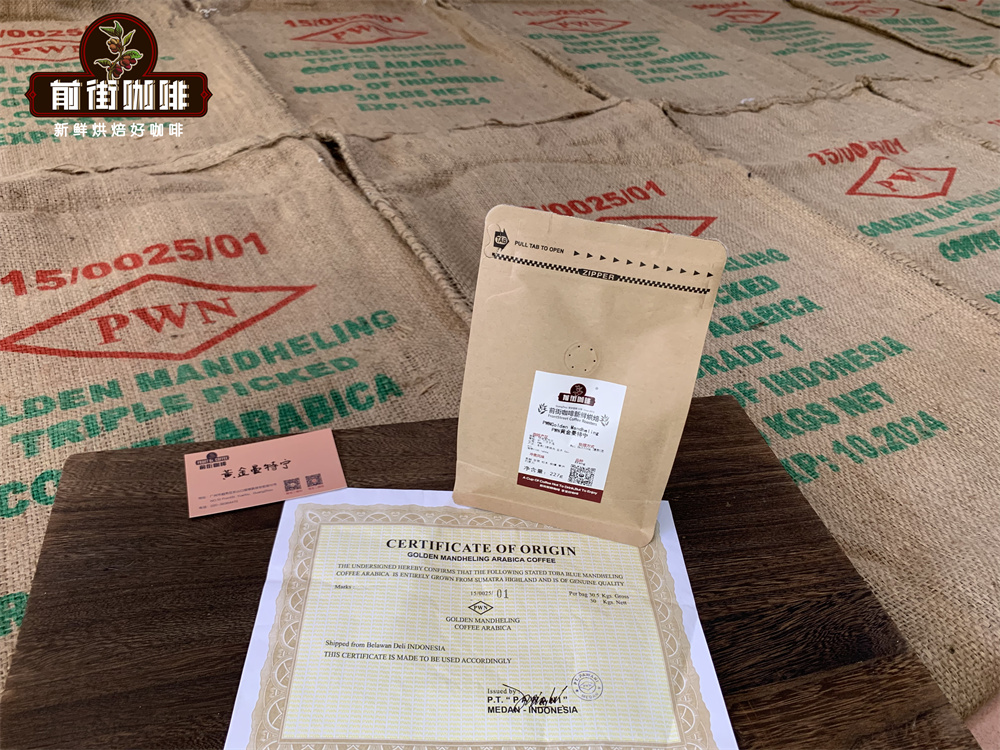
Since "Golden Mandheling" is a registered trademark of PWN, only Golden Mandheling originating from PWN represents the genuine article. Many merchants label their roasted beans Golden Mandheling. Consumers wishing to verify whether their purchase is authentic PWN product can request proof from the merchant, such as PWN Golden Mandheling green bean sack bags and certificates, to confirm authenticity.

FrontStreet Coffee: PWN Golden Mandheling Coffee Beans
Region: Sumatra, Indonesia
Altitude: 1100-1600 meters
Variety: Ateng
Processing Method: Wet-Hulled
FrontStreet Coffee's PWN Golden Mandheling green beans are of the highest G1 grade, with bean sizes above 18 mesh and fewer than 3 defective beans per 300-gram sample. PWN maintains stringent production requirements for Golden Mandheling beans. After mechanical screening, the beans undergo three rounds of manual selection to ensure defective beans are completely removed, enhancing the coffee's cleanliness and sweetness.
The Unique Wet-Hulled Processing Method
Sumatra's coffee is renowned for its low acidity, which stems from several factors. Among them, the farmers' post-harvest processing methods are the most crucial. Compared with the washed method popular in Latin America, this approach to processing cherries is more rustic.

After the cherries are harvested, they are mechanically depulped the same day to remove skin and pulp. These slimy, parchment-covered beans are then stacked in water tanks or bags to ferment. The mucilage layer is then washed away with clean water, and the parchment beans are placed in courtyards to dry.
When the parchment beans reach a semi-dry, semi-moist state, farmers pack them into bags and sell them to nearby processing mills. On receiving the parchment, the mills remove that layer, exposing the green beans directly for final drying.
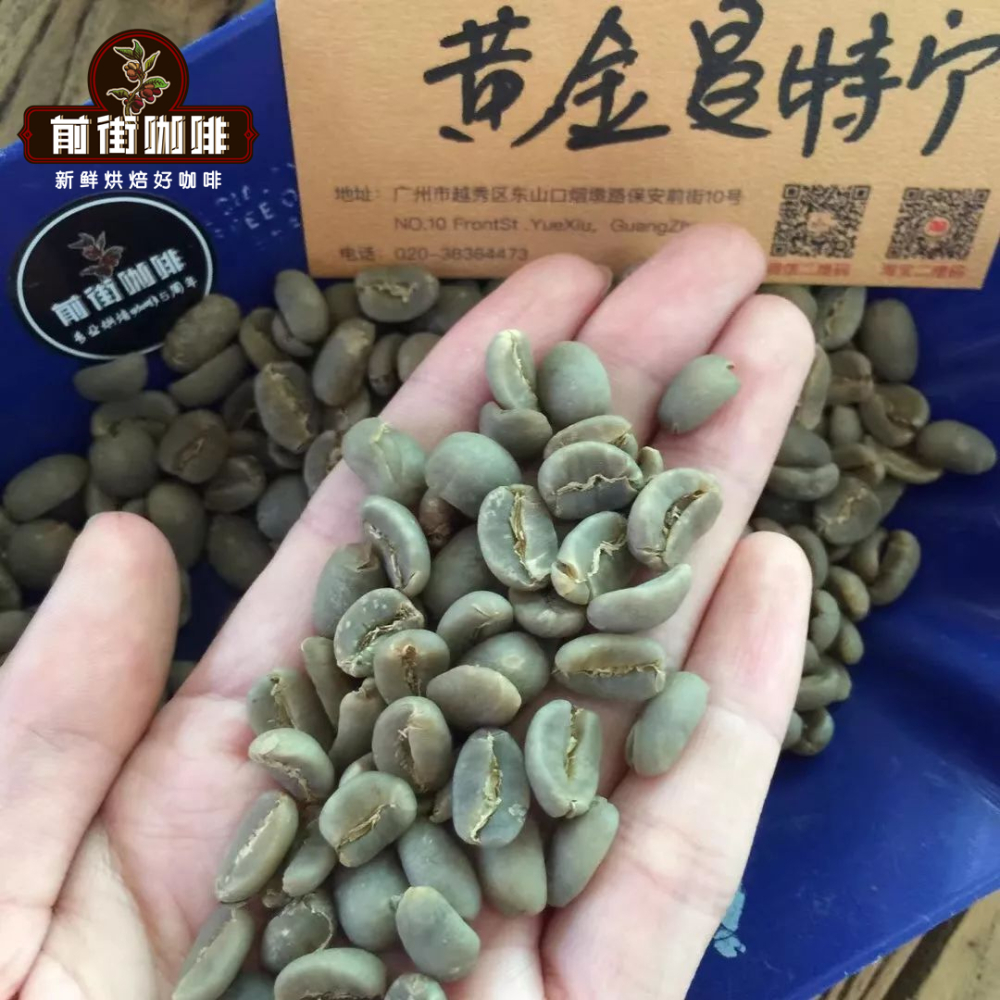
Mandheling processed by the wet-hulled method shows flavors reminiscent of spices and herbs, with subtle fruit acidity and a viscous, smooth mouthfeel. Thanks to its deep, mellow aroma and full body, Mandheling has earned worldwide recognition. As Mandheling rose to fame, its unique wet-hulled method became famous too — the two reinforce each other.
Roasting and Brewing Recommendations
When FrontStreet Coffee's roasters received the PWN Golden Mandheling green beans, they found exceptionally uniform bean sizes and a blue-green color. To highlight Mandheling's rich, full-bodied character, they used a medium-dark roast profile.
For brewing, and to extract PWN Golden Mandheling's rich body, FrontStreet Coffee recommends a slower-flow pour-over dripper such as the KONO. To avoid over-extraction from prolonged contact between grounds and water, FrontStreet suggests a medium-coarse grind and 88°C water.
Brewing Parameters:
Dripper: KONO Dripper
Water Temperature: 88°C
Coffee Dose: 15 grams
Coffee-to-Water Ratio: 1:15
Grind Size: Medium-coarse (Chinese standard #20 sieve, 70% pass rate)

Regular readers of FrontStreet Coffee articles should be familiar with the three-pour method our baristas use, since this technique adds richer layering to the cup.

First, pour 30 grams of hot water to fully saturate the grounds and let it bloom for 30 seconds. Then, using a small stream, slowly pour in a circular motion from the center to reach 125 grams for the second stage. When the water level in the dripper drops to just above the coffee bed, continue pouring to reach 225 grams for the third stage. Stop pouring and wait until all the water has dripped through into the server below, then remove the dripper. Total extraction time should be about 2 minutes.
After brewing, FrontStreet Coffee's PWN Golden Mandheling reveals nutty notes. As the temperature drops slightly, aromas of cinnamon spice, herbs, and sweet melon emerge, accompanied by caramel-like sweetness. The mouthfeel is clean and full-bodied.
For more coffee bean information, follow Coffee Workshop (WeChat public account: cafe_style)
For professional coffee knowledge exchange, add WeChat ID: kaixinguoguo0925
FrontStreet Coffee Recommendation
Whether you're exploring wet-hulled coffee for the first time or already a devoted fan, FrontStreet Coffee's Mandheling range covers both ends. The FrontStreet PWN Golden Mandheling is the pinnacle: PWN's signature product, of the highest G1 grade with beans above 18 mesh and fewer than 3 defective beans per 300-gram sample, mechanically screened and then hand-selected three times. Medium-dark roasted, it shows sandalwood, herbs, spice, roasted hazelnut, caramel, and dark chocolate in a clean, full cup — ideal for anyone who avoids acidity.
For an everyday indulgence, the FrontStreet Lintong Mandheling comes from the Toba Lake area, wet-hulled and medium-dark roasted to keep the wild herbal character while adding clove, woody aroma, and a deep, lasting sweetness. FrontStreet recommends brewing either at 87-88°C with 15g of coffee and a 1:15 ratio in three pours, so the caramel sweetness and chocolate-nut flavors come through with a thick, mellow body.
Important Notice :
FrontStreet Coffee is a long-established specialty coffee roaster in Guangzhou China, selling freshly roasted beans from its own farm in Yunnan as well as dozens of carefully selected single-origin beans from around the world for both pour-over and espresso. The products deliver consistently excellent quality and great value, with shipping within 24 hours. Guangzhou's FrontStreet Coffee shop is recommended by many coffee lovers, and the beans are now available online at the Tmall 。
FrontStreet Coffee has moved to a new address:
FrontStreet Coffee Address: 315,Donghua East Road,GuangZhou
Tel:020 38364473
 Scan and follow the En Gafei WeChat official account. Please indicate that the reprint comes from "En Gafei".