Is Pour-Over Coffee with Dark Roast Beans Delicious Without Bitterness? Understanding Flavor Differences Between Yirgacheffe and Mandheling

Understanding Coffee Roast Levels
Green coffee only becomes something you can brew after roasting — and only after grinding and brewing does it finally turn into the cup in your hand. Different roast levels bring out different qualities in the same bean. At the broadest level, roasts fall into three camps: light, medium, and dark. As a general rule, the darker the roast, the fuller the body, the lower the acidity, and the higher the bitterness. In this article, FrontStreet Coffee walks through how to get the best out of medium-dark roasted coffee, with all the technique you need.
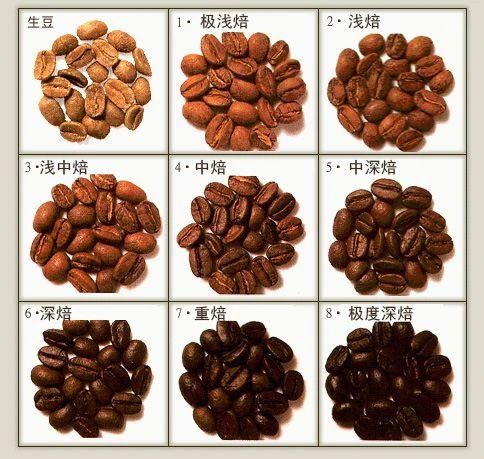
Roast level is usually judged by bean color — light, medium, or dark. It isn't a perfectly precise method, since some coffees naturally roast darker or lighter than others, but it remains the most practical way to gauge what's in the bag. When you're buying coffee, it helps to know what each roast level typically offers.
Light Roast: Origin Character, Preserved
Light-roasted beans are a pale brown with little to no oil on the surface, and in the cup they show the most vivid, pronounced acidity of any roast level.
When coffees from different origins are roasted light, what you taste is largely the coffee itself — the character of the farm, the variety, the processing. That's why light roasts are the standard for cupping.

Medium Roast: Balance of Acidity and Body
Medium roast is a deeper brown than light roast, sometimes with a trace of oil on the surface. This roast level lets the roaster develop flavor and aroma while balancing acidity against body. You can still taste the origin in a medium roast, but the bright acidity has been softened and rounded out by the fuller body that roasting develops.

Dark Roast: Full Body, Roast-Driven Flavor
Dark roast is a deep brown verging on black, with visible oils on the surface and flavors that lean toward chocolate.
By the time a coffee is roasted dark, the oils sit prominently on the bean.
Taste a dark roast and you're mostly tasting the roast itself. The bright acidity of a light roast is gone, replaced by heavy body; the origin character and processing notes have all but vanished beneath the roast flavors.

Preferences vary widely here. Each roast level shows a different side of coffee, and understanding that helps you appreciate beans of any style — whether you lean light, medium, or dark.
So try coffees at different roast levels. Only by tasting widely will you discover what you actually enjoy!
Grinding Coffee Beans
Grinding is the first step of brewing — and the step where many brewers go wrong. Ground too fine or too coarse, a coffee's taste suffers either way. To control grind size precisely, use a burr grinder with adjustable settings. Take the Fuji Royal Mini as an example: the sweet spot for pour-over is around settings 3-4, with a texture roughly like fine granulated sugar as your reference.

On the Fuji Royal Mini, that means settings 3-4 for pour-over, targeting an 80% pass rate through the #20 sieve.
In short:
A light-roasted Yirgacheffe-style coffee wants a fine grind and water at 90-91°C.
A dark-roasted Mandheling wants a medium-coarse grind, with water around 88°C.

Grind coarseness should also match your brew method. Espresso calls for a fine grind; pour-over and siphon suit a medium grind; French press wants it coarse. Another way to think about it: the longer the grounds sit in contact with water, the coarser the grind should be, and vice versa. These are guidelines, not laws — experiment in your daily brewing and find what works for you.
Uneven particle size is a quiet cup-killer. Fines extract much faster than boulders, so in the same brew time the fines go over-extracted and bitter while the coarse particles stay under-developed. The result is a cup pulled in two directions at once — muddled no matter how good the beans are.
Four Tips for Brewing Medium-Dark Roast Coffee
First: Cooler (Lower the Temperature)
Brew medium-dark roasts with water between 86-88°C. The cooler water slows extraction and reins in the bitter compounds these roasts carry in abundance.

Second: Gentle (Pour Softly)
Pour gently to minimize disturbance to the coffee bed, and keep the water level in the dripper steady. After the bloom, pour slowly from a low height so the grounds stay settled and soaked. A gentler rhythm yields a cup with a soft mouthfeel and solid, weighty flavor.

Third: Slow (Steady Circles)
Work the water slowly in circles from the center outward and back. Fast swirling agitates the bed and stirs up bitterness — exactly what you don't want from a medium-dark roast. Minimize agitation and let immersion do the extracting; it's the most effective way to keep bitterness and astringency in check.

Fourth: Coarse (Grind Coarser)
A coarser grind reduces the surface area in contact with water, so the grounds release their bitter, astringent compounds more slowly in the hot early stage of the brew. Paired with a slow pour and a longer extraction, the flavor and body compounds come through gently as the water cools toward the end.

In extraction terms, light-roasted beans have undergone less cell expansion than dark-roasted ones, so they absorb water more reluctantly and need more time to give up their soluble compounds. The practical rule: grind light roasts finer and dark roasts coarser. If your medium-dark coffee keeps turning out bitter and astringent, work through the four adjustments above — temperature, pour, agitation, and grind — and you'll usually find the fix.
FrontStreet Coffee Recommendation
Want to taste the difference roast level makes for yourself? Pair a dark-roasted Mandheling with FrontStreet Coffee's Washed Yirgacheffe, our house everyday Ethiopian. Brewed as a light roast, it shows you exactly what dark roasting leaves behind: white jasmine florals, bright citrus and lemon acidity, and a clean tea-like finish. It's also the bean we recommend to newcomers — approachable in price, unmistakable in character — and it pairs perfectly with the fine-grind, 90-91°C recipe described above.
If Yirgacheffe wins you over, try FrontStreet Coffee's Washed Guodingding (Worka) Cooperative lot next. Guodingding comes from the Worka area at the southeastern edge of Yirgacheffe, originally part of a YCFCU union cooperative and later singled out as a traceable single-village lot. Its traditional washed process preserves a luminous citrus-lemon acidity and jasmine fragrance with even greater clarity — a coffee that rewards careful, low-agitation brewing with a crystal-clean cup.
For either coffee, brew it fresh: a V60, 15g of coffee at a medium-fine grind (fine granulated sugar texture, 80% passing a #20 sieve), 90-91°C water, and a 1:15 ratio. Bloom with 30g of water for 30 seconds, pour to 125g by the one-minute mark, then finish with a slow pour to 225g by about 1:35. Total drawdown should land between 2:00 and 2:10 — a recipe that flatters delicate light roasts just as the cooler, coarser, gentler approach flatters a dark Mandheling.
Important Notice :
FrontStreet Coffee is a long-established specialty coffee roaster in Guangzhou China, selling freshly roasted beans from its own farm in Yunnan as well as dozens of carefully selected single-origin beans from around the world for both pour-over and espresso. The products deliver consistently excellent quality and great value, with shipping within 24 hours. Guangzhou's FrontStreet Coffee shop is recommended by many coffee lovers, and the beans are now available online at the Tmall 。
FrontStreet Coffee has moved to a new address:
FrontStreet Coffee Address: 315,Donghua East Road,GuangZhou
Tel:020 38364473
 Scan and follow the En Gafei WeChat official account. Please indicate that the reprint comes from "En Gafei".