How to Brew Ethiopian Sun-Dried Guji Coffee Beans: Guji Flower Queen Coffee 6.0 Pour-Over Flavor Profile

Ethiopian coffee is truly enchanting. Natural-processed coffee offers exceptional sweetness and fruitiness, making it one of FrontStreet Coffee's favorite styles. Guji in particular has stood out in recent years, and FrontStreet Coffee selected a natural lot from this region, whose geography is ideal for coffee cultivation. This natural Guji showed fresh fruit flavors during cupping, with remarkable complexity and sweetness: exceptionally rich tropical fruit notes with lychee especially prominent, followed by a delightfully creamy mouthfeel and a caramel-like sweet finish.
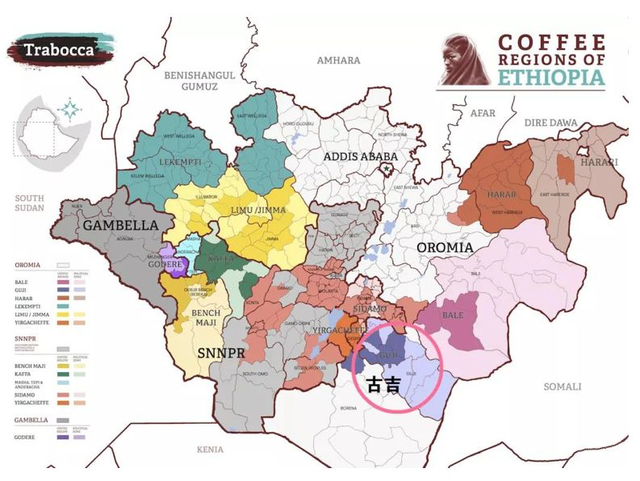
Guji has drawn significant attention in recent years, performing impressively in both flavor expression and quality. Formerly part of the Sidamo region, Guji was established as an independent growing region by the Ethiopia Commodity Exchange (ECX) in 2010.
Located southeast of Yirgacheffe, Guji borders Sidamo and Gedeo, with diverse terrain spanning towering mountains, highlands, plateaus, valleys, and plains.
The region's soil is fertile vertisol nearly two meters deep, and the average altitude exceeds 1,800 meters above sea level. These characteristics create significant day-night temperature differences — ideal terroir for premium specialty coffee. The region's greatest advantage is how soil vitality is maintained through natural organic matter cycling: fallen leaves and debris from the surrounding forests, along with plant residues, serve as natural fertilizers.
Natural Processing
The natural process is an ancient method of green coffee processing, and this FrontStreet Coffee Ethiopian Guji is natural-processed.
1. Removing Floating Beans
Harvested cherries are poured into large water tanks, where mature, full cherries sink while underdeveloped or overripe cherries float — and the floaters are removed.
2. Sun Drying
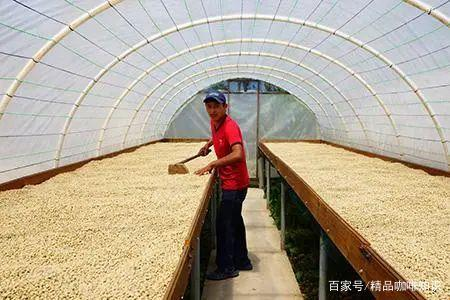
Whole cherries, complete with pulp and skin, are laid out to sun-dry until they reach approximately 12% moisture, which takes about two to four weeks depending on the climate.
3. Hulling
The naturally dried cherries are run through hulling machines to remove the dry, hard pulp, fruit flesh, and parchment layer, revealing the green beans.
Local Heirloom Varieties
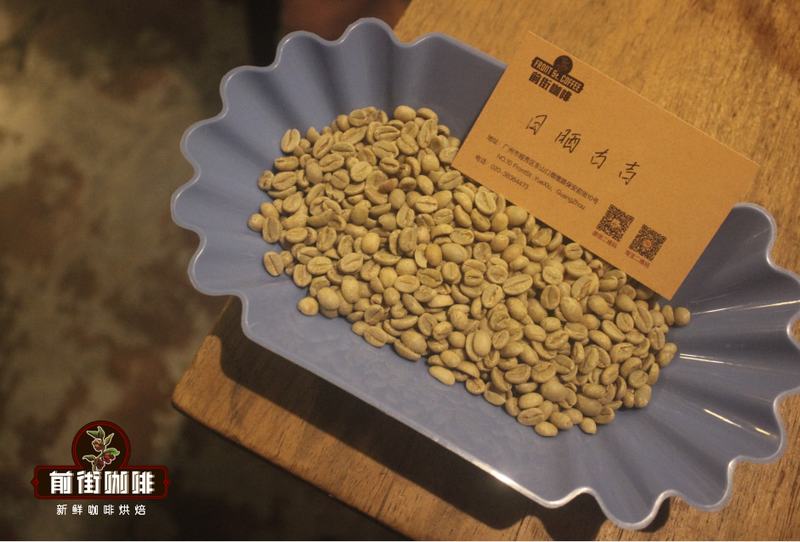
The variety of this FrontStreet Coffee natural Guji is Ethiopia's local heirloom.
These are called local heirlooms because Ethiopia has too many varieties — it is like a natural gene bank for Arabica. On one hand, the sheer number of varieties makes identification and classification difficult; on the other, the Ethiopian government, out of a desire to protect them, is unwilling to disclose information about them. Hence the collective name "Heirloom."
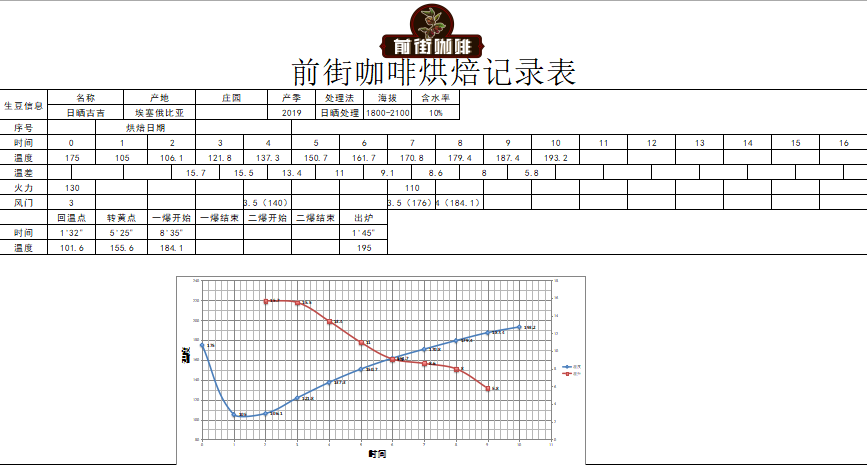
Roasting Analysis
Heat the drum to 175°C before charging, flame power at 130 and damper at 3. Turning point at 1'32". At 140°C drum temperature, open the damper to 3.5 with heat unchanged. At 155.6°C the bean surface turns yellow and the grassy aroma fully disappears — entering the drying phase. At 176°C, reduce the flame power to 110 with the damper unchanged. At 7'28", the bean surface shows pronounced wrinkles and black spots and the toast aroma clearly shifts to coffee aroma — the prelude to first crack, so listen carefully now. First crack begins at 8'35"; damper to 4, develop for 1'45" after first crack, then discharge at 195°C.

Agtron bean color value is 63.7 (left image), Agtron ground color value is 76.9 (right image), with a roast delta of 13.2.
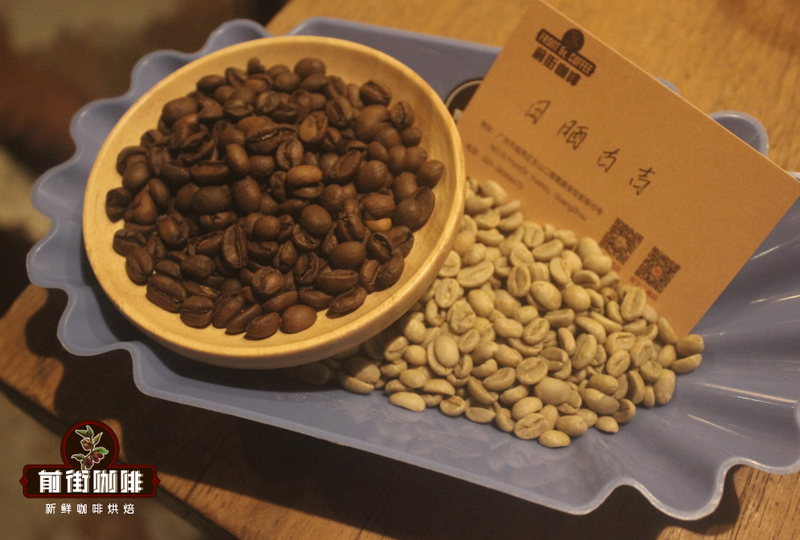
FrontStreet Coffee · Natural Guji GUJI NATURAL
Country: Ethiopia
Region: Guji
Altitude: 1800-2100 meters
Processing: Natural Process
Variety: Local Heirloom
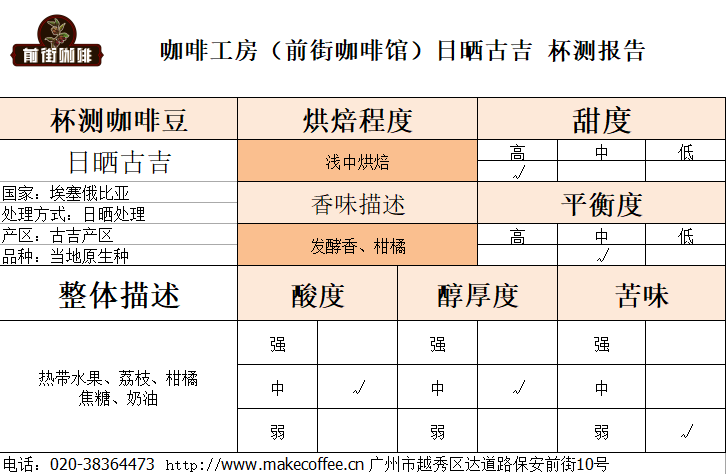
FrontStreet Coffee Cupping Notes: Tropical fruits, lychee, citrus, cream, caramel
FrontStreet Coffee Brewing Recipe:
Water temperature: 91°C | Brewer: V60 | Grind size: BG #6S | Dose: 15g | Coffee-to-water ratio: 1:15 | Bloom ratio: 1:2 | Bloom time: 30s

Brewing Method: Coin-sized circular three-pour method
Total brew time: 1'50"-2'00"
FrontStreet Coffee Ethiopia Natural Guji flavor description: subtle floral notes on the entry, rich berry and raisin sweetness, gentle fruit acidity, with tropical fruit aroma and sugarcane sweetness in the aftertaste.
FrontStreet Coffee Recommendation
If you love this lychee-forward Guji natural, the neighboring regions offer wonderful complements. The washed Yirgacheffe Gudingding Cooperative — from the Worka area, processed with the traditional washed method — delivers clean, bright citrus and lemon acidity with jasmine fragrance and none of the traditional bitterness, while the Sidamo natural Oiran leans into ripe tropical fruit: berries, florals, jackfruit, melon, and honey.
For the naturals, keep the roast medium-light and brew gently — a V60 at 90-91°C, 15g of coffee at 1:15, a 30-second bloom with 30g of water, and a total extraction of about 2:00-2:10 — to capture the fruit sweetness while avoiding over-fermented harshness.
Important Notice :
FrontStreet Coffee is a long-established specialty coffee roaster in Guangzhou China, selling freshly roasted beans from its own farm in Yunnan as well as dozens of carefully selected single-origin beans from around the world for both pour-over and espresso. The products deliver consistently excellent quality and great value, with shipping within 24 hours. Guangzhou's FrontStreet Coffee shop is recommended by many coffee lovers, and the beans are now available online at the Tmall 。
FrontStreet Coffee has moved to a new address:
FrontStreet Coffee Address: 315,Donghua East Road,GuangZhou
Tel:020 38364473
 Scan and follow the En Gafei WeChat official account. Please indicate that the reprint comes from "En Gafei".