
What Are Natural Process Coffees from Costa Rica? Natural Process Estate Fire Phoenix Specialty Coffee

Costa Rica's natural processed coffee may not enjoy the fame of its honey-processed counterparts, but its quality is just as exceptional. Even though the country is primarily associated with honey processing, FrontStreet Coffee's Fire Phoenix Estate natural "Sapphire" is a premium coffee from this origin, featuring rich raisin flavors, prominent wine notes, full-bodied texture, and a balanced sweet-and-sour profile with smoothness—a natural processed specialty bean we genuinely appreciate.
Costa Rica: Land of Premium Coffee
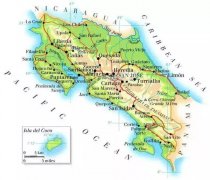
On the Central American isthmus, Costa Rica is shaped by both Pacific and Atlantic currents and sea breezes that moderate its climate. With many towering volcanoes reaching 2,000 meters, coffee cherries can ripen slowly in fertile volcanic ash soil and cool high-altitude air, developing complete, rich flavors. The country's earliest coffee cultivation took place on the slopes of the Poás and Barva volcanoes—an area known today as the Central Valley.
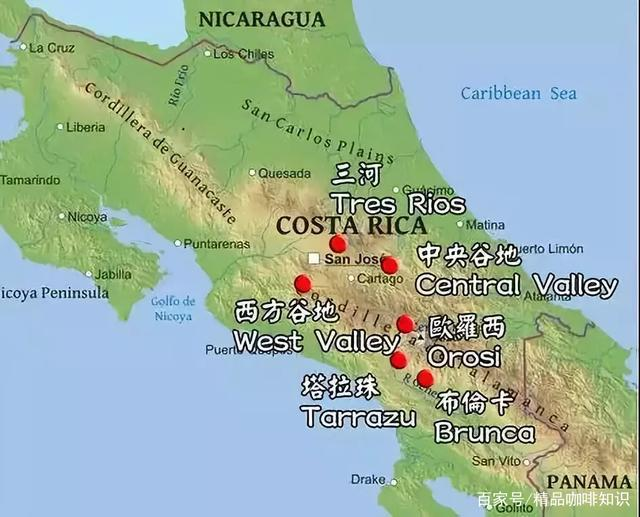
Central Valley & Fire Phoenix Growing Region
The Central Valley is also where Costa Rica's coffee industry first took root before spreading to other regions. With moderate annual rainfall of 118 inches and an average temperature of only 19°C, plus high altitude, the beans here come out hard, aromatic, and smooth, with high acidity, full body, and intense fragrance.
The Fire Phoenix Estate sits on the fertile Poás volcanic hills of the Central Valley. It is a 100% village-grown estate that takes environmental protection seriously—collecting rainwater to process coffee and using organic compost from earthworm farming, keeping cultivation entirely free of chemical fertilizers and pesticides. The owner believes organic farming is better for both the environment and the family's health, and has held to that philosophy despite many technical and organizational challenges.
Fire Phoenix was also among the first estates in Central and South America to produce honey and natural processed coffees. Its coffees are highly distinctive, above all for astonishing sweetness: cherry sugar content can reach 21-22%, and during harvest the estate applies techniques borrowed from the wine industry, selecting only cherries exceeding 20% sweetness for natural processing.
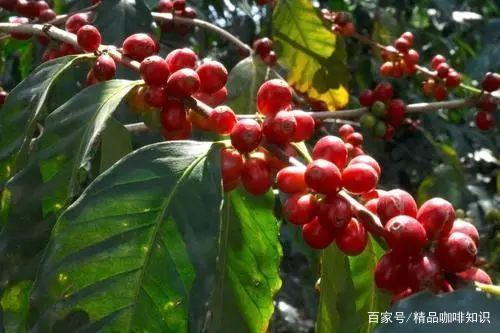
Varieties & Processing Methods
The Sapphire variety combines Caturra and Catuai: Caturra is a single-gene mutation of Bourbon, while Catuai is an artificial cross of Caturra and Mundo Novo.
Natural Processing: The natural processing of Sapphire (Zahiro) is labor-intensive. Hand-picked high-sugar cherries are first sun-dried on African raised beds for about 10 days, then moved into plastic-covered greenhouses to build more direct heat and continue drying until moisture reaches 11.5%.
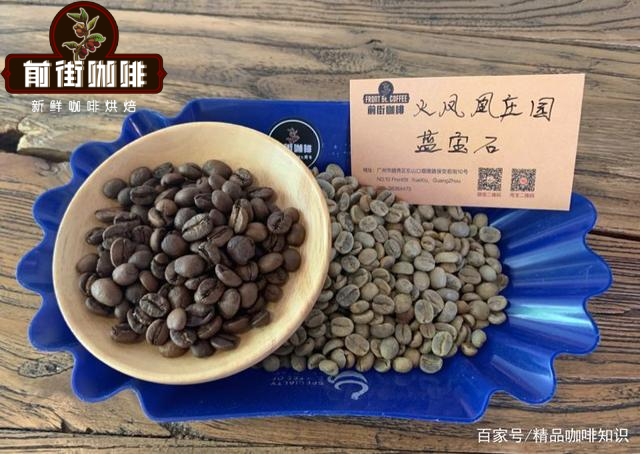
FrontStreet Coffee Costa Rica Fire Phoenix Estate Sapphire
- Region: Central Valley
- Estate: Fire Phoenix Estate
- Altitude: 1600m
- Varieties: Caturra, Catuai
- Grade: SHB
- Processing: Natural
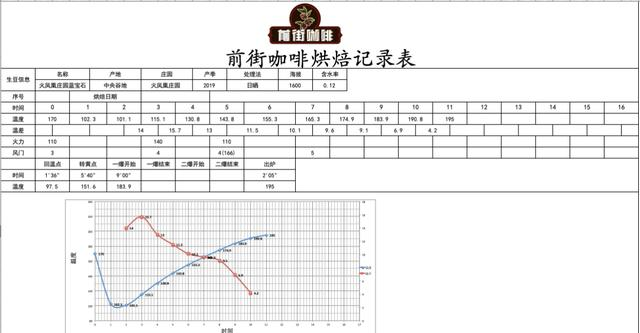
FrontStreet Coffee Roasting Recommendations
Roaster: Yangjia 800N
This Fire Phoenix Sapphire carries rich berry and tropical fruit aromas, so to preserve the fruit flavors and sweetness, FrontStreet Coffee roasts it with a medium-heat approach. Preheat the drum to 170°C, charge the beans, set the damper to 3, heat to 110, turning point at 1'36" (97.9°C). When the drum temperature reaches 140°C, open the damper to 4—the bean surface turns yellow, the grassy aroma disappears completely, and dehydration begins. At 166°C drum temperature, reduce heat to 80 with the damper unchanged. At 8'17", fine wrinkles and black spots appear on the bean surface and the toast aroma clearly turns to coffee aroma—the prelude to first crack. Listen carefully: first crack begins at 9'00". Adjust the damper to 5 (adjust heat carefully—not too small, to maintain the crack sounds) and develop for 2'05" after first crack, dropping the beans at 195°C.
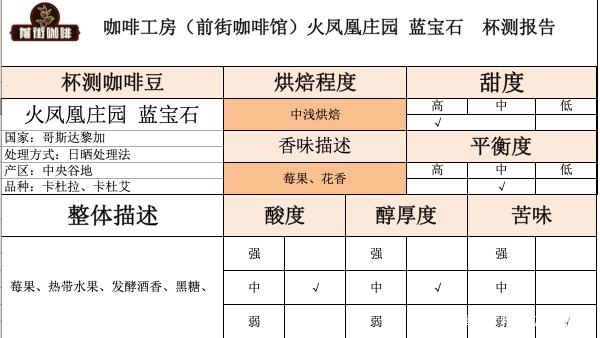
FrontStreet Coffee Cupping Report
FrontStreet Coffee Brewing Recommendations:
- Dripper: Hario V60
- Water Temperature: 90°C
- Dose: 15g
- Ratio: 1:15
- Grind Size: BG#6k

FrontStreet Coffee Brewing Technique
Segmented Extraction:
Bloom with 30g of water for 30 seconds, pour in small circles to 125g, then pause. When the water level is about to expose the coffee bed, continue pouring to 225g and stop. Wait until the bed is about to be exposed again, then remove the dripper (timing from the bloom). Extraction time: 2'00".
Flavor Description
The dry aroma reveals distinct tropical fruit, fermented notes, and sweet spices. The wet aroma emits berry and honey fragrance. In the cup: strawberry, tropical fruits, and fermented wine notes, with honey and cocoa in the finish. The mouthfeel is smooth with clear flavor layers and a noticeable aftertaste.

FrontStreet Coffee Recommendation
If Costa Rica's processing wizardry fascinates you, it is worth knowing where honey processing came from: its forerunner was the pulped natural method—depulped coffee dried with the mucilage still attached—which shortens drying time while taming the off-flavors of uncontrolled fermentation. Brazil perfected the style with classics like FrontStreet's Cerrado coffee, with its clear cream, peanut, nut, and chocolate notes, and Costa Rican producers adapted it, varying how much mucilage stays on the bean and how long it dries to create the finer distinctions of black, red, yellow, and white honey. To explore this family of flavors, try the FrontStreet Costa Rica Blackberry: a black honey coffee that removes almost no mucilage and dries for a minimum of two weeks under shading covers so the sugars fully develop, with frequent turning to prevent over-fermentation. Roasted medium-light, it smells of fresh flowers and tastes of grape, berry, and ripe blackberry. And if you would rather taste a raisin-style innovation, the FrontStreet Mozart uses the raisin honey process—cherries pre-dried on raised beds for at least three days before depulping, 100% mucilage retained, a process even more demanding than black honey—yielding osmanthus, pineapple, and raisin aromas in pour-over, cold brew, or moka pot.
Important Notice :
FrontStreet Coffee is a long-established specialty coffee roaster in Guangzhou China, selling freshly roasted beans from its own farm in Yunnan as well as dozens of carefully selected single-origin beans from around the world for both pour-over and espresso. The products deliver consistently excellent quality and great value, with shipping within 24 hours. Guangzhou's FrontStreet Coffee shop is recommended by many coffee lovers, and the beans are now available online at the Tmall 。
FrontStreet Coffee has moved to a new address:
FrontStreet Coffee Address: 315,Donghua East Road,GuangZhou
Tel:020 38364473
 Scan and follow the En Gafei WeChat official account. Please indicate that the reprint comes from "En Gafei".
![[FrontStreet Coffee Barista's Notes] Pour-over Tips - How to Extract Coffee Based on Coffee Grind Size](https://en.gafei.com/uploads/allimg/190719/19-1ZG9210925260-lp.png)