Yunnan China Arabica Coffee Bean Production Yunnan Small Bean Coffee Flavor Pros and Cons

Most of China's coffee is produced in Yunnan Province, which borders coffee-rich countries such as Myanmar, Laos, and Vietnam. FrontStreet Coffee has introduced the history of Yunnan coffee before, and here we revisit it. In 1904, the French missionary Alfred Tientsin introduced some plants to Yunnan, hoping to enjoy a small cup of coffee every day. Coffee plants were therefore introduced from Myanmar, but on a small and mostly experimental scale. It was not until 1989, when Nestle planted rust-resistant Catimor varieties throughout Yunnan, that coffee became a major economic crop in China.
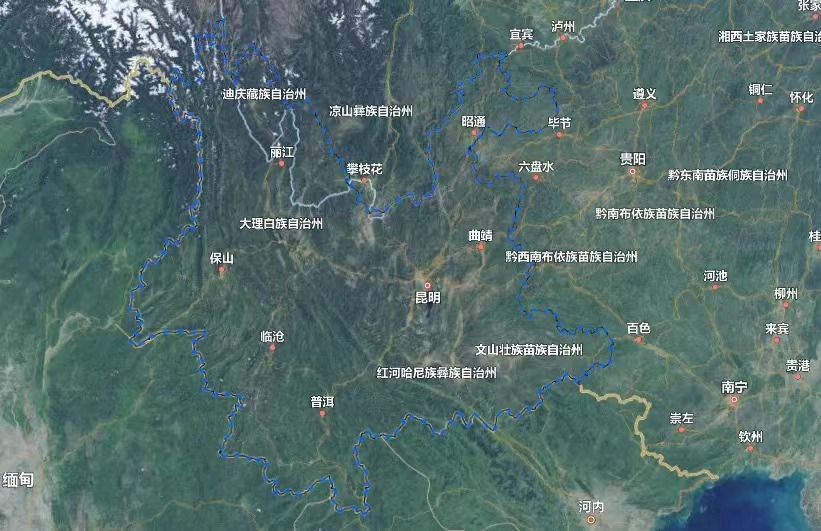
Today, 98% of China's coffee comes from approximately 90,000 hectares in Yunnan, producing about 100,000 metric tons of coffee annually. It is almost fair to say that Yunnan coffee is Chinese coffee. Coffee is also grown in other regions such as Fujian and Hainan, but because of altitude, most beans there are Robusta, whose flavors are too intense for the rising specialty market and do not suit today's consumers of single-origin pour-over. Yunnan, which can produce high-quality Arabica, has therefore become the mainstream direction for China's specialty coffee.

The advantage of the Yunnan growing region is its higher altitude compared with other coffee areas in China, ranging from approximately 800 to 1,850 meters. A large temperature difference between day and night, plus relatively abundant rainfall, gives a good foundation for high-quality green coffee. Most Yunnan coffee growing areas do hover around the qualification line for high-quality coffee cultivation, about 1,000 meters. The main coffee-growing areas in Yunnan are in the southwest: Pu'er, Baoshan, Lincang, and Xishuangbanna. The main Arabica varieties currently grown in Yunnan are Catimor and Typica, but last year Baoshan made a pioneering step with a milestone variety, Geisha. In 2016, Lao Fan, the owner of Zuo Garden Manor in Baoshan, planted Yunnan's first batch of Geisha at an altitude of 1,400-1,600 meters in shaded valleys.
Yunnan Geisha is not the mainstream, so today FrontStreet Coffee introduces the Catimor and Typica varieties based on personal experience. FrontStreet Coffee has been growing coffee in Yunnan longer than it has had its physical store. At first, FrontStreet Coffee's barista grew coffee at the Guangzhou headquarters, but various limitations turned the team's attention to Yunnan. In May 2016, FrontStreet Coffee planted its first batch of Typica coffee on Yunnan's mountains. At the same time, we understood why locals choose Catimor: it is simply not cost-effective. Coffee enthusiasts who have done some research know that Catimor carries genetic traits from Robusta; it is a hybrid of Timor and Caturra.
Catimor was bred in Portugal in 1959. Because Catimor trees are small with dense branching, allow high planting density, and have low demands on altitude and other natural conditions, it is very suitable for commercial coffee production. Catimor is often criticized by coffee lovers for its Robusta genetics. Its flavor is stronger than other Arabica beans. In fact, Yunnan initially introduced the Typica variety, and because its beans were smaller than Robusta, it was called small-grained coffee. Later, as brands like Nestle needed more commercial varieties suited to the evolving market, Yunnan began widespread cultivation of high-yield Catimor, and the more mainstream Catimor then became known as Yunnan small-grained coffee.
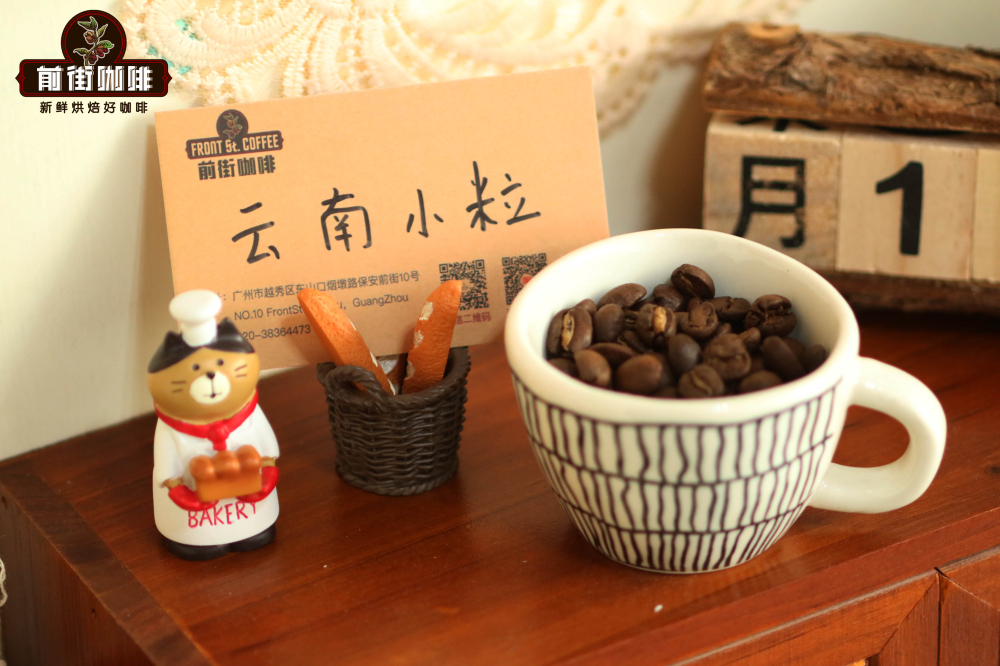
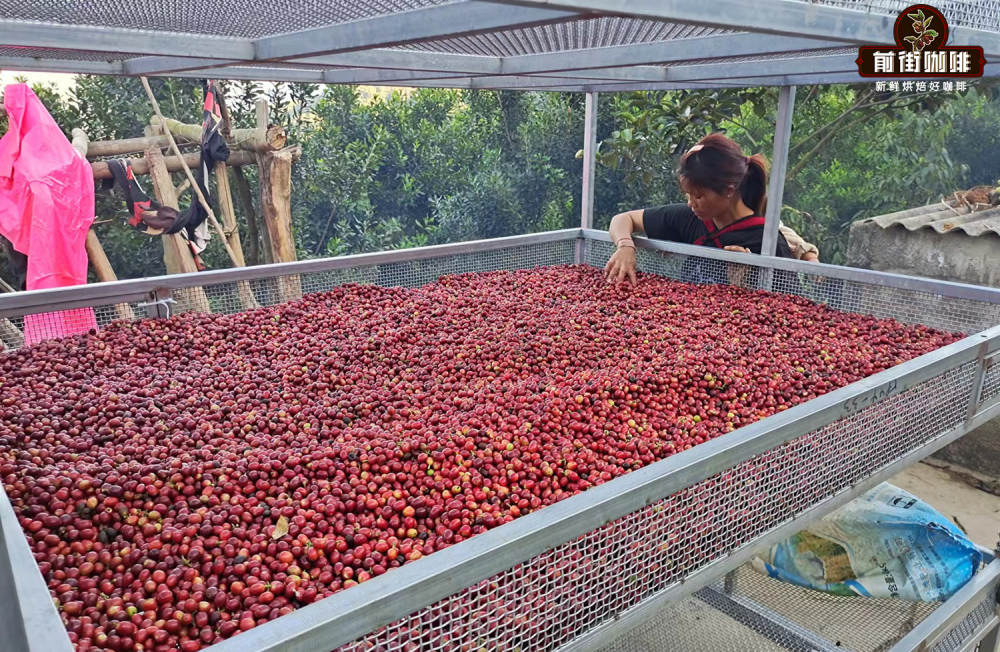
FrontStreet Coffee wanted to consider flavor factors beyond yield, though, so it chose the better-flavored Typica variety and named it "FrontStreet Coffee 2013." Its enthusiastic sales also show the popularity of FrontStreet Coffee 2013. For this coffee, FrontStreet Coffee uses natural processing to preserve the overall sweetness as much as possible, compensating for the insufficient sweetness caused by altitude. After drying, FrontStreet Coffee transported the coffee to its roasting factory in distant Guangdong. For this coffee, FrontStreet Coffee adopted a medium roast. It performs impressively: the rich fruit flavors are stunning, and were it not for the chocolate flavor in the aftertaste, one would feel like drinking fruit juice.
Today's Yunnan small-grained coffee mainly refers to the Catimor variety. FrontStreet Coffee also has Catimor beans from Baoshan, Yunnan. Now, FrontStreet Coffee brews and compares them to show the differences between FrontStreet Coffee's planted Typica beans and a general Yunnan farm's Catimor:
FrontStreet Coffee Extraction Parameters:
V60 dripper
Water temperature: 91°C
Water-to-coffee ratio: 1:15
Coffee amount: 15g
Grind size (75% pass rate through China No. 20 standard sieve)
FrontStreet Coffee Extraction Method:
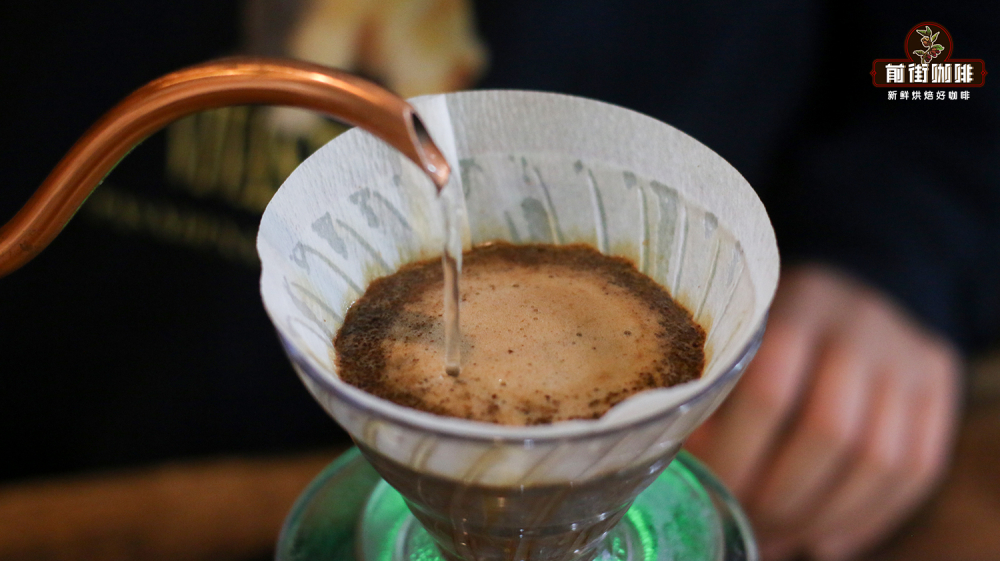
Bloom the coffee grounds with twice the amount of water as the coffee dose. Using a small water stream, pour in a circular motion from the center outward to 125 grams. When the water level drops and is about to expose the coffee bed, continue pouring to the required amount. Remove the dripper when all water has dripped through. The entire extraction time is about 2 minutes.
Yunnan Coffee Bean Characteristics and Taste:
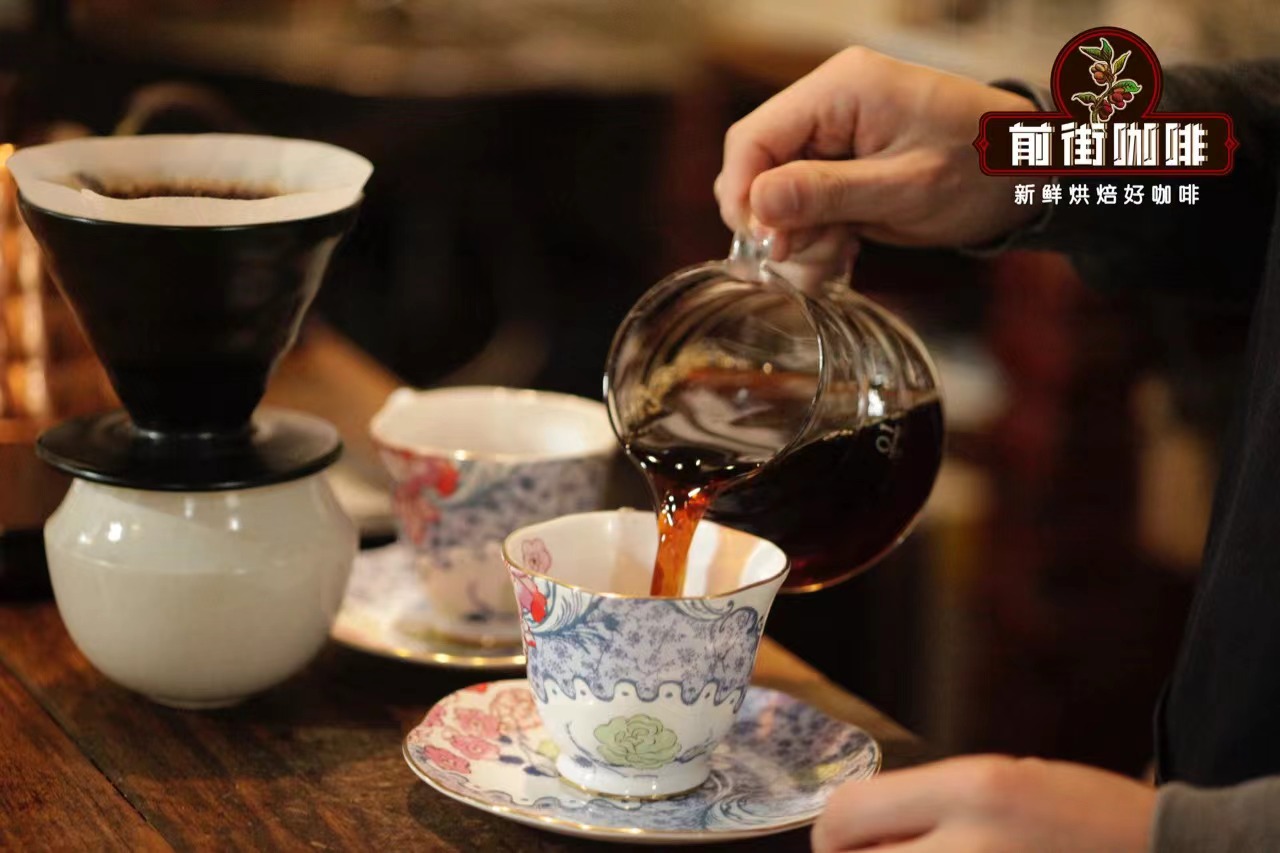
Natural processed Catimor: This coffee's taste tends toward nutty and chocolate flavors, with high body and overall balance, without special acidity.
FrontStreet Coffee 2013: The entry is rich with juice-like qualities and slightly herbal plant aromas, with a smooth mouthfeel tending toward balance, and a short, lively, bright plum acidity. Rich layers transform from apricot-peach to citrus from beginning to end. The sweetness tends toward brown sugar.
FrontStreet Coffee believes the Yunnan growing region sits in an area suitable for coffee cultivation, and the overall quality of the coffee is good. Everything has pros and cons, though, so FrontStreet Coffee lists the advantages and disadvantages of the Yunnan coffee industry:
Advantages:
Fresh, with short delivery cycles. Good balance, easy for blending. Some specialty washed coffees have berry flavors, and special processing methods and new processing attempts have brought interesting tones and flavors to Yunnan specialty coffee, making it suitable for single-origin use. Commercial-grade Yunnan beans are cheaper than imported beans.

Disadvantages:
Because of variety issues, flavors are relatively monotonous. The production cost of high-quality coffee is high, and it is difficult to compete with imported high-quality coffee on price. Domestic roasters use it rarely, market share is lacking, and the growing region's brand influence is insufficient. Domestic prejudices against Yunnan coffee and limited awareness of it also keep actual domestic consumption limited. The quality of Yunnan coffee is not very stable, and standardization in planting, processing, and manufacturing needs improvement.
For professional coffee knowledge exchange and more coffee bean information, visit FrontStreet Coffee. To explore more specialty coffee beans, visit FrontStreet Coffee.
FrontStreet Coffee Recommendation
Yunnan coffee, also called Yunnan small bean, has evenly sized, plump beans and a moderate, mellow taste. Yunnan Typica can be traced back to 1904, when the French missionary Alfred Tientsin brought coffee seed from Vietnam into Yunnan and planted it successfully in Zhugula village, Binchuan County. That was the beginning of Yunnan coffee, generally called small-seed coffee, and known domestically as Yunnan small bean coffee.
Coffee likes warm conditions, tolerates heat but not cold, and grows best with ample sunlight, with the ideal growing temperature between 16 and 21 degrees Celsius. From the equator outward, the world's coffee belt spans 25 degrees north, and Yunnan happens to fall inside it. Most of Yunnan sits at an altitude of 1,000 meters, with fertile slope soil, abundant sunshine, rich rainfall, and a large day-night temperature difference, all of which favor coffee trees.
Yunnan coffee is grown mainly across the southwestern part of the province, including the four main areas of Baoshan, Dehong, Pu'er, and Lincang. FrontStreet's daily bean list includes two Yunnan specialty coffees, from Baoshan and Lincang.
Baoshan's coffee history began in the mid-1950s, introduced by the patriotic overseas Chinese Mr. Liang Jinshan. The frost-free, warm climate suits small-bean coffee well, and the dry-hot river valley climate around Lujiangba in particular has small annual temperature variation but a large day-night difference, which gives Baoshan small bean its distinctive sweetness on the finish, while moderately low rainfall brings further advantages for the cherries.
So for an entry-level Chinese Arabica, FrontStreet Yunnan small bean is the first pick. It is washed and roasted medium, which highlights some caramel while keeping part of the acidity, so it expresses the terroir of Yunnan well. Washing removes the mucilage layer through fermentation and rinsing before drying, giving Yunnan small bean its region-specific character.
If you want a clearer Yunnan flavor, go for FrontStreet 2013 Yunnan natural Typica. The Typica grown on FrontStreet's own estate uses the most original, traditional post-harvest method, natural processing. Typica is one of the oldest and purest Arabica varieties, and after natural processing, FrontStreet's Typica has a heavier body and more prominent sweet-and-sour notes, with citrus and berry character, a hint of fermented wine, caramel sweetness, and a creamy finish.
To taste an espresso with Yunnan character, look for FrontStreet Black Cocoa, a blend of Yunnan small bean and Brazil Cerrado that many baristas recommend. The Brazilian coffee supplies the aroma of mixed nuts and a balanced body, while the Yunnan small bean plays the role of chocolate and citrus. As an americano the blend balances sweet, sour, and bitter, with the sweet aroma of nuts and brown sugar, and as a latte it has a smooth almond and cream texture, making it very beginner-friendly.
Important Notice :
FrontStreet Coffee is a long-established specialty coffee roaster in Guangzhou China, selling freshly roasted beans from its own farm in Yunnan as well as dozens of carefully selected single-origin beans from around the world for both pour-over and espresso. The products deliver consistently excellent quality and great value, with shipping within 24 hours. Guangzhou's FrontStreet Coffee shop is recommended by many coffee lovers, and the beans are now available online at the Tmall 。
FrontStreet Coffee has moved to a new address:
FrontStreet Coffee Address: 315,Donghua East Road,GuangZhou
Tel:020 38364473
 Scan and follow the En Gafei WeChat official account. Please indicate that the reprint comes from "En Gafei".