What are Asian Coffees? An Introduction to Asian Coffee Origins and Characteristics
Asian Coffee Beans

When coffee lovers think of Asian coffee, the first impression is usually rich and mellow. Asian coffee generally carries heavy flavor and strong, rounded sweetness, but its aroma and brightness are somewhat plainer. Processing usually follows wet or semi-wet methods. The green beans are mostly uniform in size, though semi-wet processed beans run darker in color.
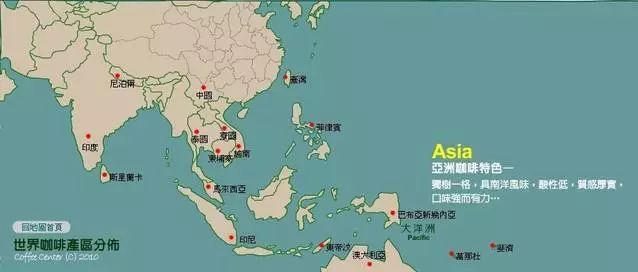
Asian beans and island flavor: more body than Central and South American or African beans, but lower acidity. The flavors lean toward driftwood, medicinal herbs, spices, and earth. The low, mellow aroma stands out ahead of the bright acidic fragrance. Island beans are relatively light and gentle, with an elegant tone.
1. Indonesia
Indonesian coffee is famous for its mellow, rich flavor and mouthfeel with very low acidity. With caramel-like and dark chocolate sweetness and aftertaste, it has won an almost obsessive following in Japan. Indonesia is a major coffee-producing country in Asia and ranks among the top producers globally. The birth of Indonesian coffee goes back to a small story, which FrontStreet Coffee will now tell.

In 1696, the Dutch introduced coffee beans to Indonesia. After successful trial planting, Java Island was established for large-scale cultivation. In 1877, however, almost all coffee trees in Indonesia were infected with leaf rust disease. Arabica beans could not resist it and were nearly wiped out, causing heavy losses.
Indonesia then had to import Robusta coffee beans from Africa. Robusta's strong disease resistance helped the country's coffee economy recover. Today Indonesia is the world's most important producer of Robusta, while Arabica accounts for only 6%-10% of its total coffee, including the well-known Mandheling. Robusta is concentrated in southern Sumatra, while Arabica grows in northern Sumatra.

The best Indonesian coffee comes from three regions: Sulawesi Island, Sumatra Island, and Java Island. Among them, Java is the most productive and is known for Arabica with bright acidity and clean fruit aroma. Today about 90% of Indonesian coffee is Robusta, now commonly used for commercial-grade coffee.
As mentioned above, Arabica plants were first brought to Indonesia by the Dutch East India Company in the 17th century, when the country was still under Dutch occupation. The goal in cultivating coffee was to break the global Arab monopoly on the coffee trade.

Initially the colonial government planted coffee in Bogor, south of Sukabumi, and near Batavia (Jakarta). Plantations were later established across East Java, West Java, and Central Java, as well as parts of Sulawesi and Sumatra. Large areas of forest were cleared to develop them, and the growth of the plantations drove extensive infrastructure work across Central Java through the 19th century - many railways and roads had to be built to move beans to ports for export.
Indonesia's high production comes from its climate. It has a typical tropical rainforest climate with an average annual temperature of 25-27°C, no distinct seasons, and annual precipitation of 1600-2200mm. Indonesia sits on a volcanic belt with fertile, mineral-rich soil that favors coffee cultivation. Altitude ranges between 900-2100 meters, with the main growing areas concentrated around 1200 meters.

Indonesian coffee has two main harvest seasons: the main harvest around September-October, and a secondary harvest in May-June. This year Indonesia's coffee bean exports have risen significantly compared with last year. Analysts suggest this is because last year's high prices in Indonesia reduced exports, while current production growth has pushed exports back up.
Indonesian Coffee Bean Varieties
There are three main categories: Arabica, Robusta, and Liberica. Among them, there are more than 20 main varieties, the common ones being Catuai, Catimor, Timor Hybrid, Typica, S288, S795, and Sidikalong.
Indonesia's coffee cultivation area currently exceeds 1 million hectares, accounting for 24% of total arable land. The average coffee plot is 1.7 hectares, with roughly 2.7 billion coffee trees, of which 66% are grown on plantations using modern methods, while the rest come from traditionally managed small farms.

Over 95% of Indonesia's coffee is produced by small farmers. Estates are mainly in East Java and Central Java provinces. Most production is organic, with 19 farmer cooperatives and exporters having obtained international certification for market organic coffee.
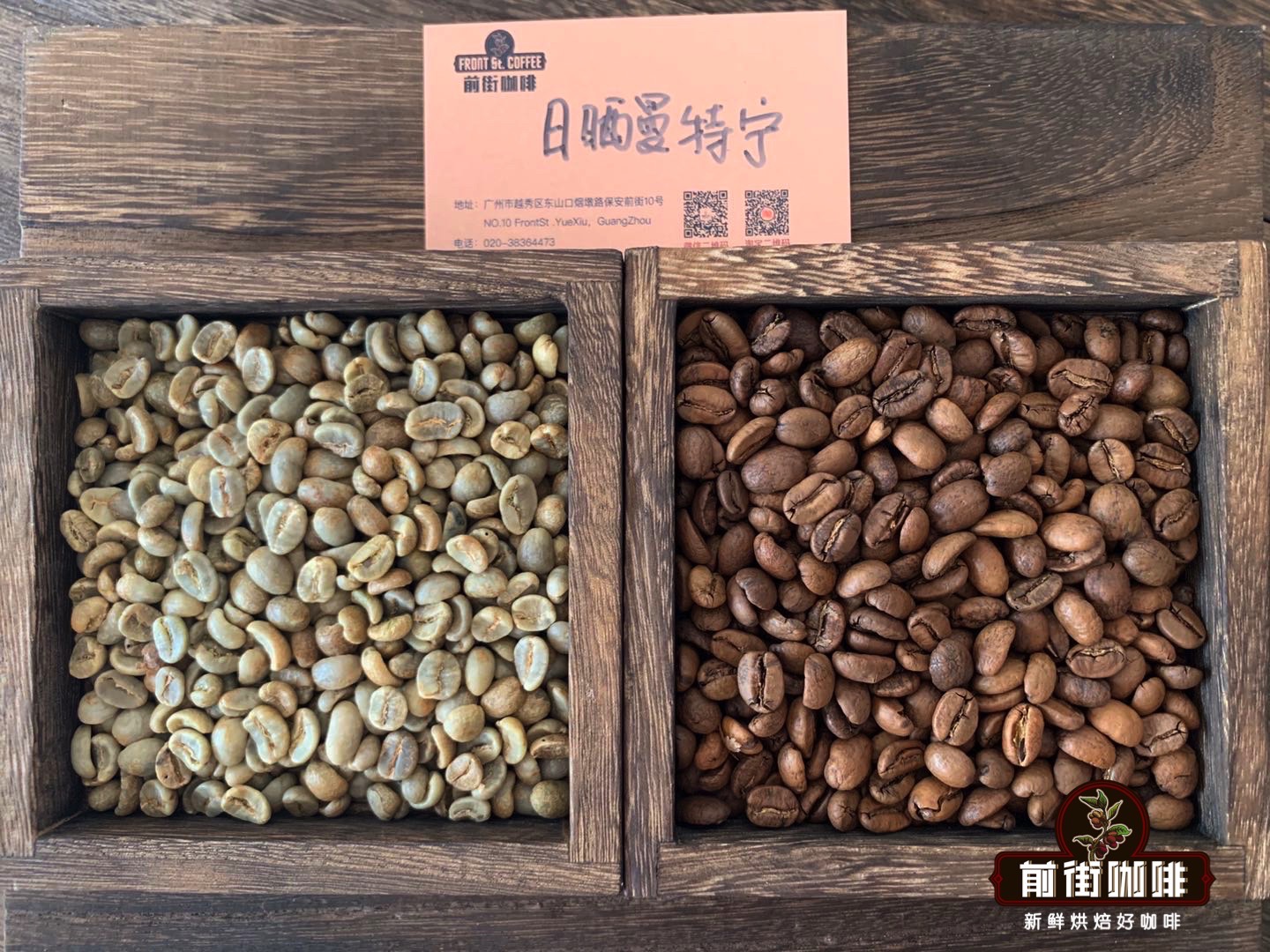
Indonesia's processing methods are unique too. Indonesian processing is called "giling basah," known elsewhere as semi-washed or wet-hulled processing. Once picked, the coffee is pulped and briefly dried. Unlike most other methods, which dry coffee to 11% or 12% moisture content, the semi-washed process stops at 30-35%. The coffee is then hulled to remove the parchment and expose the raw beans underneath, and those naked beans are dried again until they can be stored without rotting. Semi-washed coffee tends to have much lower acidity and more body than most coffee.

As a result, Indonesian coffee often has dark, bold flavors with prominent earthiness. The semi-washed process brings out earthy, musty, spicy, woody, tobacco, and leather notes, usually with a lasting impression that feels like unsweetened or dark chocolate. Sumatra is today's most popular Indonesian region, famous for dark roasting. It produces Mandheling and Ankola, two of the world's most famous and high-quality coffees, often with complex smoky or roasted flavors.
Among these, Indonesian Mandheling deserves the most attention.
Mandheling originally referred to the name of a tribe in Indonesia. After Japanese soldiers returned from Indonesia, they could not forget the delicious local coffee, so through trading friends they asked locals to help collect high-quality beans, including this Mandheling. The Japanese loved it greatly. Since the commercial source was inconvenient to disclose, the locals casually said "Mandheling," and the name accidentally became the name of a coffee bean. That local was in fact the boss of the Indonesian PWN company (Pwani Coffee Company) mentioned below - the company that first exported Gold Mandheling to Japan. FrontStreet Coffee has used PWN Gold Mandheling for many years. PWN also changed from 60kg bags to 30kg bags, and its production area shifted from Lindu to GAYO Mountain.

Its processing method is quite local as well. Mandheling mostly uses Sumatra's unique wet-hulling method. Because the weather is often rainy with continuous typhoons, the conditions for sun-drying simply are not there, and the local economy could not afford the pricier washed method, which led to the distinctive wet-hulling technique. Indonesian coffee is no longer as poor as it once was, and many estates and companies now have the means to wash. So why has wet hulling not been abandoned? FrontStreet Coffee believes wet hulling is the very factor that made Mandheling famous worldwide. When people mention Mandheling, they think of wet hulling - the two are bound together.
The specific steps of wet hulling break into two stages:
First stage: remove the peel and pulp with a wooden pulper, ferment for 3 hours, then sun-dry to bring moisture down to a semi-dry 30-50%.
Second stage: remove the mucilage and parchment layer, then continue the final drying, which takes 2-4 days and brings moisture down to 12-13%.

Beyond conventional wet hulling, there is also an aged wet-hulling method. The beans are first processed by ordinary wet hulling, then sealed in warehouses for 2-3 years. The warehouse must be cool and ventilated, and the beans turned regularly to prevent mold and decay. Over that time, acidity gradually weakens and converts to sugar, and the color deepens to mostly yellowish-brown or dark brown. FrontStreet Coffee uses this method for the Aged Mandheling on its bean list.
Wet hulling creates Mandheling's special flavor. It is fair to say Mandheling and wet hulling share a binding relationship, though today's market is no longer satisfied with the unchanging. Even though wet hulling is Mandheling's specialty, other processing methods are being tried as well.
Here are all the Indonesian coffee varieties FrontStreet Coffee currently carries:

FrontStreet Coffee - PWN Gold Mandheling Coffee Beans
Country: Indonesia
Region: Sumatra
Altitude: 1100-1600m
Variety: Typica (19 mesh)
Processing: Wet Hulling
Flavor: Nuts, spices, herbal plants, licorice, chocolate, caramel; clean and soft
Gold Mandheling comes from Lake Tawar in the Gayo Mountains of northwestern Sumatra. Since discovering Mandheling, the Japanese have paid this coffee close attention. In working with local raw bean merchants they established strict screening systems. After processing, the raw beans are screened by density and color sorting, followed by four manual selections, finally presenting Mandheling with uniform color and consistent bean shape. It is said that when raw beans are processed, Mandheling gives off a golden luster in sunlight, hence the name Gold Mandheling.

It was not a Japanese company that registered Gold Mandheling as a trademark, however, but an Indonesian company that cooperated with Japanese firms early on to export Mandheling - PWN (Pwani Coffee Company). The Japanese company registered "Gold Top Mandheling." FrontStreet Coffee believes there is actually little difference between the two in flavor; branding and different marketing strategies may simply have shifted public opinion. Which is superior is a matter of personal taste.
Gold Mandheling is specified at 18 mesh and above, with fewer than 3 defective beans per 300g raw bean sample, belonging to the top G1 grade, with a darker green color and a flat, uniform shape. After strict screening, FrontStreet Coffee found it does not carry the characteristic earthy impurity of ordinary Mandheling - it tastes cleaner and brighter, with stronger sweetness.

FrontStreet Coffee Tiger Mandheling

Country: Indonesia
Region: Sumatra
Altitude: 1500m
Variety: Caturra, Typica, Sidikalong
Processing: Wet Hulling
Flavor: Cream, black chocolate, nuts, balanced taste
Tiger Mandheling grows in Indonesia, with main production areas on three islands: Sumatra, Java, and Sulawesi. It is produced by Tiger Estate, so it is also called "Mandheling Tiger" or "Sumatra Tiger Mandheling." Northern Sumatra has relatively higher terrain, and the Aceh province around Lake Tawar and North Sumatra around Lake Toba are the main Arabica production areas.

Lake Tawar lies in the Gayo Mountains of northern Aceh, Sumatra. Indonesia straddles the equator and has a humid tropical rainforest climate with abundant rainfall and fertile volcanic soil that feeds the coffee. Because the location is remote and transport inconvenient, coffee cultivation did not begin until 1924, mostly using traditional shade-grown, pesticide-free organic methods.
FrontStreet Coffee understands this is because Indonesian annual humidity runs 70-90% and annual rainfall can reach 2,000mm, with continuous typhoons. Farmers want faster economic returns, so they use wet hulling. In the ordinary washing process, drying with parchment for 2-3 days to reach 20-24% moisture and then hulling the parchment makes the beans more easily crushed, forming small gaps - what is often called "horse hoof" or "sheep hoof" beans. These have higher defects, and they help create a thick, strong, very distinct flavor.
FrontStreet Coffee Aged Mandheling

Country: Indonesia
Region: Sumatra
Altitude: 1500m
Variety: Caturra, Catuai
Processing: Wet Hulling
Flavor: Ripe Pu-erh tea, caramel, herbs, chocolate, low acidity
When coffee lovers hear "aged coffee beans," they often assume it simply means green beans stored a long time - which of course would not do, since green beans stored too long rot, turning from fresh green to white and then yellow, becoming tasteless and even growing worms. Like aged wine, this Aged Mandheling must go through proper processing and long-term storage before it can truly be called "aged coffee."
FrontStreet Coffee Mandheling (Lindu Mandheling)
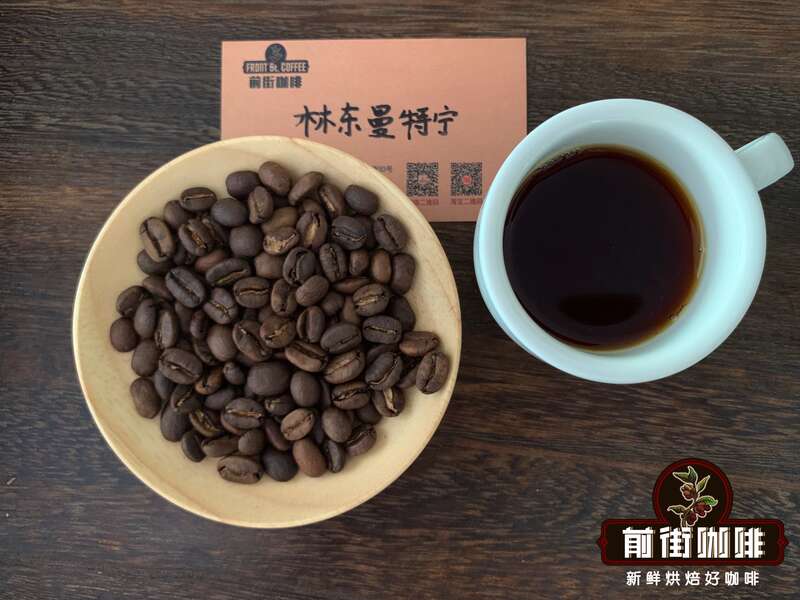
Country: Indonesia
Region: Sumatra (Lindu)
Altitude: 1100-1600m
Variety: Typica, Caturra
Processing: Wet Hulling
Flavor: Toasted bread, nuts, caramel, pine, herbs
Lindu Mandheling is produced in the Lindu mountainous area of central-northern Sumatra, near Lake Toba. It is the regular version of Mandheling. It also uses the conventional wet-hulling method, which creates its low acidity and high body. The catch with wet hulling is that when the semi-hard, semi-soft moist raw beans have their mucilage and parchment removed, they are easily crushed and crack open like sheep hooves - the well-known "sheep hoof beans." These are not defects; they are a very prominent feature of Mandheling.

According to FrontStreet Coffee's understanding, Lindu Mandheling is not focused on screening, and the lack of refined processing can make bean quality unstable - but that does nothing to diminish the world's love for its rich flavor.
FrontStreet Coffee Natural Mandheling
Country: Indonesia
Region: Sumatra (Lake Toba)
Altitude: 1000-1700m
Variety: Bourbon, Typica
Processing: Natural Processing
Flavor: Melon, fermented aroma, mango, tropical fruits, peach
Usually "Mandheling" is wet-hulled. Because that process exists nowhere else in the world, "Natural Mandheling" is genuinely rare.
Natural coffee usually carries alcoholic notes, so FrontStreet Coffee describes African naturals as "red wine," Latin American naturals as "whiskey," and Sumatran naturals as "aged sorghum wine" - very thick, but full of passionate tropical fruit. It is rarely this clean and delicate. FrontStreet Coffee believes tasting Natural Mandheling is an unforgettable experience.

There are five Indonesian Mandhelings described above, so FrontStreet Coffee hand-brewed and compared all five. Here is our summary of flavors for reference:
Gold Mandheling: Multi-layered, thick and clean, high balance, rich nut and caramel aroma, with chocolate notes and a lasting aftertaste.
Lindu Mandheling: Herbal and medicinal notes on entry, black chocolate, caramel, sweet aftertaste.
Tiger Mandheling: Pine and spice aromas, a relatively balanced mouthfeel, with obvious cream, black chocolate, and nut flavors.
Aged Mandheling: Woody, malt, and caramel aromas greet the nose. In the mouth it is less wild than traditional Mandheling, with more thickness and delicacy, giving a mature, steady feeling. Low acidity, with ripe Pu-erh tea, caramel, herbs, and chocolate on entry, and full sweetness.
Natural Mandheling: Tropical fruits, fermented sensation, moderate acidity, smooth mouthfeel, and obvious sweetness.

FrontStreet Coffee West Java Aromanis
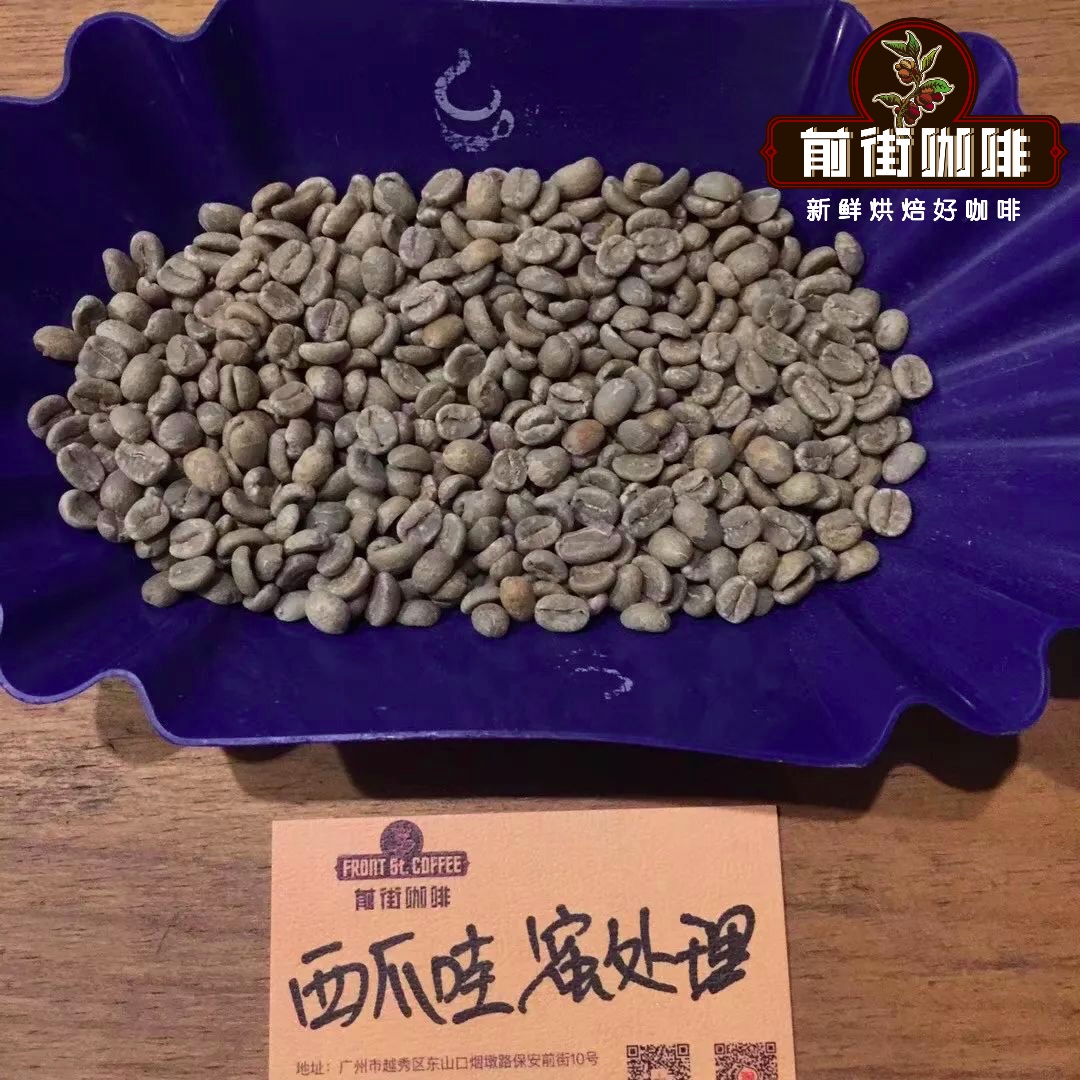
Country: Indonesia
Region: West Java (Aromanis Estate)
Altitude: 1400-1600m
Variety: Caturra, Catuai
Processing: Natural Honey Processing
Flavor: Mango, red wine, peach juice, strong fruit aroma, with plum and jackfruit flavors, clean and sweet aftertaste
"Aromanis" is a traditional Indonesian sweet snack made from flour and sugar. Here it names the coffee, implying a cotton-candy-like mouthfeel.

Everyone knows how famous Indonesia's Mandheling is. But FrontStreet also has a honey-processed coffee from West Java Island. Although it is not as famous as Mandheling, its feature is the honey processing method, rarely used in Indonesia.
Natural plus honey processing: after about 1 month of natural drying, washing and other steps are carried out, followed by storing the beans for about half a month before packaging. The only purpose of this complex, high-risk process is a more complex, fuller flavor that reflects the bean's layered heritage.
FrontStreet Coffee Kopi Luwak
Country: Indonesia
Region: Sumatra, Java
Altitude: 1000-1700m
Variety: Caturra, Catuai
Processing: In-body Fermentation
Flavor: Herbal, nuts, black chocolate, fermented flavor
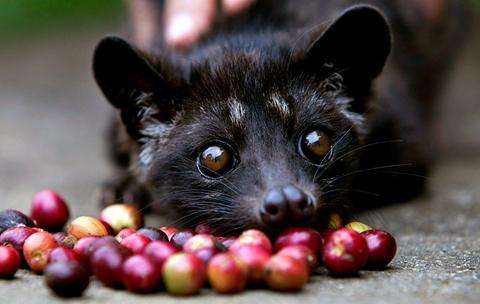
Kopi Luwak takes its name from "Kopi" (Indonesian for coffee) and "Luwak," what Indonesians call the tree-dwelling civet cat.

Kopi Luwak, produced in Indonesia, is one of the world's most expensive coffees. Indonesia grows large amounts of coffee, and Kopi Luwak exists because of a wild animal called the civet cat - an omnivore with a pointed mouth and dark gray fur whose favorite food is fresh coffee beans. Through fermentation and digestion in its body, the beans eventually become cat feces, and the feces are individual coffee beans, making them the world's most expensive droppings. Because the quantity is extremely small, the price is very high. Civet cats are found across the Indochinese Peninsula, northeastern India, Bangladesh, Bhutan, Sikkim, Nepal, and Kashmir, but only the Sumatran civet - the Indonesian civet - can produce Kopi Luwak.
In-body fermentation is also the most unusual coffee processing method. FrontStreet Coffee suggests interested coffee lovers give it a try.
2. Yunnan
Large-scale coffee cultivation in Yunnan began in the mid-1950s, at one point reaching a scale of 4,000 hectares. By the end of 1997, the province's coffee area had reached 7,800 hectares. Today the province accounts for 70% of the national growing area and 83% of national production. By both area and output, Yunnan coffee holds a dominant position in China.

Yunnan's coffee history reaches back to 1892, when a French missionary brought coffee seeds from abroad and planted them successfully in a valley in Binchuan County, Yunnan Province. More than thirty of the plants propagated from those seeds still flower and fruit in Binchuan County today.
The main variety is Arabica, the so-called small-seed coffee, commonly known in China as Yunnan small-seed coffee.

Yunnan's excellent geography and climate suit coffee well. Its conditions closely resemble Colombia's - low latitude, high altitude, and a large day-night temperature difference. According to FrontStreet Coffee's cupping analysis, the small-seed coffee produced there is a mellow-aroma type with quality and mouthfeel similar to Colombian coffee.
Yunnan's coffee-suitable areas are distributed across Simao, Xishuangbanna, Wenshan, Baoshan, Dehong, and other parts of southern and southwestern Yunnan.

FrontStreet Coffee Yunnan Baoshan Natural Catimor

Country: China
Region: Yunnan (Baoshan)
Altitude: 1450-1550m
Variety: Catimor
Processing: Red Cherry Natural Processing
Flavor: Caramel, dried fruit, cocoa, black chocolate, herbal, woody
Baoshan is one of the three major production areas for Yunnan small-seed coffee and a pioneer of small-seed cultivation and processing in China. Its history is long and its experience deep, dating back to the mid-1950s; the oldest trees are already over 60 years old. Baoshan City began large-scale cultivation in 1952, nearly 60 years ago. Thanks to the unique natural conditions of the Nujiang and Kuhe river basins and years of accumulated technique, Baoshan coffee enjoys a strong international reputation for its quality.
Most of Yunnan's cultivation today is Catimor, a hybrid of the Caturra branch of the Arabica Bourbon line with the Robusta line. Farmers favor it because its Robusta genes make it more disease-resistant than the delicate old varieties, and its yield is good too. So a Catimor trend has swept through Yunnan.

FrontStreet Coffee's Catimor is red cherry natural processed. Natural processing itself can raise sweetness, since harvesting and selecting fully ripe fruit means higher sugar in the pulp. Red cherry natural processing means that during harvest, farmers pick only mature red fruit and place them one by one in baskets; the fruit must also be uniform in size, similar in ripeness, and free of other impurities. During processing, defective beans and under- or over-ripe fruit are first removed by hand. The red fruit is then spread flat on raised wooden frames or whole trellises to dry, avoiding the risk of beans picking up impurities from the ground.
As a result, red cherry natural processing produces beans with higher sweetness than ordinary natural processing, and a fuller, more substantial mouthfeel.
FrontStreet Coffee Yunnan Small Seed

Country: China
Region: Yunnan
Altitude: 1450-1550m
Variety: Catimor
Processing: Washed Processing
Flavor: Citrus, fermented fruit aroma, cocoa, nuts, herbal
Yunnan small-seed coffee refers to small-seed coffee cultivated in Yunnan. Coffee is an evergreen small tree of the Rubiaceae family, native to Africa. The main beverage species cultivated today are small-seed coffee (Coffea arabica), also called small-fruited coffee, and medium-seed coffee (C. canephora), also called medium-fruited coffee. Small-seed coffee traditionally grown in Yunnan specifically refers to a mixed population of Bourbon variants and Typica variants.

Small-seed coffee is the most widely cultivated species in the Coffea genus. Because of its strong cold resistance and ability to tolerate short spells of low temperature, it can grow on mountains at 2100 meters altitude in tropical regions, but it is not drought-resistant; its branches are relatively fragile and not resistant to strong wind; its disease resistance is relatively weak; and its fruit drops easily once ripe. After processing, the coffee is fragrant and mellow with lower caffeine content.
FrontStreet Coffee Huaguoshan

Country: China
Region: Yunnan
Altitude: 1200m
Variety: Typica
Processing: Washed Processing
Flavor: Melon and fruit aroma, sweet melon, brown sugar, plum acidity, tea sensation
FrontStreet Coffee's Yunnan Huaguoshan differs from Yunnan Small Seed in variety: Huaguoshan is Typica, while Yunnan Small Seed is Catimor. Both can be called small-seed coffee, but because Typica's floral and fruity acidity is more gentle and rich, it is named separately to distinguish the two.
3. Papua New Guinea
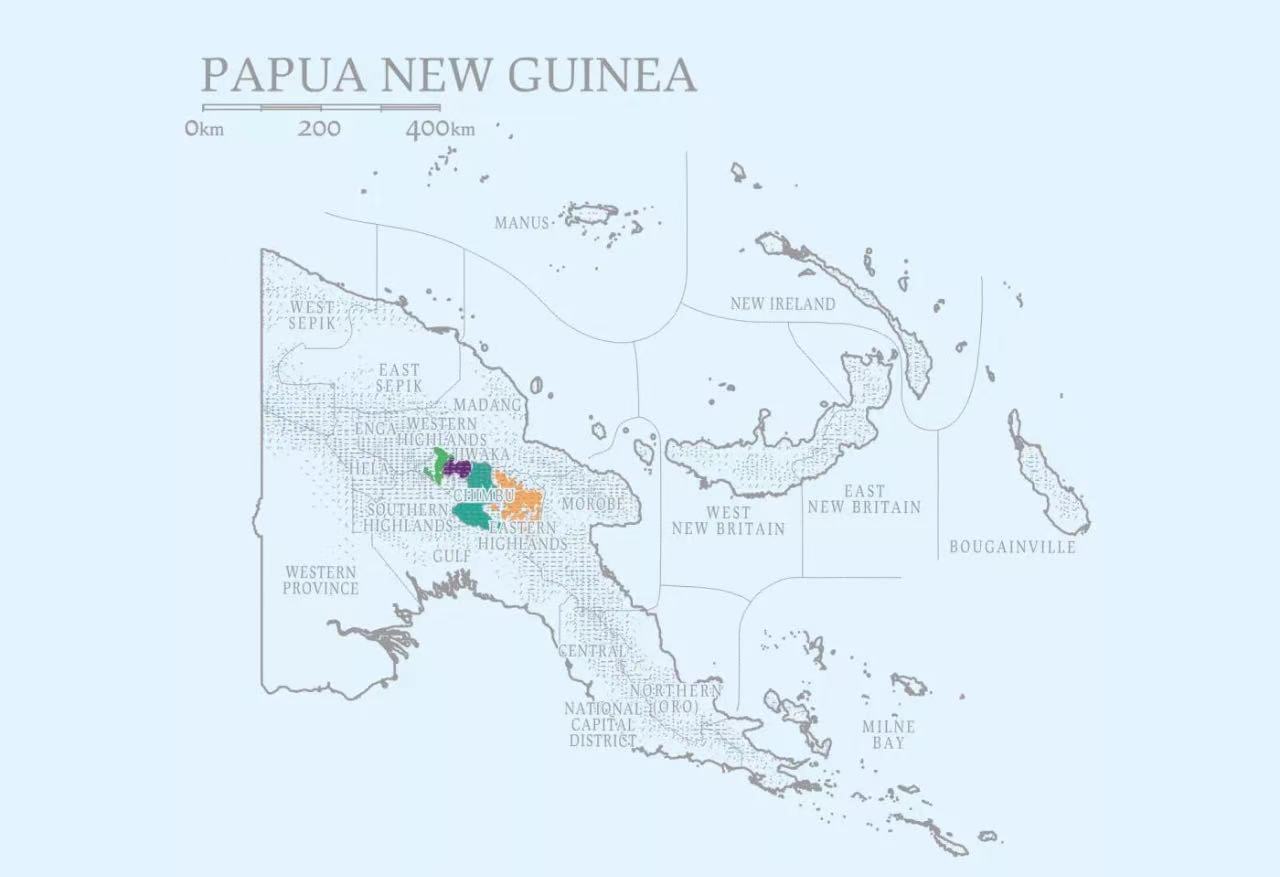
Papua New Guinea can be seen as an exception among Indonesian coffees. Estates are numerous, both large and small. Small estates mostly produce washed organic beans with strong flavor but no earthy taste, and also small amounts of natural beans with more varied, delicate flavors than the washed. Large estate coffee has a cleaner, more delicate mouthfeel, though some find it lacks personality. Overall, Papua New Guinea coffee has a lighter texture than Java beans, somewhat similar to good Central American beans. Most trees here come from Typica varieties of Jamaican Arabica, mixed with Arusha beans from Tanzanian Typica.
FrontStreet Coffee Papua New Guinea Small Blue Mountain (Bird of Paradise)

Country: Papua New Guinea
Region: Sigri Estate
Altitude: 1500m
Variety: Caturra, Catuai
Processing: Washed Processing
Flavor: Cream, nuts, chocolate, soft fruit acidity
According to FrontStreet Coffee's understanding, Sigri Estate was established in 1950 and has operated for over 60 years, making it a pioneer of the local coffee industry. The Bird of Paradise Estate is located in the Waghi Valley of the Western Highlands Province, at a high altitude of about 1500 meters, with mineral-rich volcanic soil, a cool climate, fertile land, and abundant rainfall.

Bird of Paradise Estate also cares deeply about ecological protection. To protect soil and water sources it refuses pesticides and insecticides, looking after the ecosystem and the nearby birds. The estate has held to high cultivation and processing standards for many years. During the harvest season from April to September each year, only fully ripe coffee cherries are hand-picked, ensuring a perfect balance of acidity and sweetness in the berries.
At Bird of Paradise Estate, cupping is conducted every day to ensure the plantation provides customers with consistently high-quality coffee, and the estate has become a classic of world specialty-grade coffee.
Those are all the Asian coffee varieties FrontStreet Coffee currently carries. We hope coffee lovers now have a clearer sense of Asian coffee, which will help you choose flavors that suit you.
FrontStreet Coffee Recommendation
If Indonesian coffee is what you want to explore, these are the FrontStreet beans that show the range of the region.
FrontStreet PWN Gold Mandheling - the top of the wet-hulled pyramid. Pwani Coffee Company buys only high-quality Mandheling green beans and sorts them by machine and by hand, selecting plump, defect-free beans at the specialty level. Gold Mandheling is their flagship: even in size, large and translucent, with a low defect rate. After a medium-dark roast it carries a rich toasted aroma, and the brewed black coffee has a clean cup and full body - ideal for anyone who dislikes acidic coffee.
FrontStreet Sumatra Wet-Hulled Mandheling - the classic introduction to the region. Mandheling refers to Arabica from Sumatra, mostly processed by the local wet-hulling method: because the beans are hulled while semi-dry, the raw beans stay fully exposed to the air during drying, which gives the coffee its typical herbal, spicy character. From the Lake Toba area of the Lindu region, roasted medium-dark, it is low in acidity and full-bodied, with rich caramel, dark chocolate, and toasted bread aromas and a long sweet finish.
FrontStreet Classic Blend Espresso - if you brew espresso, this is the classic Mandheling-based formula. In the days before light-roast coffee became popular, Mandheling was considered the richest coffee in the world, so it was often used in espresso. The classic "Mamba" blend of Mandheling and Brazil inspired this recipe. To keep the crema rich and golden, FrontStreet adds a small amount of Robusta and uses a deeper roast so the dark chocolate, nut, and caramel notes come through fully - even a complete beginner can pull a shot with authentic Mandheling character.
Important Notice :
FrontStreet Coffee is a long-established specialty coffee roaster in Guangzhou China, selling freshly roasted beans from its own farm in Yunnan as well as dozens of carefully selected single-origin beans from around the world for both pour-over and espresso. The products deliver consistently excellent quality and great value, with shipping within 24 hours. Guangzhou's FrontStreet Coffee shop is recommended by many coffee lovers, and the beans are now available online at the Tmall 。
FrontStreet Coffee has moved to a new address:
FrontStreet Coffee Address: 315,Donghua East Road,GuangZhou
Tel:020 38364473
 Scan and follow the En Gafei WeChat official account. Please indicate that the reprint comes from "En Gafei".